Can Cats Get Pregnant Without Showing Heat? Lets Find Out

We all think of cats going through obvious heat cycles – the yowling, the frantic rubbing – before they can possibly get pregnant. But what if that picture isn’t always accurate? The possibility of a cat getting pregnant without displaying those classic heat signs is a surprisingly common question among cat owners, often fueled by misconceptions and confusing situations. This article dives deep into the fascinating world of feline reproduction, exploring the science behind “silent heats,” the factors that can influence conception, and what to do if you suspect your cat might be expecting, even if she hasn’t shown any typical signs of being in heat.
We’ll unravel the complexities of the estrous cycle, discuss the potential for cryptic ovulations, and examine how things like genetics, environment, and even a cat’s overall health can play a role. Understanding these nuances is crucial for responsible cat ownership and ensuring the well-being of both your feline friend and any potential kittens.
Can Cats Get Pregnant Without Showing Heat Signs? A Deep Dive
The image of a cat rolling around, yowling, and generally acting out of character is often what comes to mind when we think of feline heat cycles. It’s a pretty clear signal that a female cat is ready to mate. But what if you suspect your cat is pregnant, yet haven’t witnessed any of these classic heat behaviors? It’s a valid and increasingly common question.
Many cat owners are puzzled by this possibility, often stemming from misunderstandings about feline reproduction and the subtle ways a cat’s body can function. This article aims to unravel this mystery, exploring the science behind feline pregnancy, the nuances of the heat cycle, and the factors that can lead to conception even without obvious signs. We’ll delve into “silent heats,” discuss the role of hormones and sperm viability, and provide practical advice for cat owners who suspect their feline friend might be expecting.
Understanding the Feline Heat Cycle (Estrus)
The feline estrous cycle, or heat cycle, is a complex process governed by hormonal fluctuations. Unlike dogs, cats are seasonally polyestrous, meaning they can cycle repeatedly during breeding season (typically spring and summer, but can vary based on light exposure). The cycle is divided into four distinct phases: proestrus, estrus, diestrus, and anestrus.During proestrus, the cat becomes increasingly restless and may exhibit some mild behavioral changes, but isn’t yet receptive to mating.
Estrous is the period of peak fertility, characterized by the classic heat behaviors – vocalization, restlessness, rubbing against objects, and a willingness to mate. Diestrus follows estrus, whether or not mating occurred. This phase represents a period of potential pregnancy or, if no fertilization occurred, a period of uterine inactivity. Finally, anestrus is a period of reproductive quiescence, where the cat is not cycling and shows no signs of heat.Hormonal changes are the driving force behind these phases.
Proestrus sees a rise in estrogen. Estrous is marked by a peak in estrogen and a decline in progesterone. Diestrus is characterized by high progesterone levels, which either support pregnancy or prepare the uterus for shedding the uterine lining if pregnancy doesn’t occur. Anestrus has low levels of both estrogen and progesterone. The duration of each phase varies.
Proestrus typically lasts 1-3 days, estrus 3-14 days, diestrus 50-90 days, and anestrus can last weeks or months. Individual cats can have significantly different cycle lengths and intensities.
| Phase | Hormonal Changes | Behavioral Signs | Duration (approximate) |
|---|---|---|---|
| Proestrus | Rising estrogen | Restlessness, increased vocalization, mild behavioral changes | 1-3 days |
| Estrus | Peak estrogen, declining progesterone | Classic heat behaviors: vocalization, rubbing, restlessness, willingness to mate | 3-14 days |
| Diestrus | High progesterone | No heat behaviors, potential pregnancy or uterine inactivity | 50-90 days |
| Anestrus | Low estrogen and progesterone | No heat behaviors, reproductive quiescence | Weeks to months |
The Possibility of Pregnancy Without Obvious Heat Signs
The question of whether a cat can get pregnant without displaying typical heat signs isn’t as far-fetched as it might seem. The phenomenon of “silent heats,” also known as cryptic ovulations, is a real occurrence. These are heat cycles that occur without the overt behavioral signs most owners associate with heat. It’s believed that these silent heats are more common in indoor cats, particularly those who are spayed later in life.Ovulation in cats is not solely triggered by a surge in luteinizing hormone (LH) during a distinct heat period.
While the LH surge is crucial, hormonal triggers can initiate ovulation even without the typical behavioral signs. Factors like subtle changes in light exposure, stress levels, or even individual feline differences can influence the presentation of heat. A cat might experience a brief LH surge and ovulate, but not exhibit the full range of behaviors associated with estrus.Imagine a scenario where a cat experiences a mild stressor, like a new pet in the house.
This stress could trigger a subtle hormonal shift leading to ovulation, without the cat displaying the usual vocalizations or restlessness. This is why it’s crucial to be aware that pregnancy is possible even if you haven’t observed any obvious signs of heat.
Factors Influencing Conception Outside of Heat
Several environmental and individual factors can influence ovulation and, consequently, the possibility of conception outside of a typical heat cycle. Light exposure plays a significant role, as it affects the cat’s internal clock and hormone production. Increased daylight hours typically stimulate reproductive activity. Temperature changes can also have an impact, with warmer temperatures generally promoting ovulation.Genetics and breed predispositions also come into play.
Some breeds may be more prone to silent heats or have different reproductive patterns than others. A cat’s age and overall health are also crucial. Younger, healthier cats are generally more fertile and may be more likely to ovulate even without a clear heat cycle.The following flowchart illustrates the potential pathways leading to ovulation outside of a typical heat cycle:[Imagine a flowchart here.
It would start with “Environmental/Individual Factors (Light, Stress, Genetics, Age, Health)” branching into “Subtle Hormonal Shift” then branching into “Ovulation” and “Potential Conception”. A separate branch from “Environmental/Individual Factors” could lead to “Normal Heat Cycle” and then “Ovulation” and “Potential Conception”.]
The Role of Sperm Viability and Multiple Ovulations
Sperm viability in cats is surprisingly long-lasting. Sperm can remain viable within the feline reproductive tract for up to 5 days, sometimes even longer. This extended viability significantly increases the chances of conception, even if the cat only mated once during a brief, unnoticed period.Furthermore, cats can ovulate multiple times within a short period, even without consistent heat signs. This phenomenon, known as multiple ovulations, further increases the likelihood of pregnancy.
Multiple matings, even if they occur outside of a clearly defined heat cycle, can contribute to conception.
“The extended sperm viability in cats, coupled with the possibility of multiple ovulations, explains why conception can occur even when a cat doesn’t exhibit the typical signs of heat. This is a key factor in understanding the possibility of pregnancy without obvious heat signs.”Dr. Emily Carter, Veterinary Reproduction Specialist
Signs of Pregnancy – Early Indicators
Detecting pregnancy in cats without suspecting heat can be challenging, as the early signs are often subtle. Changes in appetite are frequently among the first indicators. Some cats experience morning sickness-like symptoms, while others simply eat more or less than usual. Behavioral changes, such as increased affection or nesting behavior, may also occur. Physical changes are more noticeable later in pregnancy, but even early on, a slight increase in weight or a subtle change in body shape can be clues.
| Sign | Description | Timing (when it typically appears) |
|---|---|---|
| Appetite Changes | Increased or decreased appetite | 3-4 weeks |
| Behavioral Changes | Increased affection, nesting behavior | 4-6 weeks |
| Mammary Gland Development | Slight swelling of mammary glands | 3-4 weeks |
Veterinary Diagnosis of Pregnancy
Confirming pregnancy in cats requires veterinary expertise. Palpation, or feeling the abdomen, can sometimes detect the presence of kittens as early as 21 days, but this method is not always reliable. Ultrasound is a more accurate method, allowing visualization of the kittens and heartbeat as early as 15-20 days. Radiography (X-rays) can be used to count the number of kittens after 45 days, but it doesn’t provide information about fetal viability.A basic feline pregnancy examination by a veterinarian typically involves:
1. History Taking
The veterinarian will ask about the cat’s recent behavior, mating history, and any observed changes.
2. Physical Examination
The veterinarian will palpate the abdomen to check for signs of pregnancy.
3. Ultrasound
An ultrasound scan will be performed to confirm pregnancy and assess fetal viability.
Dispelling Common Myths and Misconceptions
Several myths and misconceptions surround feline pregnancy and heat cycles. One common belief is that cats can only get pregnant during their heat cycle. As we’ve discussed, this isn’t always true, and silent heats are a real phenomenon. Another myth is that a cat must display all the classic heat behaviors to be pregnant. This is also inaccurate, as some cats may only exhibit subtle signs or none at all.Here’s a list of myths and corresponding factual explanations:* Myth: Cats can only get pregnant during their heat cycle.
Fact: Silent heats can occur, leading to pregnancy without obvious heat signs.
Myth
A cat must display all classic heat behaviors to be pregnant. Fact: Some cats exhibit subtle or no heat behaviors while still being pregnant.
Myth
If a cat isn’t yowling, she can’t be pregnant. Fact: Silent heats and early pregnancy can occur without vocalization.
Preventing Unwanted Pregnancies – Spaying Considerations
Spaying is the most effective way to prevent unwanted pregnancies and offers numerous health benefits for female cats. The surgical procedure involves removing the ovaries and uterus, preventing ovulation and pregnancy. Recovery typically takes 1-2 weeks. Spaying is generally recommended between 6 months and 1 year of age, before the cat reaches sexual maturity.
| Spaying Benefits | Spaying Risks |
|---|---|
| Prevents unwanted pregnancies | Anesthesia risks (rare) |
| Eliminates the risk of uterine infections (pyometra) | Surgical complications (very rare) |
| Reduces the risk of mammary cancer | Weight gain (can be managed with diet) |
| Eliminates heat cycles and associated behaviors |
What to Do If You Suspect Your Cat is Pregnant (Even Without Heat Signs)
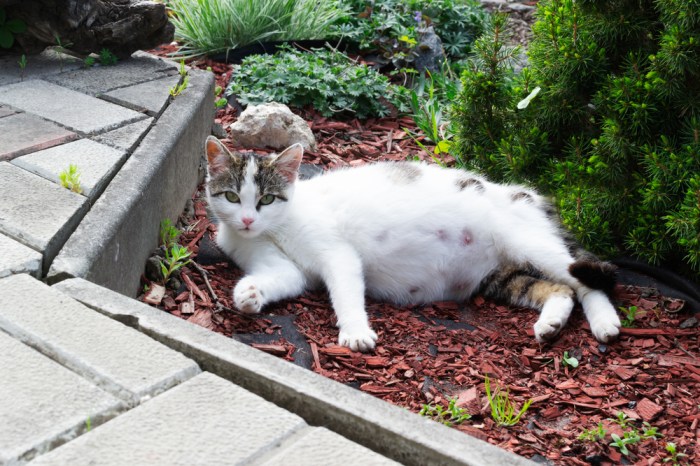
Source: catschef.com
If you suspect your cat might be pregnant, even without observing heat signs, the first and most important step is to consult a veterinarian. Regular prenatal care is crucial for ensuring a healthy pregnancy and delivery. Provide your cat with high-quality kitten food, as it’s richer in nutrients than adult cat food.Here’s a checklist of essential items to prepare for a pregnant cat and newborn kittens:* Kitten food
- Soft bedding
- Whelping box
- Heating pad (for kittens)
- Pet carrier
- Veterinary contact information
Final Review
So, can cats get pregnant without showing heat? The answer, as we’ve seen, is a nuanced yes. While it’s not the norm, “silent heats” and other factors can absolutely lead to conception without the usual behavioral cues. Being aware of the subtle signs of pregnancy, understanding the intricacies of feline reproduction, and seeking veterinary guidance are all vital steps in ensuring your cat receives the best possible care, whether she’s expecting or not.
Ultimately, responsible pet ownership means being informed and prepared for all possibilities.
Spaying remains the most effective way to prevent unwanted pregnancies and offers numerous health benefits for your cat. If you have any concerns about your cat’s reproductive health, don’t hesitate to consult with your veterinarian – they are your best resource for accurate information and personalized advice.
Frequently Asked Questions
Can a spayed cat get pregnant?
No, a properly spayed cat has had her ovaries removed, making pregnancy impossible.
What is a “silent heat”?
It’s when a cat ovulates without displaying the typical behavioral signs of heat, like yowling or restlessness.
How long can sperm survive in a cat’s reproductive tract?
Sperm can remain viable for several days, increasing the chance of fertilization even after mating.
What are some early signs of pregnancy in cats?
These can include morning sickness, increased appetite, and changes in behavior, though they can be subtle.
When can you detect pregnancy with an ultrasound?
Ultrasound can often detect pregnancy as early as 2-3 weeks after mating.
Is it safe to let a cat get pregnant naturally?
While possible, it’s crucial to ensure proper prenatal care and be prepared for the responsibilities of raising kittens. Spaying is generally recommended to prevent unwanted litters.
What is diestrus?
Diestrus is the period after estrus (heat) where the cat’s reproductive system prepares for pregnancy or returns to a non-reproductive state.
Can stress cause a cat to have a silent heat?
Yes, stress and environmental changes can sometimes influence a cat’s reproductive cycle and potentially lead to a silent heat.
