Can Cats Sense Disease? Exploring Feline Intuition

For centuries, whispers have circulated about cats possessing an uncanny ability to detect illness in humans. From folklore tales to modern-day anecdotes, stories abound of feline companions exhibiting unusual behaviors before a diagnosis is even made. This fascination stems from a deep-seated curiosity: do our furry friends truly have a sixth sense when it comes to our health, or are these just coincidences and clever interpretations of their actions?
The idea that cats can sense disease is compelling, and it’s easy to see why it resonates with so many people. We share our lives, our homes, and often our deepest emotions with these animals. But what’s the science behind these observations? Let’s delve into the sensory capabilities of cats, explore potential mechanisms, and examine the evidence – or lack thereof – surrounding this intriguing phenomenon.
Can Cats Sense Disease? Exploring the Feline Sixth Sense
It’s a story you’ve probably heard: a cat suddenly becoming overly affectionate with an owner who’s been diagnosed with cancer, or a feline friend persistently nudging a person experiencing a seizure. These anecdotes, passed down through generations, fuel a persistent fascination with the idea that cats possess a unique ability to detect illness in humans. While the science behind this phenomenon remains largely elusive, the sheer volume of personal accounts and historical lore begs the question: is there something to it?
This article delves into the observations, potential mechanisms, and scientific considerations surrounding cats’ perceived ability to sense disease, separating fact from speculation and exploring the enduring human-animal bond that makes these stories so compelling.
Introduction: The Observation of Feline Sensitivity
The belief that cats can sense illness isn’t a modern invention. For centuries, people have shared stories of feline behavior changes preceding a human diagnosis. These aren’t just isolated incidents; they’re a recurring theme in folklore and personal narratives. The public’s enduring interest stems from a combination of factors: a deep affection for cats, a desire to understand their mysterious nature, and the hope that these furry companions might offer an early warning system for health problems.
It’s a comforting thought, and one that continues to spark curiosity and debate.
| Observation | Owner’s Description | Possible Explanation (Speculative) |
|---|---|---|
| Increased Affection | “My cat started sleeping on me constantly, even though he usually prefers his own bed.” | Sensitivity to subtle changes in body temperature or scent related to illness. |
| Guarding Behavior | “She wouldn’t leave my side when I was having migraines, always sitting right next to me.” | Anxiety related to the owner’s discomfort or pain, or detection of subtle physiological changes. |
| Withdrawal | “He became very quiet and distant, hiding more than usual, a few weeks before I was diagnosed with diabetes.” | Sensitivity to changes in the owner’s routine or emotional state, potentially linked to illness. |
| Vocalization Changes | “My cat started meowing incessantly at night, which he never did before I started having chest pains.” | Possible response to changes in breathing patterns or discomfort. |
| Physical Contact | “She would lick my face and neck more often, especially when I was feeling anxious or stressed.” | Comforting behavior driven by empathy or a response to the owner’s emotional state. |
Sensory Abilities of Cats: A Foundation
To understand how cats might detect illness, it’s crucial to appreciate the remarkable sophistication of their senses. Cats aren’t just good at seeing in the dark; their entire sensory system is finely tuned to perceive the world in ways that humans often miss. Their abilities form the foundation upon which any potential illness detection might be built.
A cat’s sense of smell is arguably their most powerful tool. Their olfactory system is significantly more complex than ours, with roughly 200 million scent receptors compared to our 5-6 million. The structure of their nose allows for a “vomeronasal organ” (also known as Jacobson’s organ), which detects pheromones and other chemical signals. This heightened olfactory sensitivity allows them to discern subtle differences in scent that are imperceptible to humans.
Cats also possess exceptional hearing. Their hearing range extends beyond human capabilities, particularly in the higher frequencies. They can detect sounds as low as 64 Hz (infrasound), which allows them to hear the rustling of mice and other small creatures. Their ears are incredibly mobile, enabling them to pinpoint the source of a sound with remarkable accuracy. This sensitivity to subtle sounds could potentially allow them to detect physiological changes like altered breathing or heart rate.
While cats’ vision differs from ours, it’s adapted for hunting in low-light conditions. They excel at detecting motion, a crucial skill for catching prey. Their visual acuity is slightly lower than humans, but they compensate with a wider field of view and the ability to see better in dim light thanks to a reflective layer behind the retina called the tapetum lucidum.
While motion detection isn’t directly related to illness detection, it highlights their ability to notice subtle changes in their environment.
In comparison to humans, cats prioritize smell and hearing over vision. While we rely heavily on sight, cats navigate the world through a complex interplay of scent, sound, and subtle visual cues. This difference in sensory emphasis is key to understanding their potential ability to detect changes in a person’s physiology.
Chemical Signals & Disease: Potential Mechanisms
The core of the “cat illness detection” phenomenon likely lies in the way diseases alter human body chemistry. When the body is fighting illness, it produces a cascade of chemical changes, including alterations in volatile organic compounds (VOCs). VOCs are organic chemicals that evaporate at room temperature and are released into the air through breath, sweat, and other bodily fluids.
These VOC profiles are unique to each individual and can change significantly depending on their health status.
The hypothesis is that cats, with their incredibly sensitive sense of smell, can detect these altered VOC profiles. They might be able to distinguish between the “normal” scent of their owner and the scent associated with a particular disease. While the specific VOCs associated with different illnesses are still being researched, studies have identified links between certain VOCs and conditions like cancer, diabetes, and infections.
Research into this area is still in its early stages. For example, studies have shown that dogs can detect cancer through scent, and it’s plausible that cats could possess a similar ability. However, more research is needed to identify the specific VOCs that cats are detecting and to understand the mechanisms involved.
Flowchart: Disease -> VOC Change -> Cat Detection -> Behavioral Response
- Disease: A person develops an illness, leading to physiological changes.
- VOC Change: These changes result in alterations in the person’s VOC profile.
- Cat Detection: The cat’s highly sensitive olfactory system detects these altered VOCs.
- Behavioral Response: The cat exhibits a behavioral change in response to the detected VOCs (e.g., increased affection, guarding, withdrawal).
Behavioral Changes: What to Look For
Owners who believe their cats have detected illness often report a range of behavioral changes. These can be subtle or dramatic, and it’s important to remember that behavior can be influenced by many factors. Understanding these changes and their potential causes is crucial for responsible interpretation.
Common behavioral shifts include increased affection (e.g., more cuddling, purring), withdrawal (e.g., hiding, decreased interaction), guarding behavior (e.g., staying close to the owner, becoming protective), changes in appetite, and restlessness. While these behaviors are often attributed to illness detection, they can also be caused by anxiety, changes in routine, or other environmental factors.
It’s important to separate speculative explanations from more plausible ones. For example, a cat’s increased affection might be a genuine response to the owner’s discomfort, or it could simply be a reaction to the owner spending more time at home due to illness. Similarly, withdrawal could be a sign of anxiety related to the owner’s condition, or it could be a response to changes in the household environment.
| Severity | Potential Associated Illnesses (Speculative) | Behavioral Changes |
|---|---|---|
| Mild | Early-stage cancer, mild diabetes | Slightly increased affection, occasional guarding. |
| Moderate | Diabetes, neurological conditions (e.g., migraines), heart disease | Consistent guarding, changes in appetite, restlessness. |
| Severe | Advanced cancer, severe neurological conditions (e.g., seizures) | Significant withdrawal, aggression, extreme changes in routine. |
The way a cat exhibits behavior can also vary depending on the type of illness. For example, a cat detecting a neurological condition like seizures might exhibit restlessness or anxiety before the seizure occurs, while a cat detecting a metabolic condition like diabetes might show changes in appetite or thirst.
Specific Illnesses & Reported Observations
Anecdotal reports link cats to the detection of various illnesses, though scientific evidence remains limited. The stories are compelling, but it’s crucial to approach them with a critical eye.
| Illness | Reported Behaviors | Potential Explanations | Reliability of Reports (Low, Medium, High) |
|---|---|---|---|
| Cancer | Sleeping on the affected area, persistent licking, changes in vocalization. | Detection of VOCs associated with cancer cells, anxiety related to the owner’s discomfort. | Low |
| Diabetes | Increased thirst and urination in the cat, guarding behavior, changes in appetite. | Sensitivity to changes in the owner’s blood sugar levels, anxiety related to the owner’s condition. | Medium |
| Neurological Conditions (Seizures, Parkinson’s) | Restlessness, hiding, increased vocalization before a seizure, persistent contact. | Detection of subtle physiological changes preceding a seizure, sensitivity to tremors or stiffness. | Low |
Scientific Research & Evidence (or Lack Thereof)
While anecdotal evidence abounds, rigorous scientific research investigating cats’ ability to detect illness is scarce. Some studies have explored the potential for dogs to detect cancer through scent, but similar research on cats is limited. Existing studies often suffer from methodological limitations, such as small sample sizes, lack of control groups, and reliance on subjective observations.
Conducting controlled experiments is challenging. It’s difficult to isolate the cat’s behavior from other factors that could be influencing it. Furthermore, it’s ethically complex to intentionally expose cats to situations that might cause them stress or anxiety.
Larger sample sizes and more rigorous methodologies are needed to draw definitive conclusions. Future research should focus on identifying the specific VOCs that cats are detecting and on developing objective measures of feline behavior.
Despite numerous anecdotal reports, definitive proof of cats’ ability to detect illness remains elusive. However, the persistence of these stories and the growing body of research on animal olfaction suggest that further investigation is warranted.
The Role of Empathy & Bonding
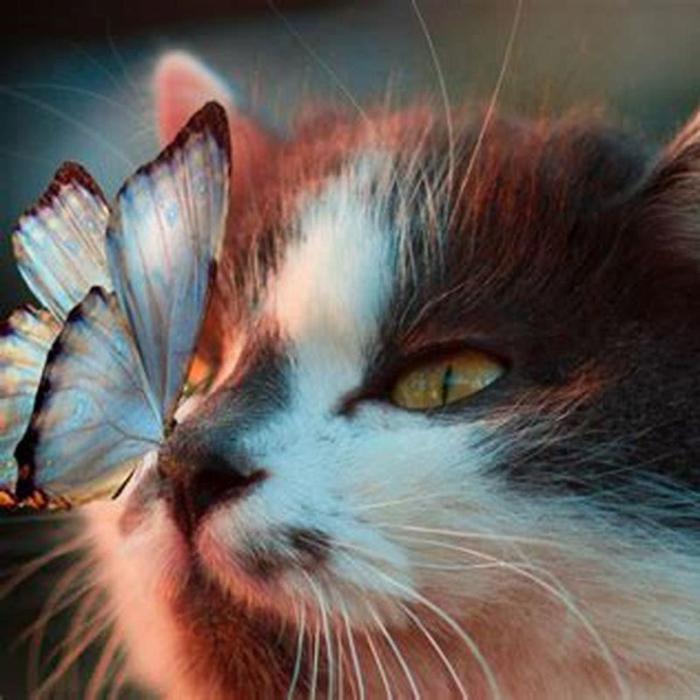
Source: diyseattle.com
The human-animal bond is a powerful force, and it likely plays a significant role in the perceived ability of cats to detect illness. Cats are highly attuned to their owners’ emotional states, and they may respond to subtle cues that humans are not even consciously aware of. This sensitivity to emotional changes could be misinterpreted as illness detection.
Mirroring behavior, where animals mimic human behavior, has also been observed in cats. This suggests that they are capable of empathizing with their owners and responding to their needs. While mirroring behavior doesn’t necessarily prove illness detection, it highlights the depth of the human-animal connection.
“Interpreting feline behavior is incredibly complex. Cats communicate through a subtle language of body posture, vocalizations, and scent marking. Attributing a specific behavior to illness detection without considering other factors is a significant oversimplification.”Dr. Eleanor Riley, Animal Behaviorist
Other Potential Explanations: Beyond Smell
While scent is likely the primary mechanism, other sensory modalities could also contribute to cats’ perceived ability to detect illness. Cats might be able to detect subtle changes in body temperature or heart rate through physical contact. They are also adept at sensing changes in a person’s posture or gait, which could be indicative of illness or injury.
Furthermore, cats are creatures of habit, and they are highly sensitive to changes in their environment. Alterations in a person’s routine, such as changes in sleep patterns or eating habits, could trigger behavioral changes in the cat that are misinterpreted as illness detection.
- Changes in owner’s routine
- New smells in the house
- Changes in household noise levels
- Changes in the owner’s physical activity
- Introduction of new pets or people
Responsible Interpretation & Avoiding Misdiagnosis
It’s crucial to emphasize that a cat’s behavior should never be used as the sole basis for a medical diagnosis. Any health concerns should be addressed by consulting with a qualified medical professional. Relying solely on a cat’s behavior for diagnosis can be dangerous and could delay necessary medical treatment.
Confirmation bias, the tendency to interpret information in a way that confirms pre-existing beliefs, can also play a role in interpreting a cat’s actions. Owners who are already concerned about their health may be more likely to attribute their cat’s behavior to illness detection.
| Cat Behavior | Possible Explanation (Medical vs. Environmental) |
|---|---|
| Increased Affection | Medical: Response to VOCs associated with illness. Environmental: Owner spending more time at home. |
| Withdrawal | Medical: Anxiety related to owner’s discomfort. Environmental: Changes in household routine. |
| Guarding Behavior | Medical: Detection of subtle physiological changes. Environmental: Owner’s increased vulnerability. |
Future Directions & Research Opportunities
Future research should focus on utilizing advanced technology to analyze VOCs and to develop more objective measures of feline behavior. The use of gas chromatography-mass spectrometry (GC-MS) could help identify the specific VOCs that cats are detecting, while wearable sensors could track feline behavior in real-time.
Training cats to detect specific biomarkers associated with disease is another promising avenue for research. This could involve using positive reinforcement techniques to reward cats for identifying specific scents associated with illness.
Ethical considerations are paramount in conducting research on animal behavior and potential illness detection. It’s essential to ensure that cats are not subjected to unnecessary stress or anxiety and that their welfare is prioritized throughout the research process.
Hypothetical Research Study: A study could investigate the ability of cats to detect a specific VOC (e.g., trimethylamine N-oxide, TMAO) associated with early-stage lung cancer. Cats would be trained to identify the VOC using a scent discrimination task. Their accuracy and response time would be measured, and their behavior would be analyzed to determine whether they can reliably detect the VOC at concentrations relevant to early-stage lung cancer.
Final Thoughts
Ultimately, while the anecdotal evidence surrounding cats sensing disease is heartwarming and often remarkable, definitive scientific proof remains elusive. It’s a complex interplay of feline sensory abilities, potential chemical detection, the powerful human-animal bond, and our own tendency to seek patterns. While your cat’s behavior might offer clues, it’s crucial to remember that they are not medical professionals. Always prioritize consulting with a doctor for any health concerns, and appreciate your cat for the loving companion they are, regardless of their diagnostic abilities.
The ongoing research into feline behavior and disease detection holds exciting possibilities, potentially leading to a deeper understanding of both animal cognition and early disease indicators. For now, let’s continue to observe, learn, and cherish the unique connection we share with our feline friends.
FAQ Resource
Why do cats sometimes seem to “guard” a sick person?
This behavior could be due to a variety of factors, including anxiety about the change in their owner’s routine, a response to subtle shifts in body odor, or simply a desire to provide comfort and closeness during a vulnerable time.
Can cats detect cancer?
There are numerous anecdotal reports of cats alerting owners to cancer, particularly breast and skin cancer. While fascinating, these remain largely unproven scientifically, though research into VOC detection is ongoing.
Do cats always act the same way when sensing illness?
No, cats can exhibit a wide range of behaviors, from increased affection and purring to withdrawal, restlessness, or even aggression. The specific response likely depends on the cat’s personality, the type of illness, and the strength of the human-animal bond.
Is it confirmation bias when I think my cat knows I’m sick?
It’s certainly possible. We tend to notice and remember instances that confirm our beliefs, so it’s important to be objective and consider alternative explanations for your cat’s behavior.
What’s the best way to support research into this topic?
Supporting animal behavior research organizations and advocating for more rigorous, controlled studies are great ways to contribute. Sharing your own observations (responsibly and with a critical eye) can also be valuable.
