Ever looked at a cat and thought, “Wow, that cat looks seriously grumpy!”? It’s a common reaction, especially when encountering certain breeds. We often project human emotions onto our feline friends, and some breeds, with their unique facial structures and postures, seem to naturally evoke a perception of displeasure. This exploration dives into the fascinating world of “angry looking cat breeds,” uncovering the reasons behind these expressions and separating appearance from actual temperament.
From the perpetually “scowling” Persian to the intensely focused Scottish Fold, we’ll examine how facial features, body language, and even cultural interpretations contribute to this perception. We’ll also debunk some common misconceptions and highlight the importance of understanding a cat’s true emotions beyond just their face.
The Allure of the “Angry” Cat: Understanding Breed Perceptions
We’ve all seen them – those feline faces that seem to perpetually scowl, radiating an air of disapproval. While undeniably charming to some, these expressions often lead to the perception of “angry” or “grumpy” cat breeds. But is there truth to this stereotype, or is it simply a matter of facial structure and cultural interpretation? This article delves into the reasons behind these perceptions, exploring specific breeds and the nuances of cat body language to reveal the truth behind the furrowed brows.
The idea of a “grumpy” cat is deeply ingrained in our culture, fueled by memes, cartoons, and even historical depictions. Psychologically, humans tend to anthropomorphize animals, projecting human emotions onto their behaviors. Certain facial features, like a flattened nose or deep-set eyes, can trigger our innate response to perceive seriousness or displeasure, even when the cat is perfectly content. Breeds commonly associated with this perception include Persians, Scottish Folds, British Shorthairs, Russian Blues, Exotic Shorthairs, Munchkins, and others.
Understanding how these features combine with body language is key to deciphering a cat’s true mood.
Persian Cats: The Classic “Grumpy” Face
The Persian cat is arguably the poster child for the “grumpy” cat stereotype. Their distinctive facial structure is the primary culprit behind this perception. The flat face, or brachycephalic structure, combined with a prominent nose and deep-set eyes, creates a naturally serious expression. While often misinterpreted, these features don’t necessarily indicate anger; they’re simply a consequence of the breed’s unique anatomy.
Many Persian owners will attest to their cats being incredibly affectionate and playful, despite their perpetually stern appearance. It’s a classic case of looks deceiving!
| Facial Feature | Description | Contribution to ‘Angry’ Look |
|---|---|---|
| Flat Face (Brachycephalic) | Shortened muzzle and compressed skull. | Creates a perpetually serious or frowning expression. |
| Prominent Nose | A large, often upturned nose. | Adds to the impression of a stern or disapproving gaze. |
| Deep-Set Eyes | Eyes that are recessed into the skull. | Can appear intense or brooding. |
| Short, Dense Fur Around the Face | Thick fur framing the face. | Can obscure the eyes and contribute to a heavier, more serious look. |
| Lack of Pronounced Cheekbones | Absence of high cheekbones. | Results in a flatter, less expressive face, often perceived as grumpy. |
Scottish Folds: The Folded Ears and Intense Gaze
The defining characteristic of the Scottish Fold – their folded ears – dramatically alters their facial expression. This unique feature, caused by a genetic mutation, gives them an owl-like appearance. Coupled with their often intense gaze, this can be easily misinterpreted as sternness or displeasure. However, it’s important to remember that the folded ears are purely a physical trait and don’t inherently dictate temperament.
Many Scottish Folds are known for their playful and affectionate personalities.
- Misconception 1: Scottish Folds are always aloof and independent.
- Misconception 2: Their intense gaze means they are constantly judging you.
- Misconception 3: The folded ears indicate a naturally aggressive temperament.
- Misconception 4: They are unhappy or uncomfortable due to their ear shape.
- Misconception 5: Scottish Folds are incapable of showing affection.
British Shorthairs: The Round Face and Stoic Demeanor
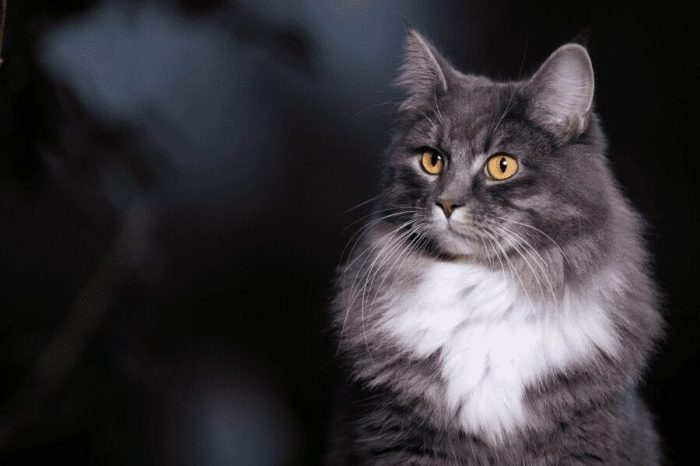
Source: cattitudedaily.com
British Shorthairs possess a round face, a hallmark of their breed, which contributes to a generally serious and stoic expression. Unlike the Persian’s perpetually frowning appearance, the British Shorthair’s expression is more subdued, often described as dignified or reserved. While both breeds can be perceived as “grumpy,” the British Shorthair’s demeanor is less overtly expressive. Subtle shifts in posture, such as a slight tilt of the head or a relaxed tail, can dramatically alter the perceived mood of a British Shorthair.
A cat curled up with its eyes closed might appear stern, but is likely deeply comfortable and content.
Russian Blues: The Intense Green Eyes and Reserved Nature
The striking, emerald-green eyes of the Russian Blue are a defining feature of the breed and can contribute to a perceived intensity. Combined with their generally reserved and independent nature, this can be easily mistaken for displeasure or aloofness. Russian Blues are often cautious around strangers and prefer a quiet environment, which further reinforces this perception. However, with their trusted humans, they are affectionate and playful, demonstrating a gentle and loyal personality.
- Behavior 1: Slow blinking – Often misinterpreted as annoyance, but is actually a sign of trust and affection.
- Behavior 2: Avoiding direct eye contact – Seen as rudeness, but is a sign of respect and non-confrontation in cat culture.
- Behavior 3: Quiet demeanor – Perceived as unhappiness, but is simply a reflection of their reserved nature.
- Behavior 4: Preference for solitude – Misunderstood as rejection, but is a sign of their independent spirit.
- Behavior 5: Hesitant approach to new people – Interpreted as distrust, but is a cautious assessment of potential threats.
Exotic Shorthairs: A Persian’s Face with a Shorter Coat
Exotic Shorthairs essentially inherit the facial structure of Persians, but with a shorter, plush coat. This means they share the same characteristic flat face, prominent nose, and deep-set eyes that contribute to the “grumpy” appearance. However, the shorter coat can soften the overall impression slightly, making them appear less severe than their Persian counterparts. The perceived expression often depends on the lighting and the cat’s current mood.
“I was convinced my Exotic Shorthair was constantly annoyed with me! He’d sit there with that serious expression, and I felt like I was always doing something wrong. It wasn’t until I started paying closer attention to his body language that I realized he was just incredibly relaxed and enjoying the sunbeam.”
Munchkins: The Low-Set Eyes and Unique Proportions
The Munchkin’s short legs and low-set eyes create a unique and somewhat unusual facial expression. The low-set eyes, combined with their distinctive proportions, can contribute to a perceived “serious” or even “unhappy” look. However, this is largely due to the novelty of their appearance and doesn’t necessarily reflect their personality. Munchkins are known for their playful and affectionate nature, often described as being full of energy and charm.
| Body Feature | Description | Potential Misinterpretation | Actual Behavior |
|---|---|---|---|
| Short Legs | Significantly shorter than average. | Appears hunched or sad. | Allows for playful pouncing and unique movements. |
| Low-Set Eyes | Eyes positioned lower on the face. | Creates a serious or concerned expression. | Enhances their ability to observe their surroundings. |
| Unique Proportions | Disproportionate body size due to short legs. | Can appear awkward or unhappy. | Contributes to their playful and energetic personality. |
| Compact Body | Small and sturdy build. | May appear stiff or unyielding. | Allows for agility and quick movements. |
Understanding Cat Body Language: Beyond the Face
It’s crucial to remember that facial expressions are just one piece of the puzzle when interpreting a cat’s mood. Focusing solely on the face can lead to inaccurate assumptions. The entire cat’s body language – including tail position, ear position, and posture – provides a more complete picture of their emotional state. A cat with a “grumpy” face might be perfectly relaxed if their tail is gently swaying and their ears are forward.
- Flattened Ears: Often misinterpreted as anger, but can indicate fear or anxiety.
- Dilated Pupils: Commonly associated with excitement or fear, not necessarily aggression.
- Slow Blinking: A sign of trust and affection, often referred to as a “cat kiss.”
- Tucked Tail: Indicates fear or submission.
- Relaxed Tail: Signifies contentment and comfort.
Breed-Specific Temperament vs. Individual Personality
While certain breeds may exhibit tendencies towards specific behaviors, it’s essential to distinguish between breed-specific temperament and individual personality. Just like humans, cats have unique personalities shaped by a variety of factors. Environmental influences and socialization play a significant role in shaping a cat’s behavior. A Persian cat raised in a loving and stimulating environment is likely to be more outgoing and playful than one raised in isolation.
- Early Socialization: Exposure to various people, animals, and environments during kittenhood.
- Genetics: Inherited traits from parents.
- Environment: The cat’s living conditions and surroundings.
- Health: Physical health can impact mood and behavior.
- Training and Enrichment: Mental and physical stimulation through play and interaction.
Illustrative Descriptions: Visualizing the “Angry” Cat
Imagine a Persian cat basking in a sunbeam, its face seemingly scowling. The lighting highlights the fur around its face, creating deep shadows that accentuate the flattened nose and deep-set eyes. The fur is thick and plush, giving the impression of a heavy, serious expression. However, upon closer inspection, the cat’s eyes are half-closed, and its body is completely relaxed, revealing a state of pure contentment.
Picture a Scottish Fold observing a bird outside a window, its folded ears framing a face with an intensely focused gaze. The cat is completely still, its body tense with anticipation. While the gaze might appear stern or displeased, it’s simply a reflection of the cat’s unwavering focus on its prey.
Visualize a British Shorthair curled up asleep on a plush cushion, its round face appearing stern and dignified. The fur is soft and dense, and the cat’s paws are tucked neatly beneath its body. Despite the serious expression, the cat is deeply comfortable and at peace, enjoying a restful slumber.
Last Word
Ultimately, while certain breeds might possess features that
-appear* stern or grumpy, it’s crucial to remember that a cat’s personality is a complex tapestry woven from breed tendencies, individual experiences, and environmental factors. Learning to read a cat’s entire body language – from tail flicks to ear positions – is key to truly understanding their feelings. So, the next time you encounter a cat with a seemingly disapproving expression, take a moment to look beyond the face and appreciate the unique individual beneath.
Hopefully, this journey has shed some light on the fascinating world of “angry looking cat breeds” and encouraged a deeper appreciation for the nuances of feline communication.
General Inquiries
Why do some people think Persians look angry?
Their flat faces, prominent noses, and deep-set eyes create a naturally furrowed brow appearance that can be misinterpreted as anger, even though they’re often relaxed.
Are Scottish Folds always grumpy?
Absolutely not! Their folded ears and intense gaze can be intimidating, but they are often sweet, affectionate, and playful cats.
Do British Shorthairs get along with children?
Generally, yes! They are known for their calm and tolerant nature, making them good companions for children, provided the children are respectful of the cat’s boundaries.
Why do Russian Blues seem so reserved?
They are naturally independent and can be a bit shy around strangers, but this doesn’t mean they’re unhappy. They often form strong bonds with their families.
What’s the best way to tell if my cat is actually angry?
Look for signs like flattened ears, dilated pupils, a twitching tail, hissing, or swatting. A truly angry cat will display a combination of these behaviors.

