Have you ever noticed a distinct “M” marking on a tabby cat’s forehead? It’s a charming and relatively common feature, sparking curiosity and even folklore across cultures. This isn’t just a random quirk; it’s a fascinating glimpse into the world of feline genetics, history, and the unique ways we connect with our furry companions. We’ll dive deep into the origins of this marking, explore the science behind it, and uncover the cultural significance it holds for cat lovers worldwide.
From ancient superstitions to modern online communities, the “M” marking has captured our attention. Understanding its genetic basis, how it manifests in different tabby types, and the stories surrounding it offers a richer appreciation for the incredible diversity within the cat world. We’ll also look at how to identify and describe this marking accurately, and explore which breeds are more likely to showcase this intriguing trait.
The Mysterious “M” on a Tabby’s Forehead: A Deep Dive
Have you ever noticed a distinct “M” shape on the forehead of a tabby cat? It’s a charming quirk that many cat lovers find endearing, but have you ever wondered about its origins, genetics, or cultural significance? This article explores the fascinating world of tabby cats with this unique marking, delving into its history, science, folklore, and more. We’ll unpack everything from the potential genetic roots to the superstitions surrounding these special felines.
The “M” marking isn’t just a cute coincidence; it’s a window into the complex world of feline genetics and cultural beliefs. Understanding this marking can deepen our appreciation for the diversity and beauty of our feline companions.
Origins and History of the “M” Forehead Marking
The “M” marking on tabby cats isn’t a recent phenomenon. Documented observations of this trait stretch back centuries, appearing in various regions across the globe. Early depictions in Egyptian art, dating back to ancient times, sometimes show cats with markings resembling the “M,” though interpretations can be subjective. In medieval Europe, folklore often associated cats with this marking with witchcraft or good luck, depending on the region and specific beliefs.
For example, in some parts of Scotland, a cat with a prominent “M” was considered a sign of good fortune, while in others, it was viewed with suspicion.
Genetic factors likely play a significant role in the development of the “M” marking. It’s believed to be linked to the agouti gene, which controls the distribution of pigment in the hair shaft, creating the banded pattern characteristic of tabby cats. The “M” likely arises from variations in how this gene is expressed, potentially influenced by other modifier genes that affect the intensity and placement of the markings.
While the exact gene interactions are still being researched, it’s thought that a combination of genes contributes to the visibility and prominence of the “M.”
Anecdotal evidence and folklore surrounding cats with the “M” marking are abundant. In Japan, these cats are sometimes considered messengers from the gods. In some Native American cultures, the marking is seen as a symbol of protection and guidance. These beliefs highlight the cultural significance of this seemingly simple marking and its connection to spirituality and symbolism.
The online discussion of this trait has significantly increased in recent years. Around 2010, online forums and social media groups began to emerge dedicated to sharing photos and stories of cats with the “M” marking. The hashtag #Mmarkings started gaining traction on platforms like Instagram and Facebook, creating a virtual community for cat lovers to connect and share their experiences.
This online visibility has fueled further interest and research into the phenomenon.
Genetic Basis and Inheritance Patterns
Understanding the “M” marking requires a grasp of the broader genetics of tabby patterns. Tabby patterns are controlled by the agouti gene (A), which determines whether a cat exhibits a banded pattern (tabby) or a solid color. The tabby gene has multiple alleles, with the dominant allele (A) producing the tabby pattern and the recessive allele (a) resulting in a solid color.
Within the tabby pattern, several other genes influence the specific type of tabby – classic, mackerel, ticked, and spotted – each with its own distinct characteristics.
While no single gene has been definitively identified as solely responsible for the “M” marking, it’s likely a complex interaction of genes, potentially including modifier genes that influence the expression of the agouti gene. These modifier genes could affect the intensity, shape, and placement of the markings, leading to the appearance of the “M.” Further research, including genetic sequencing, is needed to pinpoint the specific genes involved.
Let’s consider a hypothetical Punnett square to illustrate possible inheritance scenarios. Assume “M” is a dominant trait (represented by ‘M’) and its absence is recessive (‘m’). If both parents carry one copy of the ‘M’ gene (Mm), their offspring could inherit MM, Mm, or mm genotypes. This would result in approximately 75% of the offspring exhibiting the “M” marking (MM or Mm) and 25% without it (mm).
This is a simplified model, as the actual inheritance is likely more complex.
The “M” marking manifests differently across various tabby types. In classic tabbies, the “M” often appears within the swirling patterns. In mackerel tabbies, it’s typically found on the forehead, blending with the tiger-stripe pattern. Ticked tabbies may have a fainter “M” that’s less distinct, while spotted tabbies might have the “M” integrated into the spots.
Tabby Cat Types Exhibiting the “M” Marking
Here’s a table summarizing the appearance of the “M” marking across different tabby types:
| Cat Type | Description of “M” Marking | Common Coat Colors | Geographic Prevalence |
|---|---|---|---|
| Classic | Often appears within the swirling patterns, sometimes less distinct. | Brown, Gray, Cream, Tortoiseshell | Worldwide |
| Mackerel | Typically prominent on the forehead, blending with the tiger-stripe pattern. | Brown, Silver, Blue | Worldwide |
| Ticked | Fainter and less distinct, sometimes barely visible. | Abyssinian, Somali, various shades of brown and silver | Africa, Europe, North America |
| Spotted | Integrated into the spots, may appear as a cluster of spots forming an “M” shape. | Brown, Black, Silver | Worldwide |
The “M” marking in classic tabbies often appears as a subtle feature within the broader swirling pattern, sometimes requiring a closer look to discern. Mackerel tabbies typically display a more defined “M” on the forehead, seamlessly integrating with the characteristic tiger stripes. Ticked tabbies, known for their agouti hairs, often exhibit a fainter “M” that can be challenging to detect.
In spotted tabbies, the “M” might be represented by a grouping of spots, creating a visual approximation of the shape. Prevalence estimates vary, but it’s generally observed in around 20-30% of tabby cats, though this can fluctuate depending on breed and geographic location.
The prominence of the “M” marking can correlate with other physical characteristics within each tabby type. For instance, in mackerel tabbies, a bolder “M” might be associated with more defined and contrasting stripes. In classic tabbies, a more pronounced “M” could be linked to more intricate and swirling patterns.
Coat Colors and Patterns Associated with the “M” Marking
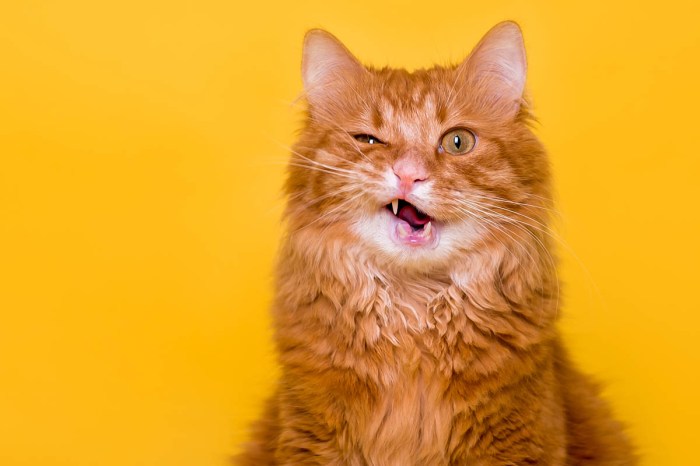
Source: cat-world.com
The “M” marking is observed across a wide spectrum of coat colors, including brown, gray, silver, cream, black, and blue. It’s particularly striking on darker coats, where the lighter shade of the “M” creates a noticeable contrast. The marking can also appear on tortoiseshell and calico cats, adding another layer of complexity to their already intricate patterns.
The “M” marking can interact with colorpoint patterns, creating unique and visually appealing combinations. In colorpoint tabbies, the “M” marking will be present within the darker points of the cat, often contrasting with the lighter body color. This creates a striking visual effect, highlighting the “M” within the colorpoint pattern.
On a mackerel tabby with a bold “M,” the marking stands out prominently against the backdrop of the tiger-like stripes, creating a focal point on the forehead. The contrast between the darker stripes and the lighter “M” enhances the visibility of the marking, making it a defining feature of the cat’s appearance.
Imagine a calico tabby. The “M” marking would be composed of a mixture of black, orange, and white patches, mirroring the overall calico pattern. The distribution of these colors within the “M” would be random, creating a unique and visually captivating design. The white patches might form a lighter Artikel around the black and orange, further accentuating the shape of the “M.”
Folklore, Superstitions, and Cultural Significance
Across cultures, cats with the “M” marking have been imbued with various superstitions and beliefs. In some European traditions, it was believed to be a sign of good luck and protection against evil spirits. Conversely, in other cultures, it was associated with bad luck or even witchcraft. These beliefs often stemmed from the cat’s mysterious nature and its perceived connection to the supernatural.
The origins of these beliefs are likely rooted in ancient folklore and mythology, where cats were often revered as sacred animals or feared as symbols of darkness. The “M” marking, being an unusual and distinctive feature, may have been interpreted as a sign of divine favor or a mark of the devil, depending on the cultural context.
In some cultures, the “M” marking is perceived as a sign of a special connection to the spiritual realm, while in others, it’s simply seen as a charming quirk. These varying perceptions highlight the diverse ways in which humans have interpreted and attributed meaning to the natural world.
“Long ago, it was said that a cat with an ‘M’ upon its brow was a guardian spirit, sent to watch over the household and protect it from harm. The clearer the ‘M,’ the stronger the protection it offered, and the more fortunate the family would be.”
Identifying and Describing the “M” Marking
Accurately identifying the “M” marking involves carefully examining the cat’s forehead for a distinct “M” shape formed by lighter or darker fur. Start by observing the forehead in good lighting conditions. Look for a pattern that resembles the letter “M,” even if it’s faint or asymmetrical. Consider the surrounding fur pattern and how it interacts with the potential “M” marking.
The “M” marking can vary significantly in appearance. It can be bold and clearly defined, faint and subtle, or asymmetrical, with one side of the “M” being more pronounced than the other. The shape can also vary, with some “M” markings being more angular and others more rounded.
Differentiating the “M” marking from other markings or blemishes is crucial. Birth defects or skin conditions can sometimes resemble the “M” marking. However, the “M” marking is typically a consistent pattern that appears within the tabby markings, while birth defects or skin conditions may be more irregular or patchy. If there’s any doubt about the nature of the marking, it’s always best to consult a veterinarian.
Here’s a descriptive scale for assessing the prominence of the “M” marking:
- Very Faint (1): Barely discernible, requires close inspection and good lighting.
- Slightly Visible (2): Can be seen with moderate effort, blending somewhat with the surrounding fur.
- Moderately Prominent (3): Clearly visible, distinct from the surrounding fur, but not overly bold.
- Bold (4): Easily recognizable, well-defined, and contrasting with the surrounding fur.
- Very Bold (5): Extremely prominent, striking, and a defining feature of the cat’s appearance.
Breed Prevalence and Specific Breeds
While the “M” marking can appear in various breeds, it’s more commonly observed in certain breeds, particularly those with strong tabby genetics. These include Maine Coons, American Shorthairs, and British Shorthairs. The prevalence is likely due to the selective breeding practices within these breeds, which have emphasized the preservation of tabby patterns.
Genetic factors within these breeds, such as the presence of specific alleles for the agouti gene and modifier genes, contribute to the marking’s prevalence. Breeders often select for cats with strong tabby markings, which can inadvertently increase the likelihood of the “M” marking appearing in subsequent generations.
The appearance of the “M” marking can vary slightly between breeds. In Maine Coons, it tends to be more prominent and well-defined, while in British Shorthairs, it might be slightly fainter and more subtle.
| Breed | Typical Coat Pattern | “M” Marking Prominence (Scale 1-5) |
|---|---|---|
| Maine Coon | Classic, Mackerel, Tabby | 3-5 |
| American Shorthair | Classic, Mackerel, Tabby | 2-4 |
| British Shorthair | Classic, Tabby | 1-3 |
Visual Characteristics and Detailed Descriptions
The texture of the “M” marking is typically smoother than the surrounding fur, often appearing as a slightly lighter or darker shade. The shading within the “M” can be subtle, with gradual transitions between the different colors. It interacts with the surrounding fur by creating a visual contrast, drawing attention to the forehead area.
The typical size of the “M” marking ranges from 1 to 3 centimeters in length, depending on the cat’s size and the prominence of the marking. The shape is generally symmetrical, resembling the letter “M,” but variations in width and angle are common.
Lighting conditions significantly affect the appearance of the “M” marking. In bright light, the marking may appear more distinct and contrasting, while in dim light, it might be less visible. The angle of the light can also influence the perceived shape and intensity of the marking.
Imagine a cat with a prominent “M” marking on a dark brown tabby coat. The “M” appears as a patch of lighter brown fur, creating a striking contrast against the darker stripes. The edges of the “M” are slightly blurred, giving it a soft and velvety texture. The interplay of light and shadow accentuates the shape of the “M,” making it a focal point of the cat’s face.
The surrounding fur is dense and plush, further enhancing the visual impact of the marking.
Distinguishing from Similar Markings
Differentiating the “M” marking from birth defects or skin conditions requires careful observation and, if necessary, veterinary consultation. Birth defects, such as congenital dermal melanocytosis, can sometimes resemble the “M” marking, but they are typically more irregular and patchy. Skin conditions, such as pigmentary rust, may also create markings on the forehead, but they are often accompanied by other symptoms, such as itching or inflammation.
The characteristics that distinguish the “M” marking from simple pigmentation variations include its consistent “M” shape and its integration within the tabby pattern. Pigmentation variations are often more random and less defined, lacking the distinct pattern of the “M” marking.
If there’s any doubt about the nature of the marking, it’s always best to consult a veterinarian. They can perform a thorough examination and rule out any underlying medical conditions.
| “M” Marking Characteristics | Characteristics of Similar Markings (e.g., Birth Defect) |
|---|---|
| Consistent “M” shape | Irregular, patchy |
| Integrated within tabby pattern | Independent of tabby pattern |
| No associated symptoms | May be accompanied by itching, inflammation, or other symptoms |
Online Communities and Shared Experiences
Online communities dedicated to cats with the “M” marking have flourished in recent years, providing a platform for cat owners to connect, share photos, and exchange information. These communities, primarily found on social media platforms and online forums, have become a valuable resource for cat lovers seeking to learn more about this unique trait.
Within these communities, members share a wide range of information and support, including genetic insights, folklore interpretations, care tips, and heartwarming stories. They also provide a sense of camaraderie and belonging for cat owners who share a common interest in these special felines.
One story shared within these communities involved a cat named Luna, whose owner noticed the “M” marking only after adopting her from a shelter. The owner’s post about Luna went viral, sparking a wave of similar stories and inspiring others to appreciate the unique beauty of their own cats.
Here’s a list of common questions asked within these online communities, categorized by topic:
- Genetics: “Is the ‘M’ marking hereditary?”, “What are the chances of my kitten inheriting the marking?”, “Are there specific breeds more likely to have the ‘M’?”
- Folklore: “What are the superstitions surrounding cats with the ‘M’ in different cultures?”, “Does the ‘M’ marking have any spiritual significance?”
- Care: “Does the ‘M’ marking require any special care?”, “Are there any health concerns associated with the marking?”
- Identification: “How can I be sure it’s an ‘M’ marking and not something else?”, “What are the different variations of the ‘M’ marking?”
Final Wrap-Up
Our journey into the world of tabby cats with an “M” on their forehead reveals a captivating blend of science, history, and cultural beliefs. It’s a reminder that even seemingly small details in our pets can hold a wealth of information and spark our imaginations. Whether you’re a seasoned cat enthusiast or simply curious about this unique marking, we hope this exploration has deepened your appreciation for the wonders of feline genetics and the special bond we share with these beloved animals.
Keep an eye out – you might just spot an “M” on your next feline encounter!
Clarifying Questions
Why do some tabby cats have an “M” on their forehead?
The “M” marking is a result of the tabby pattern itself, specifically related to the agouti gene which controls banding patterns in the fur. The “M” is essentially a darker band of pigment that appears on the forehead, a natural part of the tabby design.
Is the “M” marking always symmetrical?
No, the “M” marking can vary significantly. It can be faint, bold, perfectly symmetrical, or slightly asymmetrical. The shape and size are influenced by genetics and individual variation.
Does the color of the “M” always match the cat’s other markings?
Generally, yes. The color of the “M” will typically be a shade of the cat’s tabby markings. However, in colorpoint cats, the “M” might be a lighter shade than the rest of the body.
Are cats with an “M” on their forehead considered lucky?
In some cultures, particularly in Japan, cats with an “M” marking are believed to bring good luck and are considered sacred. However, beliefs vary widely across different cultures.
Can I tell if my cat has an “M” marking if they have long fur?
It can be more challenging with long fur, but careful observation in good lighting can often reveal the marking. You might need to part the fur slightly to see it clearly.
Is the “M” marking a sign of a health problem?
No, the “M” marking is a normal genetic trait and not indicative of any health issues. However, if you notice any unusual skin conditions or lesions, it’s always best to consult a veterinarian.
What’s the difference between an “M” marking and a birth defect?
The “M” marking is a distinct pattern within the tabby markings. Birth defects often present as irregular patches of missing or discolored fur, or other abnormalities. If you’re unsure, a vet can provide a definitive diagnosis.

