Cat Stainless Steel Drinking Fountain Keeping Your Feline Hydrated

Let’s face it, getting our cats to drink enough water can be a challenge! Thankfully, the rise of pet hydration solutions has brought us amazing options like stainless steel drinking fountains. These aren’t just a trendy gadget; they’re a smart way to encourage your cat to stay properly hydrated, which is vital for their overall health. Compared to plastic, stainless steel offers a safer, more durable, and tastier option for your furry friend, and the variety of styles – from simple gravity-fed designs to sophisticated electric and filtered models – means there’s a fountain out there for every cat and home.
We’ll dive deep into the world of stainless steel cat fountains, exploring the different types, their benefits, and how to choose the perfect one for your feline companion. From understanding the importance of flowing water to mastering fountain maintenance, this guide will equip you with everything you need to ensure your cat enjoys fresh, clean water, all while adding a touch of style to your home.
Introduction to Cat Stainless Steel Drinking Fountains
The way we care for our feline companions is constantly evolving, and hydration is a key area of focus. More and more cat owners are recognizing the importance of encouraging their cats to drink enough water, and the popularity of pet water fountains has skyrocketed as a result. These fountains offer a fresh, appealing water source that can significantly boost a cat’s daily intake.
But with so many options available, choosing the right one can feel overwhelming. This article will delve into the world of stainless steel cat drinking fountains, exploring their benefits, different types, and everything you need to know to make an informed decision.Stainless steel has emerged as the preferred material for these fountains, and for good reason. Compared to plastic, stainless steel is inherently more hygienic, durable, and doesn’t impart any unwanted tastes or odors to the water.
Plastic fountains can harbor bacteria and are prone to scratching, which creates tiny crevices where bacteria can thrive. Stainless steel, on the other hand, is non-porous, easy to clean, and resists bacterial growth. It’s also a much more robust material, meaning your fountain will last longer and withstand the occasional bump or nudge from a curious cat.
Finally, the taste of water from a stainless steel fountain is simply purer – cats are sensitive to taste, and they’re more likely to drink from a fountain that doesn’t have a plastic smell or taste. We’ll cover the main types – gravity, electric, and filtered – to help you understand the options.
Types of Stainless Steel Cat Drinking Fountains: A Comparative Look
Source: ebayimg.com
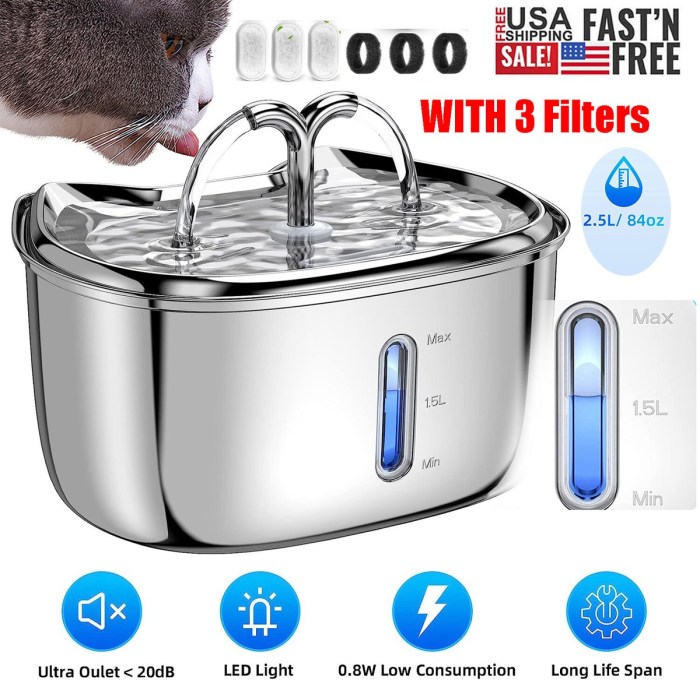
The market offers a variety of stainless steel cat fountains, each with its own advantages and disadvantages. The primary distinction lies in their power source and filtration capabilities. Understanding these differences is crucial for selecting a fountain that aligns with your cat’s personality and your household setup.Gravity-fed fountains rely on the natural force of gravity to dispense water, while electric-powered fountains use a pump to circulate the water.
Gravity fountains are simple, quiet, and don’t require electricity, making them ideal for cats who are easily startled by noise or for households looking to conserve energy. However, they can be less consistent in water flow and may not be suitable for multi-cat households where demand is high. Electric fountains offer a more consistent flow and often include features like multiple drinking bowls and timers.
They are generally more effective at encouraging cats to drink, but the pump can create a slight humming noise, and they require a power outlet.Filtered stainless steel fountains take hygiene a step further by incorporating a filter to remove impurities and improve water quality. These filters typically consist of multiple layers, including activated carbon to remove odors and chlorine, and a sponge to catch debris.
While non-filtered fountains are generally more affordable, filtered options provide cleaner, fresher water, which is particularly beneficial for cats with sensitive stomachs or those prone to urinary issues. However, filters need to be replaced regularly, adding to the ongoing cost of ownership.
| Model Name | Key Features | Price Range |
|---|---|---|
| PetSafe Drink & Go Stainless Steel Fountain | Gravity-fed, 1.5-liter capacity, simple to clean | $20 – $30 |
| Catit Flower Fountain | Electric, 3-liter capacity, replaceable filter, quiet operation | $35 – $50 |
| A2S Auto Pet Feeder Water Fountain | Electric, 2.5-liter capacity, dual filtration system, timer function | $45 – $65 |
| Pioneer Pet Raindrop Fountain | Electric, 2-liter capacity, top water reservoir, ceramic filter | $30 – $45 |
| AmazonBasics Stainless Steel Pet Water Fountain | Electric, 2-liter capacity, simple design, easy to disassemble | $25 – $40 |
Health Benefits of Using a Stainless Steel Fountain for Cats
Encouraging adequate water intake is paramount to a cat’s overall health. Many cats don’t drink enough water, which can lead to dehydration and increase the risk of urinary tract problems, kidney disease, and other health issues. Stainless steel fountains offer a compelling solution to this problem.The design of a flowing water fountain naturally encourages cats to drink more.
Cats are instinctively drawn to moving water, as it mimics the fresh water sources they would encounter in the wild. The constant movement and aeration of the water make it more appealing and refreshing than still water in a bowl. This increased water intake can significantly improve hydration levels, particularly in cats who are prone to dehydration.Beyond encouraging increased consumption, stainless steel itself contributes to better hygiene.
Unlike plastic, stainless steel is non-porous, meaning it doesn’t harbor bacteria or mold. This reduces the risk of bacterial contamination and ensures that your cat is drinking clean, safe water. Regular cleaning, of course, is still essential, but the inherent properties of stainless steel provide a significant advantage over plastic alternatives.Improved hydration plays a crucial role in feline urinary health.
Adequate water intake helps dilute urine, reducing the concentration of minerals and preventing the formation of crystals and stones. This can significantly lower the risk of urinary tract infections, cystitis, and other painful conditions. Furthermore, proper hydration supports healthy kidney function, helping the kidneys efficiently filter waste products from the body.
Features to Consider When Choosing a Fountain
Selecting the right stainless steel cat fountain involves more than just considering the power source and filtration. Several other features can significantly impact your cat’s enjoyment and your overall satisfaction with the product. Prioritizing these features based on your cat’s needs and your lifestyle is key.Ease of cleaning is a top priority for most cat owners. Look for a fountain that can be easily disassembled and reassembled, with minimal small parts that can be lost.
Stainless steel’s inherent ease of cleaning is a major advantage, but the design of the fountain itself should facilitate thorough cleaning. Quiet operation is another important factor, especially if you have a cat who is easily startled or if the fountain will be located in a bedroom. Electric fountains can sometimes produce a humming noise, so read reviews carefully to assess the noise level.
Filter replacement accessibility is also crucial. The filter should be easy to locate and replace, and the fountain should provide clear instructions on filter change intervals.A stable base is essential to prevent tipping and spills. Cats can be surprisingly clumsy, and a wobbly fountain can easily be knocked over, creating a mess and potentially scaring your cat. Look for a fountain with a wide base and non-slip feet.To help you prioritize, consider this checklist based on different cat owner priorities:
- Multi-Cat Households: Large capacity (3+ liters), multiple drinking bowls, durable construction.
- Elderly Cats: Shallow water level, gentle flow, easy access.
- Cats with Specific Health Needs (e.g., urinary issues): Filtered fountain, consistent water flow, easy to clean.
- Cats Prone to Tipping: Wide, stable base, non-slip feet.
- Noise-Sensitive Cats: Gravity-fed fountain or electric fountain with quiet operation.
- Budget-Conscious Owners: Gravity-fed fountain or electric fountain with readily available and affordable filters.
Cleaning and Maintenance of Stainless Steel Cat Fountains
Maintaining a stainless steel cat fountain is relatively straightforward, but consistent cleaning and filter replacement are essential for ensuring your cat’s health and the fountain’s longevity. A regular cleaning routine will prevent the buildup of bacteria, algae, and mineral deposits.To thoroughly clean a stainless steel fountain, begin by unplugging the electric pump (if applicable). Disassemble the fountain into its individual components – the reservoir, the pump housing, the drinking bowl, and any filters.
Wash each component with warm, soapy water, using a soft sponge or cloth to avoid scratching the stainless steel. Rinse thoroughly to remove all traces of soap. For stubborn stains or mineral deposits, you can use a mild vinegar solution (1 part vinegar to 10 parts water). Avoid harsh chemicals or abrasive cleaners, as these can damage the stainless steel.
Reassemble the fountain after all components are completely dry.Filters should be cleaned and replaced regularly. Rinse the sponge filter under running water to remove debris. Activated carbon filters typically cannot be cleaned and should be replaced every 2-4 weeks, depending on usage and water quality. Follow the manufacturer’s instructions for filter replacement.Mineral buildup, or scale, can occur over time due to the deposition of minerals from the water.
To remove scale, soak the stainless steel components in a mild vinegar solution for a few hours, then scrub gently with a soft brush. Rinse thoroughly.
Addressing Common Issues and Troubleshooting
Even with proper maintenance, issues can occasionally arise with cat fountains. Knowing how to troubleshoot common problems can save you time and frustration.Reduced water flow is a frequent complaint. This can be caused by a clogged filter, a buildup of mineral deposits in the pump, or a malfunctioning pump. Start by checking and cleaning the filter. If the filter is clean, inspect the pump for mineral deposits and clean it with a vinegar solution.
If the pump still isn’t working properly, it may need to be replaced.Unusual noises, such as gurgling or rattling, can indicate air in the pump or a loose component. Try unplugging the fountain, tilting it to release any trapped air, and then plugging it back in. Ensure all components are securely assembled.Filter clogging is a common issue, especially with hard water.
Replace the filter more frequently if you notice it clogging quickly.Here’s a flowchart to illustrate troubleshooting steps for a fountain that isn’t dispensing water:
- Is the fountain plugged in? Yes -> Proceed to step 2. No -> Plug in the fountain and check if it’s working.
- Is the pump working? Yes -> Proceed to step 3. No -> Check the pump for clogs or damage. Replace if necessary.
- Is the filter clogged? Yes -> Replace the filter. No -> Check for mineral buildup in the pump and clean if necessary.
- Still not dispensing water? Contact the manufacturer for support.
Design and Aesthetics: Integrating a Fountain into Your Home
A stainless steel cat fountain doesn’t have to be an eyesore. Many modern designs are sleek and stylish, seamlessly integrating into various home décor styles. The clean lines and minimalist aesthetic of stainless steel complement contemporary, modern, and even Scandinavian interiors.Consider placement carefully. The fountain should be located in a quiet, accessible area where your cat feels comfortable drinking.
Avoid placing it near loud appliances or in high-traffic areas. Ensure the fountain is easily accessible to all cats in the household.Stainless steel finishes offer different visual appeals. Brushed stainless steel has a more industrial, textured look, while polished stainless steel has a sleek, reflective finish. Choose a finish that complements your existing décor.
Stainless Steel Fountain Materials and Construction
The quality of a stainless steel cat fountain depends heavily on the grade of stainless steel used and the overall construction. Different grades of stainless steel offer varying levels of durability and corrosion resistance.stainless steel is the most common grade used in cat fountains. It offers good corrosion resistance and is generally considered food-grade. However, 316 stainless steel is even more corrosion-resistant and is often used in marine applications.
While more expensive, 316 stainless steel provides superior durability and longevity.Food-grade stainless steel is essential to ensure that the fountain doesn’t leach harmful chemicals into the water. Look for fountains that are explicitly labeled as food-grade.The construction of the pump and motor components is also a key indicator of quality. Look for pumps with ceramic bearings, as these are more durable and quieter than plastic bearings.
A sealed motor housing protects the motor from water damage and extends its lifespan.
Illustrations and Visual Descriptions
Imagine a cat, a sleek Siamese, gracefully lapping at the flowing water of a stainless steel fountain. Its posture is relaxed and confident, its tail gently swaying as it drinks. The water cascades down the fountain’s tiered design, creating a shimmering, inviting stream. The fountain itself is brushed stainless steel, its clean lines reflecting the surrounding light. The overall impression is one of tranquility and well-being.Now, picture a close-up view of the fountain’s filter.
It’s a multi-layered construction, starting with a coarse sponge to catch larger debris, followed by a layer of activated carbon to absorb odors and chlorine, and finally a fine mesh filter to remove smaller particles. The layers are clearly visible, demonstrating the fountain’s commitment to providing clean, filtered water.Finally, visualize a diagram illustrating the internal components of an electric fountain.
The diagram labels each part: the reservoir, the pump, the motor, the impeller, the tubing, and the drinking bowl. The impeller, a small rotating wheel, is shown drawing water from the reservoir and pushing it through the tubing to the drinking bowl. The motor, housed in a sealed compartment, powers the pump. The diagram clearly explains the function of each component, providing a comprehensive understanding of the fountain’s operation.
Cost Considerations and Value
The initial cost of a stainless steel cat fountain can range from $20 to $100 or more, depending on the features and brand. However, it’s important to consider the long-term costs, including filter replacements and potential repairs. While the initial investment may be higher than a simple plastic water bowl, the benefits of improved hydration, better hygiene, and increased durability often outweigh the cost.The ongoing cost of filter replacements is a significant factor.
Activated carbon filters typically need to be replaced every 2-4 weeks, while sponge filters may last longer. The cost of filters can range from $5 to $20 per replacement. Potential repairs, such as replacing a faulty pump, should also be factored into the equation.Here’s a table outlining the total cost of ownership for three different fountain models over two years:
| Model Name | Total Cost of Ownership |
|---|---|
| PetSafe Drink & Go Stainless Steel Fountain | $120 – $180 |
| Catit Flower Fountain | $150 – $250 |
| A2S Auto Pet Feeder Water Fountain | $200 – $350 |
Investing in a durable, hygienic, and cat-friendly water fountain is an investment in your cat’s health and well-being. The long-term benefits of improved hydration and reduced risk of health problems make a stainless steel fountain a worthwhile purchase.
Outcome Summary
Ultimately, investing in a stainless steel cat drinking fountain is an investment in your cat’s well-being. Beyond the convenience and aesthetic appeal, these fountains offer a significant boost to hydration, which can positively impact urinary health and kidney function. By carefully considering your cat’s personality, your household setup, and the fountain’s features, you can create a happy, healthy, and hydrated feline friend – and enjoy the peace of mind knowing you’re providing them with the best possible care.
So, whether you’re dealing with a picky drinker or simply want to enhance your cat’s water intake, a stainless steel fountain is a fantastic solution. With proper maintenance and a little research, you can find the perfect fountain to keep your cat purring with contentment and staying wonderfully hydrated!
Essential FAQs
How often should I clean my stainless steel cat fountain?
A thorough cleaning (disassembly, washing all parts) should be done weekly. Daily rinsing of the bowl is also a good idea to prevent algae buildup.
What kind of stainless steel is safe for my cat?
Always look for fountains made with food-grade stainless steel (typically 304 or 316 grade). This ensures it’s free from harmful chemicals.
My cat is scared of the fountain’s noise. What can I do?
Choose a quieter model, place the fountain on a soft surface to dampen vibrations, or try moving it to a less sensitive area of your home.
How do I know when to replace the filter?
Most filters need replacing every 2-4 weeks, depending on usage. Look for signs like reduced water flow or a noticeable change in water taste.
Can I use vinegar to remove mineral buildup?
Yes, a diluted vinegar solution (1 part vinegar to 3 parts water) can effectively remove scale. Rinse thoroughly afterward.
My fountain stopped dispensing water. What’s the first thing I should check?
Check the water level, ensure the pump is properly submerged, and inspect the filter for clogs.
