Mackerel Tabby Orange Cats A Detailed Look at Genetics & Beauty

The vibrant combination of a mackerel tabby pattern and a warm orange hue makes these cats truly captivating. From their striking stripes to the range of orange shades they display, mackerel tabby orange cats are a visual delight. But beyond their beauty lies a fascinating world of genetics, breed variations, and even cultural significance. We’ll dive deep into everything you need to know about these charming felines, exploring their unique characteristics and the science behind their stunning appearance.
Understanding the genetics behind the orange coloration and the distinctive mackerel tabby pattern is key to appreciating the diversity within this group. We’ll explore how the “O” gene works, the differences between male and female inheritance, and how breeders can work to produce these sought-after kittens. Plus, we’ll uncover some fun facts about orange cats and their place in folklore and popular culture.
The Allure of the Mackerel Tabby Orange Cat
The combination of fiery orange fur, the distinctive swirling patterns of a mackerel tabby, and the inherent charm of a feline companion is a truly captivating sight. These cats are often described as having a unique personality, and their striking appearance makes them a favorite among cat lovers worldwide. This article delves into the fascinating world of the mackerel tabby orange cat, exploring their genetics, common breeds, care requirements, and the cultural significance they hold.
Defining the “Mackerel Tabby Orange” Cat
The “mackerel tabby orange” cat is a delightful blend of three distinct characteristics: the vibrant orange coloration, the classic tabby pattern, and specifically, the mackerel tabby pattern. Physically, these cats boast a coat ranging from pale creams to deep, rich reds, often with a warm, golden undertone. The mackerel tabby pattern manifests as narrow, parallel stripes running vertically down the sides of the body, resembling the bones of a mackerel fish – hence the name.
The intensity of the orange color can significantly influence how the tabby markings appear; a lighter orange will showcase more subtle markings, while a deeper orange will create a bolder contrast.The orange coloration in cats is linked to the “O” gene, which is located on the X chromosome. This gene controls the production of pheomelanin, the pigment responsible for orange and red hues.
Female cats (XX) need two copies of the orange gene to be orange, while male cats (XY) only need one. This explains why orange cats are significantly more likely to be male – roughly 80% of orange cats are male. Variations in the orange shade are due to modifications of the O gene and the presence of other genes that dilute or intensify the color.
| Color Shade | Description | Common Breed Association | Potential Personality Traits |
|---|---|---|---|
| Pale Cream | A soft, almost apricot hue with subtle tabby markings. | British Shorthair, Persian | Gentle, laid-back, affectionate. |
| Light Orange | A brighter orange with well-defined, but not overly bold, stripes. | American Shorthair, Maine Coon | Playful, curious, friendly. |
| Golden Orange | A warm, golden-toned orange with rich, dark stripes. | Scottish Fold, Norwegian Forest Cat | Independent, intelligent, loyal. |
| Deep Red | A vibrant, almost copper-red orange with strong, contrasting stripes. | Bengal, Abyssinian | Energetic, active, vocal. |
| Apricot | A muted orange with a slightly pinkish tint. | Exotic Shorthair, Ragdoll | Docile, sweet-tempered, adaptable. |
Mackerel Tabby Pattern Explained
The defining feature of the mackerel tabby pattern is its resemblance to the stripes of a mackerel fish. Unlike the classic tabby pattern, which features swirling, blotchy markings, or the ticked tabby pattern, which has an agouti effect with bands of color on individual hairs, the mackerel pattern consists of narrow, parallel stripes running vertically along the cat’s body. These stripes are typically darker than the base coat color.On an orange cat, the mackerel pattern appears as a series of vertical stripes in a darker shade of orange or brown.
The stripes are usually quite narrow and evenly spaced, creating a distinct “striped” appearance. The width of the stripes can vary, but they generally remain consistent along the body.A characteristic marking often seen in mackerel tabbies is the “necklace” – a darker band of fur that encircles the neck. This marking is considered a significant feature of the mackerel pattern and is often used to identify it.
It’s a visual cue that helps distinguish it from other tabby variations.Imagine a cat standing sideways. The mackerel pattern would appear as a series of closely spaced, vertical stripes running from the shoulders to the tail. The stripes are not perfectly straight; they have a slight wave or curve, mimicking the natural pattern of fish scales. “Ghost” markings, which are fainter, less defined versions of the stripes, can often be seen, particularly on the flanks and legs.
These ghost markings add depth and complexity to the pattern, creating a subtle visual texture. The density of the stripes can also vary; some cats have very bold, dark stripes, while others have more subtle, lighter markings.
Orange Color Genetics in Detail
The genetic mechanism behind orange (ginger) coloration in felines revolves around the “O” gene, a sex-linked gene located on the X chromosome. This gene has two alleles: “O” for orange and “o” for non-orange (black or brown). As mentioned earlier, female cats have two X chromosomes (XX), meaning they need two copies of the “O” allele to be orange. Male cats have one X and one Y chromosome (XY), so they only need one “O” allele to express the orange color.The probability of a male cat being orange is significantly higher than that of a female cat.
A male only needs to inherit the “O” allele from one parent to be orange. A female, however, needs to inherit the “O” allele from both parents. This explains the roughly 80/20 male-to-female ratio of orange cats.Diluted orange shades, often referred to as “cream,” are the result of a separate gene, the “D” gene, which dilutes the intensity of the pigment.
The “D” allele allows for full pigment expression (orange), while the recessive “d” allele dilutes the pigment, resulting in a cream color.Here’s a flowchart illustrating the inheritance of the orange gene:
- Parent 1: Female (XOXo)
-Carrier of orange - Parent 2: Male (XO)
-Orange - Possible Offspring:
- Female (XO): Orange
- Female (XoXo): Non-Orange
- Male (XO): Orange
- Male (XoY): Non-Orange
This simplified flowchart demonstrates how the combination of alleles can result in different outcomes for the offspring’s coat color. More complex scenarios involving multiple generations and different allele combinations are possible, but this provides a basic understanding of the inheritance pattern.
Breeds Commonly Featuring “Mackerel Tabby Orange”
Several cat breeds frequently exhibit the striking combination of mackerel tabby markings and orange coloration. Here are ten breeds where this combination is commonly observed:
- Maine Coon: Known for their large size and gentle nature, Maine Coons often display a beautiful mackerel tabby orange pattern.
- American Shorthair: A classic American breed, the American Shorthair can be found in a variety of colors and patterns, including the mackerel tabby orange.
- Norwegian Forest Cat: These hardy cats are well-suited to cold climates and often sport a stunning mackerel tabby orange coat.
- Abyssinian: While often associated with ticked tabby patterns, Abyssinians can also display a mackerel tabby orange variation.
- Bengal: Bred to resemble a wild cat, Bengals frequently showcase bold mackerel tabby orange markings.
- Scottish Fold: The unique folded ears of the Scottish Fold are often paired with a beautiful mackerel tabby orange coat.
- British Shorthair: These round-faced cats are known for their calm demeanor and can be found in a variety of colors, including mackerel tabby orange.
- Exotic Shorthair: A short-haired version of the Persian, the Exotic Shorthair can also display the mackerel tabby orange pattern.
- Ragdoll: Known for their docile and affectionate nature, Ragdolls can occasionally be found with a mackerel tabby orange coat.
- Turkish Van: This breed is known for its distinctive white body and colored markings, which can include a mackerel tabby orange pattern on the head and tail.
| Breed Name | Origin | Size | Typical Temperament | Distinguishing Features |
|---|---|---|---|---|
| Maine Coon | United States | Large | Gentle, playful, intelligent | Large size, long fur, bushy tail |
| Bengal | United States | Medium-Large | Energetic, active, curious | Spotted or marbled coat, wild appearance |
| Scottish Fold | Scotland | Medium | Sweet, affectionate, playful | Folded ears |
| Abyssinian | Ethiopia (likely) | Medium | Active, intelligent, curious | Ticked coat, graceful build |
| Turkish Van | Turkey | Medium | Playful, intelligent, affectionate | White body with colored markings, distinctive head shape |
Variations and Uncommon Combinations
The appearance of white markings, such as mittens, socks, or a bib, on a mackerel tabby orange cat can create a striking contrast and add to its overall charm. These white markings often accentuate the tabby pattern, making it even more visible.Eye color also plays a significant role in the visual appeal of this color combination. Green eyes can create a vibrant, almost mystical look, while gold or copper eyes add warmth and intensity.
The contrast between the orange coat and the eye color can be truly captivating.While the mackerel tabby orange combination is relatively common, certain variations are quite rare. A cat with exceptionally bold, dark stripes, or an unusual eye color (such as heterochromia – two different colored eyes) is considered a particularly striking variation.
Imagine a mackerel tabby orange cat with a rich, deep red coat, bold, evenly spaced stripes, and mesmerizing golden eyes. Its fur is thick and plush, with a subtle sheen that catches the light. The “necklace” marking is prominent and perfectly symmetrical. The paws are adorned with delicate white “mittens,” and the tail is long and bushy, with a darker stripe running down its length. This cat exudes confidence, warmth, and an undeniable air of feline elegance.
Caring for an Orange Tabby Cat
Caring for an orange tabby cat generally follows the same guidelines as caring for any cat, but breed-specific needs should always be considered. Regular feeding with high-quality cat food, fresh water, and a clean litter box are essential.While there’s no definitive evidence that orange cats are predisposed to specific health concerns, it’s always important to be vigilant and monitor for any signs of illness.
Regular veterinary checkups are crucial for preventative care.Grooming requirements depend on the cat’s coat length and texture. Short-haired orange tabby cats require minimal grooming, while long-haired varieties benefit from regular brushing to prevent mats and tangles.Enriching the environment of an orange tabby cat is vital for their physical and mental well-being. Provide plenty of toys, scratching posts, and opportunities for play and interaction.
Puzzle feeders and interactive games can help keep them mentally stimulated.
The Cultural Significance of Orange Cats
Orange cats hold a unique place in folklore and popular culture. In some cultures, they are considered lucky and bring good fortune. In others, they are associated with warmth, creativity, and playfulness.Orange cats are frequently portrayed in popular media, from movies and books to internet memes. Their distinctive appearance and often affectionate personalities make them endearing characters.Orange tabby cats often have a reputation for being particularly affectionate and playful, although this is likely a combination of genetics, breed characteristics, and individual personality.Here are five famous fictional orange cats:
- Garfield: The famously lazy and sarcastic comic strip cat.
- Hobbes: Calvin’s imaginative tiger companion from the Calvin and Hobbes comic strip.
- Church: The quirky and intelligent cat from the movie “Harry and the Hendersons.”
- Pumpkin: The sweet and playful cat from the movie “A Whisker Away.”
- Cheddar: The orange tabby cat from the YouTube channel “Cole and Marmalade.”
Visualizing the Pattern: Detailed Descriptions
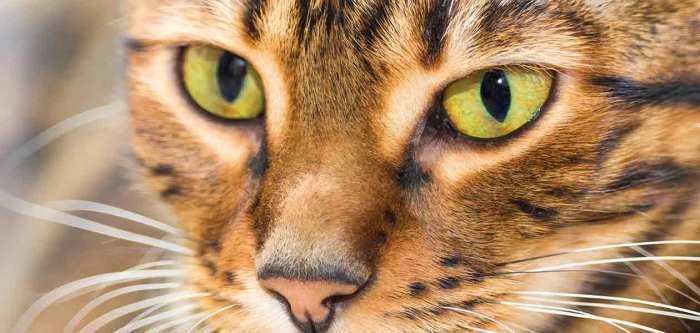
Source: thehappycatsite.com
On the face of a mackerel tabby orange cat, the markings typically begin around the eyes, forming distinct stripes that extend towards the nose. These stripes are often slightly blurred or faded around the eyes, creating a softer appearance. The markings around the mouth are usually more defined, with a darker stripe running along the upper lip.The pattern flows down the body in a series of vertical stripes, becoming more pronounced along the flanks.
The leg markings are typically narrower and less defined than those on the body, but still contribute to the overall striped appearance. The tail is usually striped from base to tip, with a darker stripe running down the center.The paws and ears also display the mackerel tabby pattern, although the markings are often more subtle. The ears may have a darker stripe running down the center, while the paws may have faint stripes on the sides.The coat of a mackerel tabby orange cat is typically medium-length and dense, with a soft, plush texture.
The fur has a subtle sheen, reflecting light and adding to the cat’s overall elegance. The density of the fur can vary depending on the breed, with some cats having a thicker, more luxurious coat than others.
Distinguishing from Similar Patterns
Distinguishing a mackerel tabby orange cat from other tabby variations requires careful observation of the pattern’s structure. Compared to a classic tabby orange cat, which features swirling, blotchy markings, the mackerel tabby has distinct, parallel stripes. The key difference lies in the pattern’s overall appearance – stripes versus swirls.A ticked tabby orange cat exhibits a different pattern altogether. Instead of stripes or swirls, ticked tabbies have individual hairs with alternating bands of color, creating a “salt-and-pepper” effect.
The underlying pattern structure is fundamentally different.To differentiate a mackerel tabby orange cat from a spotted tabby orange cat, look for the presence of distinct spots rather than stripes. Spotted tabbies have irregular, circular markings scattered across their body, while mackerel tabbies have continuous, vertical stripes.
| Pattern Type | Description | Key Distinguishing Feature |
|---|---|---|
| Mackerel | Narrow, parallel vertical stripes. | Continuous, vertical stripes resembling fish bones. |
| Classic | Swirling, blotchy markings. | Circular or swirling patterns. |
| Spotted | Irregular, circular markings. | Distinct spots scattered across the body. |
Breeding Considerations for Mackerel Tabby Orange Cats
Breeding for the specific combination of mackerel tabby markings and orange coloration requires careful consideration of genetics. Breeders need to understand the inheritance patterns of both the “O” gene (orange color) and the tabby gene.Potential challenges include ensuring that both parents carry the necessary genes for the desired traits and avoiding unintended consequences, such as producing non-orange kittens or kittens with different tabby patterns.
The rewards, however, can be significant – producing healthy, beautiful kittens with the sought-after mackerel tabby orange appearance.Genetic testing plays a crucial role in ensuring the health and quality of kittens. Testing can identify carriers of recessive genes and help breeders make informed decisions about breeding pairs.Here’s a list of essential genetic tests for breeders of orange tabby cats:
- Orange Carrier Test: Determines if a cat carries the recessive “o” allele for non-orange color.
- Dilute Carrier Test: Identifies carriers of the recessive “d” allele for diluted colors (cream).
- Tabby Pattern Test: Identifies the presence of different tabby alleles (Agouti, Tabby, etc.).
- Health Screening Tests: Tests for common feline diseases, such as FeLV and FIV.
Epilogue
From the subtle nuances of color shades to the intricate details of their stripe patterns, the mackerel tabby orange cat is a testament to the beauty and complexity of feline genetics. Whether you’re a seasoned cat enthusiast, a prospective owner, or simply curious about these delightful creatures, we hope this exploration has deepened your appreciation for the unique charm of the mackerel tabby orange cat.
Their affectionate personalities and striking looks make them truly special members of the cat world.
So, next time you encounter a gorgeous orange tabby with those telltale stripes, you’ll have a better understanding of the fascinating story behind their appearance – a story woven with genetics, breed characteristics, and a touch of feline magic!
FAQ Summary
Why are most orange tabby cats male?
Orange coloration is linked to the X chromosome. Males (XY) only need one X chromosome with the orange gene to be orange, while females (XX) need two. This makes orange females less common.
What’s the difference between a “necklace” marking and other stripes?
The “necklace” is a distinctive marking around the throat of a mackerel tabby, appearing as a darker, more concentrated stripe. It’s a common and visually appealing feature of the pattern.
Can a mackerel tabby orange cat have blue eyes?
While less common, it’s possible! Eye color is determined by separate genes, and a combination of genetics can result in a mackerel tabby orange cat with blue eyes.
What are some common health concerns for orange tabby cats?
Generally, orange tabbies don’t have specific health concerns directly related to their color. However, breed-specific predispositions are more relevant. Regular vet checkups are always important.
How can I tell if my orange tabby has a classic tabby pattern instead of a mackerel?
Classic tabbies have swirling, blotchy patterns, while mackerel tabbies have distinct, parallel stripes running down the body like a fish skeleton. Look closely at the overall pattern shape.
Do all breeds that feature mackerel tabby orange have the same personality?
No! While orange tabbies are often described as affectionate, personality is heavily influenced by breed and individual temperament. A Maine Coon orange tabby will likely have a different personality than a Siamese orange tabby.
