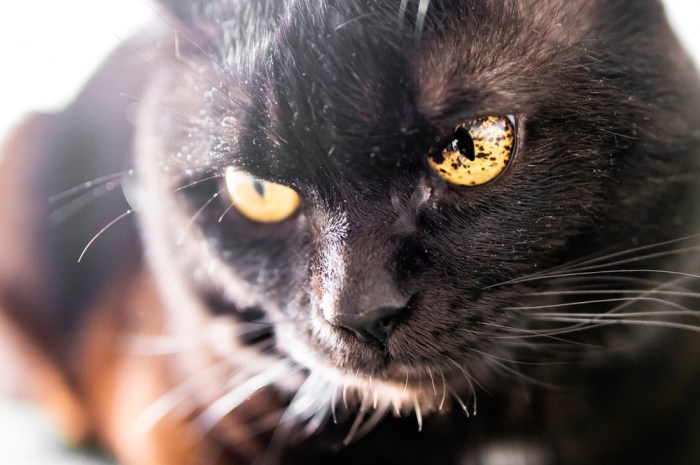
Have you noticed little flecks or patches of brown appearing in your cat’s eyes? It’s a surprisingly common observation, and while it can sometimes be a cause for concern, often it’s a perfectly normal variation in feline eye color. Cat eyes are fascinating – ranging from the classic blue to vibrant green, gold, and copper – and their color is a complex interplay of genetics and age.
This guide will delve into the world of brown spots in cats’ eyes, exploring what they are, what might cause them, and when a vet visit is warranted.
We’ll unpack the different types of brown spots you might see, from tiny specks to larger patches, and discuss how they appear against various iris colors. Beyond just describing the appearance, we’ll explore the potential underlying causes, including genetic predispositions, age-related changes, and even possible reactions to medications. Understanding these factors is key to determining whether those brown spots are simply a quirky characteristic or a sign of something more serious.
Brown Spots in Cats’ Eyes: A Comprehensive Guide
Many cat owners notice intriguing markings in their feline friends’ eyes – small brown spots or patches within the iris. These spots can range in appearance from subtle flecks to more noticeable formations. While they can be a source of curiosity and even concern, understanding what causes them and whether they require attention is crucial. This guide aims to demystify brown spots in cats’ eyes, covering everything from genetics and potential causes to diagnostic procedures and management options.
We’ll break down the science behind eye color, explore the different types of brown spots, and provide insights into how to keep your cat’s eyes healthy and bright.
The color of a cat’s eyes is a fascinating blend of genetics and biology. It’s far more complex than simply “blue” or “green.” The typical range of eye colors observed in cats includes blue, green, gold, and copper, with variations and combinations occurring frequently. The primary determinant of eye color is melanin, the same pigment responsible for skin and hair color.
The amount and distribution of melanin within the iris dictate the final hue. Genetic factors play a significant role; specific genes control melanin production and deposition. For example, the ‘B’ gene influences black and brown pigments, while the ‘O’ gene affects the intensity of orange pigment. Age can also subtly alter eye appearance. As cats age, slight pigment shifts can occur, often resulting in a more muted or yellowish tone.
While these changes are usually benign, unusual pigmentation or sudden changes warrant investigation to rule out underlying medical conditions.
Types of Brown Spots: Appearance and Variations
Brown spots in a cat’s eyes aren’t all the same. They present in a variety of visual forms, and understanding these differences can provide clues about their potential cause. These spots can manifest as small, scattered flecks, larger, more defined patches, or even ring-like formations around the pupil. The distinction between a uniform brown hue across the entire iris and discrete, localized spots is also important.
The surrounding iris color significantly impacts how brown spots are perceived. For instance, brown spots on a blue iris will appear more prominent and darker than those on a green or gold iris. Recognizing these nuances is key to proper assessment.
To help visualize the different patterns, consider this descriptive guide:
| Spot Pattern Description | Typical Size | Common Iris Color | Potential Cause (brief) |
|---|---|---|---|
| Scattered Flecks: Tiny, dispersed brown spots throughout the iris. | 1-2 mm | Blue, Green | Genetic variation, age-related changes |
| Localized Patch: A larger, distinct area of brown pigmentation. | 5-10 mm | Green, Gold | Genetic predisposition, mild inflammation |
| Ring-like Formation: A band or ring of brown pigment encircling the pupil. | Variable, often 2-5 mm wide | Blue, Copper | Genetic trait, sometimes associated with sectoral iris atrophy |
| Diffuse Speckling: A subtle, overall mottling of brown pigment. | < 1 mm, widespread | Gold, Brown | Age-related changes, melanin distribution |
Potential Causes: Medical & Genetic Considerations
The presence of brown spots in a cat’s eyes isn’t always a cause for alarm. In many cases, they are a harmless genetic trait. Certain cat breeds are predisposed to developing brown spots, suggesting a genetic link. Breeds where this is more commonly observed include Persians, British Shorthairs, Turkish Angoras, and Scottish Folds. However, age-related changes in the iris can also lead to pigment alterations.
As cats age, the distribution of melanin can shift, resulting in the appearance of new spots or a darkening of existing ones. Melanin, produced by melanocytes within the iris, is responsible for pigmentation. Its distribution is influenced by genetics and can be affected by various factors. Inflammatory conditions, such as uveitis (inflammation of the eye), can also impact iris pigmentation, causing localized discoloration.
Less commonly, drug reactions can lead to iris discoloration, although this is rare. A flowchart outlining the diagnostic process can be helpful in determining the underlying cause.
Diagnostic Flowchart: Brown Spots in Cats’ Eyes
- Observation: Notice brown spots in cat’s eyes.
- Initial Assessment: Veterinary examination – assess overall health, eye appearance, and any other abnormalities.
- Rule out Systemic Disease: Bloodwork to check for underlying health conditions.
- Ophthalmic Examination: Ophthalmoscopy to examine the internal structures of the eye. Schirmer’s tear test to assess tear production.
- Consider Breed Predisposition: Is the cat a breed known for iris pigmentation variations?
- Evaluate Age-Related Changes: Are the spots consistent with age-related pigment shifts?
- If Inflammation Suspected: Further testing (e.g., cytology, cultures) to identify the cause of inflammation.
- If Cause Remains Unclear: Iris biopsy (rarely necessary) for definitive diagnosis.
Diagnostic Procedures: Veterinary Examination & Testing
The initial veterinary examination is crucial for assessing the overall health of the cat and evaluating the eye condition. This involves a thorough observation of the eyes, including the size and shape of the pupils, the clarity of the cornea, and the presence of any discharge or redness. The veterinarian will also assess the cat’s general health, looking for any other signs of illness.
Ophthalmoscopy, using a specialized instrument called an ophthalmoscope, allows the veterinarian to examine the internal structures of the eye, including the iris, lens, and retina. This helps to identify any abnormalities beyond the brown spots themselves. A Schirmer’s tear test measures tear production, which is important for maintaining eye health and preventing dryness. Bloodwork may be necessary to rule out systemic diseases that could be contributing to the eye condition.
In rare cases, an iris biopsy may be recommended to obtain a tissue sample for microscopic examination, providing a definitive diagnosis. This is typically reserved for cases where the cause of the brown spots remains unclear after other diagnostic tests.
| Test Name | Purpose | What it Detects | Invasiveness |
|---|---|---|---|
| Veterinary Examination | Initial assessment of eye health and overall condition | Pupil size/shape, corneal clarity, discharge, redness | Non-invasive |
| Ophthalmoscopy | Examination of internal eye structures | Iris abnormalities, lens opacity, retinal health | Non-invasive |
| Schirmer’s Tear Test | Measurement of tear production | Dry eye, tear film abnormalities | Non-invasive |
| Bloodwork | Rule out systemic diseases | Infection, inflammation, metabolic disorders | Minimally invasive |
| Iris Biopsy | Definitive diagnosis of iris abnormalities | Cellular changes, inflammation, tumor | Invasive |
Breed-Specific Considerations
Certain cat breeds are known for exhibiting brown spots in their eyes more frequently than others. Persians, British Shorthairs, and Turkish Angoras are prime examples. In these breeds, brown spots are often considered a normal variation within the breed standard, rather than a fault. However, the specific acceptance of these spots can vary depending on the breed registry and individual breeder preferences.
Genetic testing for predispositions to iris pigmentation variations is currently limited, but research is ongoing. Anecdotal observations from breeders suggest that brown spots can be inherited in a complex pattern, often influenced by multiple genes. Some breeders report that brown spots tend to be more prevalent in certain lineages or when specific color combinations are bred together.
Age-Related Changes & Progression
As cats age, their irises undergo natural changes, including subtle pigment shifts. These changes are typically gradual and benign, but it’s important to distinguish them from signs of a more serious condition. The iris may become slightly paler or develop a more yellowish hue with age. Small brown spots may also appear or become more noticeable. Regular veterinary checkups for older cats are essential for monitoring eye health and detecting any abnormalities early on.
A timeline illustrating typical iris changes throughout a cat’s lifespan can be helpful. During the first few years, iris color is relatively stable. Around 5-7 years of age, subtle pigment shifts may begin. By 10 years or older, brown spots may become more prominent, and the iris may exhibit a more muted tone.
Distinguishing Brown Spots from Other Eye Conditions
It’s important to differentiate brown spots from other iris abnormalities, such as iris atrophy (thinning of the iris), heterochromia (different colored irises), and pigment dispersion (scattering of pigment throughout the iris). Cataracts (clouding of the lens) and corneal issues (problems with the clear front surface of the eye) can also mimic the appearance of brown spots. Brown spots are typically localized and don’t affect the overall clarity of the eye.
Heterochromia involves a difference in iris color between the two eyes, while iris atrophy results in a thin, translucent iris. Pigment dispersion causes a speckled appearance throughout the iris. Cataracts cause a cloudy or opaque appearance to the lens, while corneal issues affect the clarity of the cornea. Careful examination by a veterinarian is necessary to make an accurate diagnosis.
Brown spots are localized pigment variations within the iris, typically benign and often genetically influenced. Heterochromia involves different colored irises, while iris atrophy results in a thin, translucent iris. Distinguishing these conditions requires a thorough veterinary examination.
Management & Treatment Options
Brown spots in cats’ eyes don’t always require treatment. In most cases, they are a harmless cosmetic variation. However, if the brown spots are associated with an underlying medical condition, such as inflammation or infection, treatment will be necessary to address the root cause. Management strategies for cats with brown spots related to underlying medical conditions may include anti-inflammatory medications, antibiotics, or other therapies as prescribed by a veterinarian.
Supportive care measures, such as lubricating eye drops, can help maintain eye health and comfort. Potential complications if brown spots are left untreated are generally limited to those associated with the underlying condition causing them. For example, untreated uveitis can lead to glaucoma and vision loss.
Last Word
Source: veterinaryvisioncenter.com
Ultimately, spotting brown spots in your cat’s eyes doesn’t automatically mean a trip to the vet is necessary. However, being informed about the potential causes and knowing what to look for is crucial for maintaining your feline friend’s eye health. Regular checkups, especially as your cat ages, are vital for monitoring any changes and addressing any underlying issues promptly.
By understanding the nuances of feline eye pigmentation, you can be a more observant and proactive guardian of your cat’s well-being, ensuring they enjoy clear and comfortable vision for years to come.
Remember, early detection and proper management are key to addressing any potential eye health concerns. If you have any doubts or notice any other concerning symptoms, always consult with your veterinarian for a thorough examination and personalized advice.
Top FAQs
Are brown spots in a cat’s eyes always a sign of a problem?
Not necessarily! In many cases, brown spots are a normal variation in eye color, especially in certain breeds. However, it’s important to monitor them and consult a vet if you notice any changes or other concerning symptoms.
Can genetics play a role in brown spots?
Absolutely. Certain breeds, like Persians, British Shorthairs, and Turkish Angoras, are more predisposed to developing brown spots due to their genetic makeup. Breeders often have anecdotal knowledge of inheritance patterns within these breeds.
How does age affect a cat’s eye color?
As cats age, the iris can undergo subtle pigment shifts. These changes are often benign but should be monitored during regular vet checkups to rule out any underlying conditions.
What’s the difference between brown spots and heterochromia?
Brown spots are localized areas of pigmentation within the iris, while heterochromia refers to a difference in eye color between the two eyes. Heterochromia can be genetic or caused by injury or disease.
What diagnostic tests might a vet perform?
A vet might perform an ophthalmoscopy to examine the eye’s internal structures, a Schirmer’s tear test to assess tear production, and potentially bloodwork to rule out systemic diseases. In rare cases, an iris biopsy might be considered.
Are there any treatments for brown spots?
Treatment isn’t always necessary. Management focuses on addressing any underlying medical conditions that might be contributing to the pigmentation changes. Supportive care can help maintain eye health and comfort.
What are some potential complications of untreated brown spots?
If brown spots are related to an underlying inflammatory or infectious condition, leaving it untreated could lead to discomfort, vision impairment, or even blindness. Regular monitoring is key.

