Orange tabby cats! They’re instantly recognizable, often described as friendly and playful, and hold a special place in many hearts. But have you ever wondered what truly defines a “classic” orange tabby? It’s more than just the color; it’s a fascinating combination of genetics, coat patterns, breed influences, and even a bit of history. This guide dives deep into the world of these beloved felines, exploring everything from their unique markings to their charming personalities and how to best care for them.
We’ll unravel the science behind their vibrant orange hue, differentiate between the various tabby patterns (mackerel, classic, ticked), and explore which breeds commonly showcase this striking coloration. Beyond the visuals, we’ll delve into their typical behaviors, potential health considerations, and offer practical advice for ensuring a happy and healthy life for your orange tabby companion.
The Allure of the Classic Orange Tabby
Orange tabby cats are instantly recognizable, radiating warmth and charm. But beyond their striking color, there’s a fascinating world of genetics, breed variations, and unique personalities that define these beloved felines. This article delves into the specifics of the classic orange tabby, exploring everything from their physical traits and genetic background to their temperament and care requirements. We’ll unpack the nuances of their coat patterns, discuss common breeds that showcase this coloration, and offer practical advice for ensuring a happy and healthy life for your orange tabby companion.
Defining the Classic Orange Tabby
The term “orange tabby” encompasses a wide range of cats with orange fur, but the “classic” designation refers to a specific set of physical characteristics. It’s more than just the color; it’s about the pattern. The most common patterns seen in orange tabbies are mackerel, classic (or blotched), and ticked. Mackerel tabbies display narrow, parallel stripes resembling a fish skeleton.
Classic tabbies, on the other hand, have swirling, marbled patterns, often described as “bullseye” markings on their sides. Ticked tabbies, also known as agouti tabbies, have a salt-and-pepper appearance with individual hairs banded with different colors, lacking distinct stripes or swirls. The visual difference is immediately apparent – mackerel are striped, classic are swirled, and ticked appear subtly patterned.Orange tabbies typically exhibit a medium build, though size can vary considerably depending on the breed.
They range from the relatively small American Shorthair to the large and fluffy Maine Coon. Regardless of size, they generally possess a muscular and well-proportioned physique.The orange coloration itself is a result of a sex-linked gene located on the X chromosome. Female cats have two X chromosomes (XX), meaning they need two copies of the orange gene to display the color.
Male cats have one X and one Y chromosome (XY), so only one copy of the orange gene is needed for them to be orange. This explains why orange tabbies are significantly more common in males. The gene doesn’t produce orange pigment directly; instead, it prevents the production of black pigment, allowing the underlying yellow/orange pigment to show through.
| Pattern | Description | Common Markings | Temperament Tendencies |
|---|---|---|---|
| Mackerel | Narrow, parallel stripes resembling a fish skeleton. | Vertical stripes on the sides, often with a “necklace” marking on the chest. | Often energetic and playful, can be quite vocal. |
| Classic/Blotched | Swirling, marbled patterns, often with “bullseye” markings. | Large, swirling patterns on the sides, sometimes with a dorsal stripe. | Generally relaxed and affectionate, known for being laid-back. |
| Ticked | Salt-and-pepper appearance with banded hairs, lacking distinct stripes or swirls. | Subtle ticking throughout the coat, often with a slightly darker “mask” on the face. | Independent and observant, can be quite quiet. |
Breed Associations & Common Breeds
Several breeds frequently exhibit orange tabby markings, each showcasing the pattern in a unique way. The American Shorthair is a classic example, often displaying a robust build and well-defined mackerel stripes. Maine Coons, with their long, flowing fur, present a magnificent display of classic or mackerel patterns. Persian cats can also be orange tabbies, though the pattern may be less distinct due to their long, dense fur.
British Shorthairs often display a more muted, rounded classic pattern.Within each breed, the orange tabby pattern manifests differently. In American Shorthairs, the stripes are typically bold and clear. In Maine Coons, the pattern can be softer and more blended due to the length of their fur. Persian orange tabbies often have a more subtle, almost ghost-like pattern. British Shorthairs tend to have a more rounded, less defined pattern.Historically, orange tabbies have been associated with good luck and prosperity in some cultures, contributing to their popularity within certain breeds.
For instance, the American Shorthair’s popularity as a working cat on farms likely contributed to the prevalence of the orange tabby pattern, as their visibility made them easier to spot.
- American Shorthair: Average lifespan: 15-20 years; Grooming needs: Low; Common health concerns: Hypertrophic cardiomyopathy (HCM), hip dysplasia.
- Maine Coon: Average lifespan: 10-13 years; Grooming needs: High; Common health concerns: HCM, hip dysplasia, spinal muscular atrophy (SMA).
Coat Patterns in Detail
The visual distinctions between mackerel, classic (blotched), and ticked orange tabby patterns are quite striking. Mackerel patterns are characterized by their distinct, parallel stripes, creating a linear appearance. Classic patterns feature swirling, marbled markings that resemble a bullseye. Ticked patterns lack distinct stripes or swirls, instead presenting a salt-and-pepper effect due to banded hairs.Genetically, each pattern is determined by different variations of the tabby gene.
The Agouti gene controls whether the hairs are banded (ticked) or solid. The Tabby S gene, with its different alleles (A, Ta, T), dictates the specific pattern – mackerel (Ta) or classic (T). The absence of the tabby gene results in a solid color.Lighting conditions significantly impact the perceived appearance of these patterns. In bright light, the stripes of a mackerel tabby are clearly defined.
In dimmer light, the swirling patterns of a classic tabby may appear more muted. Ticked patterns can appear more or less pronounced depending on the angle of the light.The mackerel pattern flows in a linear fashion, with bold, vertical stripes running along the cat’s sides. The texture appears crisp and defined, creating a sense of movement. The classic pattern exhibits a swirling, almost hypnotic visual flow.
The markings blend and merge, creating a sense of depth and complexity. The ticked pattern has a subtle, textured appearance. The banded hairs create a soft, muted effect, lacking the sharp lines of other tabby patterns.
Temperament and Behavior
Source: stitchpalettes.com
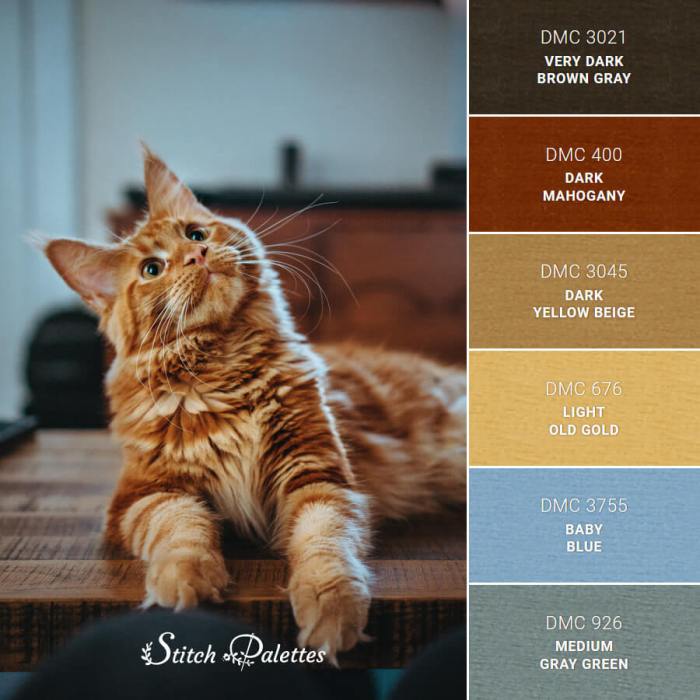
Orange tabby cats are often described as having a particularly charming and outgoing personality. They are frequently playful and affectionate, enjoying interactive games and cuddling with their humans. Many exhibit a strong sense of independence, however, and are content to entertain themselves when left alone.Anecdotally, many owners report their orange tabby cats being particularly vocal, often “chatting” with them throughout the day.
Others describe them as being incredibly playful, constantly seeking out toys and engaging in energetic bursts of activity. While each cat is an individual, these common observations contribute to the orange tabby’s reputation for being a friendly and engaging companion.While generalizations should be approached with caution, some believe that male orange tabbies tend to be more outgoing and boisterous than their female counterparts.
Female orange tabbies are often described as being more independent and reserved, though equally affectionate.
| Behavior | Frequency | Potential Causes |
|---|---|---|
| Vocalization | Medium to High | Attention-seeking, hunger, boredom, excitement. |
| Climbing | High | Instinctual behavior, exploration, seeking a high vantage point. |
| Hunting | Medium | Predatory instincts, boredom, playfulness. |
Health Considerations
While orange tabbies are generally healthy cats, they are potentially susceptible to certain health issues, regardless of breed. These can include hypertrophic cardiomyopathy (HCM), a heart condition, and hip dysplasia, a skeletal disorder. Regular veterinary checkups are crucial for early detection and management of these conditions.Preventative care, including vaccinations, parasite control, and dental hygiene, is essential for maintaining an orange tabby’s overall health and well-being.
A balanced diet and regular exercise are also vital for preventing obesity and related health problems.
Preventative care for orange tabby cats should include annual veterinary checkups, vaccinations, parasite control, dental cleanings, and a balanced diet. Early detection of potential health problems is key to ensuring a long and healthy life.
Caring for an Orange Tabby
Appropriate nutrition for orange tabby cats varies depending on their life stage. Kittens require a diet rich in protein and calories to support their rapid growth. Adult cats need a balanced diet to maintain their weight and energy levels. Senior cats may benefit from a diet formulated for older cats, with added nutrients to support joint health and cognitive function.Environmental enrichment and interactive play are crucial for keeping orange tabbies mentally and physically stimulated.
Providing scratching posts, toys, and opportunities for exploration can help prevent boredom and destructive behaviors.Grooming requirements depend on the cat’s coat length and type. Short-haired orange tabbies require minimal grooming, while long-haired varieties need regular brushing to prevent mats and tangles.
| Age Group | Nutritional Needs | Activity Level Recommendations |
|---|---|---|
| Kitten | High-protein, high-calorie food formulated for kittens. | Multiple short play sessions throughout the day. |
| Adult | Balanced diet formulated for adult cats. | Daily play sessions and opportunities for exploration. |
| Senior | Diet formulated for senior cats, potentially with added joint support. | Moderate activity levels, adjusted to the cat’s individual needs. |
Visual Descriptions & Imagery
A tiny orange tabby kitten playfully bats at a sunbeam, its fur a vibrant tapestry of orange and cream. The texture of its fur is soft and plush, catching the light with each playful swipe of its paws. The movement is quick and erratic, a flurry of tiny limbs and a twitching tail.A portrait of an adult orange tabby lounges on a windowsill, its warm fur a striking contrast against the cool, smooth glass.
The cat’s eyes are half-closed, radiating contentment. The light highlights the subtle swirls of its classic tabby pattern, creating a sense of peaceful serenity.An orange tabby Maine Coon stands regally, its long, flowing fur cascading down its powerful build. The fur is thick and luxurious, rippling with movement. The cat’s muscular frame is evident beneath the fur, hinting at its strength and agility.The classic (blotched) orange tabby’s markings appear particularly dramatic against a dark background.
The swirling patterns seem to come alive, creating a mesmerizing visual effect. The contrast between the warm orange fur and the deep shadows emphasizes the complexity and beauty of the tabby pattern.
Historical and Cultural Significance
Orange tabby cats have held various symbolic meanings throughout history and across different cultures. In some cultures, they are considered symbols of good luck and prosperity, while in others, they are associated with mischievousness and playfulness.Folklore surrounding orange tabbies varies widely. In some European traditions, orange tabbies were believed to bring good fortune to sailors. In Japan, they are sometimes associated with the god of the harvest.The portrayal of orange tabbies in popular media has evolved over time.
Early depictions often portrayed them as mischievous or cunning characters. More recently, they have been increasingly featured as lovable and endearing companions in literature, film, and art. Timeline of Orange Tabby Representation:* 1800s: Often depicted as sly or cunning characters in literature.
Early 1900s
Beginnings of portrayal as domestic companions in art.
Mid-1900s
Increased popularity in cartoons and children’s books.
Late 1900s – Present
Widespread representation as beloved pets in various media.
Distinguishing from Similar Patterns
Differentiating an orange tabby from other coat patterns like ginger, marmalade, or cream can be tricky, but careful observation can reveal subtle differences. Ginger cats are simply orange cats, without a distinct tabby pattern. Marmalade cats are orange tabbies with a particularly rich, reddish-orange hue. Cream cats are dilute orange tabbies, with a paler, cream-colored coat.The key differences lie in the markings and coloration.
Orange tabbies have distinct stripes, swirls, or ticked patterns. Ginger cats lack these markings. Marmalade cats have a deeper, more intense orange color than typical orange tabbies. Cream cats have a lighter, more muted color.Genetically, the differences are determined by variations in the genes controlling pigment production and pattern development. The Agouti gene and the Tabby gene play crucial roles in determining the final coat pattern.
Flowchart for Identifying a Cat’s Coat Pattern:
Is the cat orange?
Yes → Proceed to step 2.
- No → Not an orange tabby.
- Does the cat have distinct stripes, swirls, or ticked markings?
Yes → Orange Tabby (Mackerel, Classic, or Ticked).
- No → Ginger or Marmalade (depending on color intensity).
- Is the color a pale cream color?
Yes → Cream Tabby.
No → Ginger or Marmalade.
Finding an Orange Tabby
Responsible sourcing is paramount when acquiring an orange tabby cat. Shelters and rescues are excellent places to find loving cats in need of a home. Reputable breeders prioritize the health and temperament of their kittens and are transparent about their breeding practices.When speaking with a breeder, ask about the kitten’s health history, including any genetic screenings performed. Inquire about the breeder’s socialization practices and whether they allow potential adopters to interact with the kittens.Temperament testing is crucial when adopting a cat from a shelter or rescue.
Spend time interacting with the cat to assess its personality and ensure it’s a good fit for your lifestyle. Key Considerations When Choosing a Kitten:* Health history and vaccinations
- Personality and energy level
- Compatibility with existing pets
- Breeder or shelter reputation
- Overall health and appearance
Wrap-Up
From their captivating coat patterns to their often-endearing personalities, classic orange tabbies are truly special cats. Understanding their genetics, breed predispositions, and specific care needs allows us to appreciate them even more and provide the best possible life for these furry friends. Whether you’re a seasoned cat owner or considering welcoming an orange tabby into your home, this exploration offers a comprehensive look at what makes them so uniquely charming and rewarding to have around.
So, the next time you see a classic orange tabby basking in the sun, remember the fascinating story behind their stripes and the rich history they carry – a story woven with genetics, breed heritage, and a whole lot of feline charm!
FAQ
Why are most orange tabbies male?
Orange coloration is linked to the X chromosome. Females need two copies of the orange gene (one on each X chromosome) to be orange, while males only need one (as they have one X and one Y chromosome).
What’s the difference between a mackerel and a classic tabby?
Mackerel tabbies have narrow, parallel stripes running down their sides, resembling a fish skeleton. Classic (or blotched) tabbies have swirling, marbled patterns, often with a “bullseye” marking on their sides.
Are orange tabbies generally more affectionate?
While individual personalities vary, orange tabbies are often described as being particularly affectionate and people-oriented. However, this isn’t a guarantee and depends on the cat’s individual temperament and upbringing.
What are some common health concerns for orange tabbies?
Like all cats, orange tabbies can be prone to certain health issues. Some breeds they’re commonly found in (like Maine Coons) have breed-specific concerns. Regular vet checkups are crucial for early detection and prevention.
How can I tell if my orange tabby is getting enough exercise?
Look for signs like playful behavior, active hunting instincts (even with toys!), and a healthy appetite. Providing interactive toys, climbing structures, and regular play sessions can help keep them physically and mentally stimulated.
What’s the best diet for a senior orange tabby?
Senior cats often benefit from a diet that’s lower in calories and higher in protein to maintain muscle mass. Look for food specifically formulated for senior cats and consult with your veterinarian for personalized recommendations.

