Quote About Cats Love Exploring Feline Affection & Human Bonds

We all know cats have a reputation for being aloof, but the truth is, they’re capable of deep and complex affection. Diving into “quote about cats love” reveals a fascinating world of feline bonding, challenging common misconceptions and highlighting the unique ways cats express their devotion. This exploration goes beyond the simple purr, delving into the science, history, and psychology of the human-cat connection.
From historical figures who cherished their feline companions to the subtle nuances of a slow blink, we’ll uncover the many facets of feline love. We’ll also examine how our own need for comfort and companionship intertwines with the quiet, reassuring presence of a cat, creating a bond unlike any other.
The Enduring Mystery of Feline Affection
Cats. They’re enigmatic, independent, and often perceived as aloof. But beneath that cool exterior lies a capacity for deep affection, a bond that can be just as profound as any human relationship. This article delves into the fascinating world of feline love, exploring its nuances, biological underpinnings, and the unique ways cats express their devotion. We’ll move beyond the simple purr to uncover the subtle signals and behaviors that reveal a cat’s true feelings, and examine why these creatures hold such a special place in our hearts.
The Essence of Feline Affection
For years, cats have been unfairly labeled as less affectionate than dogs. This misconception stems from a misunderstanding of how cats express their emotions. While dogs often wear their hearts on their sleeves with enthusiastic tail wags and exuberant greetings, cats tend to be more subtle and reserved. It’s not that they don’t feel love; it’s that they show it in different ways.
The idea that cats are simply manipulative creatures seeking food and shelter is a gross oversimplification of their complex emotional lives.
- Beyond the Purr: Affection isn’t just about purring. Slow blinking, head-butting (also known as “bunting”), kneading, rubbing against your legs, and bringing you “gifts” are all signs of a cat’s affection.
- Biological Roots: Feline bonding is rooted in biology. Oxytocin, often called the “love hormone,” is released during positive interactions between cats and their humans, just as it is in human relationships. Pheromones also play a crucial role, marking territory and signaling comfort and security. Early experiences, particularly during kittenhood, significantly shape a cat’s ability to form strong bonds. Kittens separated from their mothers too early may struggle to form secure attachments.
- A Different Love Language: Cats don’t express affection in the same way humans do. They aren’t likely to shower you with verbal affirmations or grand gestures. Instead, they offer quiet companionship, gentle touches, and subtle cues that demonstrate their trust and devotion. Understanding this difference is key to appreciating the unique nature of the human-cat bond.
Famous Quotes About Cats and Love: A Compilation
Throughout history, writers, poets, and thinkers have recognized the profound impact cats have on human lives. Their observations, captured in eloquent words, offer a glimpse into the enduring fascination with these enigmatic creatures. The following compilation showcases a range of perspectives on cats and love, categorized by theme and author.
| Quote | Author | Theme |
|---|---|---|
| “Cats are the ultimate life philosophers.” | Sidonie Gabrielle Colette | Companionship |
| “A cat is a born aristocrat.” | Charles Baudelaire | Independence |
| “There is no hunting more pleasurable than the pursuit of a cat.” | Ernest Hemingway | Humor |
| “Cats possess a secret language, the meows, purrs, and chirps of which are only understood by those who listen with their hearts.” | Susan Herbert | Companionship |
| “Cats are the quietest of creatures, and the most observant.” | Charles Dickens | Loyalty |
Charles Baudelaire (1821-1867): A French poet, critic, and translator, known for his symbolist poetry and his fascination with the darker aspects of human experience. Ernest Hemingway (1899-1961): An American novelist, short-story writer, and journalist, renowned for his concise prose and his exploration of themes of courage, loss, and masculinity. Susan Herbert (1933-2016): A British artist and writer, best known for her whimsical cat paintings and her insightful observations about feline behavior.
Charles Dickens (1812-1870): An English writer and illustrator, considered one of the greatest novelists of the Victorian era.
Exploring the Human-Cat Bond
The human-cat bond is a complex and mutually beneficial relationship. Humans are drawn to cats for a variety of psychological reasons, including their independence, their grace, and their ability to provide comfort and companionship. The presence of a cat can be incredibly soothing, offering a sense of calm and stability in a chaotic world.
- Stress Reduction: Studies have shown that interacting with cats can lower blood pressure, reduce stress hormones, and promote relaxation. The simple act of petting a cat can release endorphins, which have mood-boosting effects.
- Anecdotes of Impact: Countless stories illustrate the profound impact cats have on human lives. From providing comfort to grieving individuals to offering a sense of purpose to those struggling with loneliness, cats have a remarkable ability to heal and uplift.
- Mutualism: The human-cat relationship is a prime example of mutualism. Humans provide cats with food, shelter, and affection, while cats offer companionship, entertainment, and emotional support. It’s a win-win situation for both parties.
Types of Feline Love Expressions
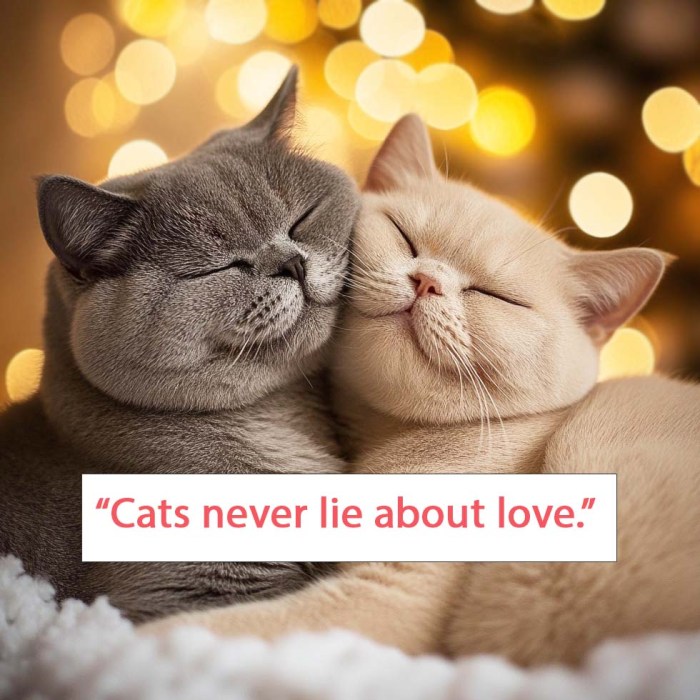
Source: thelongwhiskers.com
Cats express affection in a variety of subtle and nuanced ways. Understanding these behaviors is crucial to deciphering your cat’s feelings and strengthening your bond. While each cat has its own unique personality and preferences, certain expressions of affection are commonly observed.
- Kneading: This rhythmic pushing motion with the paws, often accompanied by purring, is a throwback to kittenhood when kittens knead their mother’s belly to stimulate milk flow. In adult cats, it’s a sign of contentment and comfort.
- Head-Butting (Bunting): Rubbing their head or body against you is a way for cats to mark you with their scent, claiming you as part of their territory and showing affection.
- Slow Blinking: Often referred to as a “cat kiss,” slow blinking is a sign of trust and relaxation. If your cat slowly blinks at you, return the gesture to show them you feel the same way.
- Bringing Gifts: While it might seem odd, cats often bring their owners “gifts” such as toys or even prey. This is a sign of affection and a way of sharing their bounty.
- Following: A cat that consistently follows you around the house is showing you a high level of trust and affection.
- Vocalizations: Purring, meowing, and chirping can all be expressions of affection, although the specific meaning can vary depending on the context.
Unlike dogs, who often greet their owners with enthusiastic jumping and licking, cats tend to be more reserved in their displays of affection. However, their subtle gestures are no less meaningful.
Cats and Their People: Individual Relationships
Just as humans have unique personalities, so do cats. Their individual personalities significantly influence how they express affection. Some cats are naturally more affectionate than others, while some prefer to show their love in more subtle ways.
- The “Velcro Cat”: These cats are incredibly clingy and love to be near their humans at all times.
- The “Independent Observer”: These cats are more reserved and prefer to observe from a distance, but they still show affection in their own way, such as by sleeping near you or occasionally offering a gentle head-butt.
- The “Lap Cat”: These cats are always eager to curl up on your lap for a cuddle.
Early socialization plays a crucial role in a cat’s ability to form strong bonds. Kittens who are exposed to positive human interaction during their critical socialization period (2-7 weeks of age) are more likely to be confident and affectionate as adults.

(Note: This is a placeholder for a flowchart. The flowchart would visually represent factors like early socialization, consistent positive interaction, respecting boundaries, and providing enrichment, all contributing to a strong human-cat bond.)
The Language of Cat Body Language
Understanding a cat’s body language is essential for interpreting their emotional state and responding appropriately. While cats may not be able to verbally express their feelings, their bodies speak volumes.
- Tail Position: A tail held high indicates confidence and happiness, while a tucked tail suggests fear or anxiety.
- Ear Posture: Ears forward indicate alertness and interest, while flattened ears suggest fear or aggression.
- Pupil Dilation: Dilated pupils can indicate excitement, fear, or playfulness, while constricted pupils suggest calmness or aggression.
Subtle cues, such as a relaxed posture, slow blinking, and gentle purring, indicate that a cat is feeling content and loved.
“To understand a cat, you must first understand that cats do not think of humans as giants. They think of us as large, clumsy cats.”
Neil Postman
Historical Perspectives on Cats and Affection
The perception of cats and their capacity for affection has evolved significantly throughout history. In ancient Egypt, cats were revered as deities and were considered symbols of grace and protection. However, in medieval Europe, cats were often associated with witchcraft and were persecuted. Over time, attitudes towards cats have shifted, and they are now widely recognized as beloved companions.
- Historical Figures: Numerous historical figures, including Abraham Lincoln, Ernest Hemingway, and Queen Victoria, were known to have strong bonds with their cats.
- Cultural Significance: In some cultures, cats are considered symbols of good luck and prosperity, while in others, they are associated with mystery and the supernatural.
Timeline: (Early Egypt – Revered as deities) -> (Medieval Europe – Associated with witchcraft) -> (18th-19th Centuries – Growing popularity as pets) -> (20th-21st Centuries – Widespread acceptance as beloved companions)
Fostering a Loving Relationship with Your Cat
Building a strong and loving bond with your cat requires patience, understanding, and a willingness to meet their needs. Providing enrichment, playtime, and positive reinforcement are all essential for fostering a happy and healthy relationship.
- Enrichment: Provide your cat with plenty of toys, scratching posts, and opportunities to explore.
- Playtime: Engage in interactive play sessions with your cat to stimulate their mind and body.
- Positive Reinforcement: Reward your cat with treats and praise when they exhibit desirable behaviors.
- Respect Boundaries: Allow your cat space when they need it and avoid forcing affection on them.
Introducing a New Cat: Gradually introduce a new cat to a household with existing pets, allowing them to adjust to each other’s scent and presence before allowing direct interaction.
Illustrative Descriptions of Feline Affection
Sometimes, words can’t fully capture the feeling of a cat’s affection. Here are a few descriptive scenes that aim to convey the warmth and connection of the human-cat bond.
A ginger cat curls up asleep on its owner’s lap, a warm, furry weight. The gentle purring vibrates against the chest, a soothing rhythm that melts away stress. The feeling of contentment is palpable, a shared moment of peace and tranquility.
A sleek black cat gently head-butts its owner’s hand, a soft, insistent nudge. The fur is velvety smooth, the pressure subtle but comforting. It’s a silent declaration of affection, a connection forged through shared moments and mutual trust.
A calico cat slowly blinks at its owner, a languid, deliberate gesture. The eyes are half-closed, relaxed and trusting. It’s a “cat kiss,” a sign of deep affection and a silent promise of companionship.
A playful tabby cat brings a “gift” – a small, brightly colored toy mouse – to its owner, dropping it proudly at their feet. The cat’s demeanor is one of pride and generosity, a heartfelt offering of affection and a playful invitation to engage.
The Unique Comfort of a Cat’s Presence
There’s a unique comfort in simply having a cat nearby. Their quiet presence can be incredibly soothing, offering a sense of calm and stability in a chaotic world. Cats have a remarkable ability to provide emotional support, especially during times of stress or loneliness.
| Situation | How a Cat Can Help |
|---|---|
| Feeling anxious | Providing comfort, offering a distraction, reducing stress hormones |
| Grieving a loss | Offering companionship, providing a sense of routine, reducing feelings of isolation |
| Feeling lonely | Providing unconditional love, offering a sense of purpose, reducing feelings of emptiness |
Feline companionship has also been shown to have therapeutic benefits for individuals with mental health challenges, providing a source of comfort, support, and unconditional love.
Closing Notes
Ultimately, understanding “quote about cats love” isn’t just about appreciating cute cat videos; it’s about recognizing the profound impact these creatures have on our lives. Whether it’s the calming weight of a cat curled on your lap, the playful pounce of a favorite toy, or the quiet understanding in their eyes, the love of a cat is a unique and invaluable gift.
It’s a testament to the power of interspecies connection and the enduring appeal of these enigmatic, furry friends.
Expert Answers
Why do cats knead?
Kneading is a behavior rooted in kittenhood, where they would knead their mother’s belly to stimulate milk flow. As adults, it’s often a sign of contentment and comfort, a way of recreating that feeling of security.
What does it mean when a cat slow blinks at me?
A slow blink is essentially a cat kiss! It’s a sign of trust and affection, indicating they feel safe and comfortable around you. Try slow blinking back – it’s a great way to build rapport.
Why do cats bring me “gifts” like dead mice?
While it might be unsettling, it’s a sign of affection! Your cat sees you as part of their family and is trying to provide for you, just as they would for their kittens. It’s their way of showing they care.
Are all cats affectionate?
Not all cats express affection in the same way. Some are more independent, while others are incredibly cuddly. It depends on their individual personality and early socialization experiences.
How can I tell if my cat is stressed?
Signs of stress in cats can include hiding, changes in appetite, excessive grooming, and aggression. Pay attention to their body language and environment to identify potential stressors.
What’s the best way to introduce a new cat to my existing cat?
Introduce them slowly, starting with scent swapping (rubbing a towel on one cat and then letting the other smell it). Gradually allow supervised short visits, increasing the time as they become more comfortable.
