Have you ever noticed a cat with a uniquely swirling, almost marbled pattern on its fur? That might be a blotched tabby! These captivating felines possess a distinctive coat pattern that sets them apart from their classic, mackerel, and ticked tabby cousins. We’re diving deep into the world of blotched tabby cats, exploring their genetics, breed prevalence, how to tell them apart, and everything you need to know about caring for these beautiful creatures.
From understanding the science behind their mesmerizing markings to appreciating their cultural significance throughout history, this guide will unravel the mysteries of the blotched tabby. We’ll also touch on health considerations, breeding practices, and even conjure up some vivid descriptions to truly appreciate their unique charm. Get ready to learn all about these fascinating felines!
The Enigmatic Blotched Tabby Cat: A Comprehensive Guide
Tabby cats are instantly recognizable with their distinctive stripes and patterns. While most people are familiar with classic and mackerel tabbies, there’s a less common, yet equally fascinating variety: the blotched tabby. This pattern, sometimes called “broken tabby,” presents a unique visual appeal and a complex genetic story. This guide dives deep into the world of blotched tabby cats, exploring their genetics, breed prevalence, identification, health, and more.
Whether you’re a seasoned cat lover or just starting your feline journey, prepare to be captivated by the beauty and complexity of these remarkable cats.
Defining the Blotched Tabby Pattern
The blotched tabby pattern is a variation of the agouti gene, which controls the distribution of pigment in a cat’s coat. Unlike classic, mackerel, or ticked tabbies, the blotched tabby doesn’t display distinct, parallel stripes. Instead, it features large, irregular blotches or swirls of color, often resembling a marble cake. The genetic basis lies in a recessive allele that disrupts the typical stripe formation.
This allele interacts with other genes influencing coat color and intensity, resulting in the diverse appearances we see in blotched tabbies.
Visually, blotched tabbies are characterized by their large, swirling markings. These blotches can vary significantly in size and shape, sometimes merging together to create larger patches of color. The distribution is typically random, lacking the linear arrangement seen in mackerel tabbies. The pattern is often described as “broken” because it doesn’t follow a consistent, striped design. Common coat colors in blotched tabbies include brown (often referred to as chocolate or cinnamon), silver, blue (grey), and cream.
The intensity of the color can also vary, ranging from deep, rich hues to paler, more muted tones.
| Pattern Type | Description | Markings | Common Colors |
|---|---|---|---|
| Classic | Features swirling, marbled patterns. | Bold, looping stripes; often a “bullseye” pattern on the sides. | Brown, blue, cream, red |
| Mackerel | Displays narrow, parallel stripes. | Vertical stripes; “tiger stripes.” | Brown, silver, blue, red |
| Ticked | Shows a “sand-like” appearance with no distinct stripes. | Individual hairs have bands of color (agouti hairs); minimal markings. | Abyssinian, Somali, Singapura |
| Blotched | Exhibits large, irregular blotches or swirls. | Large, random blotches; “broken” pattern. | Brown, silver, blue, cream |
Breed Prevalence of Blotched Tabby Markings
Source: dreamstime.com
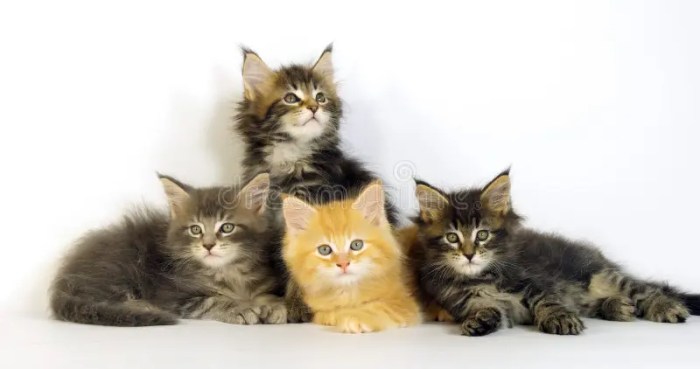
While the blotched tabby pattern can appear in various breeds, it’s particularly prevalent in the British Shorthair and the American Shorthair. The British Shorthair, in particular, has a breed standard that explicitly acknowledges and appreciates the blotched tabby pattern, often referred to as the “blue” or “grey” variety. Historically, the blotched tabby pattern in British Shorthairs was initially considered a fault, but its unique beauty eventually led to its acceptance and even desirability within the breed.
Certain breeds are genetically predisposed to displaying the blotched tabby pattern due to their underlying genetic makeup. The British Shorthair’s genetic heritage, stemming from domestic cats brought to Britain by the Romans, likely contributed to the prevalence of this pattern. Similarly, the American Shorthair, with its diverse ancestry, also carries genes that favor the blotched tabby appearance. The inheritance of the blotched tabby pattern is complex, involving multiple genes and their interactions.
It’s not a simple dominant or recessive trait, making it challenging to predict with certainty in breeding scenarios.
The inheritance pattern of blotched tabby markings is best visualized as a complex interplay of genes. While the specific genes involved are still being researched, it’s understood that multiple factors contribute to the expression of the pattern. A simplified flowchart would show a starting point with parents carrying the recessive allele for blotched tabby. Their offspring have a 25% chance of inheriting the blotched pattern, a 50% chance of being a carrier (without displaying the pattern), and a 25% chance of not inheriting the allele at all.
This probability increases with subsequent generations if both parents are carriers.
Distinguishing Blotched Tabby from Other Patterns
Differentiating a blotched tabby from a classic tabby can be tricky, as both patterns involve swirling markings. However, the key difference lies in the size and boldness of the markings. Classic tabbies have more defined, bolder swirls, often forming a distinct “bullseye” pattern on their sides. Blotched tabbies, on the other hand, have larger, more diffuse blotches that are less clearly defined.
The overall appearance of a blotched tabby is more “broken” and less structured than a classic tabby.
Distinguishing a blotched tabby from a mackerel tabby is even more straightforward. Mackerel tabbies are characterized by their narrow, parallel stripes, resembling a tiger’s markings. Blotched tabbies lack these distinct stripes, instead displaying large, irregular blotches. The presence or absence of parallel stripes is the most reliable indicator of the pattern type.
Identifying a blotched tabby versus a ticked tabby requires careful observation. Ticked tabbies, like Abyssinians, have a “sand-like” appearance with no distinct stripes or blotches. Instead, each individual hair has bands of color. Blotched tabbies, despite their irregular markings, still exhibit distinct blotches or patches of color, unlike the uniform appearance of ticked tabbies.
Accurately identifying blotched tabby patterns in kittens can be challenging. Their markings often appear less defined and more diffuse than in adult cats, making it difficult to distinguish them from other patterns. Careful observation and comparison with known examples are essential for accurate identification.
Health Considerations and Blotched Tabby Cats
Currently, there’s no evidence to suggest that the blotched tabby pattern itself is associated with any specific health conditions. However, it’s important to remember that the pattern is a visual characteristic and doesn’t necessarily reflect the cat’s overall health. Any health concerns are more likely related to the cat’s breed and individual genetic predispositions, rather than the presence of the blotched tabby pattern.
Similarly, the blotched tabby pattern is not believed to impact a cat’s overall health or lifespan. However, cats with any pattern should receive regular veterinary checkups to monitor their health and address any potential issues. Responsible breeders should prioritize health testing and genetic screening to minimize the risk of inherited diseases, regardless of the cat’s pattern.
- American Veterinary Medical Association (AVMA): https://www.avma.org/
-Provides information on feline health and welfare. - The Cat Fanciers’ Association (CFA): https://cfa.org/
-Offers resources on cat breeds and health. - Cornell Feline Health Center: https://www.vet.cornell.edu/fhc/
-A leading research center for feline health. - PetMD: https://www.petmd.com/
-A comprehensive resource for pet health information.
Visual Descriptions & Imagery of Blotched Tabby Cats
Let’s imagine a blotched tabby cat named Jasper. He’s a medium-sized cat with a luxurious, semi-long coat of silver and charcoal grey. His markings are large, swirling blotches that resemble a stormy sea. His eyes are a striking amber color, contrasting beautifully with his dark fur. Jasper has a calm and gentle personality, often found curled up in a sunbeam, purring contentedly.
He enjoys gentle petting and is known for his affectionate nature, often rubbing against his human companions for attention. His backstory might involve being a stray rescued from a local shelter, now enjoying a life of comfort and love.
A silver blotched tabby cat presents a mesmerizing interplay of light and shadow. The silver base coat allows the darker grey blotches to stand out, creating a shimmering effect. The edges of the blotches are often softened, giving the coat a velvety appearance. The light catches the silver fur, highlighting the swirling patterns and creating a dynamic visual display. The overall impression is one of elegance and sophistication.
A blue blotched tabby cat exhibits subtle variations in color and pattern. The blue (grey) base coat is muted and calming, while the darker grey blotches provide contrast and definition. The markings are often less distinct than in silver blotched tabbies, creating a softer, more blended appearance. The overall effect is one of tranquility and understated beauty.
Petting a blotched tabby cat is a sensory delight. The fur is soft and dense, providing a warm and comforting sensation. The swirling patterns are subtly felt beneath your fingertips, creating a unique tactile experience. The cat’s purr vibrates through its body, adding to the feeling of contentment and relaxation. It’s a moment of pure connection and feline bliss.
Caring for a Blotched Tabby Cat
The grooming needs of a blotched tabby cat depend on their coat length and density. Cats with longer coats, like British Shorthairs, require more frequent brushing to prevent mats and tangles. Regular brushing, ideally 2-3 times a week, helps remove loose fur and distribute natural oils, keeping the coat healthy and shiny. Shorter-coated blotched tabbies still benefit from regular brushing, though less frequently, perhaps once a week.
Providing enrichment and stimulation for a blotched tabby cat is crucial for their physical and mental well-being. These cats often enjoy interactive toys, such as feather wands and laser pointers, to satisfy their hunting instincts. Providing scratching posts, climbing structures, and puzzle feeders can also help keep them entertained and engaged. Regular playtime and social interaction are essential for preventing boredom and promoting a happy, healthy life.
Regular veterinary checkups are vital for all cats, including those with the blotched tabby pattern. Annual checkups allow veterinarians to monitor their health, administer vaccinations, and screen for potential health problems. Early detection and treatment can significantly improve a cat’s quality of life and longevity.
| Grooming Task | Frequency | Recommended Tools |
|---|---|---|
| Brushing | 1-3 times per week | Slicker brush, metal comb, rubber grooming mitt |
| Nail Trimming | Every 2-3 weeks | Cat nail clippers |
| Ear Cleaning | As needed | Cotton balls, ear cleaning solution (specifically for cats) |
The Cultural Significance of Tabby Cats (Including Blotched)
Tabby cats have held a significant place in human culture for centuries, often associated with good luck and prosperity. In ancient Egypt, cats were revered as sacred animals, and tabby markings were seen as a symbol of the goddess Bastet. Throughout history, tabby cats have been depicted in art, literature, and folklore, often representing domesticity, comfort, and companionship.
Folklore and myths surrounding tabby cats vary across cultures. Some believe that the “M” marking on a tabby cat’s forehead represents the Virgin Mary, while others associate tabby markings with protective spirits. Specific beliefs about blotched tabbies are less common, but their unique appearance often evokes a sense of mystery and intrigue.
Tabby cats, including blotched tabbies, have been frequently portrayed in art, literature, and popular culture. From classic paintings to modern-day cartoons, these cats have captured the hearts and imaginations of people worldwide. Their distinctive markings and charming personalities make them ideal subjects for artistic expression.
Breeding and Blotched Tabby Patterns
Breeding for the blotched tabby pattern is a complex endeavor, requiring a thorough understanding of feline genetics. The pattern is influenced by multiple genes, making it challenging to predict the outcome of breeding combinations. Responsible breeders carefully select breeding pairs to increase the likelihood of producing kittens with the desired pattern, while also prioritizing the health and well-being of all cats involved.
Ethical considerations are paramount in breeding cats with specific patterns. Breeders should prioritize the health and temperament of their cats over the pursuit of a particular appearance. Genetic testing and health screening are essential to minimize the risk of inherited diseases and ensure the welfare of future generations.
- Do I have a thorough understanding of feline genetics and the inheritance of the blotched tabby pattern?
- Have I conducted thorough health testing and genetic screening on my breeding cats?
- Am I committed to providing a loving and supportive environment for my cats and kittens?
- Do I have a plan for rehoming any kittens that do not meet my breed standards?
- Am I prepared to invest the time and resources necessary to ensure the health and well-being of my cats?
Identifying Sub-Patterns within Blotched Tabby
Within the blotched tabby pattern, several sub-patterns exist, adding further complexity and visual variety. “Broken blotched” tabbies exhibit more fragmented and irregular markings, with smaller, more dispersed blotches. “Spotted blotched” tabbies display a pattern that resembles spots rather than large swirls, although the underlying structure remains blotched.
Identifying these sub-patterns requires careful observation of the marking arrangement. Broken blotched tabbies have a more chaotic and less defined pattern, while spotted blotched tabbies have more distinct, circular markings. The size and shape of the blotches, as well as their distribution across the body, are key indicators of the sub-pattern.
These sub-patterns can influence a cat’s appearance and, to a lesser extent, their behavior. The fragmented markings of a broken blotched tabby might give it a more playful and energetic appearance, while the more defined spots of a spotted blotched tabby might convey a sense of calmness and composure. However, these are generalizations, and individual personalities vary greatly.
Imagine a visual guide: A broken blotched tabby would show a coat with many small, disconnected blotches, almost like a mosaic. A spotted blotched tabby would have more circular, distinct spots, though still arranged in a swirling pattern rather than straight lines. The contrast between the blotches and the base coat color would be a key factor in distinguishing these sub-patterns.
Outcome Summary
The blotched tabby cat, with its swirling patterns and captivating presence, is a testament to the beauty and complexity of feline genetics. Whether you’re a seasoned cat lover or just beginning your journey into the world of cats, understanding these unique markings adds a whole new layer of appreciation. From their historical symbolism to the practicalities of caring for one, we hope this exploration has deepened your understanding and admiration for the blotched tabby.
So, the next time you encounter a cat with a mesmerizing, blotched coat, you’ll know exactly what you’re looking at – a truly special and beautiful member of the feline family!
Commonly Asked Questions
Why are blotched tabby patterns less common than other tabby patterns?
The blotched tabby pattern is often recessive, meaning both parents need to carry the gene for it to be expressed in their kittens. This makes it less frequently observed compared to dominant patterns like mackerel.
Can a kitten’s blotched tabby pattern change as it grows?
While the basic pattern remains consistent, the intensity and contrast of the markings can change as a kitten matures. Their coat may darken or lighten, and the blotches might become more or less defined.
Are blotched tabby cats generally more active than other cats?
There’s no direct link between the blotched tabby pattern and activity levels. A cat’s personality and energy levels are influenced by a combination of genetics, breed, and environment.
What’s the difference between a “broken blotched” and a “spotted blotched” tabby?
A “broken blotched” tabby has blotches that are interrupted or disconnected, creating a more fragmented appearance. A “spotted blotched” tabby has blotches that are smaller and more rounded, resembling spots rather than large swirls.
Do blotched tabby cats have any specific dietary needs?
No, blotched tabby cats don’t have any unique dietary requirements. A high-quality, balanced cat food appropriate for their age and activity level is essential.
Is it possible to predict the pattern of a kitten based on its parents’ markings?
Predicting a kitten’s pattern with certainty is difficult due to the complexities of genetics. However, knowing the parents’ patterns can provide some clues about the likelihood of certain markings appearing.

