Ever noticed those charming brown markings around your cat’s eyes? They’re more than just a cute quirk! These spots, often referred to as “eye lynx points” or simply brown spots, are a fascinating blend of genetics, breed standards, and sometimes, a little bit of health consideration. This guide dives deep into the world of brown spots on cats, exploring their origins, variations, potential health implications, and how to best care for your feline friend.
We’ll unravel the genetic mysteries behind these markings, differentiate them from other eye discolorations like tear stains, and provide practical tips for grooming and ensuring your cat’s eye health. Whether you’re a seasoned breeder or a curious cat owner, you’ll gain a better understanding of this common and often endearing trait.
Understanding Brown Spots on Cats’ Eyes
Those adorable little brown markings around your cat’s eyes – are they just a cute quirk, or is there more to it? Many cat owners are curious about these spots, wondering about their origins and whether they indicate any health concerns. This article dives deep into the world of feline eye pigmentation, exploring the genetics, appearance, potential health implications, and how to care for your cat’s unique features.
We’ll cover everything from breed-specific traits to distinguishing brown spots from other eye conditions.The presence of brown spots around a cat’s eyes is primarily a result of genetic factors, though environmental influences can play a minor role. These spots are essentially areas of increased melanin production, the same pigment responsible for coat color and skin tone. Understanding the underlying genetics and how different breeds express this trait is key to appreciating the beauty and complexity of feline appearance.
Understanding Brown Spots on Cats’ Eyes – Causes & Origins
The color and pattern of a cat’s coat, including the pigmentation around their eyes, are largely determined by their genes. Several genes interact to control melanin production and distribution. TheMC1R* gene, for example, is a major player in determining coat color, influencing whether a cat produces eumelanin (black/brown pigment) or phaeomelanin (red/yellow pigment). Variations in this gene, and others involved in pigment deposition, can lead to the development of brown spots around the eyes.Different breeds commonly exhibit this trait due to selective breeding practices that have favored these markings over generations.
Breeders often select for specific coat colors and patterns, inadvertently or intentionally, leading to a higher prevalence of brown spots in certain breeds.Here’s a list of cat breeds where eye brown spots are a standard characteristic:
- British Shorthair: Often have distinct, symmetrical brown markings.
- Scottish Fold: Brown spots are common, adding to their endearing appearance.
- Exotic Shorthair: Similar to Persians, they frequently display eye brown spots.
- Persian: A classic example, with many Persians exhibiting prominent brown markings.
- Oriental Shorthair: While less common than in some breeds, brown spots can occur.
- Russian Blue: Can sometimes have subtle brown spots around the eyes.
- Chartreux: A breed known for its blue-gray coat, brown spots can add contrast.
Melanin is the key pigment responsible for eye color and surrounding pigmentation. The amount and type of melanin present determine whether a cat’s eyes are blue, green, gold, or brown. Increased melanin around the eyes results in the brown spots we observe. The intensity of the brown color is directly related to the concentration of melanin in that area.While genetics are the primary driver, environmental factors can have a minor influence.
Sun exposure, for instance, can slightly darken existing pigmentation over time. However, this effect is minimal compared to the impact of inherited genes.
Types of Brown Spots – Appearance & Variations
Brown spots around a cat’s eyes aren’t all the same. They come in a variety of shapes, patterns, and colors, adding to the unique charm of each feline face. You might see complete rings encircling the eyes, partial patches of brown, or even tiny “freckles” scattered around the eye area.The intensity of the brown color also varies considerably. Some cats have light tan markings, while others have dark chocolate or reddish-brown spots.
This variation is due to differences in melanin concentration and the specific genetic variants present.Here’s a table summarizing different spot patterns, color intensities, breed associations, and typical eye colors:
| Spot Pattern | Color Intensity | Breed Association | Typical Eye Color |
|---|---|---|---|
| Complete Ring | Dark Chocolate | British Shorthair | Gold, Copper |
| Partial Patch | Light Tan | Scottish Fold | Green, Yellow |
| Freckles | Reddish-Brown | Exotic Shorthair | Blue, Green |
| Asymmetrical Patch | Medium Brown | Persian | Blue, Green |
| Subtle Ring | Pale Brown | Russian Blue | Green |
The presence of brown spots can significantly influence a cat’s overall facial expression. A complete ring of dark brown can give a cat a more serious or intense look, while lighter, more scattered spots can contribute to a softer, more playful appearance.In kittens, brown spots may be less pronounced than in adult cats. As they mature, melanin production increases, and the spots often become more defined and darker.
This developmental change is a normal part of feline growth.
Eye Health Considerations – Related Conditions
Source: metamorphosis.com
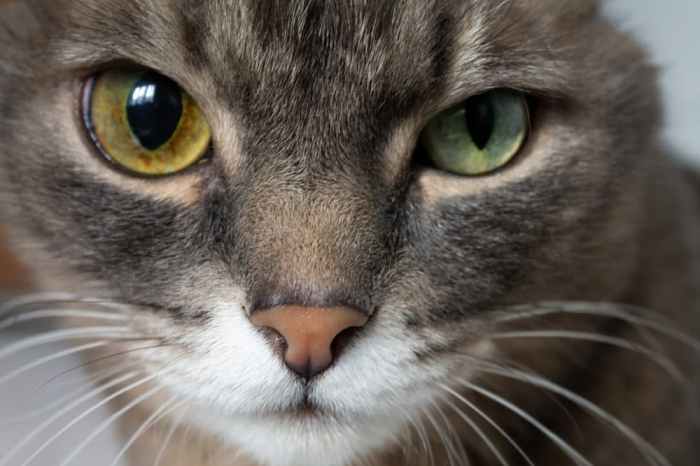
While brown spots are usually a harmless genetic trait, it’s important to differentiate them from potential eye conditions that canmimic* their appearance. Conjunctivitis (pinkeye) and inflammation can cause redness and discoloration around the eyes, which might initially be mistaken for brown spots.Distinguishing between natural pigmentation and signs of illness is crucial. Brown spots are typically symmetrical and consistent in color and pattern.
Inflammation, on the other hand, often presents as redness, swelling, and discharge.To examine a cat’s eyes for signs of discomfort or irritation alongside the brown spots, gently lift the upper eyelid and look for any redness, cloudiness, or excessive tearing. Also, observe the pupil for any abnormalities in size or shape.Here’s a step-by-step procedure for checking a cat’s eye health:
- Gently restrain your cat: Wrap them in a towel if necessary.
- Examine the exterior: Look for any signs of injury, swelling, or discharge.
- Check the conjunctiva: Gently lift the upper eyelid and examine the pink membrane for redness or inflammation.
- Observe the pupil: Ensure it’s round and of equal size.
- Look for cloudiness: Check the cornea (the clear front part of the eye) for any cloudiness or opacities.
Cats with brown spotsmay* exhibit increased sensitivity to sunlight. The darker pigmentation around their eyes could potentially absorb more UV rays, leading to discomfort or irritation. Providing shade and limiting sun exposure during peak hours is a good precaution.
Breed-Specific Characteristics – Brown Spots as a Marker
Certain breeds have brown spots as a defining feature, contributing significantly to their overall breed standard. These spots are often considered desirable traits, and breeders actively select for them.Here’s a list of breeds categorized by coat length, where brown spots are a notable characteristic: Short Coat:
- British Shorthair
- Chartreux
Medium Coat:
- Russian Blue
Long Coat:
- Persian
- Exotic Shorthair
- Scottish Fold
Breed standards often specify the desired color and pattern of brown spots. For example, the British Shorthair standard calls for “distinct, symmetrical markings” around the eyes.The appearance of brown spots can vary significantly between breeds. In British Shorthairs, they are typically dark and symmetrical, while in Scottish Folds, they might be lighter and more scattered.Breeders select for or against brown spots depending on breed preferences and the overall desired appearance.
Some breeders prioritize intense, symmetrical markings, while others prefer a more subtle or natural look.Brown spots can influence the perceived “cuteness” or “uniqueness” of a cat within a breed. They often add character and visual interest to a cat’s face, making them even more appealing to potential owners.
Distinguishing Brown Spots from Other Pigmentation Issues
It’s important to differentiate brown spots from other forms of facial discoloration, such as tear staining. Tear staining is a yellowish or reddish-brown discoloration beneath the eyes, caused by the buildup of porphyrins (iron-containing compounds) in tears.Here’s a visual guide to help distinguish between these conditions: Brown Spots: Located around the eyes, typically symmetrical. The color is consistent and doesn’t change significantly.
The texture is smooth and blends seamlessly with the surrounding fur. Tear Staining: Located directly beneath the eyes, often appearing as streaks or patches. The color is typically yellowish or reddish-brown and can vary in intensity. The texture is often slightly crusty or flaky. Other Discoloration (e.g., fungal infection): May appear as patchy, irregular discoloration with a different texture (e.g., scaly, bumpy).The causes of tear staining differ significantly from inherited brown spots.
Tear staining is often linked to diet, allergies, or poor tear drainage. Brown spots are a result of genetic factors.Misdiagnosis is possible, especially if the discoloration is subtle. It’s always best to consult a veterinarian to rule out any underlying medical conditions.Here’s a flowchart to help differentiate between brown spots, tear stains, and other discoloration issues:[Flowchart Description: Start with “Facial Discoloration Observed.” Branch 1: “Located around eyes, symmetrical?” Yes -> Brown Spots.
No -> Branch
2. Branch 2
“Located beneath eyes, yellowish/reddish-brown streaks?” Yes -> Tear Staining. No -> Branch
3. Branch 3
“Patchy, irregular discoloration, unusual texture?” Yes -> Other Discoloration (Consult Veterinarian). No -> Consult Veterinarian.]
Grooming and Care – Managing Appearance & Health
Grooming practices for cats with brown spots should consider their coat type and sensitivity. Regular brushing helps remove loose fur and prevent buildup around the eyes.Gentle cleansers can be used to prevent buildup around the eyes, but it’s important to choose products specifically formulated for cats. Avoid harsh chemicals or fragrances that could irritate the skin.Protecting cats with brown spots from excessive sun exposure is advisable, especially during peak hours.
Providing shade and limiting outdoor time can help prevent discomfort and potential skin irritation.Ingredients to avoid in eye wipes or cleansers for cats with sensitive skin include alcohol, artificial fragrances, and harsh detergents. Look for products with natural ingredients like aloe vera or chamomile.To gently clean the area around a cat’s eyes, use a soft, damp cloth or cotton ball.
Wipe gently from the inner corner of the eye outwards, avoiding excessive pressure.
Outcome Summary
From the intricate genetics that dictate their appearance to the historical evolution of breed standards, brown spots on cats offer a captivating glimpse into the world of feline beauty and inheritance. Recognizing the difference between natural pigmentation and potential health concerns is key to providing the best care for your cat. Ultimately, appreciating these unique markings allows us to celebrate the individuality and charm that each cat brings to our lives.
So, the next time you admire those striking brown spots around your cat’s eyes, you’ll know there’s a whole lot more to them than meets the eye – a story of genetics, evolution, and the enduring appeal of our beloved feline companions.
Quick FAQs
Why do some cats have brown spots around their eyes and others don’t?
It’s primarily genetics! Specific genes control melanin production, which determines coat and eye color. Certain breeds inherit these genes, leading to brown spots. It’s also possible for seemingly “clear” parents to carry recessive genes that can unexpectedly appear in kittens.
Are brown spots always harmless?
Generally, yes. However, it’s crucial to rule out other conditions like conjunctivitis or inflammation. Any signs of discomfort, excessive tearing, or redness warrant a vet visit.
Can tear stains be confused with brown spots?
Yes, it’s a common mistake! Tear stains are caused by porphyrins (iron-containing compounds) in tears, creating reddish-brown discoloration. Brown spots are inherited pigmentation. Tear stains often appear below the eyes, while brown spots are typically around the eyes.
What’s the best way to clean the area around my cat’s eyes if they have brown spots?
Use a gentle, feline-specific cleanser and a soft, damp cloth. Avoid harsh chemicals or excessive rubbing. Always wipe
-away* from the eye to prevent irritation.
Do cats with brown spots need extra sun protection?
Some believe they may be more sensitive to sunlight, though more research is needed. Limiting sun exposure during peak hours and providing shaded areas can be beneficial.
What breeds are most known for having brown spots around their eyes?
Common breeds include British Shorthairs, Scottish Folds, Persians, and Burmese. However, brown spots can appear in various breeds.
Can breeders influence the appearance of brown spots?
Yes, breeders often select for or against brown spots depending on the breed standard and desired aesthetic. Some breeds prize them, while others consider them undesirable.

