There’s something undeniably captivating about a cat sporting stripes reminiscent of a tiger – a wild beauty tamed into a loving companion. These “tiger striped cats,” also known as tabby cats, boast a fascinating history, complex genetics, and a surprising range of variations. We’ll dive deep into the world of these stunning felines, exploring their origins, the breeds that showcase this pattern best, and the science behind their unique markings.
Get ready to discover the secrets behind those mesmerizing stripes!
From ancient art depicting striped cats to modern-day social media showcasing their beauty, the allure of these patterns has endured. Understanding the genetic factors at play, like the Agouti and Tabby genes, reveals a complex interplay that creates the diverse range of stripe patterns we see today. We’ll also look at how different breeds, like Bengals and Egyptians Maus, uniquely express these markings, and what it takes to keep these gorgeous cats healthy and happy.
The Allure of Tiger Striped Cats: A Comprehensive Guide
There’s something undeniably captivating about a cat sporting stripes reminiscent of a miniature tiger. These stunning felines, often referred to as tiger striped cats, hold a special place in the hearts of many. But where did this striking pattern originate? What breeds commonly display it? And what’s the science behind those mesmerizing markings?
This guide delves into the fascinating world of tiger striped cats, exploring their history, genetics, care, and the reasons behind their enduring appeal.
Origins and History of Tiger Striped Cats
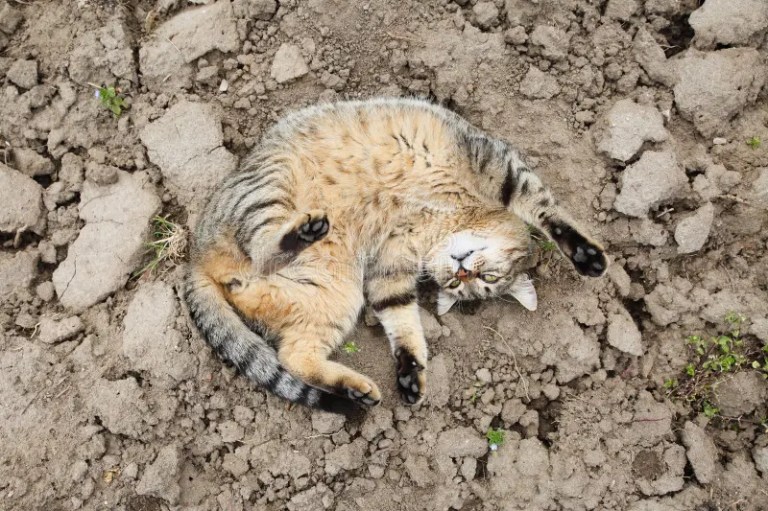
Source: dreamstime.com
The tabby pattern, the foundation for tiger stripes, is incredibly ancient and prevalent in domestic cats. It’s believed to be one of the oldest coat patterns in the cat family, predating domestication. The “tiger stripe” pattern, a specific type of tabby, likely evolved as a result of natural selection, providing camouflage in various environments. Early depictions of striped cats appear in art and literature across diverse cultures, hinting at their long-standing presence alongside humans.
Ancient Egyptian art frequently features striped cats, often associated with the goddess Bastet, highlighting their revered status. Similarly, Roman mosaics and Chinese paintings showcase cats with tabby markings, demonstrating the widespread recognition and appreciation of this pattern throughout history. The genetic basis for these patterns is rooted in a complex interplay of genes, with the Agouti gene playing a crucial role in determining whether a cat displays a tabby pattern at all.
The Agouti gene, in its recessive state (aa), results in a solid-colored cat. When the dominant Agouti gene (A) is present, it allows for the expression of the tabby pattern. The presence of the Agouti gene, combined with other modifiers, allows for the development of the banded pattern characteristic of tiger stripes. Furthermore, the link between wild cat ancestry and the prevalence of tiger-like stripes in domestic breeds is significant.
Many domestic cat breeds share genetic similarities with wild cats, and the tabby pattern is common in various wild feline species, suggesting a shared ancestral origin.
Breeds Commonly Exhibiting Tiger Striped Patterns
Several cat breeds are known for their striking tiger-like striping. While the pattern can appear in mixed breeds, certain breeds consistently showcase this trait. The Bengal, Egyptian Mau, and Savannah are particularly renowned for their distinctive striped coats. Understanding the nuances of each breed’s striping pattern is key to appreciating the diversity within this category.
The Bengal breed, a hybrid of domestic cats and Asian Leopard Cats, is perhaps the most famous for its tiger-like appearance. Bengals exhibit both rosetted and striped variations. Rosetted Bengals have markings that resemble rose petals, while striped Bengals display bold, vertical stripes. The Egyptian Mau, originating from Egypt, is characterized by its unique “bullseye” markings on its flanks, often accompanied by striking stripes.
These markings, along with their muscular build and large ears, give them a distinctive and elegant appearance. The Savannah breed, a cross between a domestic cat and a Serval (a medium-sized African wild cat), boasts a more wild and exotic look. Savannahs often have long, vertical stripes, but the pattern can vary depending on the generation (how far removed they are from their Serval ancestor).
| Breed | Typical Stripe Pattern | Coat Length | Temperament |
|---|---|---|---|
| Bengal | Striped or Rosetted | Short | Active, Intelligent, Playful |
| Egyptian Mau | Striped with Bullseye Markings | Short | Affectionate, Loyal, Energetic |
| Savannah | Long, Vertical Stripes | Short to Medium | Curious, Intelligent, Social |
| Abyssinian | Ticked Tabby (subtle stripes) | Short | Active, Curious, Intelligent |
| Maine Coon | Classic or Mackerel Tabby | Long | Gentle, Playful, Affectionate |
Genetics of Tabby Markings and Stripe Variations
The genetics of tabby markings are complex, involving multiple genes that interact to produce a wide range of patterns. The Tabby gene (T) is the primary determinant of whether a cat exhibits a tabby pattern. It has three known alleles: Ta (mackerel), Tbr (brown or classic), and Tsi (ticked). The Ta allele produces the mackerel tabby pattern, characterized by narrow, parallel stripes.
The Tbr allele results in the classic tabby pattern, featuring swirling or blotched markings. The Tsi allele produces the ticked tabby pattern, where the hairs are banded with different colors, creating a shimmering effect. The Agouti gene (A), as mentioned earlier, controls the distribution of pigment, creating the banded patterns that define tabby markings. The Inhibitor gene (I) influences coat color, and its interaction with the Tabby gene can affect the intensity and shade of the stripes.
For example, a cat with the Inhibitor gene (Ii or ii) will have a diluted coat color, such as blue or cream, regardless of its Tabby genotype.
Different combinations of these genes can result in varying stripe widths, density, and placement. A cat with TaTa will consistently display a mackerel tabby pattern, while a cat with TbrTbr will exhibit a classic tabby pattern. The interplay between these genes, along with other modifiers, creates the incredible diversity of tabby patterns observed in cats.
A flowchart illustrating the genetic pathways leading to different tabby patterns would begin with the Tabby gene (T). From there, branches would lead to the different alleles (Ta, Tbr, Tsi), each influencing the pattern. The Agouti gene (A) would then interact with these alleles, further modifying the pattern. Finally, the Inhibitor gene (I) would impact coat color, adding another layer of complexity to the overall appearance.
Distinguishing Tiger Striped Cats from Other Tabby Patterns
While all tabby patterns share a common ancestry, they differ significantly in their appearance. Mackerel tabbies have narrow, parallel stripes resembling a fish skeleton. Classic tabbies have swirling, blotched markings. Ticked tabbies have a shimmering effect due to banded hairs. Spotted tabbies have distinct spots rather than stripes.
Tiger striped cats, specifically, are characterized by bold, vertical stripes that are relatively evenly spaced and cover a significant portion of the body. The density and boldness of the stripes are key differentiators. Tiger striped cats typically have darker, more defined stripes compared to other tabby variations.
A “true” tiger striped cat exhibits a consistent pattern of bold, vertical stripes across its body, with minimal variation in stripe width or spacing. A cat with simply a few stripes might be considered a tabby with a slight resemblance to a tiger, but it wouldn’t possess the characteristic intensity and uniformity of a true tiger striped cat. Environmental factors, such as sunlight exposure and diet, can subtly influence stripe development and appearance, but they don’t fundamentally alter the underlying genetic pattern.
- Mackerel Tabby: Narrow, parallel stripes running vertically down the body.
- Classic Tabby: Swirling, blotched markings that resemble marble.
Coat Colors and Variations in Tiger Striped Cats
Tiger striped cats can exhibit a wide range of coat colors, including brown, silver, blue (gray), and charcoal. The base color is determined by other genes, while the tabby pattern overlays this foundation. Colorpoint patterns, where the extremities (face, ears, paws, tail) are lighter than the body, can also interact with tabby striping, creating unique and striking appearances. The dilution gene (d) plays a significant role in determining coat color.
The dominant D allele results in full color, while the recessive d allele dilutes the color, producing shades like blue (from black) or cream (from brown). Rare or unusual color combinations in tiger striped cats can occur due to complex interactions between multiple genes.
| Color | Description | Genetic Influence |
|---|---|---|
| Brown | Rich, dark brown stripes on a brown background. | BB or Bb (no dilution) |
| Silver | Grayish-white stripes on a silver background. | Modifier genes affecting pigment distribution |
| Blue | Gray stripes on a gray background. | dd (dilution gene) |
| Charcoal | Dark gray to black stripes on a dark gray background. | Modifier genes affecting pigment density |
| Cream | Pale cream stripes on a cream background. | dd (dilution gene) and BB or Bb |
| Colorpoint | Darker stripes on the extremities (face, ears, paws, tail) with a lighter body. | cs gene (colorpoint restriction) |
Caring for Tiger Striped Cats: Health and Grooming
The general health considerations for domestic cats, regardless of coat pattern, include providing a nutritious diet, ensuring access to fresh water, and maintaining a clean living environment. Regular veterinary checkups and preventative care, such as vaccinations and parasite control, are essential for maintaining overall health. Breeds known for tiger striping, such as Bengals, may be predisposed to certain health concerns, such as hypertrophic cardiomyopathy (HCM), a heart condition.
Responsible breeders screen their cats for these conditions to minimize the risk of transmission.
Grooming recommendations for cats with dense, striped coats involve regular brushing to prevent matting and tangles. A slicker brush and a metal comb are effective tools for removing loose fur and maintaining a healthy coat. Brushing frequency should be increased during shedding season. Regular nail trimming and ear cleaning are also important aspects of feline grooming.
Essential grooming practices for maintaining a healthy and vibrant striped coat include regular brushing (at least 2-3 times per week), nail trimming every 2-3 weeks, and ear cleaning as needed. A balanced diet and regular veterinary checkups contribute to overall coat health and vitality.
The Appeal and Popularity of Tiger Striped Cats
The visual striking nature of tiger striped cats is a primary reason for their appeal. The resemblance to a miniature tiger evokes a sense of wildness and exotic beauty. Anecdotal evidence and online surveys consistently indicate a high level of interest in these cats as pets. The symbolic associations of tigers – strength, power, and grace – likely influence the perception of striped cats, further enhancing their desirability.
Social media and online communities play a significant role in showcasing and celebrating tiger striped cats, contributing to their growing popularity.
Imagine a Bengal cat, its sleek, muscular body adorned with bold, dark brown stripes, lounging gracefully on a moss-covered rock in a sun-dappled forest clearing. The stripes blend seamlessly with the shadows, creating an illusion of camouflage. Its amber eyes gleam with intelligence and curiosity, reflecting the surrounding foliage. The cat exudes an aura of quiet confidence and untamed beauty, a testament to the captivating allure of tiger striped cats.
Unique Markings and Patterns within Tiger Striped Cats
While the classic tiger stripe pattern is well-defined, variations and unique markings can occur. Swirling stripes, where the stripes curve and intertwine, are a less common but visually striking variation. Broken stripes, where the stripes are interrupted or fragmented, can also be observed. “Ghost markings” are faint, almost imperceptible stripes that appear as subtle shading on the coat. Asymmetrical striping, where the stripes are unevenly distributed on the body, can be attributed to genetic factors or developmental variations.
Cats with distinctive markings, such as a stripe that forms a unique shape or a cluster of stripes concentrated in a particular area, are particularly prized for their individuality.
- Swirling Stripes: Stripes that curve and intertwine, creating a marbled effect.
- Broken Stripes: Stripes that are interrupted or fragmented, appearing as dashes or patches.
- Ghost Markings: Faint, subtle shading that resembles stripes but is not as distinct.
- Asymmetrical Striping: Uneven distribution of stripes across the body.
- Bullseye Markings: Distinct circular markings on the flanks, often seen in Egyptian Maus.
Ultimate Conclusion
The world of tiger striped cats is a rich tapestry of genetics, history, and undeniable beauty. Whether you’re a seasoned cat enthusiast or simply appreciate a striking appearance, understanding the nuances of these patterns – from the classic mackerel stripe to the rare swirling variations – adds a whole new layer of appreciation. Ultimately, these cats offer a unique blend of wild elegance and domestic charm, making them beloved companions around the globe.
So, next time you see a cat with those captivating stripes, you’ll know there’s a fascinating story behind them!
FAQs
Why are they called “tiger striped”?
The term “tiger striped” comes from the resemblance of their markings to the stripes found on tigers. It’s a descriptive term highlighting the striking similarity.
Is a tiger striped cat a specific breed?
No, “tiger striped” refers to a coat pattern, not a breed. Many different breeds can exhibit this pattern, including Bengals, Egyptian Maus, and even domestic shorthairs.
What’s the difference between a tabby and a tiger striped cat?
Essentially, they’re the same thing! “Tabby” is the broader term for cats with striped, swirled, spotted, or ticked patterns. “Tiger striped” specifically refers to a more pronounced, bold stripe pattern.
Can a cat’s stripes change as it ages?
Yes, subtle changes can occur. The intensity and definition of stripes can sometimes fade or become more pronounced as a cat matures, influenced by factors like sun exposure and genetics.
Are tiger striped cats more prone to certain health problems?
Not inherently. However, if the cat is a breed known for specific health concerns (like Bengals and their potential for hypertrophic cardiomyopathy), those risks may be present regardless of the stripe pattern.
What’s the best way to groom a tiger striped cat?
Regular brushing (2-3 times a week) is key, especially for breeds with longer coats. Use a soft-bristled brush or grooming glove to remove loose fur and prevent mats. Pay attention to areas behind the ears and under the legs.

