Have you ever seen a cat that just…stuck out? Beauty, as they say, is in the eye of the beholder, and that’s especially true when it comes to our feline friends. What one person finds adorable, another might consider a little unusual. Across cultures and even within species, what’s considered beautiful varies wildly. And when it comes to cats, “weird” can mean anything from a lack of fur to a coat that looks like it’s been styled by a particularly enthusiastic poodle.
But there’s a certain charm to these unique appearances, a fascination with the unexpected that draws us to these wonderfully odd creatures. After all, who doesn’t love a pet that’s a little bit different?
We’re diving into the fascinating world of the weirdest looking cat breeds, exploring their origins, unique characteristics, and the quirks that make them so special. From hairless wonders to fluffy, curly oddities, prepare to be amazed by the incredible diversity within the feline kingdom. We’ll look at the genetics behind these unusual traits and the care these cats require to thrive, proving that “weird” doesn’t mean “difficult” – just different!
The Weirdest Looking Cat Breeds: A Celebration of Feline Uniqueness
What constitutes “beauty” is a fascinatingly subjective thing. Across cultures, what’s considered attractive in humans varies wildly. Even within the animal kingdom, preferences differ – a peacock’s flamboyant display might be irresistible to a peahen, while a lioness prioritizes practicality and camouflage. So, when we talk about “weird” looking cats, we’re wading into a realm of personal taste and unusual genetics.
This isn’t about judging; it’s about appreciating the incredible diversity within the feline world and celebrating the quirks that make these breeds so captivating.
The term “weird” in this context simply refers to cats that deviate significantly from the typical domestic shorthair appearance. This can stem from unusual coat patterns, extreme body shapes, or distinctive facial features. While some might find these traits odd, many people are drawn to the novelty and charm of these unique felines. There’s a certain appeal in owning a pet that stands out from the crowd, a living testament to the wonders of genetic variation.
The Sphynx: Hairless Wonders
History and Origin
The Sphynx cat’s story begins in the 1960s with a barn cat in Canada named Prune. Through selective breeding, a hairless kitten named June was born. This initial line unfortunately disappeared, but in the 1970s, a New Mexico breeder named Elizabeth Green rediscovered hairless kittens and began a breeding program, combining them with Devon Rex cats to stabilize the breed.
The name “Sphynx,” evoking the enigmatic Egyptian statues, was chosen to reflect their unique and somewhat otherworldly appearance.
Physical Characteristics
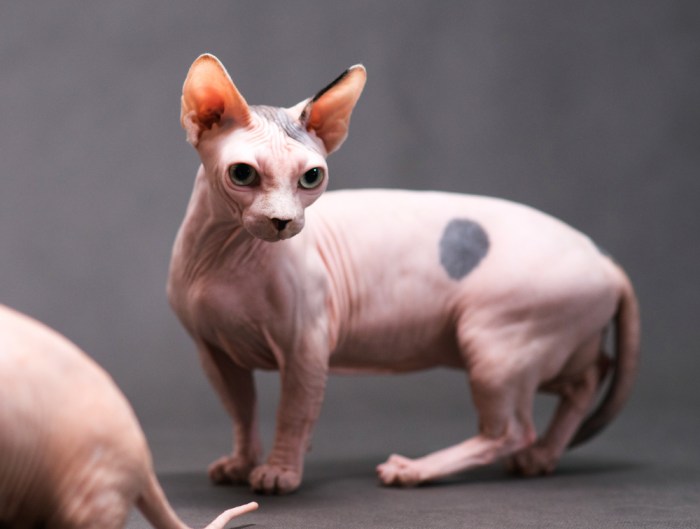
Despite being called “hairless,” Sphynx cats aren’t entirely devoid of fur. They typically have a fine down covering their skin, which feels like peach fuzz. Their skin is wrinkled, particularly around the shoulders, hips, and face, giving them a distinctive, almost ancient look. Their large, lemon-shaped eyes and prominent ears further contribute to their expressive faces. The lack of fur also means their skin is more visible, showcasing a range of colors and patterns.
Care Requirements
The Sphynx’s lack of fur necessitates specific care. Without a coat to regulate their body temperature, they are prone to getting cold and need warm environments. Regular bathing (typically once a week) is essential to remove the buildup of oils on their skin. Their ears also require frequent cleaning to prevent wax buildup. A diet rich in essential fatty acids is important for skin health.
| Physical Feature | Description | Care Implications |
|---|---|---|
| Skin | Wrinkled, peach-fuzz covered, various colors and patterns | Requires regular bathing to remove oil buildup; susceptible to sunburn. |
| Ears | Large, prominent | Requires frequent cleaning to prevent wax buildup. |
| Temperature Regulation | Poor | Needs warm environments; sweaters or blankets may be necessary. |
The Cornish Rex: Wavy and Elegant
The Story of Kallibunker
The Cornish Rex’s story is one of pure chance. In 1950, a barn cat in Cornwall, England, gave birth to a litter of kittens, one of which, named Kallibunker, possessed an unusual, wavy coat. This was the result of a spontaneous genetic mutation. Kallibunker’s owner, Bertram Milliken, recognized the uniqueness of his cat and began a breeding program, carefully selecting for the wavy coat trait.
This marked the beginning of the Cornish Rex breed.
Unique Coat Texture
The Cornish Rex’s coat is its defining characteristic. It’s incredibly soft and wavy, resembling rippled silk. Unlike most cats, the Cornish Rex lacks an undercoat, resulting in a single layer of loose curls. The waves are caused by a mutation affecting the hair follicle structure, leading to a lack of the crimped structure found in typical cat fur.
Body Structure and Head Shape
Beyond the coat, Cornish Rex cats have a distinctive body structure. They are slender and graceful, with long legs and a whippet-like build. Their head is triangular with high cheekbones and large, oval eyes, giving them an elegant and refined appearance. Their ears are also large and set low on the head.
Temperature Regulation and Grooming
The Cornish Rex’s lack of an undercoat makes them more sensitive to cold than other cats. They require warmer environments and may benefit from sweaters in cooler climates. Grooming is relatively easy, requiring only occasional brushing to prevent matting and tangling of the wavy fur. The coat’s texture also means they shed less than many other breeds.
The Devon Rex: Pixie-Like Charm
Genetic Mutation
Similar to the Cornish Rex, the Devon Rex’s distinctive features are the result of a spontaneous genetic mutation. However, the mutation is different, affecting the hair shaft in a different way. This mutation causes the Devon Rex’s fur to be soft, loose, and often wavy, but with a slightly different texture than the Cornish Rex.
Distinctive Features
Devon Rex cats are instantly recognizable by their large, low-set ears, which often curl backward. They also have short legs, a narrow head, and expressive, wide-set eyes. Their overall appearance is often described as “pixie-like” or “elfin,” contributing to their endearing charm.
Coat Comparison
Source: catster.com
While both the Cornish Rex and Devon Rex have wavy coats, there are subtle differences. The Cornish Rex’s coat is generally tighter and more consistently wavy, while the Devon Rex’s coat can be looser and more variable, sometimes appearing almost straight in certain areas. The Devon Rex’s fur is also often described as being softer and more downy than the Cornish Rex’s.
| Breed | Coat Description |
|---|---|
| Cornish Rex | Tightly curled, consistently wavy, rippled silk texture. |
| Devon Rex | Looser waves, variable texture, sometimes appearing straight, softer and downy. |
Personality
The Devon Rex is known for its playful and mischievous personality. They are highly energetic and intelligent, often described as “monkey-like” in their antics. They are affectionate and enjoy being around people, often following their owners from room to room and participating in household activities. Their curious nature and love of play make them entertaining and engaging companions.
The Lykoi: The “Werewolf” Cat
Genetic Anomaly
The Lykoi, often referred to as the “werewolf cat,” is the result of a rare genetic anomaly. This isn’t a breed in the traditional sense, but rather a naturally occurring mutation within domestic shorthair cats. The mutation affects the keratin gene, which is responsible for hair growth. This results in sparse, patchy fur, particularly around the face, ears, and legs.
Appearance
The Lykoi’s appearance is striking and undeniably unique. The sparse fur gives them a resemblance to a werewolf, with large eyes and a distinctive facial pattern. Their skin is often visible, showcasing a range of colors and patterns. The lack of fur around the nose and mouth can give them a perpetually surprised expression.
Health Implications
While the Lykoi’s appearance is captivating, there are health considerations. The genetic mutation is still being studied, but initial research suggests that it doesn’t appear to be associated with any significant health problems. However, breeders are carefully screening Lykoi cats to ensure they are free from other genetic diseases.
“The first time you see a Lykoi, you do a double-take. It’s a truly startling appearance, and most people initially react with a mixture of surprise and curiosity. They often ask if something is wrong with the cat, but once they learn about the genetic mutation, they’re usually fascinated by its uniqueness.”
The Scottish Fold: Folded Ears and Sweet Faces
Genetic Mutation
The Scottish Fold’s most distinctive feature, its folded ears, is caused by a dominant gene mutation that affects cartilage throughout the body. This mutation, first discovered in Scotland in the 1960s, leads to a softening of the cartilage, causing the ears to fold forward and downward.
Ear Folding Degrees
The degree of ear folding can vary significantly among Scottish Folds. Some cats have a tight, neat fold, while others have a looser, more relaxed fold. Some may have only one folded ear, while others have both. The appearance can change as the cat ages, with the ears becoming more folded over time.
Health Concerns
Unfortunately, the same gene mutation that causes the folded ears is also associated with a painful and debilitating condition called osteochondrodysplasia (OCD). OCD affects the cartilage and bone development, leading to arthritis and other skeletal problems. Responsible breeders are carefully screening their cats for OCD and avoiding breeding cats with signs of the condition.
| Ear Fold Degree | Description | Potential Health Risks | Appearance Impact |
|---|---|---|---|
| Tight Fold | Ears fold neatly forward and downward. | Higher risk of OCD. | Classic Scottish Fold appearance. |
| Loose Fold | Ears fold more loosely and may not be as pronounced. | Moderate risk of OCD. | Less dramatic fold, but still distinctive. |
| Single Fold | Only one ear is folded. | Risk of OCD depends on genetics. | Asymmetrical appearance. |
| No Fold | Ears stand erect. | Lower risk of OCD. | Resembles a domestic shorthair. |
The American Wirehair: A Fuzzy, Tangled Look
Accidental Discovery
The American Wirehair breed emerged unexpectedly in upstate New York in 1966. A litter of barn kittens produced by a farm cat had several kittens with a distinctly wiry coat. This was a spontaneous genetic mutation, and the farmer, Helen Smith, recognized its uniqueness and contacted a local cat breeder, T. Barnhart, who began a breeding program to establish the breed.
Unique Coat Texture
The American Wirehair’s coat is its defining characteristic. It’s dense, wiry, and rough to the touch, resembling a steel brush. The individual hairs are crimped and bent, giving the coat a distinctive, tangled appearance. This texture is caused by a mutation affecting the hair follicle structure.
Grooming and Shedding
The American Wirehair’s coat requires minimal grooming. Due to the wiry texture, they shed less than many other breeds. However, occasional hand-stripping (plucking out dead hairs) can help maintain the coat’s texture and appearance. Regular brushing can also help prevent matting.
Personality and Temperament
American Wirehairs are known for their gentle and affectionate personalities. They are playful and energetic, but also enjoy cuddling and spending time with their families. They are intelligent and easily trained, making them rewarding companions.
The Selkirk Rex: Plush and Curly
Genetic Mutation
The Selkirk Rex’s curly coat is the result of a dominant genetic mutation discovered in Montana in 1987. A litter of kittens born to a calico farm cat had one kitten with a strikingly curly coat. This kitten, named Miss DePesto, became the foundation of the Selkirk Rex breed.
Types of Curls
The curls in Selkirk Rex cats can vary in tightness and looseness. Some cats have tight, ringlet-like curls, while others have looser, more relaxed waves. The curl pattern can also vary across the body, with some areas being curlier than others. The degree of curl is influenced by factors such as age, coat length, and genetics.
Care Requirements
Maintaining a Selkirk Rex’s curly coat requires regular grooming. Gentle brushing is essential to prevent matting and tangling. Bathing is also important to keep the coat clean and moisturized. Avoid harsh shampoos that can strip the coat of its natural oils.
Teddy Bear Appearance
The Selkirk Rex’s curly coat gives them a plush, teddy bear-like appearance. The soft, curly fur is incredibly appealing to the touch, and their overall appearance is often described as cuddly and endearing.
The LaPerm: Gentle Waves and a Soft Touch
Spontaneous Mutation
The LaPerm breed originated from a spontaneous mutation in a barn cat in Oregon in 1984. A litter of kittens was born, and one kitten, named Curly, had a unique, wavy coat. Curly’s owner, Deak Sogomonian, recognized the uniqueness of the coat and began a breeding program to establish the breed.
Coat and Hypoallergenic Qualities
The LaPerm’s coat is soft, wavy, and often described as feeling like silk. The waves can range from loose to tight, and the coat can be long or short. Interestingly, some people with cat allergies report fewer reactions to LaPerm cats, suggesting they may have hypoallergenic qualities, although this is not definitively proven.
Personality
LaPerm cats are known for their affectionate and gentle personalities. They are playful and energetic, but also enjoy cuddling and spending time with their families. They are intelligent and easily trained, making them rewarding companions.
- Soft
- Wavy
- Silky
- Flowing
- Gentle
The Turkish Van: The “Swimming Cat” with Unique Markings
Affinity for Water
The Turkish Van is famously known as the “swimming cat” due to its unusual affinity for water. Historically, these cats were observed by villagers in the Lake Van region of Turkey enjoying swimming and playing in the lake. This behavior is relatively rare among cats and has become a defining characteristic of the breed.
Distinctive Color Pattern
The Turkish Van’s color pattern is striking and easily recognizable. They have a predominantly white body with colored markings (typically black, cream, or red) on the head and tail, often described as a “van pattern.” The contrast between the white body and the colored markings creates a visually appealing and distinctive appearance.
Physical Characteristics
Turkish Vans are large and muscular cats with a long, flowing coat. They have expressive, almond-shaped eyes and a wedge-shaped head. Their tails are long and bushy, adding to their elegant appearance.
- They are highly intelligent and enjoy interactive play.
- They are affectionate and bond strongly with their families.
- They are energetic and playful, requiring plenty of exercise and stimulation.
Closing Notes
From the Sphynx’s bare skin to the Lykoi’s werewolf-like appearance and the Selkirk Rex’s plush curls, we’ve uncovered a truly remarkable collection of feline oddities. Each breed boasts a unique story, a genetic quirk, and a personality that shines through their unusual exterior. Ultimately, these “weirdest looking cat breeds” remind us that beauty isn’t about conforming to a standard; it’s about celebrating individuality and embracing the wonderfully strange and unexpected.
So, the next time you see a cat that looks a little different, take a closer look – you might just discover your new favorite furry friend!
Essential FAQs
Are “weird” cat breeds unhealthy?
Not necessarily! While some breeds have specific health concerns linked to their unique traits (like Scottish Folds and their cartilage issues), many are perfectly healthy. Responsible breeders prioritize health testing and ethical breeding practices.
Do hairless cats get cold easily?
Yes, Sphynx and other hairless breeds are more sensitive to temperature changes. They need warmer environments, sweaters in cooler weather, and plenty of cozy blankets.
Are Lykoi cats truly hypoallergenic?
While the Lykoi’s sparse fur might
-seem* hypoallergenic, there’s no guarantee. Allergies are often triggered by proteins in saliva and dander, not just fur. Spending time with a Lykoi before committing is always a good idea.
What’s the difference between a Cornish Rex and a Devon Rex?
Both have wavy coats, but the Cornish Rex’s waves are tighter and more defined, while the Devon Rex’s are looser and more flowing. Devon Rexes also have larger ears and a more pixie-like appearance.
How much grooming do curly-coated cats need?
Surprisingly, curly-coated breeds like the Selkirk Rex and LaPerm often require less grooming than you might think. While regular brushing is still important to prevent mats, their curls tend to trap loose fur.

