It’s a bizarre observation that many cat owners make: their feline friend seems strangely drawn to the pungent smell of bleach. You’re scrubbing the bathroom, and your cat is sniffing intently, even rubbing against the area. But why? This isn’t a typical feline attraction – most cats aren’t fans of strong chemicals. We’ll dive deep into the science behind this peculiar behavior, exploring everything from their super-sensitive noses to potential evolutionary instincts, and, most importantly, why it’s a serious safety concern.
The mystery begins with understanding just how different a cat’s sense of smell is compared to ours. They possess a vastly more complex olfactory system, capable of detecting scents we can’t even imagine. This heightened sensitivity, combined with unique neurological responses and even a connection to familiar smells like ammonia, can create a confusing and potentially dangerous attraction to bleach.
Let’s unravel this feline fascination, piece by piece.
Why Do Cats Like the Smell of Bleach? A Deep Dive
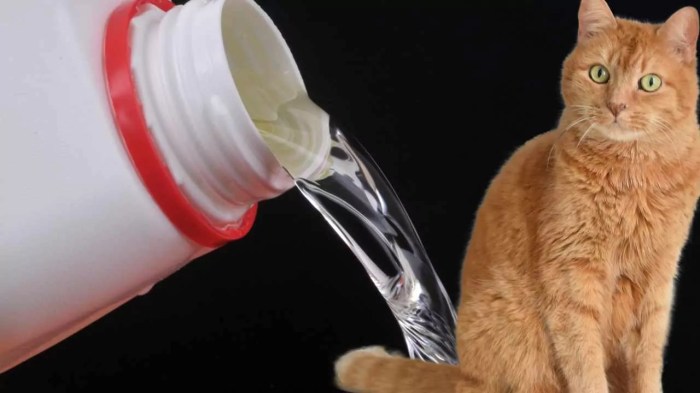
Source: howtofeelgood.net
It’s a bizarre observation, isn’t it? You’ve just cleaned with bleach, and your cat is practically glued to the spot, sniffing with intense focus. It seems counterintuitive – bleach is harsh, toxic, and certainly not something we humans find appealing. But for some cats, it’s a source of fascination. This article explores the complex reasons behind this peculiar feline behavior, delving into their unique sensory perception, potential instinctive interpretations, and the safety concerns we need to address.
Understanding why your cat is drawn to bleach isn’t just about satisfying curiosity; it’s about ensuring their safety and well-being. We’ll break down the science, the behavior, and what you can do to redirect this potentially dangerous attraction.
1. Initial Attraction
The Chemical Sensation
Household bleach primarily contains sodium hypochlorite (NaClO) dissolved in water. When diluted, it releases volatile organic compounds (VOCs) like chlorine and ammonia. These compounds are highly reactive and readily evaporate into the air, creating the characteristic pungent smell. A cat’s olfactory system is significantly more sensitive than ours, allowing them to detect these VOCs at concentrations far below what we can perceive.
The interaction of these chemicals with receptors in a cat’s nasal cavity likely triggers a neurological response, potentially stimulating reward pathways in the brain – though the exact mechanisms are still being researched. It’s not simply about the “smell” as we understand it; it’s a complex chemical interaction that can be perceived as stimulating or even pleasurable.
| Scent | Chemical Compounds | Cat Response | Potential Explanation |
|---|---|---|---|
| Bleach | Chlorine, Ammonia, Sodium Hypochlorite | Intense sniffing, attraction, sometimes rubbing | Stimulation of olfactory receptors, potential reward pathway activation. |
| Catnip | Nepetalactone | Euphoria, rolling, rubbing, vocalization | Binding of nepetalactone to olfactory receptors, triggering a neurological response. |
| Valerian Root | Actinidine | Similar to catnip, but with a more calming effect for some cats | Binding of actinidine to olfactory receptors, potentially affecting GABA receptors. |
| Silvervine | Actinidine and other compounds | Similar to catnip, often more potent for cats who don’t respond to catnip | Binding of compounds to olfactory receptors, triggering a neurological response. |
2. Sensory Perception Differences
Cat vs. Human
Cats possess a significantly higher density of olfactory receptors – around 200 million compared to our 5-6 million. Furthermore, they have a wider variety of receptor types, allowing them to detect a broader range of scents. This heightened sensitivity means they can detect trace amounts of chemicals that are completely imperceptible to us. Crucially, cats also have the vomeronasal organ, or Jacobson’s organ, located in the roof of their mouth.
This organ is specialized for detecting pheromones and other non-volatile chemical cues. While its role in the attraction to bleach is not fully understood, it’s possible that certain components of bleach, or compounds released during the cleaning process, stimulate this organ, contributing to the cat’s reaction.
The evolutionary advantage of heightened olfactory sensitivity in feline ancestors was paramount for survival. The ability to detect prey, identify predators, locate mates, and assess territory boundaries relied heavily on a keen sense of smell. This legacy of olfactory prowess continues to shape feline behavior today, even in domesticated environments.
3. Behavioral Interpretations
What Does the Scent Represent?
The bleach smell might trigger instinctive interpretations in cats. The ammonia component, in particular, could be mistaken for the scent of other animals’ urine, potentially triggering a territorial response. Cats might also associate the smell with specific events or locations. For example, if bleach is used regularly in the kitchen, a cat might associate the smell with food preparation or the presence of their human.
Past experiences play a crucial role; a cat who encountered bleach during a period of stress might develop an aversion, while one who encountered it during a positive experience might become attracted to it.
Imagine a scenario where a cat consistently encounters the bleach smell while their owner is cleaning near their food bowl. The cat associates the cleaning activity, and therefore the bleach smell, with the anticipation of food. This positive association can override any potential negative aspects of the smell, leading to a seemingly inexplicable attraction.
4. The Role of Ammonia
A Familiar Scent?
Bleach contains ammonia, a compound also present in feline urine. It’s plausible that cats are attracted to the ammonia component of bleach, mistaking it for a familiar scent. However, the concentration of ammonia in bleach is significantly higher than in cat urine. This difference could lead to confusion and potentially even irritation.
While the scent might initially be appealing, prolonged exposure could cause discomfort.
| Source | Ammonia Concentration (approximate) | Potential Cat Response |
|---|---|---|
| Bleach (diluted) | 2-5% | Initial attraction, followed by potential irritation or discomfort. |
| Cat Urine | 0.01-0.05% | Territorial marking, scent investigation. |
The strong ammonia smell of bleach can also be confusing for cats, as it resembles the scent of other animals’ urine, potentially leading to territorial behaviors or marking attempts.
5. Individual Variation
Not All Cats React the Same
Not all cats are drawn to the smell of bleach. Age, breed, and personality can all influence a cat’s response to scents. Younger cats are often more curious and exploratory, while older cats might be more cautious. Certain breeds, like Siamese, are known for their heightened sensitivity to smells. A cat’s individual scent preferences and aversions also play a role.
Furthermore, a cat’s overall health and stress levels can affect their olfactory perception; a stressed or unwell cat might be more sensitive to strong smells.
- Young age and high curiosity
- Certain breeds known for heightened olfactory sensitivity
- Lack of negative associations with cleaning activities
- Overall good health and low stress levels
- Individual scent preferences – some cats simply dislike strong smells
6. Safety Concerns
Why It’s Dangerous
Bleach is toxic to cats if ingested or inhaled. Even small amounts can cause serious health problems. Ingestion can lead to burns in the mouth and esophagus, vomiting, and abdominal pain. Inhalation of bleach fumes can cause respiratory irritation, coughing, difficulty breathing, and even pulmonary edema. Systemic poisoning can occur if bleach is absorbed into the bloodstream, affecting vital organs.
Imagine a simplified diagram of a cat’s respiratory system. The nasal passages, lined with sensitive mucous membranes, are the first point of contact for bleach fumes. These fumes irritate the membranes, causing inflammation and potentially damaging the delicate tissues. Further down, the trachea and bronchioles, the main airways, are also vulnerable to irritation and swelling. The lungs, where oxygen exchange occurs, are the most severely affected, potentially leading to fluid buildup and impaired breathing.
It is crucial to store bleach securely, out of reach of cats, and to ensure adequate ventilation when using bleach-based cleaning products.
7. Alternative Explanations
Other Contributing Factors
It’s possible that cats aren’t necessarily attracted to the smell of bleach itself, but rather to the
-location* where it’s used. They might be drawn to the kitchen or bathroom because those are areas where their humans spend time, or where food is prepared. The act of cleaning itself might release other appealing scents, such as the fragrance of cleaning products or the smell of freshly cleaned surfaces.
Environmental factors like humidity and temperature can also influence a cat’s perception of the bleach smell; for example, warmer temperatures can increase the volatility of VOCs, making the smell more noticeable.
Consider this flowchart: Cleaning activity -> Release of bleach fumes and other scents -> Cat detects scent -> Cat associates scent with location (kitchen, bathroom) -> Cat is drawn to location, regardless of the specific scent.
8. Behavioral Modification
Redirecting the Attraction
Redirecting a cat’s attention away from areas where bleach is used is essential for their safety. This can be achieved by providing alternative, enriching activities that keep them engaged and prevent boredom. Positive reinforcement techniques, such as treats and praise, can be used to discourage the behavior of sniffing or approaching bleach containers. Consistently rewarding the cat for staying away from the area can help create a negative association with the location.
| Activity Type | Materials Needed | Estimated Time Commitment | Potential Benefits |
|---|---|---|---|
| Interactive Play | Feather wand, laser pointer, toy mouse | 15-30 minutes daily | Physical exercise, mental stimulation, bonding with owner. |
| Puzzle Toys | Food-dispensing puzzle toys | 15-30 minutes daily | Mental stimulation, problem-solving skills, slow feeding. |
| Catnip Toys | Catnip-filled toys | 5-10 minutes several times daily | Sensory stimulation, playful behavior, relaxation. |
| Window Perch | Window perch, comfortable blanket | Ongoing | Observation of the outdoors, mental stimulation, relaxation. |
Conclusive Thoughts
Ultimately, while the reasons behind a cat’s attraction to bleach smell are complex and multifaceted – ranging from chemical interactions to potential associations with familiar scents – the bottom line is clear: bleach is dangerous for cats. Understanding the underlying causes can help us redirect their attention and create a safer environment. By providing enriching activities, ensuring secure storage of cleaning products, and recognizing the individual quirks of our feline companions, we can protect them from harm while still appreciating their unique and sometimes perplexing behaviors.
So, the next time you catch your cat sniffing around the bleach, remember it’s not a sign of good taste, but a potential hazard. A little awareness and proactive safety measures can go a long way in keeping your furry friend happy and healthy.
Questions and Answers
Why are cats’ noses so much better than ours?
Cats have significantly more olfactory receptors (around 200 million compared to our 5-6 million) and a larger olfactory bulb in their brain, allowing them to detect a wider range of scents and in much smaller concentrations.
What is the vomeronasal organ (Jacobson’s organ)?
It’s a specialized scent organ located in the roof of the mouth that detects pheromones and other chemical signals, playing a crucial role in social and reproductive behavior.
Could my cat be mistaking bleach for cat urine?
Yes, the ammonia present in bleach shares a chemical similarity with feline urine, and cats might be drawn to it for that reason, though it’s a dangerous confusion.
Why doesn’t every cat like the smell of bleach?
Individual cats have varying scent preferences and aversions based on age, breed, personality, and past experiences. Some may be more sensitive or have developed aversions to certain smells.
What are the immediate dangers of bleach exposure for cats?
Ingestion or inhalation of bleach can cause severe respiratory irritation, burns to the mouth and esophagus, and systemic poisoning. It’s a medical emergency.
How can I redirect my cat’s attention away from bleach?
Provide alternative, enriching activities like interactive toys, scratching posts, and playtime. Use positive reinforcement to discourage approaching bleach areas.
Is it possible my cat likes the location where I use bleach, not the smell itself?
Absolutely! Cats can associate cleaning routines with positive experiences (like food being nearby) and be drawn to the location regardless of the scent.

