Is your cat spending an unusual amount of time in the litter box? It’s a common concern for cat owners, and it can be worrying! Frequent trips to the litter box aren’t just inconvenient; they can signal underlying medical issues, behavioral stress, or even problems with the litter box setup itself. This guide dives deep into the potential reasons behind this behavior, offering practical solutions and advice to help you understand and address your cat’s needs.
We’ll explore everything from urinary tract infections and feline anxiety to litter box preferences and dietary influences. Understanding the root cause is key to helping your feline friend feel comfortable and healthy, and ultimately, reducing those frequent trips to the box. Let’s get started!
Why Does My Cat Keep Going to the Litter Box?
It’s a common concern for cat owners: your feline friend seems to be spending an inordinate amount of time in the litter box. While occasional visits are normal, frequent trips can signal an underlying issue, whether it’s a medical problem, behavioral stress, or a simple matter of litter box setup. This guide will explore the various reasons behind this behavior, offering insights and practical solutions to help you understand and address your cat’s needs.
Figuring out why your cat is using the litter box more than usual can feel overwhelming, but breaking it down into potential causes—medical, behavioral, environmental—is a great starting point. Let’s dive in and explore each area in detail, so you can better understand what might be going on with your furry companion.
Potential Medical Reasons for Frequent Litter Box Visits
Before assuming a behavioral issue, it’s crucial to rule out any underlying medical conditions. Frequent litter box visits can be a symptom of several feline health problems, often related to the urinary tract. Ignoring these could lead to more serious complications down the line.
Detail Common Feline Urinary Tract Infections (UTIs) and Their Symptoms
UTIs in cats are similar to those in humans, caused by bacteria entering the urinary tract. Symptoms often include frequent urination (often small amounts), straining to urinate, blood in the urine (hematuria), and vocalization while urinating. Cats may also lick their genital area excessively. Diagnosis typically involves a urinalysis to identify bacteria and assess urine pH.
Explain How Feline Idiopathic Cystitis (FIC) Manifests and What Factors Might Trigger It
FIC is a common condition, particularly in male cats, characterized by inflammation of the bladder without a clear bacterial cause. It’s often linked to stress and anxiety. Symptoms mirror those of a UTI: frequent urination, straining, pain, and blood in the urine. Potential triggers include changes in the household, loud noises, and even boredom. Management focuses on stress reduction and dietary adjustments.
Discuss the Possibility of Bladder Stones or Crystals and How They Impact Urination Frequency
Bladder stones and crystals can irritate the bladder lining, leading to frequent, painful urination. These formations can obstruct the urethra, a life-threatening situation, especially in male cats. Diagnosis involves urinalysis and potentially X-rays or ultrasound to visualize the stones. Treatment may involve dietary changes, medication, or surgical removal.
Provide a List of Kidney Diseases That Could Lead to Increased Water Intake and Subsequent Litter Box Use
Kidney disease is a common ailment in older cats, and it often leads to increased thirst (polydipsia) as the kidneys struggle to concentrate urine. This increased water intake naturally results in more frequent urination. Other signs of kidney disease include weight loss, decreased appetite, and lethargy. Blood tests and urinalysis are essential for diagnosis.
Elaborate on Diabetes and Its Connection to Increased Thirst and Urination
Diabetes mellitus, or diabetes, occurs when the body doesn’t produce enough insulin or can’t effectively use it. This leads to high blood sugar levels, which the kidneys try to eliminate through increased urination. Increased thirst (polydipsia) accompanies this, creating a cycle of frequent litter box visits. Diagnosis involves blood glucose testing.
| Condition | Common Symptoms | Potential Diagnostic Tests |
|---|---|---|
| UTI | Frequent urination, straining, blood in urine, excessive licking | Urinalysis, urine culture |
| FIC | Frequent urination, straining, blood in urine, vocalization | Urinalysis, physical exam, stress assessment |
| Bladder Stones/Crystals | Frequent urination, straining, pain, blood in urine | Urinalysis, X-rays, ultrasound |
| Kidney Disease | Increased thirst, increased urination, weight loss, lethargy | Blood tests, urinalysis |
| Diabetes | Increased thirst, increased urination, increased appetite, weight loss | Blood glucose testing |
Behavioral Causes: Stress and Anxiety
If medical causes have been ruled out, behavioral factors are likely at play. Cats are creatures of habit and routine, and disruptions to their environment can trigger stress and anxiety, which can manifest as altered litter box habits. Understanding these triggers is key to addressing the problem.
Discuss How Changes in the Household (New Pet, Baby, Moving) Can Affect a Cat’s Behavior
Significant changes in the household, such as introducing a new pet or baby, moving to a new home, or even rearranging furniture, can be incredibly stressful for cats. These changes disrupt their sense of security and can lead to anxiety-related behaviors, including inappropriate elimination.
Explain the Concept of Feline Anxiety and How It Can Manifest as Frequent Litter Box Visits
Feline anxiety isn’t always obvious. It can manifest in various ways, including hiding, changes in appetite, aggression, and, yes, frequent litter box visits. The litter box can become a “safe space” for an anxious cat, leading to increased use.
Detail How Multi-Cat Households Can Create Stress and Competition, Leading to Altered Litter Box Habits
Multi-cat households can be complex. Competition for resources (food, water, litter boxes, resting spots) can create stress and territorial disputes. A cat might avoid a litter box if it feels threatened by another cat. This can lead to inappropriate elimination outside the box.
Share Strategies for Identifying Stressors in a Cat’s Environment
Observe your cat’s behavior closely. Look for signs of stress, such as hiding, excessive grooming, changes in appetite, or aggression. Identify potential triggers in the environment, such as loud noises, unfamiliar people, or conflicts with other pets. Consider keeping a diary to track behaviors and potential triggers.
Design a Flowchart Illustrating Potential Stress Triggers and Corresponding Behavioral Responses
Imagine a flowchart starting with “Potential Stress Trigger” (e.g., New Pet, Loud Noise, Change in Routine). From there, branches lead to “Cat’s Response” (e.g., Hiding, Increased Grooming, Frequent Litter Box Visits, Aggression). Each response then branches to “Possible Solutions” (e.g., Provide Safe Space, Reduce Noise, Re-establish Routine, Consult Veterinarian/Behaviorist).
Litter Box Environment and Preferences
Even if your cat isn’t experiencing medical or behavioral issues, the litter box itself might be the problem. Cats are notoriously picky about their litter box setup, and a poorly designed or maintained box can lead to avoidance.
Explain the Importance of Litter Box Size and Depth for Different Cat Sizes and Preferences
The litter box should be large enough for your cat to comfortably turn around and dig. Kittens need shallower boxes, while larger cats require more space. Depth is also a factor; some cats prefer deep litter, while others prefer a shallower layer.
Discuss the Impact of Litter Type (Clay, Clumping, Crystal, Wood) on a Cat’s Willingness to Use the Box
Litter type is a major factor. Some cats prefer the texture of clay litter, while others dislike the dustiness. Clumping litter is convenient for cleaning but can be ingested by some cats. Crystal litter is absorbent but can be noisy. Wood litter is eco-friendly but may not be preferred by all cats.
Experimentation is often necessary.
Detail the Ideal Number of Litter Boxes Based on the Number of Cats in the Household (Provide a Formula)
The general rule is to have one litter box per cat, plus one extra. So, for two cats, you should have three litter boxes. For three cats, you need four, and so on. This ensures that each cat has a choice and reduces competition.
Provide Tips for Cleaning Litter Boxes Effectively and Frequently
Scoop litter boxes at least once daily, preferably twice. Completely empty and clean the box with mild soap and water every 1-2 weeks. Avoid using harsh chemicals or scented cleaners, as these can deter cats.
| Litter Type | Pros | Cons | Cat Preference (general) |
|---|---|---|---|
| Clay | Inexpensive, readily available | Dusty, doesn’t control odor well | Some cats prefer the texture |
| Clumping | Easy to clean, good odor control | Can be ingested, may be dusty | Popular choice for many cats |
| Crystal | Excellent odor control, low dust | Noisy, can be expensive | Some cats dislike the texture |
| Wood | Eco-friendly, good odor control | Can be dusty, some cats dislike the smell | Good alternative for sensitive cats |
Litter Box Location Considerations
Where you place the litter box is just as important as the box itself. A poorly located box can deter your cat from using it.
Discuss the Importance of Placing Litter Boxes in Quiet, Accessible Locations
Litter boxes should be placed in quiet, low-traffic areas where your cat feels safe and secure. Avoid placing them near noisy appliances or in areas that are difficult to access.
Explain Why Litter Boxes Should
Not* Be Placed Near Noisy Appliances or High-Traffic Areas
Not* Be Placed Near Noisy Appliances or High-Traffic Areas
Loud noises and constant activity can stress cats and make them reluctant to use the litter box. A washing machine, dryer, or frequently used doorway are all unsuitable locations.
Detail How to Strategically Position Litter Boxes to Avoid Territorial Disputes in Multi-Cat Homes
In multi-cat homes, spread out the litter boxes in different locations to minimize competition. Avoid placing them all in one central area.
Share Examples of Ideal and Unsuitable Litter Box Locations
Ideal locations include a quiet corner of a spare room, a laundry room (away from the noisy machines), or a bathroom. Unsuitable locations include near the food and water bowls, in a high-traffic hallway, or in a dark, cramped closet.
Organize a List of 5 “Do’s” and 5 “Don’ts” for Litter Box Placement
Do’s: 1. Place in quiet areas. 2. Ensure easy access. 3.
Provide multiple boxes in multi-cat homes. 4. Keep boxes away from food and water. 5. Regularly clean the area around the box.
Don’ts: 1. Place near noisy appliances. 2. Locate in high-traffic areas. 3.
Confine to a dark, cramped space. 4. Place near food and water. 5. Ignore your cat’s preferences.
Conclusion
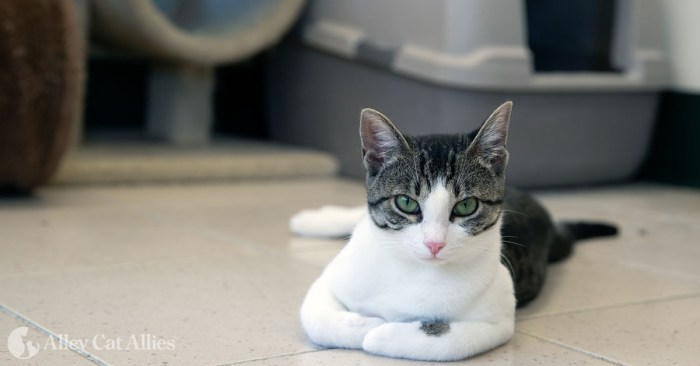
Source: alleycat.org
Navigating a cat’s frequent litter box visits can feel overwhelming, but remember that with careful observation and a proactive approach, you can often pinpoint the cause and find a solution. Whether it’s adjusting their diet, enriching their environment, or seeking veterinary care, addressing the underlying issue is crucial for your cat’s well-being. By understanding their needs and providing a supportive environment, you can help your cat regain comfortable litter box habits and enjoy a happier, healthier life.
Don’t hesitate to consult with your veterinarian – they are your best resource for diagnosing and treating any medical concerns. With a little patience and dedication, you can help your cat feel their best!
FAQ Summary
My cat is straining to urinate, but producing little to no urine. Is this normal?
No, this is a serious emergency! It could indicate a urinary blockage and requires immediate veterinary attention. Do not wait.
What’s the best way to tell if my cat is spraying versus urinating in the litter box?
Spraying involves small amounts of urine deposited on vertical surfaces, often accompanied by backing up to the surface. Regular urination is a larger volume deposited in the litter box.
How often should I clean the litter box?
Ideally, scoop the litter box once or twice daily and completely empty and clean it with mild soap and water at least once a month.
Can stress cause my cat to start urinating outside the litter box?
Absolutely! Stress and anxiety are common triggers for inappropriate elimination. Identifying and addressing the source of stress is key.
My cat only drinks water from the faucet. Is this a problem?
While it can be quirky behavior, it often indicates a preference for fresh, moving water. Consider a cat fountain to encourage hydration.
Should I punish my cat for going outside the litter box?
No! Punishment is ineffective and can worsen anxiety, leading to more inappropriate elimination. Focus on identifying and addressing the underlying cause.