Ever wonder if you’re
-really* giving your feline friend the best possible nutrition? Dr. Marty Greer, a veterinary nutritionist, believes many commercial cat foods fall short, and his brand, Dr. Marty’s, aims to change that. This review dives deep into Dr.
Marty’s cat food, exploring its philosophy, ingredients, product lines, and real-world results. We’ll break down everything you need to know to decide if it’s the right choice for your cat, from picky eaters to those with specific health needs.
Dr. Greer’s approach centers on mimicking a cat’s natural diet – think whole prey, organ meats, and limited processing. He believes this is key to optimal health and vitality. We’ll examine how this philosophy translates into the actual ingredients and formulations, and compare it to what’s typically found in mainstream cat food brands. Get ready for a comprehensive look at what makes Dr.
Marty’s unique.
Dr. Marty’s Cat Food: A Deep Dive for Discerning Cat Parents
Let’s be honest, finding the
-right* food for your cat can feel overwhelming. There’s so much conflicting information out there, and we all just want what’s best for our furry companions. I’ve been doing a lot of research lately, and Dr. Marty’s Cat Food has been popping up everywhere. It’s got a dedicated following, but also some questions swirling around it.
This review aims to cut through the noise and give you a clear, honest look at what Dr. Marty’s is all about, whether it lives up to the hype, and if it might be a good fit for your cat.
Introduction to Dr. Marty’s Cat Food
Dr. Marty Greer isn’t your average pet food formulator. He’s a veterinarian with a passion for feline nutrition, and his approach is rooted in understanding how cats evolved and what they naturally need to thrive. He’s a vocal advocate for a diet that mimics what cats would eat in the wild – primarily raw, whole prey. This philosophy is the bedrock of Dr.
Marty’s Cat Food.
The core principle guiding the formulation is simple: provide cats with biologically appropriate nutrition. This means focusing on high-quality animal protein, organ meats (which are incredibly important for cats!), and avoiding fillers, grains, and artificial additives. Dr. Marty believes that many commercial cat foods fall short in providing the complete nutritional profile cats need, leading to health problems down the line.
Dr. Marty’s mission is to provide cats with a convenient and affordable way to access a raw or freeze-dried diet that closely resembles their ancestral diet. Their target audience is broad, but they particularly appeal to owners of indoor cats (who often need help maintaining a healthy weight), senior cats (who may have specific dietary needs), and cats with sensitivities or health concerns like urinary tract issues or digestive problems.
They aim to make a raw-inspired diet accessible to everyone, regardless of their comfort level with preparing raw food.
| Product Line | Primary Protein Source | Target Cat Type |
|---|---|---|
| Raw Recipes | Chicken, Duck, Salmon, Turkey | All cats, especially those needing a biologically appropriate diet |
| Freeze-Dried Recipes | Chicken, Duck, Salmon, Turkey | Convenient option for those hesitant about raw, or traveling |
| Raw Turkey & Chicken Recipe for Indoor Cats | Turkey & Chicken | Indoor cats, weight management |
Ingredient Breakdown & Nutritional Profile
What actually
-goes* into Dr. Marty’s Cat Food? It’s a significant departure from many mainstream brands. The focus is on whole prey ingredients, meaning they strive to include all parts of the animal, not just muscle meat. Organ meats, like liver and heart, are a cornerstone of the formula.
You’ll also find things like whole fish (bones and all, which are a great source of calcium), and limited amounts of fruits and vegetables for added vitamins and minerals. Taurine, an essential amino acid for cats, is included, as it’s crucial for heart and eye health.
Why are organ meats so important? They’re packed with nutrients that muscle meat alone doesn’t provide – vitamins A, B12, iron, and other essential minerals. Taurine, as mentioned, is vital. Fruits and vegetables provide antioxidants and fiber, though in smaller quantities, as cats aren’t primarily herbivores. The limited use of carbohydrates is intentional, reflecting a cat’s evolutionary diet.
Let’s look at the guaranteed analysis. This can vary slightly depending on the specific recipe, but generally, you can expect:
- Protein: 40-50%
- Fat: 15-25%
- Fiber: 2-5%
- Moisture: 60-70% (Raw), 8-12% (Freeze-Dried)
Compared to AAFCO standards, Dr. Marty’s generally exceeds the minimum requirements for protein and fat, reflecting the emphasis on animal-based ingredients. The lower fiber content is also consistent with a cat’s natural diet.
| Ingredient | Function | Source | Potential Benefits |
|---|---|---|---|
| Chicken Liver | Vitamin A, B12, Iron Source | Poultry | Supports vision, immune function, energy production |
| Chicken Heart | Taurine, CoQ10 Source | Poultry | Supports heart health, cellular energy |
| Whole Fish (Sardines) | Calcium, Omega-3 Fatty Acids | Seafood | Supports bone health, brain function, skin & coat |
| Pumpkin | Fiber Source | Vegetable | Supports digestive health, regularity |
Product Line Overview – Raw & Freeze-Dried Options
Dr. Marty’s offers two main product lines: Raw and Freeze-Dried. The key difference lies in the preparation method and, consequently, the texture and convenience.
Raw recipes are, as the name suggests, uncooked. They are gently ground and frozen to preserve nutrients. This method retains the most natural enzymes and nutrients found in whole prey. Freeze-Dried recipes, on the other hand, are made by freeze-drying raw ingredients. This process removes almost all moisture, resulting in a lightweight, shelf-stable product that can be rehydrated with water.
While freeze-drying does cause some nutrient loss compared to raw, it’s still a significantly better option than many cooked commercial foods.
Here’s a breakdown of the available recipes:
| Product Name | Format (Raw/Freeze-Dried) | Key Ingredients |
|---|---|---|
| Chicken Recipe | Raw & Freeze-Dried | Chicken, Chicken Liver, Chicken Heart, Sardines |
| Duck Recipe | Raw & Freeze-Dried | Duck, Duck Liver, Duck Heart, Sardines |
| Salmon Recipe | Raw & Freeze-Dried | Salmon, Salmon Liver, Salmon Heart, Chicken |
| Turkey & Chicken Recipe for Indoor Cats | Raw & Freeze-Dried | Turkey, Chicken, Chicken Liver, Chicken Heart |
Cat Health Benefits & Potential Concerns
Many Dr. Marty’s customers report seeing significant improvements in their cats’ health after switching to this food. Potential benefits include improved digestion, healthier skin and coat, increased energy levels, and even better weight management. The biologically appropriate ingredients can be particularly helpful for cats with sensitivities or allergies, as the limited ingredient list reduces the likelihood of triggering reactions.
The food supports a cat’s natural diet by providing the nutrients they would obtain from hunting whole prey. The high protein content helps maintain muscle mass, while the organ meats provide essential vitamins and minerals. The limited carbohydrates help regulate blood sugar levels and prevent obesity.
However, there are potential concerns to consider. The cost is higher than many commercial brands, which can be a barrier for some owners. Availability can also be an issue, as Dr. Marty’s is primarily sold online. Finally, some picky eaters may not readily accept the taste or texture of the food, especially the raw variety.
Proper handling of raw food is also essential to prevent bacterial contamination.
- Digestive Health: Reduced gas, firmer stools, improved nutrient absorption
- Skin & Coat: Shinier coat, reduced shedding, healthier skin
- Energy Levels: Increased activity, improved stamina
- Weight Management: Helps maintain a healthy weight, especially in indoor cats
- Immune System: Supports a strong immune system due to nutrient density
Comparing Dr. Marty’s to Other Cat Food Brands
Let’s see how Dr. Marty’s stacks up against some popular competitors. Compared to brands like Blue Buffalo, Purina, and Royal Canin, Dr. Marty’s generally has a simpler ingredient list with a greater emphasis on animal-based protein and organ meats. Many mainstream brands rely more heavily on grains, fillers, and by-products.
When compared to other grain-free options, Dr. Marty’s often stands out due to its focus on whole prey ingredients and the inclusion of organ meats. While many grain-free foods substitute grains with potatoes or peas, Dr. Marty’s prioritizes animal protein as the primary ingredient.
The price point is definitely higher than most commercial brands. However, many owners feel that the potential health benefits justify the cost. The value proposition lies in the quality of the ingredients and the potential for reduced vet bills in the long run.
| Brand | Ingredient Quality | Price Range (per lb) | Overall Value |
|---|---|---|---|
| Dr. Marty’s | Excellent (Whole Prey, Organ Meats) | $8 – $12 | High (Potential for long-term health benefits) |
| Blue Buffalo | Good (Grain-Free, but some fillers) | $5 – $8 | Moderate |
| Purina | Fair (Contains grains and by-products) | $3 – $5 | Low |
| Royal Canin | Good (Formulated for specific needs) | $6 – $10 | Moderate to High |
Customer Reviews & Testimonials
Customer reviews for Dr. Marty’s are overwhelmingly positive, with many owners reporting significant improvements in their cats’ health and well-being. Common themes include increased energy, shinier coats, improved digestion, and even a reduction in picky eating. However, there are also some recurring complaints, primarily related to the cost and the initial transition period.
“My cat, Oliver, used to have constant digestive issues and a dull coat. Since switching to Dr. Marty’s Chicken Recipe, he’s a completely different cat! He’s more energetic, his coat is gorgeous, and his digestion is much better.”
“I was hesitant to try raw food, but Dr. Marty’s made it so easy. My cat loves it, and I feel good knowing I’m feeding him the best possible nutrition.”
Some customers have mentioned that their cats initially refused the food, requiring a slow and gradual transition. Others have expressed concerns about the cost, particularly for multi-cat households. A few have reported that their cats experienced mild digestive upset during the transition period, which is common when switching to a new diet.
- Palatability: Generally excellent, but some picky eaters may require a slow transition.
- Digestion: Significant improvements reported in many cases.
- Energy Levels: Increased activity and stamina commonly observed.
- Overall Health: Shinier coats, healthier skin, improved weight management.
Feeding Guidelines & Transitioning to Dr. Marty’s
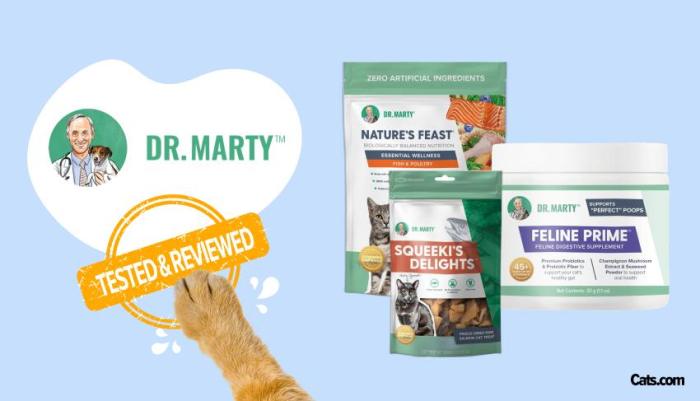
Source: cats.com
Feeding guidelines vary depending on your cat’s weight, age, and activity level. As a general rule, adult cats typically need around 4-6 ounces of food per day, divided into two meals. Kittens require more frequent feedings and larger portions.
It’s crucial to transition to Dr. Marty’s gradually to avoid digestive upset. A sudden change in diet can lead to vomiting or diarrhea. A recommended transition schedule is as follows:
- Day 1-2: 25% Dr. Marty’s, 75% old food
- Day 3-4: 50% Dr. Marty’s, 50% old food
- Day 5-6: 75% Dr. Marty’s, 25% old food
- Day 7: 100% Dr. Marty’s
| Cat Weight (lbs) | Daily Feeding Amount (cups) | Notes |
|---|---|---|
| 5-8 | 1/4 – 1/2 | Adjust based on activity level |
| 9-12 | 1/2 – 3/4 | Monitor weight and adjust accordingly |
| 13-16 | 3/4 – 1 | May need slightly more for active cats |
Sourcing & Manufacturing Practices
Dr. Marty’s sources its ingredients from reputable suppliers in the United States. They prioritize humanely raised animals and sustainable farming practices. The specific sourcing locations vary depending on the ingredient.
The food is manufactured in a USDA-inspected facility that adheres to strict quality control standards. Raw recipes are gently ground and frozen to preserve nutrients. Freeze-Dried recipes undergo a careful freeze-drying process to remove moisture while maintaining nutritional integrity.
Quality control measures include regular testing of ingredients and finished products to ensure safety and nutritional accuracy. They also conduct audits of their suppliers to verify their adherence to quality standards.
[Flowchart Illustration: Sourcing -> Ingredient Testing -> Manufacturing (Grinding/Freezing or Freeze-Drying) -> Quality Control Testing -> Packaging -> Distribution]
Cost & Value Assessment
Dr. Marty’s Cat Food is priced higher than many commercial brands, with prices ranging from $8 to $12 per pound depending on the format and recipe. The cost per serving is approximately $0.50 to $1.00, depending on your cat’s appetite.
While the initial cost may seem high, it’s important to consider the potential long-term value. A higher-quality diet can lead to improved health, reduced vet bills, and a longer, healthier life for your cat. The convenience of the freeze-dried option also adds value for busy owners.
- High-quality ingredients
- Potential for reduced vet bills
- Convenience (especially with freeze-dried)
- Improved cat health and well-being
- Supports a cat’s natural diet
Addressing Common Questions & Concerns
Let’s address some frequently asked questions about Dr. Marty’s Cat Food.
- How should I store Dr. Marty’s? Raw recipes should be stored frozen. Freeze-Dried recipes can be stored at room temperature in a cool, dry place.
- What is the shelf life? Raw recipes have a shelf life of several months when frozen. Freeze-Dried recipes have a shelf life of one year.
- Is Dr. Marty’s suitable for cats with allergies? The limited ingredient list can be beneficial for cats with sensitivities, but it’s always best to consult with your veterinarian before making any dietary changes.
- What if my cat doesn’t like the food? Try mixing it with a small amount of warm water or broth to enhance the flavor. A slow transition is also key.
- Is raw food safe? Proper handling is essential to prevent bacterial contamination. Always wash your hands and surfaces thoroughly after handling raw food.
For further information and support, visit the Dr. Marty’s website or consult with your veterinarian.
Final Conclusion
After a thorough examination, Dr. Marty’s cat food presents a compelling case for those seeking a more biologically appropriate diet for their cats. While the price point is higher than many conventional options, the focus on whole prey ingredients and potential health benefits could offer long-term value. Ultimately, the decision rests on your cat’s individual needs and preferences, but Dr.
Marty’s is certainly a brand worth considering for discerning cat parents looking to elevate their feline’s well-being.
From digestive health to a shinier coat and increased energy, many customers report positive changes in their cats. However, palatability can be a challenge for some, and the raw format requires careful handling. We hope this review has provided you with the information you need to make an informed choice and give your cat the nutrition they deserve!
Query Resolution
Can I feed my cat Dr. Marty’s if they have allergies?
Dr. Marty’s offers limited ingredient recipes, but it’s crucial to carefully review the ingredient list and consult with your veterinarian if your cat has known allergies. Always introduce new foods slowly.
How long does Dr. Marty’s cat food last once opened?
Raw and freeze-dried food should be stored properly. Raw food needs to be frozen and thawed daily. Freeze-dried food should be stored in an airtight container in a cool, dry place. Check the packaging for specific expiration dates.
Is Dr. Marty’s safe to handle?
Raw food requires careful handling to prevent bacterial contamination. Always wash your hands and surfaces thoroughly after handling raw pet food. Follow recommended food safety guidelines.
My cat is a picky eater – will they like Dr. Marty’s?
Palatability varies from cat to cat. A gradual transition is key (see feeding guidelines). You can also try warming the food slightly to enhance the aroma.
What’s the difference between the Raw and Freeze-Dried lines?
Raw food is gently frozen to preserve nutrients, while freeze-dried food is dehydrated, making it shelf-stable and lightweight. Both offer whole prey nutrition, but the preparation methods differ.
How much Dr. Marty’s should I feed my cat?
Feeding amounts depend on your cat’s weight, age, and activity level. Refer to the feeding guidelines provided on the packaging and adjust as needed to maintain a healthy body condition.