There’s something undeniably captivating about a cat sporting those bold, vertical stripes – the hallmark of the mackerel tabby pattern. From the sleek elegance of an Abyssinian to the majestic presence of a Maine Coon, this pattern graces a wide variety of breeds, each with its own unique charm. But what exactly
-is* a mackerel tabby, and what makes it different from other tabby variations?
Let’s dive into the genetics, characteristics, and care of these beautifully marked felines.
The tabby pattern itself is ancient, appearing in domestic cats for thousands of years, and is deeply rooted in their wild ancestry. The “mackerel” designation refers to the narrow, parallel stripes that resemble the bones of a mackerel fish – hence the name! Understanding the underlying genetics and how they interact with color variations unlocks a fascinating world of feline beauty.
The Alluring World of Mackerel Tabby Cats
The tabby pattern is arguably the most recognizable and beloved in the feline world. It’s a genetic blueprint that manifests in a stunning array of stripes, swirls, and spots, giving each cat a unique and captivating appearance. But within the tabby family, the mackerel tabby stands out with its distinctive, linear markings. This article dives deep into the world of mackerel tabby cats, exploring their genetics, common breeds, care requirements, and the reasons behind their enduring appeal.Tabby patterns are a result of the Agouti gene, which controls whether a cat’s hairs are banded (agouti) or solid colored.
When the Agouti gene is “on,” it allows for the expression of tabby patterns. The specific pattern displayed – mackerel, classic, ticked, or spotted – is then determined by other modifying genes. The mackerel pattern, in particular, is characterized by narrow, parallel stripes that run vertically along the body, resembling the bones of a mackerel fish – hence the name.
It’s a dominant pattern, meaning it only takes one copy of the tabby gene for it to be expressed.The genetic basis is complex, involving interactions between the Agouti gene and other genes that influence stripe width, density, and color distribution. While the Agouti gene dictates
- whether* a tabby pattern appears, other genes determine
- what kind* of tabby pattern it is. Understanding these genetic interactions helps explain the variations we see within the mackerel tabby pattern itself.
Here’s a comparison of the four main tabby patterns:
| Pattern Description | Appearance | Genetics (brief) | Common Breeds |
|---|---|---|---|
| Mackerel | Narrow, vertical stripes running along the body. Distinct “M” marking on the forehead. | Agouti gene “on,” specific modifiers for narrow stripes. | American Shorthair, Maine Coon, Bengal, Abyssinian |
| Classic | Wider, swirling patterns often described as “bullseye” markings. | Agouti gene “on,” modifiers for broader, circular patterns. | British Shorthair, Persian, Exotic Shorthair |
| Ticked | Individual hairs are banded with different colors, creating a “salt and pepper” or “agouti” appearance. Minimal striping on the body. | Agouti gene “on,” but with modifiers that minimize stripe development. | Abyssinian, Somali |
| Spotted | Distinct spots instead of stripes. Can range from small, scattered spots to larger, more defined markings. | Agouti gene “on,” modifiers that break up stripes into spots. | Bengal, Ocicat |
Defining the Mackerel Tabby Pattern
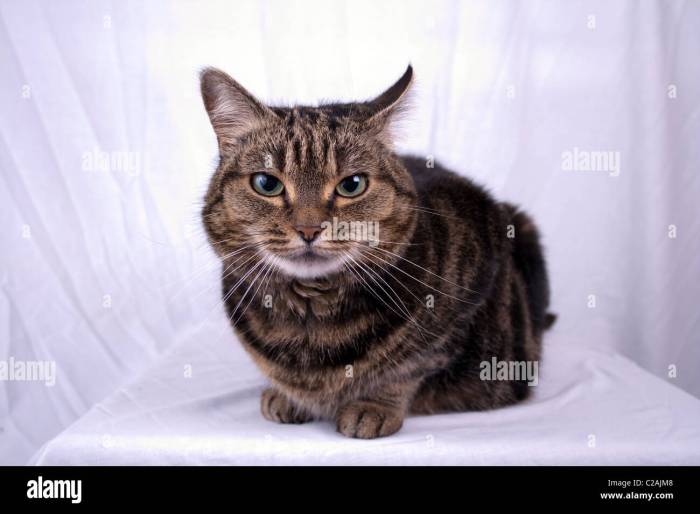
The hallmark of a mackerel tabby is the presence of narrow, parallel stripes that run vertically down the body, from the shoulders to the tail. These stripes are typically quite distinct and well-defined, creating a striking, almost tiger-like appearance. The density and contrast of the stripes can vary, contributing to the unique look of each individual cat.A key identifier of the mackerel tabby is the prominent “M” marking on the forehead.
This marking is a result of the way the tabby pattern develops during embryonic growth and is a consistent feature across all mackerel tabby variations. It’s a reliable visual cue for identifying this pattern.Within the mackerel pattern, there’s a fascinating variation known as “reversed mackerel.” In this variation, the stripes appear wider and more horizontal than the typical vertical stripes.
This is due to a slight shift in the way the stripes are oriented during development. Instead of running straight down the body, they curve slightly, creating a broader, more rounded appearance.Imagine a reversed mackerel tabby: its coat would display stripes that are noticeably wider than those of a standard mackerel tabby. These stripes would run horizontally across the body, giving the cat a more robust and substantial look.
The “M” marking on the forehead would still be present, but the overall impression would be one of broader, more relaxed stripes rather than the sharp, vertical lines of a typical mackerel tabby. The effect is quite visually appealing and adds another layer of diversity to the mackerel tabby pattern.
Breeds Commonly Exhibiting Mackerel Tabby Patterns
Several breeds are known for frequently displaying the mackerel tabby pattern. These include the American Shorthair, Maine Coon, Bengal, and Abyssinian. Each breed showcases the mackerel pattern in its own unique way, influenced by the breed’s overall size, coat length, and other genetic factors.For example, in American Shorthairs, the mackerel tabby pattern often appears in classic brown or silver colors.
Maine Coons, with their long, flowing coats, display the mackerel pattern beautifully, often in a variety of colors including brown, blue, and red. Bengals, known for their wild appearance, frequently exhibit the mackerel pattern in striking combinations of brown and black, creating a truly captivating look. And, as we’ll discuss further, the Abyssinian breed has a particularly rich history with the mackerel tabby pattern.Here’s a table summarizing some common breeds with mackerel tabby patterns:
| Breed Name | Typical Color(s) | Size (approximate) | Temperament (brief) |
|---|---|---|---|
| American Shorthair | Brown, Silver, Blue | 10-15 lbs | Affectionate, Easygoing |
| Maine Coon | Brown, Blue, Red, Cream | 13-18 lbs (males can be larger) | Gentle Giant, Playful |
| Bengal | Brown, Black, Silver | 8-15 lbs | Active, Intelligent, Curious |
| Abyssinian | Ruddy, Blue, Silver | 6-12 lbs | Energetic, Affectionate, Playful |
The Abyssinian breed has a particularly fascinating history with the mackerel tabby pattern. Originally, the Abyssinian was not consistently tabby. The “ticked” appearance, which is a form of agouti, was the defining characteristic. However, the introduction of tabby cats from the Far East in the 1930s brought the mackerel tabby gene into the breed. Breeders then selectively bred for this pattern, resulting in the beautiful mackerel tabby Abyssinians we see today.
This demonstrates how genetic traits can be introduced and cultivated within a breed over time.
Color Variations in Mackerel Tabby Cats
Source: alamy.com
Mackerel tabby cats can display a remarkable range of colors, including brown (often referred to as “seal” or “seal lynx”), silver, blue (a diluted gray), cream, and red/orange (also known as “ginger” or “marmalade”). The possibilities are truly diverse, creating a stunning array of visual combinations.The colors displayed are determined by separate genes that interact with the tabby pattern. For example, the “brown” color is controlled by a dominant gene, while the “blue” color is a recessive dilution of brown.
These color genes work in conjunction with the Agouti gene to produce the final coat color and pattern.A particularly intriguing variation is the “torbie” (tortoiseshell tabby). This pattern combines the tabby markings with patches of red or orange, creating a mottled appearance. The torbie pattern is almost exclusively found in female cats due to the way the genes for orange and black coat colors are located on the X chromosome.A silver mackerel tabby is a particularly striking example of the pattern’s versatility.
The silver coloration is caused by a recessive gene that inhibits pigment production, resulting in a shimmering, almost metallic sheen to the fur. The contrast between the dark stripes and the silver background creates a visually stunning effect. The silver hairs have less pigment, giving them a bright, reflective quality.
Caring for a Mackerel Tabby Cat
General cat care requirements remain the same regardless of coat pattern: providing a nutritious diet, ensuring regular veterinary care, and offering plenty of opportunities for play and enrichment. A high-quality cat food that meets their nutritional needs is essential for maintaining their health and vitality. Regular checkups with a veterinarian are crucial for preventative care and early detection of any potential health issues.However, certain breeds commonly exhibiting the mackerel tabby pattern may have specific care considerations.
For instance, Maine Coons, with their long, luxurious coats, require regular brushing to prevent mats and tangles. Bengals, being highly active, need plenty of interactive playtime and opportunities to exercise.Early socialization is paramount for all cats, regardless of their pattern. Exposing kittens to a variety of people, animals, and environments during their critical socialization period (roughly 2-7 weeks of age) helps them develop into well-adjusted and confident adults.Here’s a suggested weekly grooming routine for a long-haired mackerel tabby, such as a Maine Coon:
- Daily: Quick brush to remove loose fur and prevent mats.
- Every Other Day: More thorough brushing, paying attention to areas prone to matting (behind the ears, under the legs, around the tail).
- Weekly: Bath (if needed), nail trimming, and ear cleaning.
- Monthly: Professional grooming (optional, but recommended for maintaining coat health).
Health Considerations for Mackerel Tabby Cats
Like all cats, mackerel tabbies are susceptible to common feline health issues such as upper respiratory infections, kidney disease, and dental problems. Regular veterinary checkups and preventative care, including vaccinations and parasite control, are essential for minimizing these risks.Certain breeds frequently displaying the mackerel tabby pattern have breed-specific health concerns. For example, Maine Coons are predisposed to hypertrophic cardiomyopathy (HCM), a heart condition.
Bengals can be prone to progressive retinal atrophy (PRA), an eye disease. Responsible breeders screen their cats for these conditions to reduce the likelihood of them being passed on to offspring.The importance of regular veterinary checkups cannot be overstated. These checkups allow veterinarians to monitor your cat’s overall health, detect any early signs of illness, and provide appropriate treatment.Be vigilant for signs of common feline illnesses, such as changes in appetite, lethargy, vomiting, diarrhea, coughing, or sneezing.
If you notice any of these signs, seek veterinary attention promptly. Early intervention can often make a significant difference in the outcome.
Mackerel Tabby Appearance in Detail
The fur texture and length in mackerel tabby cats vary considerably depending on the breed. American Shorthairs typically have a short, dense coat, while Maine Coons boast a long, flowing, and shaggy coat. Bengals have a sleek, short coat with a distinctive glittery sheen.Eye color variations are also common among mackerel tabbies. You might see shades of green, gold, copper, or even blue, depending on the breed and individual genetics.
The intensity and hue of the eye color can further enhance the cat’s overall appearance.Body structure and build are also breed-dependent. American Shorthairs are medium-sized and muscular, while Maine Coons are large and gentle giants. Bengals are known for their athletic and muscular build, reflecting their wild ancestry.A Bengal mackerel tabby is a particularly striking example of this pattern. Its muscular build is accentuated by the bold, vertical stripes that run along its body.
The coat is short and sleek, with a distinctive glittery sheen that catches the light. The eyes are typically green or gold, and the overall impression is one of power, agility, and wild beauty. The markings are often sharply defined, creating a dramatic contrast against the background color.
Distinguishing Mackerel Tabby from Other Patterns
The key difference between the mackerel tabby and the classic tabby pattern lies in the arrangement of the stripes. Mackerel tabbies have narrow, vertical stripes, while classic tabbies have wider, swirling patterns. Think of it this way: mackerel stripes are like the bones of a fish, while classic patterns resemble bullseye markings.Differentiating a mackerel tabby from a ticked tabby can be more challenging.
Ticked tabbies have individual hairs that are banded with different colors, creating a “salt and pepper” or “agouti” appearance. They have minimal striping on the body, unlike mackerel tabbies. The “M” marking on the forehead is also less prominent in ticked tabbies.Identifying tabby patterns in mixed-breed cats can be particularly difficult, as they often exhibit a combination of patterns or diluted markings.
Careful observation and a process of elimination are often required.Here’s a flowchart to illustrate the process of identifying a cat’s tabby pattern:
- Start: Observe the forehead marking. Is there a distinct “M”?
- If Yes: Proceed to stripe analysis. Are the stripes narrow and vertical?
- If No: Consider ticked or other patterns.
- Narrow, Vertical Stripes: Mackerel Tabby
- Wide, Swirling Patterns: Classic Tabby
- Minimal Striping, Banded Hairs: Ticked Tabby
The Appeal of Mackerel Tabby Cats
The mackerel tabby pattern holds a unique appeal for many cat lovers. The striking, linear markings evoke a sense of wildness and elegance, creating a captivating visual impression. The pattern’s resemblance to the markings of wild cats, such as tigers and leopards, adds to its allure.I’ve heard countless stories from owners of mackerel tabby cats who describe their personalities as being both playful and affectionate.
Many report that their cats are intelligent, curious, and enjoy interactive playtime. While personality is influenced by many factors, there seems to be a common thread of spiritedness and charm associated with this pattern.The aesthetic qualities of the mackerel tabby pattern are undeniable. The bold stripes create a visually dynamic and engaging appearance, making these cats stand out from the crowd.
The pattern’s versatility, with its range of colors and variations, further enhances its appeal.Mackerel tabby cats often possess a perceived “wild” or “striking” appearance. Their markings evoke a sense of untamed beauty, reminding us of the power and grace of nature. This combination of elegance and wildness is what makes them so captivating.
Mackerel Tabby Cats in Popular Culture
Mackerel tabby cats, or tabby cats in general, have made numerous appearances in movies, books, and other media. Think of the iconic Cheshire Cat from “Alice in Wonderland,” a classic example of a tabby cat. Many fictional characters are depicted with tabby markings, often symbolizing intelligence, mystery, or independence.In different cultures, cats have been associated with various symbolic meanings. In some cultures, they are considered symbols of good luck and prosperity, while in others, they are associated with mystery and the supernatural.
Tabby cats, with their distinctive markings, often embody these symbolic qualities.Throughout history, tabby cats have been depicted in art, from ancient Egyptian murals to modern paintings. Their striking appearance has made them a popular subject for artists seeking to capture the beauty and essence of the feline form.
“There is no hunting more pleasurable than the pursuit of a cat.”Ernest Hemingway
Summary
From the subtle shimmer of a silver mackerel tabby to the powerful build of a Bengal, the mackerel tabby pattern offers a stunning array of visual delights. Whether you’re a seasoned cat enthusiast or simply appreciate a beautiful animal, the unique markings and personalities of these cats are sure to leave a lasting impression. So, next time you see a cat with those distinctive stripes, you’ll know exactly what you’re looking at – a magnificent example of the mackerel tabby cat breed!
Ultimately, caring for a mackerel tabby is much like caring for any cat, but understanding their breed-specific needs and potential health concerns will ensure a long and happy life for your striped companion.
Essential Questionnaire
Why are some mackerel tabbies called “torbie”?
“Torbie” is a portmanteau of “tortoiseshell” and “tabby.” It describes a mackerel tabby with patches of red or orange, creating a mottled appearance alongside the stripes. This happens when a cat inherits both the tabby gene and the gene for orange/red coloring.
What does the “M” marking on a mackerel tabby’s forehead signify?
The “M” marking is a key identifier of all tabby cats, including mackerel tabbies. It’s a remnant of their wild ancestors’ markings and is a direct result of the Agouti gene, which controls the distribution of pigment in the hair shaft.
Are reversed mackerel tabbies rarer than standard mackerel tabbies?
While not exceedingly rare, reversed mackerel tabbies are less common. The genetic expression that causes the stripes to appear wider and more horizontal is a variation within the mackerel pattern itself.
What’s the best way to groom a long-haired mackerel tabby like a Maine Coon?
Regular brushing (at least 2-3 times a week) is essential to prevent mats and tangles. Use a stainless steel comb to reach the undercoat and a slicker brush to remove loose fur. Bathing is typically only needed a few times a year unless they get particularly dirty.
What are some common health concerns to be aware of in breeds that frequently exhibit the mackerel tabby pattern?
Depending on the breed, potential concerns include hypertrophic cardiomyopathy (HCM) in Maine Coons, progressive retinal atrophy (PRA) in Abyssinians, and hip dysplasia in larger breeds. Regular vet checkups are crucial for early detection and management.
Can you identify a tabby pattern in a mixed-breed cat?
It can be challenging! Start by looking at the forehead marking (the “M”). Then, analyze the stripe pattern – are they narrow and vertical (mackerel), broad and swirling (classic), or are the hairs banded (ticked)? A flowchart can be a helpful guide.

