Have you ever stumbled upon a photo of a cat with adorable little speckles dotting its nose or paws? It’s a phenomenon that’s taken the internet by storm, and for good reason – these freckled felines are undeniably charming! The sudden surge in popularity of images featuring these unique cats online has sparked a lot of curiosity, and it’s fascinating to consider why we, as humans, are so drawn to these unusual markings.
It seems like just recently, we started noticing this trait more and more, and the internet has wholeheartedly embraced the cuteness.
Beyond the “aww” factor, there’s a genuine scientific intrigue surrounding feline freckles. From the genetics behind their appearance to the potential health implications, there’s a lot to unpack. We’ll delve into the biology, explore which breeds are most prone to this adorable trait, and discuss how to best care for these special kitties. Get ready to learn everything you ever wanted to know about cats with freckles!
The Delightful Mystery of Freckled Cats
It’s a surprisingly common sight these days: a photo of a cat, seemingly ordinary at first glance, but then you notice it – tiny, adorable freckles dotting its nose, paws, or ears. The internet has exploded with images of these uniquely marked felines, sparking a wave of fascination and prompting many a “aww!” moment. While the phenomenon isn’t entirely new, its visibility has dramatically increased in recent years, largely thanks to the power of social media.
This surge in popularity reflects our enduring human fascination with unusual animal markings – anything that sets an animal apart and adds a touch of quirky charm.
I remember scrolling through Instagram a few weeks ago and stumbling upon a picture of a ginger tabby with a constellation of freckles around its nose. It was so unexpected, so utterly charming, that I had to stop and admire it. It’s that kind of unexpected cuteness that makes these cats so captivating, and it’s what’s driving the online buzz.
Genetics and Biology of Feline Freckles
At their core, freckles in mammals, including cats, are a result of localized increases in melanin production. Melanin is the pigment responsible for skin and hair color, and it’s produced by specialized cells called melanocytes. Freckles aren’t a new formation of melanocytes; rather, they represent areas where existing melanocytes are producing more melanin than surrounding cells. This increased production is often linked to genetic factors, though environmental influences can also play a role.
Pinpointing the exact genes responsible for freckles in cats is an ongoing area of research. However, scientists suspect that variations in genes involved in melanocyte development and melanin synthesis are likely culprits. These genes might influence the distribution and intensity of melanin production, leading to the characteristic freckled appearance. It’s important to note that freckles are distinct from other feline pigmentation patterns like tabby markings, which are controlled by a different set of genes and result in broader stripes or swirls of color.
Roan, another pigmentation pattern, involves patches of white hair interspersed with colored hair, a completely different mechanism than freckle formation.
Exposure to sunlight, particularly during kittenhood, is thought to potentially influence freckle development. While genetics lay the groundwork, increased sun exposure might trigger melanocytes to produce more melanin in certain areas, potentially intensifying or expanding existing freckles. However, the extent of this influence is still being investigated.
| Characteristic | Freckles | Lentigo | Moles (Nevi) |
|---|---|---|---|
| Appearance | Small, flat, pigmented spots | Larger, flat, pigmented patches | Raised or flat, pigmented growths |
| Melanocyte Activity | Increased melanin production in existing melanocytes | Increased number of melanocytes | Clumped melanocytes |
| Potential Causes | Genetics, sun exposure | Genetics, sun exposure, hormonal changes | Genetics, developmental factors |
| Typical Location | Nose, lips, ears, paws | Anywhere on the body | Anywhere on the body |
Breeds Commonly Associated with Freckles
While freckles can appear in any cat breed, they are noticeably more prevalent in certain breeds. This suggests a genetic predisposition within these breeds. The breeds most often associated with freckles include the Turkish Van, Turkish Angora, and some lines of British Shorthair. However, it’s crucial to understand that freckles aren’t a breed standard in any of these breeds; they are simply a more frequently observed trait.
Estimating the exact prevalence of freckles within each breed is challenging, as it relies on observational data and isn’t consistently tracked. However, anecdotal evidence and breeder reports suggest that freckles might occur in approximately 10-20% of Turkish Vans and Turkish Angoras, while their presence in British Shorthairs is generally lower, perhaps around 5-10%. The genetic links between breed characteristics and freckle development are likely complex, potentially involving interactions between multiple genes.
- High Prevalence: Turkish Van, Turkish Angora
- Moderate Prevalence: British Shorthair
- Low Prevalence: Other breeds (freckles can occur sporadically)
Locations and Patterns of Freckles on Cats
Freckles in cats typically appear on the face, particularly around the nose and lips, as well as on the ears, paws, and sometimes the chin. The distribution of freckles can vary significantly from cat to cat. Some cats have a clustered pattern, where freckles are grouped closely together in certain areas. Others have a more scattered distribution, with freckles appearing randomly across their body.
Linear patterns, where freckles form a line or streak, are less common but can occur.
Freckle size, shape, and color also vary. They can range from tiny pinpricks to slightly larger spots. The color is typically brown or black, but pink or reddish-brown freckles are also observed. Imagine a cat’s nose: the freckles might appear as a delicate dusting of tiny brown dots, concentrated around the nostrils and extending slightly onto the upper lip.
The density can range from sparse, barely noticeable markings to a more pronounced pattern that significantly alters the cat’s appearance.
Health Considerations and Potential Concerns
Generally, freckles in cats are not considered a health concern. They are a benign cosmetic trait, similar to freckles in humans. However, like any skin marking, it’s important to monitor them for any changes that could indicate a more serious problem. While there’s no definitive evidence linking freckles to an increased risk of skin cancer in cats, it’s always prudent to be vigilant.
Regular veterinary checkups are essential for all cats, including those with freckles. During these checkups, your veterinarian can examine the skin for any abnormalities and provide guidance on maintaining your cat’s overall health. Keep an eye out for any changes in the size, shape, color, or texture of the freckles. Any new growths or sores that develop near the freckles should also be reported to your veterinarian.
- Changes in size or shape
- Changes in color (darkening, lightening, or unusual hues)
- Irregular borders
- Bleeding, scabbing, or crusting
- Itching or discomfort
Caring for Freckled Cats: Specific Needs?
Freckled cats don’t require any special care beyond what’s needed for any healthy cat. However, given the potential role of sun exposure in freckle development, taking precautions to protect their skin is a good idea, especially for cats with lighter-colored freckles. This is particularly important for cats who spend a lot of time outdoors.
Sun protection strategies include limiting outdoor exposure during peak sunlight hours, providing shaded areas outdoors, and using cat-safe sunscreen on exposed areas like the nose and ears. Regularly monitoring the freckles for any changes is also crucial. Early detection of any abnormalities can significantly improve the chances of successful treatment if a problem arises.
Preventative Care Plan for a Freckled Cat:
- Diet: High-quality, balanced diet to support overall health.
- Grooming: Regular brushing to maintain healthy skin and coat.
- Vet Visits: Annual checkups, including skin examinations.
- Sun Protection: Limit sun exposure, provide shade, and consider cat-safe sunscreen.
- Monitoring: Regularly check freckles for any changes.
The Cultural Impact and Online Presence
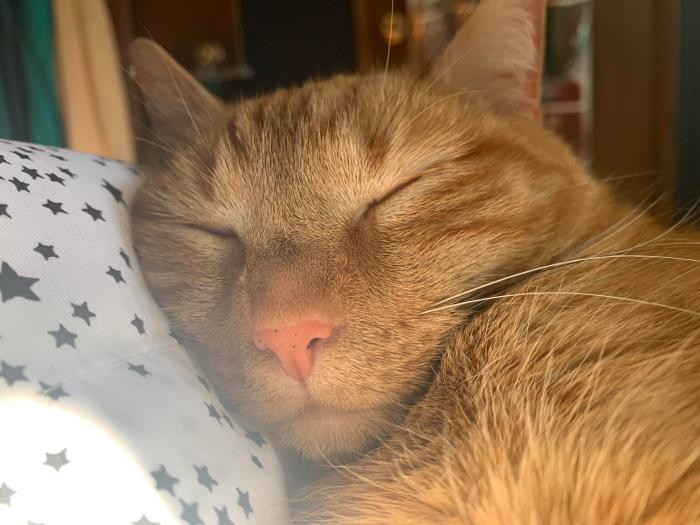
Source: redd.it
Social media has undeniably played a significant role in popularizing freckled cats. Platforms like Instagram, TikTok, and Facebook have provided a space for cat lovers to share photos and videos of these uniquely marked felines, creating a virtual community around them. The sheer volume of content featuring freckled cats is a testament to their online appeal.
The types of content commonly shared online include adorable photos, short videos showcasing their personalities, and humorous memes. The “cuteness factor” of freckled cats is a major contributor to their online appeal. The unexpected and charming appearance of freckles adds a touch of whimsy and uniqueness that resonates with many people.
| Platform | Frequency of “Freckled Cat” Related Posts (Estimated) |
|---|---|
| High (Thousands of posts with relevant hashtags) | |
| TikTok | Moderate (Numerous videos featuring freckled cats) |
| Moderate (Shared photos and videos in cat-related groups) | |
| Low (Occasional mentions and photos) |
Illustrative Descriptions of Freckled Cats
Imagine a ginger tabby cat, basking in a sunbeam. Around its nose, a delicate scattering of tiny brown freckles creates a charming contrast against its orange fur. The freckles are most concentrated around the nostrils, fading slightly as they extend onto the upper lip. On its paws, similar freckles dot the pads, adding a touch of playful uniqueness to its appearance.
Picture a sleek black cat, its fur as dark as midnight. A scattering of delicate pink freckles adorns its ears and chin, creating a striking contrast against its dark coat. The freckles are small and evenly distributed, giving the cat a subtly whimsical appearance.
Envision a white cat, its fur as pure as snow. A cluster of brown freckles graces its nose, adding a touch of warmth and character to its otherwise pristine appearance. The freckles are slightly darker than the surrounding fur, creating a subtle but noticeable accent.
Consider a calico cat, a patchwork of colors and patterns. On its lips, a scattering of freckles in varying shades of brown and black adds another layer of complexity to its already unique appearance. The freckles blend seamlessly with the calico pattern, enhancing its overall charm.
Distinguishing Freckles from Other Skin Conditions
Differentiating freckles from other skin conditions that might resemble them, such as lentigo, nevi (moles), or skin infections, is crucial for accurate diagnosis and appropriate care. Freckles are typically small, flat, and evenly pigmented spots. Lentigo, on the other hand, are larger, flat, and often darker patches. Moles are raised or flat growths that can vary in color and texture.
Skin infections often present with redness, inflammation, and potentially pus or crusting.
Visual characteristics that help distinguish freckles include their small size, flat surface, and uniform color. Lentigo tend to be larger and more irregularly pigmented. Moles often have a distinct border and may be raised. Skin infections typically exhibit signs of inflammation and discomfort. A veterinary diagnosis is always recommended for any unusual skin markings to rule out any underlying health concerns.
- Freckles: Small, flat, uniform color, benign.
- Lentigo: Larger, flat, often darker, potential for sun damage.
- Skin Infections: Redness, inflammation, pus, crusting, discomfort.
The Future of Research: Understanding Feline Freckles
Future research into feline freckles could focus on identifying the specific genes involved in their development and understanding the precise mechanisms that regulate melanin production in these areas. This knowledge could not only shed light on the genetic basis of freckles but also potentially benefit feline health in other ways.
A deeper understanding of the genetic and biological factors underlying freckle formation could lead to improved diagnostic tools for detecting skin abnormalities and potentially inform strategies for preventing or treating skin cancer in cats. Furthermore, insights gained from studying feline freckles could have broader applications in veterinary medicine, contributing to our understanding of pigmentation and skin health in other species.
- High Priority: Identify specific genes responsible for freckle development.
- Medium Priority: Investigate the role of environmental factors (e.g., sun exposure) in freckle formation.
- Low Priority: Explore the potential link between freckles and skin cancer risk.
Final Thoughts
From their surprising genetic roots to their undeniable appeal on social media, cats with freckles offer a delightful blend of science and charm. Understanding the biology behind these markings, recognizing potential health considerations, and appreciating their cultural impact paints a complete picture of this fascinating feline trait. Whether you’re a seasoned cat lover or just stumbled upon this adorable phenomenon, hopefully, you now have a deeper appreciation for these uniquely speckled companions and the joy they bring to our online world.
So, the next time you see a photo of a freckled cat, take a moment to appreciate the intricate genetics and the simple joy they bring. They’re a reminder that even the smallest details can make a big difference in the world of cuteness!
FAQ Insights
Are freckles in cats genetic?
Yes, freckles are believed to be genetically determined, though the specific genes involved are still being researched. They’re linked to melanin production, the pigment responsible for fur and skin color.
Do freckles ever turn into something harmful?
While generally harmless, it’s important to monitor freckles for any changes in size, shape, or color. Any concerning changes should be checked by a veterinarian to rule out potential skin issues.
What’s the difference between a freckle, a lentigo, and a mole on a cat?
Freckles are small, scattered spots of pigment. Lentigo are larger, more defined areas of increased pigmentation. Moles (nevi) are raised, often larger growths that can be benign or, rarely, cancerous. A vet can accurately diagnose these.
Should I apply sunscreen to my freckled cat?
Yes, especially for cats with lighter-colored freckles, sun protection is a good idea. Look for pet-safe sunscreens and limit their exposure to direct sunlight during peak hours.
Are freckled cats more prone to skin cancer?
There’s no definitive evidence that freckles directly increase the risk of skin cancer in cats. However, any unusual skin markings should be monitored, and regular vet checkups are always recommended.
Which breeds are most likely to have freckles?
Breeds like Abyssinians, Oriental Shorthairs, and Burmese are known to have a higher prevalence of freckles, but they can appear in any breed.

