Funny Looking Cat Breeds A Quirky Guide to Unique Felines

Let’s be honest, beauty is in the eye of the beholder, and that’s especially true when it comes to cats! What one person finds adorable, another might find… well, a little unusual. We’re diving into the wonderful world of funny looking cat breeds – those felines with appearances that definitely stand out from the crowd. From hairless wonders to cats with curled ears and werewolf-like fur, get ready for a delightful exploration of feline uniqueness.
Throughout history, unusual cat appearances have been interpreted in fascinating ways across different cultures. Some were seen as omens, others as symbols of good luck, and still others simply as curiosities. Genetics play a huge role in these distinctive features, with mutations and selective breeding leading to the incredible variety we see today. It’s a testament to the amazing adaptability and diversity within the feline world.
Funny Looking Cat Breeds: A Celebration of Feline Quirks
Let’s be honest, beauty is in the eye of the beholder. And when it comes to cats, what one person considers adorable, another might find… well, a little unusual. The term “funny looking” is entirely subjective, a playful descriptor for cats that deviate from the typical fluffy, sleek, or perfectly proportioned feline ideal. This article dives into the world of these wonderfully quirky breeds, exploring the history, genetics, and personalities that make them so endearing.
The perception of unusual cat appearances isn’t new. Throughout history, cats with unique features have been viewed differently across cultures. In ancient Egypt, cats were revered as deities, regardless of their appearance. However, in medieval Europe, cats, including those with unusual markings or features, were often associated with witchcraft and superstition. Today, we celebrate these differences, recognizing that a cat’s charm isn’t defined by conventional standards of beauty.
Genetic mutations, spontaneous variations, and selective breeding have all contributed to the fascinating array of feline features we see today. These mutations, while sometimes impacting health, often result in the distinctive looks that make these breeds so captivating.
The Sphynx: Hairless Wonders
The Sphynx cat, instantly recognizable for its lack of fur, is perhaps the most iconic example of a “funny looking” breed. Their history is surprisingly recent, with the modern Sphynx lineage tracing back to a cat named Prune in the 1970s. Prune was a hairless cat discovered in Toronto, Canada, and her offspring formed the foundation of the breed. Interestingly, the Sphynx has a connection to the Devon Rex, as early breeding programs involved crossing Sphynx cats with Devon Rexes to strengthen the hairless gene.
A Sphynx isn’t entirely hairless; they possess a fine downy fuzz, often described as peach fuzz, that gives their skin a velvety texture. Their skin is warm to the touch and wrinkles, particularly around the face and shoulders. The ears are large and wide-set, and coloration can vary widely, from solid colors to patterns like tabby and tortoiseshell. Despite the lack of fur, Sphynx cats can still exhibit a range of eye colors, including blue, green, and copper.
| Feature | Description | Impact on Appearance |
|---|---|---|
| Skin Texture | Peach-fuzz like, warm to the touch | Creates a unique, almost alien look. |
| Wrinkles | Prominent, especially around the face and shoulders | Adds character and a slightly aged appearance. |
| Ear Shape | Large and wide-set | Contributes to their expressive and alert appearance. |
| Coloration | Varies widely, including solid colors and patterns | Adds visual interest and individuality. |
Sphynx cats are known for their affectionate and playful personalities. They are often described as being dog-like in their loyalty and enjoy being the center of attention. Their unusual appearance can sometimes lead to initial reactions of surprise or even apprehension from people, but once they’ve experienced the warmth and charm of a Sphynx, they’re often won over. Many owners report that their Sphynx cats are incredibly social and thrive on human interaction.
The Scottish Fold: Folded Ears and Sweet Faces
The Scottish Fold is instantly recognizable by its distinctive folded ears, a trait caused by a dominant gene mutation affecting cartilage development. This mutation, while responsible for their charming appearance, also carries potential health implications, particularly affecting joint health. Responsible breeders carefully monitor and manage breeding programs to minimize the risk of these issues.
The degree of ear folding varies significantly among Scottish Folds. Some cats have a single, gentle fold, while others exhibit a tight “cap” where the ears lie flat against the head. The appearance of the ears can change as the cat matures, with folds becoming more pronounced over time. Regardless of the ear fold, Scottish Folds typically have a round face and large, expressive eyes.
The Scottish Fold’s overall expression is often described as “owl-like” or “sweet,” lending them an air of gentle wisdom and endearing charm. Their folded ears frame their faces in a way that emphasizes their large, round eyes, creating a captivating and unforgettable look.
Despite their unusual appearance, Scottish Folds are known for their gentle and adaptable temperaments. They are often described as being quiet and affectionate, enjoying cuddling and spending time with their human companions. Their playful nature often contrasts with their seemingly serious expression, making them a delightful and engaging breed.
The Devon Rex: Pixie-Like Charm
The Devon Rex shares some similarities with both the Cornish Rex and the Sphynx, but possesses a unique charm all its own. While all three breeds have unusual coat types, the Devon Rex’s wavy fur sets it apart. The Cornish Rex has tightly curled fur, while the Sphynx is largely hairless. The Devon Rex’s coat is soft, loose, and often described as resembling the waves of the ocean.
Devon Rexes are characterized by their large, low-set ears, which contribute significantly to their “pixie-like” appearance. Their fur is wavy and often sparse, particularly around the head and neck. They also have an elongated body and a slender build. Their facial structure, with its prominent cheekbones and large eyes, further enhances their whimsical charm.
- Cream
- Blue
- Chocolate
- Cinnamon
- Lilac
These coat colors, combined with the Devon Rex’s unique fur texture and facial features, create a truly distinctive and captivating look. The combination of their large ears, wavy fur, and expressive eyes gives them an almost otherworldly quality, solidifying their reputation as the “pixie cat.”
The Cornish Rex: The Curly-Coated Cutie
The Cornish Rex is renowned for its exceptionally curly coat, a trait originating in Cornwall, England, in the 1950s. A barn cat named Kallibunker gave rise to this breed, and his unique curly fur was passed down through generations. The Cornish Rex’s coat is a result of a recessive gene that affects the hair follicle structure.
The Cornish Rex’s fur is characterized by its tight, springy waves, unlike the looser waves of the Devon Rex. The coat is also relatively short and dense, lacking an undercoat, which contributes to its unique texture. This lack of an undercoat also means they are very sensitive to cold and often seek out warm places to curl up.
| Coat Characteristic | Description | Maintenance | Visual Effect |
|---|---|---|---|
| Curl | Tight, springy waves | Requires regular brushing | Creates a playful, whimsical look. |
| Density | Relatively short and dense | Minimal shedding | Enhances the curly texture. |
| Undercoat | Absent | Easy to care for | Contributes to the unique feel of the coat. |
Cornish Rexes are known for their energetic and playful personalities. They are highly intelligent and enjoy interactive games and activities. Their distinctive appearance, combined with their lively nature, makes them a truly engaging and entertaining breed.
The Lykoi: The Werewolf Cat
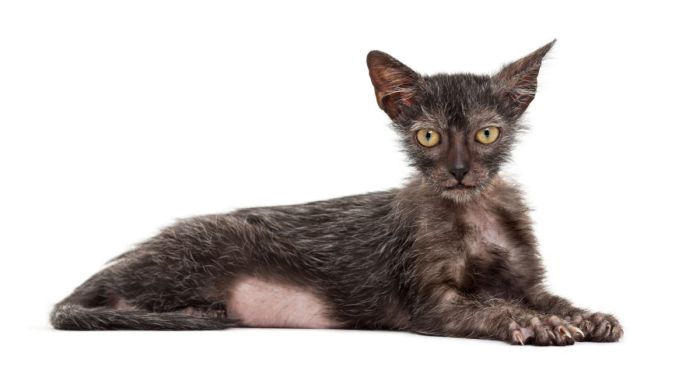
The Lykoi, often referred to as the “werewolf cat,” possesses a striking appearance due to a rare genetic mutation. This mutation causes sparse, patchy fur, giving the cat a resemblance to a werewolf. The mutation affects the hair follicles, preventing them from producing a full coat of fur.
Lykoi cats have large ears, prominent whiskers, and unique eye color, often a striking gold or green. Their appearance is further accentuated by the lack of fur around their eyes and nose, giving them a distinctive and somewhat wild look. Despite their unusual appearance, Lykoi cats are known for their affectionate and playful personalities.
The Lykoi is a relatively recent breed, first appearing in the United States in 2011. Its growing popularity is a testament to its unique appearance and endearing personality. Breeders are carefully working to understand and manage the genetics of this fascinating breed.
The American Curl: Ears that Sweep Back
The American Curl is defined by its defining feature: ears that curl backward, creating a distinctive silhouette. This trait is caused by a naturally occurring dominant gene that affects the cartilage of the ears. The curl begins to develop within a few weeks of the kitten’s birth and becomes more pronounced as they mature.
The degree of ear curl varies significantly among American Curls, ranging from a gentle curve to a dramatic roll. The curl can also change over time, becoming tighter or looser as the cat ages. Regardless of the degree of curl, the American Curl’s ears are a defining characteristic of the breed.
The American Curl’s body type is typically medium-sized and well-proportioned, with a graceful and elegant appearance. Their facial features are soft and expressive, complementing the curled ears and creating a charming and endearing look.
American Curls are known for their friendly and adaptable nature. They are often described as being affectionate and playful, enjoying spending time with their human companions. Their gentle disposition and unique appearance make them a popular choice for families and individuals alike.
The Munchkin: Short Legs and Big Personalities
The Munchkin’s most distinctive feature is its short legs, a result of a spontaneous genetic mutation that affects bone development. This mutation, while contributing to their unique appearance, has also raised concerns about potential health issues, and responsible breeders prioritize the health and well-being of their cats.
The variations in leg length within the Munchkin breed can be quite noticeable, with some cats having significantly shorter legs than others. Despite their short legs, Munchkins are surprisingly agile and energetic.
- Playing with toys
- Climbing (to a limited extent)
- Cuddling
- Exploring
Munchkins are known for their playful and affectionate personalities. Their short legs don’t hinder their ability to enjoy life and interact with their human companions. Their unique appearance and charming personalities make them a beloved breed.
Exotic Shorthair: The Persian’s Easy-Care Cousin
The Exotic Shorthair shares many characteristics with the Persian breed, but with one key difference: its short, plush coat. While Persians require extensive grooming to maintain their long, flowing fur, the Exotic Shorthair’s shorter coat is significantly easier to care for. Both breeds share a similar facial structure and body type.
Exotic Shorthairs are characterized by their flat face, large round eyes, and stocky build. Their facial features are reminiscent of the Persian, but with a more compact and rounded appearance. Their short, dense coat is soft and plush to the touch.
Exotic Shorthairs come in a wide range of colors and patterns, including solid colors, tabby patterns, and colorpoint variations. This variety adds to their visual appeal and allows for a wide range of individual appearances.
Exotic Shorthairs are known for their calm and affectionate temperaments. They are often described as being gentle and docile, enjoying cuddling and spending time with their human companions.
Selkirk Rex: The Curly Sheep Cat
The Selkirk Rex is distinguished by its unique, plush, curly coat, a spontaneous mutation first discovered in Montana in 1987. The curls are a result of a dominant gene that affects the hair follicle structure, creating a distinctive and appealing texture.
Selkirk Rexes exhibit a variety of curl types, ranging from loose waves to tight, well-defined curls. The degree of curl can vary depending on the cat’s age, coat length, and genetics.
| Curl Type | Description |
|---|---|
| Loose | Gentle waves, soft to the touch |
| Tight | Springy, well-defined curls |
Selkirk Rexes are known for their affectionate and playful personalities. Their curly coats add to their charm and appeal, making them a delightful and engaging breed.
Final Summary
Source: onlinecatworld.com
From the Sphynx’s alien-like skin to the Munchkin’s adorably short legs, we’ve explored a fascinating array of breeds that challenge conventional notions of feline beauty. Each one, with its unique quirks and charming personalities, proves that “funny looking” doesn’t equal “less lovable.” These breeds are a reminder to appreciate the beauty in all its forms, and to celebrate the wonderfully weird and wonderful world of cats!
So, whether you’re a seasoned cat lover or just starting your feline journey, hopefully, this guide has sparked your curiosity and maybe even inspired you to welcome a uniquely charming cat into your life. After all, a little bit of quirkiness can make a whole lot of difference!
Question Bank
Are funny looking cat breeds healthier than regular cats?
Not necessarily. Some breeds with unique appearances, like Scottish Folds and Munchkins, have genetic predispositions to certain health issues. Responsible breeders prioritize health testing to minimize these risks, but it’s always important to do your research.
Do Sphynx cats feel cold?
Yes! Because they lack fur, Sphynx cats are more sensitive to temperature changes and can get cold easily. They often seek out warm spots and may benefit from sweaters or blankets.
How much grooming do curly-coated cats like the Cornish Rex and Selkirk Rex need?
While their coats are unique, they still require regular grooming! Cornish Rex cats need daily brushing to prevent mats, while Selkirk Rex cats benefit from weekly brushing to maintain their plush curls.
Are Lykoi cats truly hypoallergenic?
While they produce less of the Fel d 1 protein (a common cat allergen) than many breeds, Lykoi cats aren’t completely hypoallergenic. Allergies vary from person to person, so it’s best to spend time with a Lykoi before committing to ownership.
What is the average lifespan of a Munchkin cat?
Munchkin cats generally have a lifespan similar to other domestic cats, typically ranging from 12 to 15 years. However, their short legs can sometimes lead to joint issues, which may impact their longevity.
Why do Exotic Shorthairs have flat faces?
Exotic Shorthairs were bred to resemble Persian cats, inheriting their characteristic flat faces. This brachycephalic (short-headed) structure can sometimes lead to breathing difficulties and other health concerns, so responsible breeding is crucial.
