Automatic Pet Feeder Cat Simplifying Mealtime for Your Feline Friend

Juggling work, travel, and everything else life throws at you can make consistent pet care a challenge. Thankfully, the rise of automatic pet feeders for cats offers a fantastic solution! These devices have evolved dramatically, moving from simple mechanical timers to sophisticated, app-controlled systems. We’ll explore the world of automatic feeders, diving into the different types, essential features, and how to choose the perfect one to keep your kitty happy and well-fed, even when you’re not around.
From ensuring portion control to reducing anxiety in cats left alone, automatic feeders provide peace of mind for owners and a reliable feeding schedule for our furry companions. We’ll break down the pros and cons of each type, from basic gravity feeders to high-tech smart models, and guide you through the setup and troubleshooting process. Let’s get started!
Introduction to Automatic Pet Feeders for Cats
Let’s face it, juggling work, life, and keeping your feline friend happy and well-fed can be a challenge. Automatic cat feeders have emerged as a fantastic solution for busy cat parents, offering a blend of convenience, control, and peace of mind. This guide will walk you through everything you need to know about these increasingly popular devices, from their humble beginnings to the sophisticated smart feeders available today.
The concept of automated pet feeding isn’t entirely new. Early iterations involved simple mechanical timers, often repurposed from kitchen appliances, to release food at set intervals. These were clunky and unreliable, but they represented the first step towards automating a crucial aspect of pet care. Over time, technology advanced, leading to more sophisticated timed feeders with larger hoppers and improved dispensing mechanisms.
The real revolution, however, came with the advent of app-controlled feeders, integrating Wi-Fi connectivity and smartphone apps for remote management and monitoring. Now, we have feeders that can track food consumption, integrate with smart home systems, and even dispense treats – a far cry from those early mechanical timers!
The core benefits of using an automatic feeder for your cat are numerous. Firstly, it offers unparalleled convenience, especially for those with unpredictable schedules or frequent travel. Secondly, it allows for precise portion control, which is vital for managing weight and preventing overeating – a common problem in indoor cats. Finally, it provides peace of mind, knowing your cat will receive consistent meals even when you’re not home.
There’s a wide range of automatic feeders available, broadly categorized as gravity feeders, timed feeders, app-controlled feeders, and those designed specifically for wet food.
Types of Automatic Cat Feeders: A Detailed Comparison
Choosing the right automatic feeder depends heavily on your cat’s needs and your lifestyle. Gravity feeders and timed feeders represent the more traditional approaches, while app-controlled feeders offer a level of sophistication and control previously unheard of. Wet food feeders address a unique challenge, as wet food doesn’t lend itself as easily to automated dispensing.
Gravity feeders are the simplest type, relying on gravity to dispense food as the bowl empties. They’re generally inexpensive and require no programming, making them ideal for cats who graze throughout the day. However, they lack portion control and can lead to overeating if your cat isn’t self-regulating. Timed feeders, on the other hand, dispense food at pre-set times and portion sizes.
They offer better portion control than gravity feeders but require programming and may not be suitable for cats who prefer to eat at irregular intervals. App-controlled feeders take things a step further, allowing you to schedule meals, adjust portions, and monitor your cat’s eating habits remotely via a smartphone app. They offer the most flexibility and control but are typically more expensive.
Finally, wet food feeders are a relatively new development, designed to keep wet food fresh and prevent spoilage while dispensing it automatically. These often involve refrigeration and specialized dispensing mechanisms.
| Feeder Type | Price Range | Food Type Compatibility | Scheduling Options | Smart Features |
|---|---|---|---|---|
| Gravity Feeder | $15 – $30 | Dry | None | None |
| Timed Feeder | $30 – $75 | Dry | Multiple Meals, Portion Control | Limited (some may have basic timers) |
| App-Controlled Feeder | $75 – $200+ | Dry | Remote Scheduling, Portion Adjustments, Multiple Users | Wi-Fi Connectivity, Smartphone App Control, Notifications |
| Wet Food Feeder | $100 – $300+ | Wet | Scheduled Dispensing, Refrigeration | App Control (often), Portion Control |
Features to Consider When Choosing a Feeder
Selecting the right automatic feeder involves more than just choosing a type. Several features can significantly impact its usability, reliability, and your cat’s well-being. Portion control accuracy is paramount; you want to ensure the feeder dispenses the correct amount of food each time. Reliability is equally important – a feeder that malfunctions can leave your cat hungry and anxious. Beyond these core features, consider the importance of a battery backup.
Power outages are inevitable, and a battery backup will ensure your cat continues to receive meals even when the electricity is out. Easy cleaning is another crucial factor. Look for feeders with dishwasher-safe components to simplify maintenance. Finally, be mindful of noise levels during operation. A loud feeder can startle or stress your cat, and it can be disruptive to you as well.
- Must-Have: Accurate Portion Control, Reliable Dispensing Mechanism, Easy to Clean, Battery Backup
- Nice-to-Have: Multiple Meal Scheduling, Portion Size Customization, Quiet Operation, Large Food Hopper
- Luxury: App Control, Smart Home Integration, Voice Control, Camera Monitoring, Treat Dispensing
Programming and Usage: A Step-by-Step Guide
Programming an automatic feeder can seem daunting, but it’s generally a straightforward process. Let’s start with a basic timed feeder. Typically, you’ll need to set the current time, then program the desired meal times and portion sizes. This usually involves using buttons on the feeder itself to navigate menus and adjust settings. For app-controlled feeders, the process is slightly more involved.
You’ll need to download the manufacturer’s app, create an account, and connect the feeder to your home Wi-Fi network. Once connected, you can use the app to schedule meals, adjust portions, and monitor your cat’s eating habits remotely. Common programming errors include incorrect time settings, inaccurate portion sizes, and Wi-Fi connectivity issues. Consult the feeder’s manual for troubleshooting tips.
Here’s a flowchart illustrating the setup process:
Start -> Unbox Feeder & Read Manual -> Insert Batteries/Plug in -> Set Current Time -> Program Meal Times & Portions -> Test Dispensing -> First Meal!
Cat Behavior and Automatic Feeders
Automatic feeders can be a valuable tool for managing overeating and obesity in cats. By providing precise portion control, they help prevent cats from consuming excessive amounts of food. Consistent feeding schedules, facilitated by automatic feeders, can also reduce anxiety and stress in cats, particularly those left alone for extended periods. Cats thrive on routine, and knowing when to expect their next meal can provide a sense of security.
Introducing a new feeder gradually is key to minimizing resistance. Start by placing the feeder near your cat’s existing food bowl and allowing them to investigate it. Gradually transition to using the feeder for all meals, offering treats and praise along the way. Some cats may try to circumvent the feeder, such as knocking it over or tampering with the mechanism.
Secure the feeder to a stable surface and consider using a feeder with a child-resistant lock to prevent unauthorized access.
Materials, Durability, and Safety
Automatic feeders are typically constructed from plastic, stainless steel, or ceramic. Plastic feeders are generally the most affordable but may be less durable. Stainless steel feeders are more robust and hygienic, while ceramic feeders are non-porous and easy to clean. Feeder stability is crucial to prevent tipping and spills. Choose a feeder with a wide base and non-slip feet.
Safety features to look for include child-resistant locks and food-grade materials. Avoid feeders with small parts that could be ingested by your cat. Carefully inspect the feeder for any sharp edges or potential hazards before allowing your cat to use it.
Maintenance and Cleaning Procedures
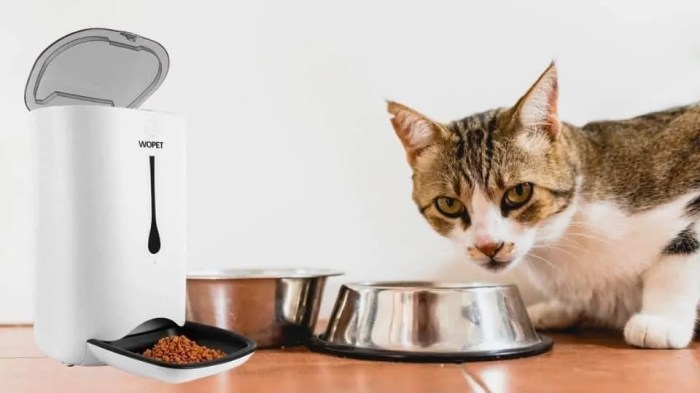
Source: alphapetsuk.com
Regular cleaning is essential to prevent bacterial growth and maintain food freshness. Disassemble the feeder according to the manufacturer’s instructions and wash all removable parts with warm, soapy water. Pay particular attention to the food hopper and dispensing mechanism, as these areas are prone to accumulating food debris. Rinse thoroughly and allow all parts to dry completely before reassembling.
Address common maintenance issues promptly, such as jammed dispensing mechanisms. Lubricating the mechanism with food-grade silicone spray can often resolve these issues.
| Component | Cleaning Frequency | Recommended Cleaning Method |
|---|---|---|
| Food Hopper | Weekly | Warm, soapy water; Dishwasher safe (check manual) |
| Dispensing Mechanism | Weekly | Warm, soapy water; Use a small brush to remove debris |
| Bowl | Daily | Warm, soapy water; Dishwasher safe |
Advanced Features and Smart Technology
Modern automatic feeders are increasingly integrating with smart home ecosystems like Alexa and Google Assistant, allowing for voice control and remote management. Some feeders feature built-in cameras, enabling you to monitor your cat’s eating habits and even interact with them remotely. Advanced feeders can track food consumption and provide insights into your cat’s eating habits, helping you identify potential health concerns.
Furthermore, some feeders can dispense treats or medication, providing a convenient way to reward your cat or administer necessary medications.
Budget Considerations and Value for Money
Automatic feeders range in price from under $50 to over $200. Feeders under $50 typically offer basic timed feeding functionality. $50-$100 models often include app control and more advanced scheduling options. Feeders priced above $100+ typically boast premium features like smart home integration, camera monitoring, and treat dispensing. While the initial investment in an automatic feeder may seem significant, the long-term cost savings can be substantial.
Reduced food waste, fewer vet visits related to obesity, and the convenience of remote management all contribute to the overall value proposition.
A basic timed feeder offers reliable portion control and consistent feeding schedules for a reasonable price. However, a high-end app-controlled model provides unparalleled flexibility, remote monitoring, and integration with smart home systems, ultimately offering a more comprehensive and convenient solution for the modern cat parent.
Troubleshooting Common Issues
Encountering problems with your automatic feeder is inevitable. Common issues include feeder malfunctions, inaccurate portioning, and cat disinterest. Consult the feeder’s manual for troubleshooting tips. Resetting the feeder to factory settings can often resolve software glitches. Frequently asked questions (FAQs) typically address common concerns and provide solutions.
If the dispensing mechanism is blocked, try clearing it with a small brush or pipe cleaner. A visual guide demonstrating this process would show a close-up of the dispensing area, highlighting the location of potential blockages and illustrating how to gently dislodge them with a thin, flexible tool.
Final Review
Ultimately, choosing an automatic pet feeder cat is about finding the right balance between features, budget, and your cat’s individual needs. Whether you’re battling overeating, managing a busy schedule, or simply seeking a little extra peace of mind, these devices can be a game-changer. By understanding the different options and considering your cat’s behavior, you can select a feeder that simplifies mealtime and contributes to a healthier, happier life for your feline friend.
So, take the plunge and discover the convenience and benefits of automated feeding!
Detailed FAQs
Can I use an automatic feeder for wet food?
Yes, but it’s more challenging. Specialized wet food feeders exist, often using refrigeration and timed dispensing, but they can be pricier and require more maintenance to prevent clumping.
How often should I clean my automatic feeder?
It depends on the feeder type and usage. The bowl should be cleaned daily, the dispensing mechanism weekly, and the food hopper monthly. Refer to the manufacturer’s instructions for specifics.
What if my cat tries to break into the feeder?
Choose a sturdy, weighted feeder that’s difficult to tip over. You can also try placing it in a location that’s less accessible or using a feeder with a locking mechanism.
Do I need Wi-Fi for all automatic feeders?
No! Timed feeders don’t require Wi-Fi. App-controlled feeders, of course, do, but there are plenty of reliable options without internet connectivity.
How do I know if the portion sizes are accurate?
Use a kitchen scale to verify the portion sizes dispensed by the feeder, especially when first setting it up. Adjust the settings as needed.
What if the feeder malfunctions during a power outage?
A battery backup is crucial! Make sure the feeder you choose has a reliable battery backup to ensure your cat continues to receive meals.
Can I use an automatic feeder to give my cat medication?
Some advanced feeders offer medication dispensing features. However, consult with your veterinarian to ensure it’s appropriate for your cat and the medication.
