Tiny paws, big appetites! If you’re the proud owner of a petite feline friend, you’ve probably wondered if standard cat food truly meets their unique needs. Small cat breeds often have different nutritional requirements and chewing abilities than their larger counterparts, leading to a growing interest in specialized food options like Smalls. This review dives deep into Smalls cat food, exploring its ingredients, benefits, and whether it lives up to the promises of tailored nutrition for your little buddy.
We’ll be looking at everything from the history of small cat food formulations and the science behind why smaller cats benefit from specialized diets, to a breakdown of ingredients and a comparison of different brands. Plus, we’ll cover practical tips on feeding guidelines, portion control, and even how to introduce new flavors to even the pickiest eaters. Get ready to learn how to optimize your small cat’s health and happiness through their diet!
Introduction to Small Cat Food
For years, cat food formulations largely catered to the average feline – a size and activity level that didn’t always account for the unique needs of smaller breeds. While the pet food industry has evolved significantly, the recognition of specialized nutrition for smaller cats is relatively recent. Early cat foods often contained larger kibble sizes and ingredient ratios that weren’t ideal for tiny mouths and digestive systems.
The shift towards smaller-breed specific formulas reflects a growing understanding of feline nutritional science and a desire to provide optimal health and well-being for all cats, regardless of size.The nutritional requirements of small breed cats differ from those of larger breeds in several key areas. Smaller cats generally have lower caloric needs due to their reduced metabolic rate and smaller body mass.
They also require smaller kibble sizes to prevent choking and ensure comfortable chewing. Furthermore, their digestive systems may be more sensitive, necessitating easily digestible ingredients. Larger breeds often require higher protein and fat levels to support muscle growth and energy expenditure, which isn’t always necessary for smaller, less active cats.Veterinarians increasingly recommend specialized food for smaller cats because it addresses these specific needs.
A properly formulated small cat food can help prevent overfeeding, support healthy weight management, and minimize digestive upset. It can also contribute to better dental health and overall vitality.
| Small Cat Food | Standard Cat Food |
|---|---|
| Dry Food: 1/8 – 1/4 cup daily | Dry Food: 1/4 – 1/2 cup daily |
| Wet Food: 1-2 tablespoons daily | Wet Food: 3-6 tablespoons daily |
| Treats: 1-3 small treats daily | Treats: 5-10 treats daily |
Ingredient Breakdown & Quality
Small cat food formulations often feature familiar ingredients like chicken, fish, and turkey, but the
- quality* and
- source* of these ingredients are crucial. You’ll frequently see these proteins listed prominently, reflecting their importance in a cat’s diet. Beyond the main protein source, other common ingredients include grains (though grain-free options are increasingly popular), vegetables, and vitamins/minerals.
Protein is paramount for small cats, just as it is for all felines. It’s essential for building and maintaining muscle mass, supporting a healthy immune system, and providing energy. The digestibility of the protein source is equally important. Cats have limited digestive enzymes to break down plant-based proteins, so animal-based proteins are generally more easily absorbed and utilized. Look for ingredients like deboned chicken, salmon meal, or turkey meal, which indicate a higher protein concentration.Potential allergens in cat food can include common proteins like beef, dairy, and soy, as well as grains like wheat and corn.
If your small cat exhibits signs of allergies (e.g., itching, vomiting, diarrhea), it’s important to identify and eliminate the offending ingredient. Limited-ingredient diets, which contain a minimal number of ingredients, can be helpful in pinpointing allergens.
| Protein Source | Benefits | Potential Concerns |
|---|---|---|
| Chicken | Highly digestible, good source of amino acids, palatable | Common allergen for some cats |
| Salmon | Rich in omega-3 fatty acids, supports healthy skin and coat, good source of protein | Potential for mercury contamination (choose reputable brands) |
| Turkey | Lean protein source, easily digestible | Can be less palatable than chicken for some cats |
High-quality ingredients are those that are easily recognizable, whole foods. Examples include named meat sources (e.g., “chicken” instead of “poultry”), whole vegetables (e.g., “sweet potatoes” instead of “vegetable by-products”), and cold-pressed oils (e.g., “salmon oil” instead of “animal fat”). Fillers, on the other hand, are ingredients added to increase bulk without providing significant nutritional value. Common fillers include corn, wheat, and soy.
While these ingredients aren’t inherently harmful, they can dilute the nutrient density of the food and may be difficult for some cats to digest.
Types of Small Cat Food Available
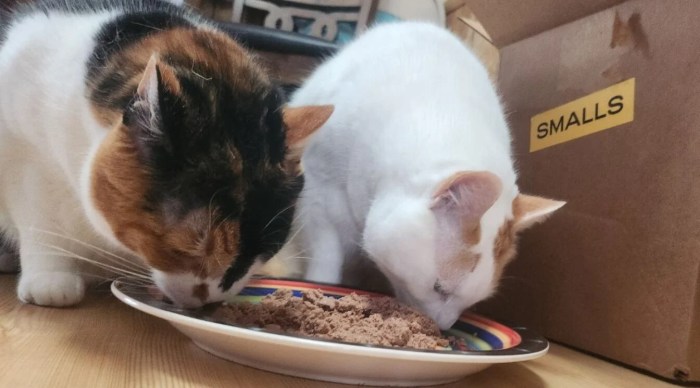
Source: loveyourcat.com
The market offers a variety of small cat food options, broadly categorized as dry, wet, and raw. Each type has its own advantages and disadvantages regarding palatability, hydration, and dental health.Dry food is convenient and cost-effective, making it a popular choice for many cat owners. However, it has a lower moisture content than wet food, which can contribute to dehydration.
The larger kibble size in standard dry food can be problematic for small cats, but specialized small-breed dry foods address this with smaller, more manageable pieces. Dry food can also help promote dental health by scraping plaque and tartar from teeth as the cat chews.Wet food, on the other hand, has a high moisture content, which is beneficial for hydration and kidney health.
It’s also generally more palatable than dry food, making it a good option for picky eaters. However, wet food is more expensive than dry food and spoils quickly once opened.Raw food diets are gaining popularity, but they require careful preparation and handling to prevent bacterial contamination. Raw food is typically made with fresh, whole ingredients and is believed by some to offer superior nutritional benefits.
However, it’s crucial to consult with a veterinarian before switching to a raw food diet, as improper preparation can pose health risks.Freeze-dried and dehydrated small cat food options represent a middle ground. Freeze-drying involves removing moisture from frozen food, preserving nutrients and flavor. Dehydration uses heat to remove moisture. Both methods result in a shelf-stable product that can be rehydrated with water before serving.
- Wet food benefits for small cats:
- Increased hydration, supporting kidney health
- Higher palatability, encouraging eating
- Smaller portion sizes, aiding in weight management
- Easier to chew for cats with dental issues
Popular Brands & Product Lines
Several leading brands specialize in small cat food, recognizing the unique needs of these diminutive felines. Purina Pro Plan, Royal Canin, and Hill’s Science Diet are among the most well-known. Each brand offers a range of product lines catering to different life stages, from kitten to senior.Purina Pro Plan offers a “Small Breed” line with smaller kibble sizes and tailored nutrient profiles.
Royal Canin has a “XSmall Breed” line specifically formulated for cats weighing under 5 pounds. Hill’s Science Diet offers a “Small & Tender” line with smaller kibble and easily digestible ingredients.Let’s compare Purina Pro Plan Small Breed and Royal Canin XSmall Breed. Purina Pro Plan typically features a higher protein content, while Royal Canin often emphasizes specific fiber blends for digestive health.
The ingredient lists are both generally high-quality, but Royal Canin tends to use more proprietary blends, which can make it harder to assess the exact ingredient ratios.
| Brand | Price/lb | Rating |
|---|---|---|
| Purina Pro Plan Small Breed | $3.00 – $4.50 | 4.5 stars |
| Royal Canin XSmall Breed | $4.00 – $6.00 | 4.0 stars |
| Hill’s Science Diet Small & Tender | $2.50 – $3.50 | 3.8 stars |
Health Benefits & Considerations
Small cat food can significantly support healthy weight management in smaller felines. The smaller portion sizes and tailored calorie content help prevent overfeeding, a common issue that can lead to obesity. A controlled calorie intake is particularly important for small cats, as they are more susceptible to the negative health consequences of excess weight.Specific nutrients play crucial roles in maintaining optimal health.
Taurine, an essential amino acid, is vital for heart and eye health. Omega fatty acids, found in fish oil and flaxseed oil, support healthy skin, coat, and brain function. Vitamins and minerals, such as vitamin D and calcium, are also essential for overall well-being.The smaller kibble size in small cat food offers a significant benefit for cats with dental issues or difficulty chewing.
It reduces the risk of choking and makes it easier for cats to consume their food comfortably.Specific formulations can address common health concerns. For example, urinary tract health formulas often contain controlled levels of magnesium, phosphorus, and calcium to help prevent crystal formation. Hairball control formulas include fiber to help move hairballs through the digestive system.Reading and interpreting a cat food label is essential for making informed choices.
Pay attention to the guaranteed analysis, which lists the percentages of protein, fat, fiber, and moisture. Also, review the ingredient list, prioritizing foods with named meat sources as the first few ingredients.
Feeding Guidelines & Portion Control
Determining the appropriate daily food intake for a small cat involves considering several factors, including weight, age, activity level, and overall health. A general guideline is to feed small cats approximately 1/8 to 1/4 cup of dry food or 1-2 tablespoons of wet food per day, divided into multiple meals.Monitoring weight is crucial for adjusting portions accordingly. Weigh your cat regularly and consult with a veterinarian if you notice any significant weight fluctuations.
A healthy weight for a small cat typically falls between 5 and 10 pounds, but this can vary depending on the breed.Transitioning a small cat to a new food should be done gradually over 7-10 days. Start by mixing a small amount of the new food with the old food, gradually increasing the proportion of new food each day.
This helps prevent digestive upset.[Flowchart: Calculate Daily Caloric Needs]
1. Determine Weight
Weigh your cat in pounds.
2. Assess Activity Level
Sedentary
Multiply weight by 20 calories.
Moderately Active
Multiply weight by 25 calories.
Very Active
Multiply weight by 30 calories.
3. Adjust for Age
Kitten
Add 10-20% to caloric needs.
Senior
Subtract 10-20% from caloric needs.
4. Divide by Calories per Cup
Divide the total daily caloric needs by the number of calories per cup of the chosen food. This will give you the approximate daily feeding amount in cups.
Palatability & Cat Preferences
A cat’s food preferences are influenced by a complex interplay of factors, including texture, aroma, and flavor. Some cats prefer crunchy kibble, while others prefer the moistness of wet food. The aroma of the food also plays a significant role, as cats rely heavily on their sense of smell.Introducing new flavors and textures to picky small cats requires patience and experimentation.
Start by offering small amounts of the new food alongside the cat’s familiar food. You can also try mixing the new food with a small amount of tuna juice or warm water to enhance its aroma and palatability.Signs that a cat enjoys their food include eating enthusiastically, purring while eating, and licking their bowl clean. Conversely, signs of disinterest include turning away from the food, leaving food uneaten, or exhibiting a lack of enthusiasm.Enhancing the palatability of small cat food can be achieved through several simple techniques.
Adding warm water to dry food can soften the kibble and release its aroma. Sprinkling a small amount of catnip on the food can also entice picky eaters.
Cost & Value
The cost of small cat food varies depending on the brand, formulation, and ingredient quality. Premium brands with high-quality ingredients typically cost more than budget-friendly options. However, it’s important to consider the concept of “value” – not just the price per pound, but also the nutritional benefits and overall quality of the food.Calculating the cost per serving can help you compare different food options more accurately.
Divide the price per pound by the number of cups per pound to determine the cost per cup. Then, multiply the cost per cup by the number of cups your cat typically eats per day to determine the daily cost.
| Food Type | Estimated Monthly Cost | Pros/Cons |
|---|---|---|
| Dry Food | $20 – $40 | Convenient, cost-effective, promotes dental health. Can be less palatable and lower in moisture. |
| Wet Food | $40 – $80 | High moisture content, highly palatable, easier to chew. More expensive, spoils quickly. |
| Raw Food | $60 – $120+ | Potentially superior nutritional benefits, highly palatable. Requires careful preparation and handling, can be expensive. |
Special Dietary Needs for Small Cats
Small cats with specific health conditions may require specialized diets. For example, cats with diabetes may benefit from a low-carbohydrate, high-protein diet to help regulate blood sugar levels. Cats with kidney disease may require a diet that is low in phosphorus and protein to reduce the workload on their kidneys.Prescription diets, formulated by veterinarians, can be effective in managing these conditions.
These diets are often specifically tailored to address the underlying cause of the health problem.Choosing a small cat food for a cat with allergies or sensitivities requires careful attention to the ingredient list. Avoid ingredients that are known to trigger allergic reactions in your cat. Limited-ingredient diets can be helpful in identifying and eliminating allergens.Ingredients to avoid for cats with specific health concerns include:
- Diabetes: Grains, corn syrup, excessive carbohydrates
- Kidney Disease: Phosphorus, high levels of protein
- Allergies: Common allergens like beef, dairy, soy, wheat, and corn
Storage & Handling
Proper storage techniques are essential for maintaining food freshness and preventing spoilage. Store dry cat food in an airtight container in a cool, dry place. Avoid storing dry food near heat sources or in direct sunlight.Handling wet cat food safely is crucial to minimize bacterial contamination. Refrigerate opened cans of wet food promptly and discard any uneaten food after 24 hours.
Use a clean spoon or scoop to serve wet food and avoid leaving wet food out at room temperature for extended periods.Keeping food containers sealed tightly is important to prevent moisture and pests from contaminating the food. Regularly check food containers for signs of damage or spoilage.
- Dry Small Cat Food Storage:
- Store in an airtight container.
- Keep in a cool, dry place.
- Avoid direct sunlight.
- Check expiration dates regularly.
- Wet Small Cat Food Storage:
- Refrigerate opened cans promptly.
- Discard uneaten food after 24 hours.
- Use a clean spoon or scoop.
Last Point
Navigating the world of cat food can feel overwhelming, but understanding your small cat’s specific needs is key to their well-being. Smalls, along with other specialized brands, offers a compelling option for those seeking high-quality, tailored nutrition. By considering factors like ingredient quality, palatability, and your cat’s individual health concerns, you can make an informed decision that supports a long, happy, and healthy life for your furry little companion.
Ultimately, the best food is the one your cat thrives on, and hopefully, this review has provided you with the knowledge to find it!
Popular Questions
What’s the difference between small cat food and regular cat food?
Small cat food is formulated with smaller kibble sizes, higher protein content, and often adjusted nutrient ratios to meet the specific needs of smaller breeds, who may have different metabolic rates and chewing abilities.
Are freeze-dried and dehydrated cat foods the same?
While both remove moisture, freeze-drying involves freezing the food first and then removing water through sublimation, preserving more nutrients. Dehydration uses heat to remove water, which can slightly alter the nutritional profile.
How can I tell if my cat likes a new food?
Look for signs like enthusiastic eating, a healthy appetite, shiny coat, and good energy levels. A lack of interest or digestive upset could indicate they don’t enjoy it.
Can I give my cat wet food exclusively?
Yes, wet food can be a complete and balanced diet for cats, especially beneficial for hydration and urinary health. Just ensure it meets their nutritional needs.
How long should I transition my cat to a new food?
A gradual transition over 7-10 days is recommended, slowly increasing the proportion of the new food while decreasing the old food to avoid digestive upset.
What does “AAFCO statement” mean on a cat food label?
It means the food has been formulated to meet the nutritional levels established by the Association of American Feed Control Officials (AAFCO) for a specific life stage (kitten, adult, senior).

