Can Cats Be Service Animals What No Search Result Tells You

If you have spent hours googling this question, you have already seen the same copy-pasted line a hundred times. Every top search result will tell you cats cannot be service animals, full stop. But that is not the whole truth, and it fails every disabled person who has watched their cat naturally step up to support them long before they ever considered this label.
This is not an internet meme trend. There are unpublicized legal exceptions, documented working cats, and an entire quiet community of handlers that almost no mainstream outlet bothers to cover. We are skipping the generic yes or no answers to break down exactly what is legal, what is realistic, and what actually matters for anyone exploring this option.
Last week I was camped on a gross airport floor waiting for a 3 hour delayed flight, when a woman walked past with a tiny orange tabby in a well fitted harness. The guy next to me snorted into his soda and said “Nice fake service animal. Everyone knows only dogs count.”
I hear this line at least once a week. Online. In coffee shops. Waiting for buses. Everyone has an opinion on this, and almost no one has the full story.
Let’s get one thing straight first
I’m not here to tell you every cat in a vest is a real service animal. I’m also not here to tell you none of them are.
This argument always devolves into two yelling camps. Either every house cat is a valid working animal, or anyone who brings a cat anywhere is a clout chasing liar. Both takes are stupid.
So can cats actually be service animals?
The legal fine print no one reads
If you live in the United States, the federal ADA only recognizes dogs and miniature horses as official service animals. That part is true.
What no one mentions is that this is just one country’s rule. Canada, most of the EU, New Zealand and multiple Australian states fully recognize trained cats as service animals. Even inside the US, many states have their own exceptions, and federal rules don’t apply everywhere you go.
And more importantly—legal status doesn’t erase actual work an animal does.
The jobs no one talks about cats doing
Everyone acts like only dogs can be trained to assist with disability. That’s not true. Cats are regularly trained to:
- Alert deaf owners to door knocks, smoke alarms, phone rings or crying babies
- Notify diabetic and seizure owners 10-20 minutes before an episode hits
- Provide consistent deep pressure therapy for autistic people who can’t tolerate a dog’s size, energy or slobber
- Navigate small apartment spaces for people with limited mobility far better than any medium sized dog can
I spoke last year to a woman with type 1 diabetes who went through three diabetic alert dogs before finding her cat. All the dogs got destructive and anxious in her 500 square foot city apartment. The cat? Napped on her desk most days. Patted her cheek exactly 15 minutes before her blood sugar crashed. Every single time, for four years running.
Does this mean every cat can do this? Hell no. Most cats will not do this. Most cats would rather knock your drink off the counter than alert you to a medical emergency.
Training a cat for consistent task work takes twice as long as training most dogs. 90% wash out. The ones that make it are rare outliers. That’s the part no one on either side of the argument will tell you.
Why everyone fights about this so badly
The real problem isn’t cats being service animals. The problem is people lying about their pets.
Every time someone sticks a $10 amazon vest on their untrained house cat and brings it to Walmart for tiktok views, they make life harder for the tiny number of people who actually rely on a working cat. Every viral meme making fun of fake service cats makes every stranger that much more likely to harass someone who needs their animal with them.
And let’s be honest here. Most of the “service cat” content you see online is just clout. That’s not up for debate. But that doesn’t mean none of them are real.
What we should actually be arguing about
We keep fighting over species when we should be fighting over behaviour.
If an animal is reliably trained to perform a specific task for a disability. If it is quiet, clean, and unobtrusive in public. If it never bothers other people. Who cares what it is?
I’ve sat next to a perfectly calm working cat on a 3 hour flight that never made a sound. I’ve had a certified service dog jump on my lunch at a restaurant. The vest doesn’t matter. The paperwork doesn’t matter. The species on the collar doesn’t matter.
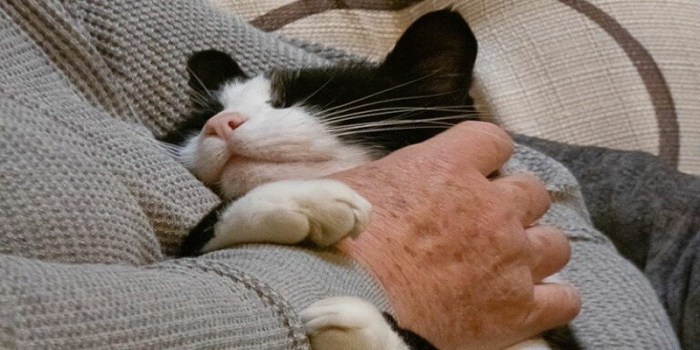
I saw that same orange tabby from the airport again last month. His owner was sitting on a bench outside the terminal having a full panic attack. He didn’t run. He didn’t beg for snacks. He just laid flat on her chest, purring, until her breathing slowed down.
No one stopped to argue about ADA rules. No one made a joke about fake service animals. No one cared he was a cat. They just saw someone getting the help they needed.
That’s the part everyone forgets.
Source: poultrycaresunday.com
At the end of the day, service animals exist for one single purpose: to help disabled people live safer, more independent lives. No institutional bias, no hot take, and no internet argument changes that basic fact. If your cat can happily and reliably support your disability, you do not owe anyone an apology for choosing the help that works for you. Always prioritize your cat’s comfort, follow the proper legal steps, and know you are not alone in this.
