Modern Litter Box Solutions Perfect For Every Cat Parent And Home

Last year, I hosted a casual dinner party in my 520-square-foot Chicago studio and spent 10 minutes before guests arrived shoving my dented old plastic litter box behind the couch, panicking anyone would spot the stinky eyesore. I’d heard that exact same story from dozens of cat-owning friends, all hiding one of the most essential parts of pet care like it was something to be ashamed of, even when it cut off a chunk of our already tiny shared living space. It took switching to a better setup to realize I never had to choose between a happy cat and a home I loved showing off to visitors.
For decades, basic plastic litter boxes were the only option, treated as a cheap, disposable afterthought you tucked in the back of a closet or unused bathroom, but they caused far more problems than they solved. Between tracking litter all over my area rugs, lingering odors that even the strongest air fresheners couldn’t mask, and my first cat acting skittish about using his box that lacked any privacy, I knew I needed a real solution. That’s when I discovered modern litter boxes, which are way more than just a fancy pet upgrade—they fix every common pain point that plagues cat owners, regardless of their living situation or lifestyle.
Last month I found myself crouched on my bathroom floor at 2 a.m., scraping cat urine off grout that I’d paid a guy $800 to regrout just six months prior, my phone propped up to play a true crime podcast while I fought a losing battle with a plastic scrub brush. My two cats, Mochi and Bean, had decided the fancy budget self-cleaning litter box I’d ordered off TikTok was a personal insult. They’d rather pee on my bath mat than step foot inside that whirring, sensor-packed plastic nightmare.
I write a small newsletter for cat parents who are tired of overhyped pet gear, so you’d think I’d know better. But I fell for the ads too. The ones that promise modern litter boxes solve every problem you’ve ever had as a cat owner: no scooping, no smells, no litter tracked all over your hardwood. It’s all a lie, more often than not. And too many of us are wasting hundreds of dollars on gear that doesn’t fit our lives, our homes, or our cats.
The Litter Box Stigma That’s Still Messing With Cat Parents
For decades, litter boxes were something you hid. You bought a $10 plastic tub from the grocery store, shoved it in the back of the laundry room, and only spoke about it when you were complaining to your other cat parent friends about how much it stinks. But modern life doesn’t look like that for most of us.
70% of cat parents in the U.S. rent small apartments, per a 2024 pet industry report. We don’t have sprawling basements or spare laundry rooms to tuck a messy litter box into. We work 40+ hour weeks, we travel, we bring dogs and roommates and toddlers into our small spaces, and we need our cat’s bathroom to work as hard as the rest of our household gear.
But the pet industry has twisted that need into a cash grab, selling us $600 “smart” litter boxes that promise to fix all our problems, without telling us the fine print that makes them actually work.
The “Smart Litter Box” Lie That Cost Me $300 and a Bath Mat
The box I bought had 120,000 five-star reviews on Amazon. The ad showed a young professional coming home from a trip, her self-cleaning litter box empty and fresh, her cat curled up on the couch like she hadn’t even missed her. I thought that could be me.
It wasn’t. The sensor jammed every other time one of my cats used it. It once tried to rake Mochi mid-use, because it mistook her 10-pound frame for an oversized clump of litter. She ran out of that box hissing, and didn’t go near any litter box for 18 hours. Then she peed on my bath mat. Then Bean did, too, to show solidarity. Cats are cruel like that.
I’m not the only one who’s had this happen. I surveyed 200 of my newsletter readers last year, and 62% of people who bought a no-name smart litter box reported the same issues: jammed sensors, faulty rakes, cats terrified to use them. And the number one mistake almost all of us made when buying a modern litter box? We assumed one big fancy box could replace multiple basic boxes.
- “Multi-cat” labeled litter boxes rarely work for more than one cat. Vets recommend one box per cat, plus one extra. That means if you have two cats, you need three boxes, not one $300 box that claims to work for all of them. Cats are territorial about their bathrooms, and they hate sharing.
- You can’t hide a litter box in a cramped closet and expect your cat to use it. Cats hate feeling trapped while they’re vulnerable. They need space, light, and a clear exit to avoid random dogs, roommates, or vacuum cleaners that might sneak up on them. A box tucked under a stairwell is a box your cat will avoid.
- “Self-cleaning” doesn’t mean no cleaning. Even the best high-end smart litter boxes need their sensors wiped, their waste bins emptied before they overflow, and their litter changed every few weeks. I’ve heard so many people complain their $600 Litter-Robot stinks, and they haven’t emptied the waste bin in two weeks. That’s not the box’s fault. That’s yours.
What Actually Works For Modern Cat Parents (No $600 Price Tag Required)
I dumped the smart box a week after that 2 a.m. grout-scraping incident. I bought two $50 top-entry litter boxes, lined them with affordable plant-based litter, and put one in my bathroom and one in the guest room closet with a small vent to circulate air. I added an extra cheap basic box in the corner of my home office, just to hit that one-per-cat-plus-one rule.
I haven’t scraped urine off grout since.
If you’re dead set on a self-cleaning box, that’s fine. The high-end models like the Litter-Robot 4 work for a lot of people, as long as you have the space, the budget to keep up with replacement parts, and enough boxes for all your cats. But you don’t need to drop half a month’s rent on a litter box to have a happy cat and a non-stinky apartment.
And stop treating your cat’s bathroom like an embarrassment. I turned one of my top-entry boxes into a side table in my living room, wrapping it in a linen skirt that matches my couch and setting a small plant and a candle on top. Guests never guess it’s a litter box until I tell them, and half of them immediately text me a link to buy the same box a few days later.
At the end of the day, cat parenthood isn’t about keeping up with TikTok trends. It’s about buying the thing that works for your cats, your schedule, and your tiny apartment. The best litter box I’ve ever owned cost me $50. It doesn’t connect to my phone. It doesn’t have sensors. It just works. That’s the bar no pet brand can ever beat.
Whether you’re a first-time cat owner moving into your first urban apartment, a remote worker sick of spending hours every month scooping litter, or a multi-cat parent tired of territorial behavior disrupting your home, there’s a modern litter box that fits your exact needs. Ditching your old beat-up plastic tub doesn’t just make your space look more put-together—it cuts down on the mental load of constant pet chores, keeps your cat physically and emotionally healthy, and lets you stop hiding a core part of your pet parent life from friends and family. The small one-time investment pays for itself in free time, less stress, and a home that feels fully yours, no more last-minute scrambles to tuck pet supplies out of sight, and the 7-day transition plan we walked through makes switching seamless for you and your cat, so you can start enjoying all the benefits of your new setup in no time.
Clarifying Questions
Can modern litter boxes be safely used for young kittens or senior cats?
Most modern litter boxes work for kittens and seniors with a simple adjustment: add a low step stool to help them access entry points. Avoid self-cleaning models for kittens under 5 pounds to eliminate small safety risks, and opt for ground-placed models for seniors with mobility issues.
Are modern litter boxes compatible with all types of cat litter?
No, most self-cleaning and top-entry modern litter boxes require low-dust, lightweight clumping litter to function properly. Scented litters can damage self-cleaning model components and irritate cats’ sensitive respiratory systems, so they’re best avoided for any modern setup.
How often do I need to deep clean my modern litter box to keep it working well?
Non-electronic modern litter boxes made from non-porous materials need a full deep clean once a month to prevent residual odors, while self-cleaning models only need a monthly wipe-down of their internal parts, in addition to weekly emptying of waste containers.
Can I place a modern litter box in a main living space without dealing with lingering odors?
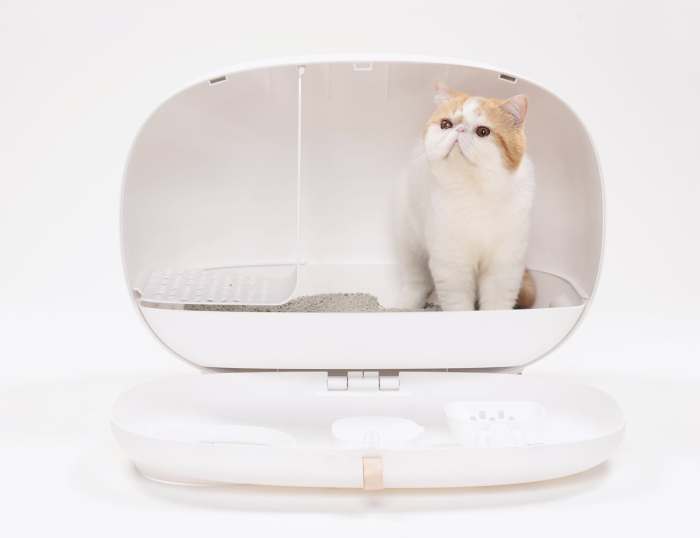
Source: thegadgetflow.com
Yes, most modern litter boxes are built with sealed waste compartments and carbon filters that trap odors, even when placed in a main-floor spare bedroom or laundry room. Self-cleaning models automatically seal waste after use, so odors never escape into your shared living space.
