Keeping your feline friend properly hydrated is crucial for their overall health and well-being, and sometimes a simple water bowl just doesn’t cut it. Many cats prefer moving water, and that’s where cat fountains come in! These clever devices encourage drinking, offering fresh, filtered water that’s more appealing than stagnant water. But with so many options available, choosing the right one can feel overwhelming.
We’ll explore the different types, materials, features, and maintenance tips to help you find the best rated cat fountains to suit your cat’s needs and your lifestyle.
From ceramic elegance to stainless steel durability, and the convenience of automatic models, there’s a fountain out there for every cat and budget. We’ll delve into the importance of filtration, the impact of noise levels, and even how to cater to your cat’s individual preferences. Understanding these factors will empower you to make an informed decision and ensure your kitty stays happy, healthy, and well-hydrated.
The Ultimate Guide to Cat Fountains: Keeping Your Feline Hydrated
Let’s be honest, getting cats to drink enough water can be a challenge. They’re notoriously picky, and often prefer to lap up water from a dripping faucet than a boring old bowl. That’s where cat fountains come in. They’re not just a trendy gadget; they’re a vital tool for ensuring your feline friend stays properly hydrated, which is crucial for their overall health and well-being.
This guide will walk you through everything you need to know about cat fountains, from the different types available to choosing the right one for your cat’s unique needs.
Inadequate water intake can lead to serious health problems in cats, including urinary tract infections, kidney disease, and even bladder crystals. Cats evolved in arid environments and don’t have a strong thirst drive, so they often need encouragement to drink. A cat fountain provides fresh, flowing water that’s more appealing than stagnant water in a bowl, prompting them to drink more frequently.
We’ll explore the various fountain options and help you navigate the world of feline hydration.
Different Types of Cat Fountains
The market offers a variety of cat fountains, each with its own advantages and disadvantages. The most common types are ceramic, stainless steel, and plastic. Each material offers a different aesthetic and has varying levels of durability and safety. Understanding these differences is key to making an informed decision.
| Material | Advantages | Disadvantages |
|---|---|---|
| Ceramic | Aesthetically pleasing, doesn’t impart taste to water, generally quiet. | Can be fragile and prone to chipping, porous surface can harbor bacteria if not cleaned thoroughly, can be more expensive. |
| Stainless Steel | Durable, hygienic (non-porous), easy to clean, doesn’t impart taste to water. | Can be noisier than ceramic fountains, some cats may not like the metallic taste, limited design options. |
| Plastic | Most affordable option, lightweight, often comes in various colors and designs. | Potential for harboring bacteria in scratches, may impart a plastic taste to water, less durable than ceramic or stainless steel, safety concerns regarding BPA and phthalates (ensure BPA-free). |
Top Contenders: Examining Popular Models
Source: thirstycatfountains.com
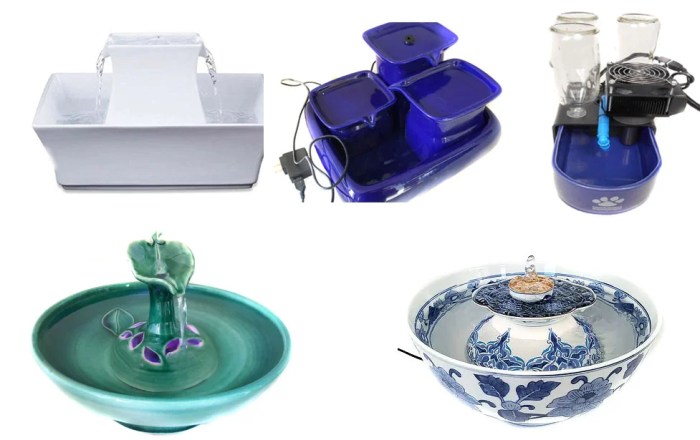
Choosing the “best” cat fountain depends on your cat’s preferences and your budget. However, several models consistently receive high ratings for their features, reliability, and ease of use. Let’s take a closer look at five popular contenders.
We’ll examine models like the PetSafe Drinkwell Platinum, the Cat Mate C300, the Pioneer Pet Raindrop, the A2O Water Fountain, and the H2Oasis. Each boasts unique features designed to entice even the pickiest of cats to drink more. Understanding their specifications will help you determine which one best suits your feline companion.
| Model Name | Water Capacity (oz) | Filtration Type | Noise Level (dB) |
|---|---|---|---|
| PetSafe Drinkwell Platinum | 64 | Activated Carbon Filter | 30-40 |
| Cat Mate C300 | 68 | Foam Filter & Charcoal Filter | 35-45 |
| Pioneer Pet Raindrop | 64 | Carbon Filter | 40-50 |
| A2O Water Fountain | 80 | 3-Stage Filtration (Foam, Activated Carbon, Ion Exchange Resin) | 25-35 |
| H2Oasis | 80 | Activated Carbon Filter | 30-40 |
The PetSafe Drinkwell Platinum features a sleek, stainless steel bowl and a replaceable carbon filter. Its design is minimalist and modern, available in white or gray. The Cat Mate C300 offers a more traditional design with a plastic housing and a dual filtration system. The Pioneer Pet Raindrop mimics a natural rainfall, appealing to cats who enjoy drinking from moving water.
The A2O Water Fountain stands out with its advanced 3-stage filtration and larger capacity, boasting a contemporary aesthetic. Finally, the H2Oasis provides a quiet operation and a simple, elegant design.
Filtration Systems: A Deep Dive
The filtration system is arguably the most important aspect of a cat fountain. It ensures the water is free from debris, odors, and harmful contaminants, making it more appealing to your cat and safer for them to drink. Different types of filters are used in cat fountains, each targeting specific impurities.
Common filter types include foam filters, activated carbon filters, and ion exchange resin filters. Foam filters primarily remove larger debris like hair and sediment. Activated carbon filters absorb odors and improve the taste of the water by removing chlorine and other chemicals. Ion exchange resin filters help reduce water hardness and remove heavy metals. A combination of these filters often provides the most comprehensive purification.
Regular filter replacement is crucial for maintaining the fountain’s effectiveness and preventing bacterial growth. The recommended replacement schedule varies depending on the filter type and usage, but generally, foam filters should be replaced every 2-4 weeks, carbon filters every 1-3 months, and resin filters every 6-12 months. Always refer to the manufacturer’s instructions for specific recommendations.
- Step 1: Unplug the fountain from the power outlet.
- Step 2: Disassemble the fountain according to the manufacturer’s instructions.
- Step 3: Remove the old filter(s) and discard them properly.
- Step 4: Rinse the filter housing with clean water.
- Step 5: Insert the new filter(s) into the housing, ensuring they are properly seated.
- Step 6: Reassemble the fountain.
- Step 7: Plug the fountain back in and allow it to run for a few minutes to flush out any loose particles.
Noise Levels: Finding a Quiet Fountain
Cats are sensitive to noise, and a noisy fountain can be a source of stress and anxiety. The level of noise a fountain produces is influenced by factors such as the pump type and the water flow rate. Some fountains can be surprisingly loud, while others operate almost silently.
Excessive noise can deter cats from approaching the fountain, defeating the purpose of encouraging hydration. A fountain that constantly hums or gurgles can disrupt their sleep and create a generally unpleasant environment. It’s important to choose a fountain with a low noise level to ensure your cat feels comfortable drinking from it.
Decibel (dB) ratings are used to measure sound intensity. A quiet fountain typically has a noise level below 40 dB, which is comparable to the sound of a quiet library. Anything above 50 dB can be considered disruptive. When evaluating a fountain, look for models specifically advertised as “quiet” or with low dB ratings. Consider reading reviews from other cat owners to get a sense of the fountain’s actual noise level in real-world use.
Several techniques can minimize fountain noise. Proper placement is key – avoid placing the fountain on hard surfaces that amplify sound. Regularly cleaning the pump and impeller can prevent debris buildup that contributes to noise. Some fountains also offer adjustable flow rates, allowing you to reduce the water flow and decrease the noise level.
Material Considerations: Safety and Durability
The material used to construct a cat fountain significantly impacts its safety, durability, and ease of cleaning. Ceramic, stainless steel, and plastic are the most common materials, each presenting unique considerations.
Safety is paramount. Plastic fountains may contain BPA and phthalates, chemicals that can leach into the water and potentially harm your cat. Always choose BPA-free plastic fountains. Ceramic fountains are generally considered safe, but their porous nature can harbor bacteria if not cleaned thoroughly. Stainless steel is the most hygienic option, as it’s non-porous and doesn’t leach chemicals.
Durability varies by material. Stainless steel is the most durable, resistant to scratches, cracks, and leaks. Ceramic is less durable and prone to chipping. Plastic is the least durable and can crack or leak over time. Ease of cleaning is also a factor.
Stainless steel and ceramic are relatively easy to clean, while plastic can be more challenging due to its porous surface.
| Material | Safety Concerns | Durability |
|---|---|---|
| Ceramic | Potential for bacterial growth due to porous surface. | Moderate – prone to chipping. |
| Stainless Steel | Generally safe – doesn’t leach chemicals. | High – resistant to scratches, cracks, and leaks. |
| Plastic | Potential for BPA and phthalate leaching (choose BPA-free). | Low – can crack or leak. |
Last Word
Navigating the world of cat fountains can seem complex, but ultimately, the goal is simple: to provide your cat with a constant source of fresh, appealing water. By considering factors like material safety, filtration quality, noise levels, and your cat’s unique drinking habits, you can select a fountain that promotes hydration and contributes to their overall well-being. Investing in a good quality fountain is an investment in your cat’s health, and with the right choice, you can enjoy peace of mind knowing your furry friend is getting the hydration they need to thrive.
Question Bank
How often should I clean my cat fountain?
Daily rinsing of the bowl is ideal. A thorough cleaning (disassembly, washing all parts) should be done weekly, and a deeper sanitization with a pet-safe solution monthly.
What kind of filter should I use?
Most fountains use a combination of foam, carbon, and sometimes resin filters. Carbon filters remove odors and impurities, foam filters catch debris, and resin filters can help soften water. Always use filters specifically designed for your fountain model.
My cat is scared of the fountain. What can I do?
Start by placing the fountain near their existing water bowl. Let them investigate it at their own pace. You can also try adding a little catnip near the fountain to entice them. Ensure the fountain is in a quiet, low-traffic area.
Can I use vinegar to clean my cat fountain?
Yes, diluted white vinegar (1 part vinegar to 9 parts water) is a safe and effective way to sanitize the fountain. Rinse thoroughly after cleaning.
How do I know if my fountain pump is failing?
Signs of a failing pump include reduced water flow, unusual noises (grinding, sputtering), or the fountain stopping completely. Check for blockages first, then consider replacing the pump.
Are plastic cat fountains safe for my cat?
Look for fountains made from BPA-free and phthalate-free plastic. These chemicals can leach into the water and potentially harm your cat. Stainless steel and ceramic are generally considered safer alternatives.

