Maine Coons are already known for their impressive size, but some individuals truly reach legendary proportions. We’re diving deep into the world of the biggest Maine Coon cats – exploring what defines “biggest,” looking at record-holders, and understanding the genetics, care, and potential health considerations that come with these magnificent felines. It’s a fascinating journey into the world of oversized fluffballs!
From historical size trends to the specific genes that contribute to their grandeur, we’ll unpack everything you need to know about these gentle giants. We’ll also look at how breeders influence size and what practical considerations owners of exceptionally large Maine Coons should keep in mind. Get ready to be amazed!

The Gentle Giants: Exploring the World of Biggest Maine Coon Cats
Maine Coons are already known for their impressive size, but some individuals truly stand out as exceptional giants. This article dives deep into what defines a “biggest” Maine Coon, explores the record-holders, and examines the factors that contribute to their remarkable size. We’ll also look at the unique care considerations for these magnificent felines.
It’s easy to be captivated by the sheer scale of a truly large Maine Coon. But beyond the impressive measurements, there’s a fascinating interplay of genetics, nutrition, and environment that shapes these gentle giants. Let’s unpack it all.
Defining “Biggest” in Maine Coons
Determining the “biggest” Maine Coon isn’t as simple as just looking at weight. Several factors contribute to a cat’s overall size, and each can be measured differently. Understanding these distinctions is key to appreciating the scale of these impressive animals.
- Length: This is typically measured from the tip of the nose to the tip of the tail. It’s a common metric for comparing Maine Coon size.
- Weight: A straightforward measurement, but can be influenced by muscle mass and overall body condition.
- Height: Measured from the ground to the highest point of the cat (usually the head or ears).
- Girth: The circumference of the cat’s chest, often indicating overall bulk and muscle development.
Historically, Maine Coon size has shown a gradual increase over time. Early Maine Coons, originating in the 19th century, were already large compared to other domestic cats, but selective breeding for size and desirable traits has led to even larger specimens in recent decades. Breeders have increasingly focused on producing cats that meet specific size standards, contributing to the overall trend.
Genetics play a crucial role in determining a Maine Coon’s potential size. While specific genes responsible for extreme size haven’t been definitively identified, it’s believed that multiple genes contribute to the trait, influencing bone structure, muscle development, and overall growth rate. Larger parents are more likely to produce larger kittens, though environmental factors also play a significant role.
Show-quality Maine Coons have specific size standards set by cat fancier associations like the CFA (Cat Fanciers’ Association). These standards generally call for males to weigh between 13-25 pounds and females between 8-20 pounds, with length ranging from 40 inches. However, typical pet Maine Coons often exceed these standards, with some individuals reaching significantly larger sizes.
Record-Breaking Maine Coons: Documented Giants
Source: mainecoon.org
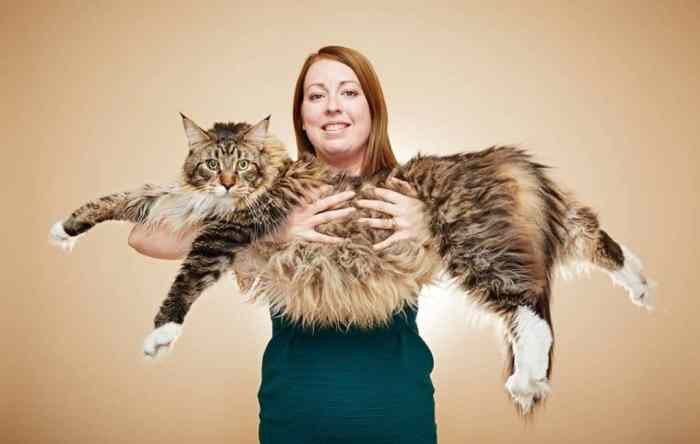
Several Maine Coons have achieved legendary status for their exceptional size. These cats have captured the attention of cat lovers worldwide and serve as examples of the breed’s potential for grandeur. Stewie and Molly are two of the most well-known examples.
Stewie, for example, held the Guinness World Record for the longest domestic cat, measuring an astounding 48.5 inches long. Molly, another impressive Maine Coon, was known for her substantial weight and overall size.
| Name | Weight (lbs) | Length (inches) |
|---|---|---|
| Stewie | 27 | 48.5 |
| Molly | 30 | 45 |
| Zeus | 25 | 42 |
The living conditions and care routines for these exceptionally large cats often involve providing ample space to move around, sturdy furniture that can withstand their size and strength, and specialized feeding plans to support their nutritional needs. Extra-large litter boxes are a must, and enrichment activities need to be scaled up to keep them entertained.
Extremely large Maine Coons can be predisposed to certain health concerns, such as hip dysplasia and hypertrophic cardiomyopathy (HCM). Regular veterinary checkups, including screenings for these conditions, are crucial for ensuring their well-being. Careful monitoring of their diet and exercise is also essential to maintain a healthy weight and prevent joint problems.
Male vs. Female Size Differences
Male Maine Coons consistently grow larger than females, a common pattern in many animal species. This difference is primarily due to hormonal influences and genetic factors that promote greater muscle mass and bone density in males.
On average, male Maine Coons weigh between 13-25 pounds and can reach lengths of 40 inches or more. Females typically weigh between 8-20 pounds and have a length range of 30-42 inches. These are just averages, and individual variation can be significant.
Males typically reach their full size between 3-5 years of age, while females may mature slightly earlier, around 2-4 years. The developmental timeline for males often involves a more gradual increase in size and muscle mass over a longer period.
The physical characteristics contributing to size differences include a more robust bone structure and greater muscle mass in males. Their chests are typically broader, and their overall build is more substantial compared to females.
Factors Influencing Individual Size
Diet plays a critical role in a Maine Coon’s growth. Kittens and young cats require a diet rich in protein and essential nutrients to support healthy bone and muscle development. Large-breed kitten food formulas are often recommended to ensure they receive the appropriate balance of nutrients.
Early socialization and handling can indirectly affect a cat’s overall development and size. Positive interactions with humans during kittenhood can reduce stress and promote healthy growth patterns. However, it’s important to handle kittens gently to avoid causing injury.
Genetics from both parents significantly influence a kitten’s potential size. Kittens inherit a combination of genes from their mother and father, which determines their predisposition for growth. Knowing the size of the parents can provide an indication of the kitten’s likely adult size.
The environment also plays a role in growth. Temperature, activity level, and access to resources can all impact a cat’s development. A warm, stimulating environment with plenty of opportunities for play and exercise can promote healthy growth.
Health Concerns Related to Large Size
Larger Maine Coons are potentially more susceptible to certain health problems, including hip dysplasia, a condition affecting the hip joint, and hypertrophic cardiomyopathy (HCM), a form of heart disease. Spinal muscular atrophy (SMA) is another concern.
Owners can minimize the risk of these health issues by providing a balanced diet, maintaining a healthy weight, and ensuring adequate exercise. Supplementation with glucosamine and chondroitin may also help support joint health.
Regular veterinary checkups and screenings are essential for large Maine Coons. HCM can be detected through echocardiograms, and hip dysplasia can be assessed through radiographs. Early detection allows for timely intervention and management.
Adjusting feeding and exercise routines is crucial for supporting the health of a very large cat. Controlled portions of high-quality food can help prevent obesity, while regular exercise can maintain muscle mass and joint flexibility.
Caring for a Large Maine Coon: Practical Considerations
- Extra-Large Litter Box: A larger litter box is essential to accommodate their size and prevent messes.
- Sturdy Scratching Posts: These cats need robust scratching posts that won’t tip over.
- Spacious Cat Tree: A tall, multi-level cat tree provides ample space for climbing and exploring.
- Large Food and Water Bowls: Choose bowls that are easy to clean and won’t tip over.
- Durable Toys: Invest in durable toys that can withstand their strength and playfulness.
Grooming a long-haired, large cat requires regular brushing, ideally several times a week, to prevent mats and tangles. A stainless steel comb and a slicker brush are essential tools. Bathing is typically only needed a few times a year.
Handling and transporting a very large cat can be challenging. A sturdy carrier is a must, and it may be helpful to enlist assistance when moving them. Positive reinforcement and gentle handling can make the process less stressful.
Creating a comfortable and enriching environment for a giant Maine Coon involves providing plenty of space, interactive toys, and opportunities for social interaction. A quiet, safe haven where they can retreat and relax is also important.
Maine Coon Lineages and Size
Certain Maine Coon bloodlines are known for consistently producing larger-than-average cats. These lineages often have a history of selective breeding for size and other desirable traits. The Van Dykes and the Russian bloodlines are often cited as examples.
The history of these lineages is intertwined with the breed’s development. Early breeders focused on preserving the breed’s original characteristics, including its large size. Over time, breeders have refined these lineages to further enhance their size and other traits.
Cats from different lineages can exhibit subtle differences in physical characteristics. Some lineages may have a more muscular build, while others may have a longer coat or a more distinctive facial feature. Breeders carefully select for these traits to maintain the unique characteristics of each lineage.
Breeders select for size by carefully evaluating the size of potential breeding cats and choosing individuals that meet their standards. They also consider other desirable traits, such as temperament, coat quality, and overall health.
Visualizing Size: Comparisons and Descriptions
A large Maine Coon can easily resemble a small dog in size, standing as tall as a Beagle and weighing as much as a small terrier. They often feel like a warm, furry pillow when you cuddle with them, their substantial weight a comforting presence.
A very large Maine Coon possesses a powerful, muscular build. Their chest is broad, their legs are sturdy, and their overall physique exudes strength and agility. Their fur is thick and luxurious, adding to their impressive presence.
Despite their size, large Maine Coons are surprisingly agile and graceful. They move with a quiet confidence, effortlessly navigating their surroundings. Their movements are fluid and coordinated, showcasing their athleticism.
The head and facial features of a large Maine Coon are particularly striking. Their ears are large and tufted, their eyes are wide and expressive, and their chin is strong and prominent. Their overall facial structure conveys a sense of wisdom and dignity.
The Maine Coon’s Physical Build: Anatomy of a Giant
The Maine Coon’s skeletal structure is robust and well-proportioned, with long bones and strong joints that support their size and strength. Their spine is flexible, allowing for a wide range of motion.
The musculature of a Maine Coon is well-developed, with powerful muscles in their legs, chest, and shoulders. These muscles enable them to jump, climb, and pounce with ease.
The Maine Coon’s coat is a defining characteristic of the breed. Its thick, shaggy texture provides insulation and protection from the elements. The coat’s density and length contribute to the cat’s perceived size.
The cat’s paw structure is unique, with large, well-padded paws that provide excellent traction and support their weight. Their retractable claws are sharp and strong, allowing them to climb and hunt effectively.
Illustrative Descriptions of Exceptional Maine Coons
Titan, the Gentle Colossus: Titan was a Maine Coon of unparalleled size, tipping the scales at over 35 pounds and stretching nearly 50 inches from nose to tail. Despite his imposing stature, he possessed a remarkably gentle nature. He spent his days lounging in sunbeams, occasionally engaging in playful swatting at dangling toys. His purr was a deep rumble that vibrated through the floor, a testament to his immense size and contented spirit.
“Petting Titan was an experience unlike any other. His fur felt like a luxurious, dense cloud, and you could feel the powerful muscles rippling beneath. It was like stroking a warm, furry boulder – a comforting and awe-inspiring sensation.”
A large Maine Coon entering a room is a spectacle to behold. Their sheer size commands attention, and their movements are deliberate and graceful. They glide across the floor with a quiet confidence, their long fur flowing behind them like a majestic cape. Their presence fills the room, creating a sense of warmth and wonder.
A playful interaction between a Maine Coon and a child is a heartwarming sight. The cat’s size can be initially intimidating, but their gentle nature quickly puts the child at ease. They engage in playful swatting and chasing, their large paws carefully avoiding any accidental bumps. The child’s laughter and the cat’s contented purrs create a moment of pure joy and connection.
Last Point
Ultimately, the biggest Maine Coon cats are a testament to the breed’s remarkable genetic potential and the dedication of breeders who have carefully cultivated these impressive animals. While size is certainly captivating, it’s their gentle nature, playful personalities, and unwavering loyalty that truly make them beloved companions. Whether you’re a seasoned Maine Coon enthusiast or just curious about these colossal kitties, we hope this exploration has deepened your appreciation for these extraordinary felines.
So, next time you see a Maine Coon, take a moment to consider the incredible genetics and care that can lead to a truly giant, and utterly charming, housemate!
User Queries
How much do the biggest Maine Coons typically weigh?
The heaviest recorded Maine Coon, Stewie, tipped the scales at over 25 pounds! While most large males are in the 15-20 pound range, some can easily exceed that.
What’s the difference between show size and pet size for Maine Coons?
Show standards favor a balanced, muscular build, typically around 15-25 pounds for males and 10-18 pounds for females. Pet Maine Coons can often be larger, especially if they come from lineages known for size.
Are larger Maine Coons more prone to health problems?
Yes, larger size can increase the risk of conditions like hip dysplasia and hypertrophic cardiomyopathy (HCM). Regular vet checkups and a healthy lifestyle are crucial.
What kind of food is best for a very large Maine Coon?
A high-quality, protein-rich diet formulated for large breeds is ideal. Look for food with added glucosamine and chondroitin to support joint health.
Do male Maine Coons always get bigger than females?
Generally, yes. Males typically weigh 5-10 pounds more than females and can be significantly longer.
What are some essential items I need for a large Maine Coon?
Think big! You’ll need an extra-large litter box, a sturdy scratching post (or several!), a spacious cat tree, and durable toys that can withstand a larger cat’s play.

