For centuries, humans have been captivated by the allure of wild animals, dreaming of having a piece of the wilderness as a companion. Lately, there’s been a noticeable surge in interest surrounding exotic pets, and bobcats – those sleek, mysterious wild cats – have started to appear on some people’s wish lists. But is keeping a bobcat as a pet a realistic or ethical idea?
The legal landscape is complex, and the realities of caring for such a creature are far more demanding than most realize. Let’s dive into the fascinating, and often complicated, world of bobcats as pets, exploring everything from their natural behaviors to the legal hurdles and ethical considerations involved.
This exploration will cover a wide range of topics, starting with the reasons people are drawn to these animals and the significant drawbacks they present. We’ll delve into bobcat biology and behavior, examining their natural habitat, diet, and social interactions. Crucially, we’ll navigate the legal maze surrounding bobcat ownership, looking at state-specific regulations and potential local ordinances. Beyond the legalities, we’ll discuss the practicalities of providing a suitable environment, diet, and healthcare for a bobcat, as well as the ethical implications of keeping a wild animal in captivity.
Finally, we’ll explore alternatives for appreciating these magnificent creatures from a safe and respectful distance.
The Allure of the Wild: Bobcats as Pets
There’s a primal fascination humans have always held with wild animals. From ancient Egyptian cat worship to the Victorian era’s penchant for exotic birds, the desire to bring a piece of the wilderness into our homes is deeply ingrained. Recently, this fascination has surged, fueled by social media and a growing disconnect from the natural world. More people are exploring the possibility of keeping exotic animals, often with limited understanding of the complexities involved.
While the idea of a miniature wildcat prowling your backyard might seem appealing, the reality is far more nuanced. This post will delve into the world of bobcat ownership, exploring the legal landscape, practical considerations, and ethical implications. It’s a journey into a world of challenges, responsibilities, and potential dangers.
The legal framework surrounding exotic pet ownership in the United States is a patchwork of state and local laws. There’s no overarching federal regulation; instead, individual states have varying degrees of control. Some states outright prohibit the ownership of many exotic animals, while others require permits or licenses. Local ordinances can further restrict ownership, even in states where it’s generally permitted.
Navigating this legal maze is crucial before even considering bringing a bobcat into your life.
| Reasons for Interest | Potential Drawbacks | Legal Considerations |
|---|---|---|
| Unique and striking appearance | High maintenance and specialized care | Varying state and local laws |
| Perceived independence and low-maintenance nature (often a misconception) | Potential for aggression and unpredictable behavior | Permit/license requirements |
| Novelty and status symbol | Significant financial investment (enclosure, food, vet care) | Risk of legal penalties for non-compliance |
Understanding Bobcats: Biology and Behavior
Source: cats.com
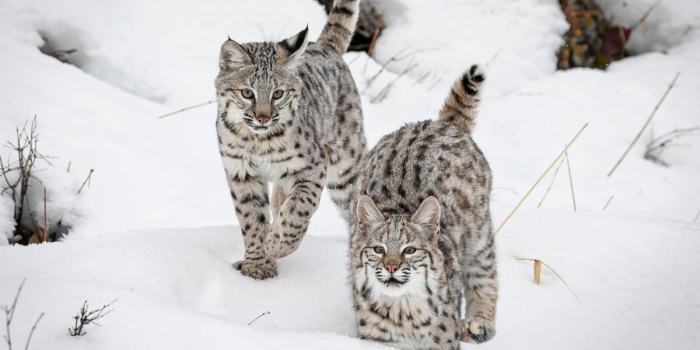
Bobcats ( Lynx rufus) are medium-sized wild cats native to North America. They thrive in a diverse range of habitats, from forests and swamps to deserts and mountains. Their diet primarily consists of rabbits and rodents, but they’ll also prey on birds, reptiles, and even larger animals like deer fawns. Understanding their natural behaviors is essential to assessing whether captivity is a viable option – and, more importantly, whether you can provide for their needs.
In the wild, bobcats are solitary hunters, marking their territories with scent and claw marks. While they occasionally interact with other bobcats, particularly during mating season, they are not inherently social animals. Their hunting behavior is characterized by stealth and ambush, relying on their keen senses and agility to capture prey. The differences between subspecies can influence temperament; for example, Florida bobcats are generally smaller and may exhibit slightly different behaviors compared to those in the Rocky Mountains.
Imagine a detailed skeletal diagram of a bobcat. The most striking feature is the elongated spine, allowing for incredible flexibility and enabling them to navigate dense undergrowth with ease. Their relatively short, powerful limbs are built for bursts of speed and agile leaps. The shoulder blades are loosely attached, granting a wide range of motion for their forepaws, crucial for grasping and holding prey.
The skull is compact and robust, with large eye sockets indicating excellent binocular vision for judging distances during hunts. Finally, the flexible tail, short and bobbed, acts as a counterbalance during quick turns and jumps, contributing to their overall agility and hunting prowess.
Legality and Regulations: A Complex Landscape
The legality of owning a bobcat varies dramatically across the United States. Some states have outright bans, while others allow ownership with strict permitting requirements. It’s crucial to research both state and local laws before considering bobcat ownership, as local ordinances can be even more restrictive than state regulations. The process of obtaining permits can be lengthy and expensive, and compliance with regulations is essential to avoid legal repercussions.
- States Where Ownership is Explicitly Legal (with permits): Texas, Nevada, Wisconsin (limited circumstances)
- States with Restrictions: Oklahoma (requires specific permits and enclosures), Arizona (requires permits and proof of experience), Florida (requires permits and specific enclosure standards)
- States Where Ownership is Prohibited: California, New York, Illinois, Massachusetts, and many others. This list is not exhaustive and changes frequently.
Generally, permits for exotic animal ownership require demonstrating adequate knowledge of the animal’s care, providing a secure and appropriate enclosure, and obtaining liability insurance. Some states may also require a veterinary inspection to ensure the animal is healthy and free from disease.
| State | Legality | Permit Requirements | Local Ordinances |
|---|---|---|---|
| Texas | Legal (with permit) | Proof of enclosure, knowledge of care, liability insurance | Some cities may have additional restrictions |
| California | Prohibited | N/A | Strict enforcement of state laws |
| Nevada | Legal (with permit) | Enclosure inspection, knowledge test, liability insurance | Clark County has specific regulations |
| Florida | Legal (with permit) | Caged animal permit, enclosure standards, veterinary inspection | Many counties have stricter regulations |
| Wisconsin | Legal (limited circumstances) | Permit required for captive bobcats, specific enclosure requirements | Local ordinances may apply |
Housing and Environment: Replicating the Wild
Providing a suitable environment for a bobcat in captivity is a significant challenge. These are wild animals adapted to vast territories and complex ecosystems. Replicating their natural habitat requires a substantial investment of time, money, and expertise. The enclosure must be secure, spacious, and enriched to prevent boredom and stress, which can lead to behavioral problems.
The ideal enclosure should be at least 1 acre in size, with a perimeter fence at least 8 feet high and buried at least 2 feet deep to prevent digging. The fence should be constructed of heavy-gauge chain-link or similar material, reinforced with additional supports. The enclosure should also include a variety of features to stimulate the bobcat’s natural behaviors, such as climbing structures, scratching posts, and areas for digging and exploring.
Imagine a sprawling, one-acre enclosure for a bobcat. The perimeter is secured by an 8-foot-high chain-link fence, buried two feet underground and reinforced with concrete footings. Within the enclosure, a natural landscape unfolds: a forested area with tall trees for climbing, a rocky outcrop for basking in the sun, a shallow pond for drinking and playing, and a large, sandy area for digging. Scattered throughout the enclosure are sturdy scratching posts, puzzle feeders to stimulate hunting instincts, and a variety of hiding places to provide a sense of security. The entire enclosure is covered by a mesh roof to prevent escape and protect the bobcat from predators.
Diet and Nutrition: Meeting Specific Needs
A bobcat’s natural diet is primarily carnivorous, consisting of small mammals like rabbits and rodents. They also consume birds, reptiles, and occasionally larger prey. Replicating this diverse diet in a captive environment is difficult, requiring careful planning and a deep understanding of their nutritional needs.
Commercially available cat food can form a portion of a bobcat’s diet, but it’s unlikely to provide all the necessary nutrients. Supplementation with raw meat, bones, and organ meats is essential. It’s also important to provide a variety of food items to ensure they receive a balanced intake of vitamins and minerals. Consulting with a veterinarian experienced in exotic animal nutrition is highly recommended.
| Meal | Food Item | Portion Size |
|---|---|---|
| Monday | Raw rabbit | 5-7 lbs |
| Tuesday | High-quality kitten food (grain-free) | 2 cups |
| Wednesday | Raw chicken and bones | 5-7 lbs |
| Thursday | Raw quail and organ meats | 3-5 lbs |
| Friday | High-quality adult cat food (grain-free) | 2 cups |
| Saturday | Raw rodent (e.g., rat, mouse) | 1-2 rodents |
| Sunday | Raw beef and bone | 5-7 lbs |
Health and Veterinary Care: Specialized Expertise
Bobcats are susceptible to a range of health problems, including feline leukemia virus (FeLV), feline immunodeficiency virus (FIV), and parasitic infections. Finding a veterinarian with experience treating bobcats can be challenging, as most vets specialize in domestic animals. Preventative care, including regular checkups, vaccinations, and parasite control, is crucial for maintaining their health.
| Potential Health Issue | Symptoms | Treatment Options |
|---|---|---|
| FeLV | Weight loss, lethargy, enlarged lymph nodes | No cure; supportive care, management of secondary infections |
| FIV | Fever, loss of appetite, gingivitis | No cure; supportive care, management of secondary infections |
| Parasitic Infections (worms, fleas, ticks) | Weight loss, diarrhea, skin irritation | Deworming medication, flea and tick control |
| Upper Respiratory Infections | Sneezing, coughing, nasal discharge | Antibiotics, supportive care |
| Dental Disease | Bad breath, difficulty eating, drooling | Dental cleaning, extractions |
Socialization and Training: A Difficult Task
Socializing a bobcat with humans is an incredibly difficult and often unsuccessful endeavor. These are wild animals with ingrained instincts, and attempts to force them into a domestic role can lead to aggression and unpredictable behavior. Early socialization, if even possible, requires extensive experience and a deep understanding of bobcat behavior. Ethical considerations surrounding early removal from the mother are paramount.
Training techniques based on positive reinforcement, such as rewarding desired behaviors with food or praise, may be applicable, but progress is likely to be slow and inconsistent. It’s crucial to establish clear boundaries and avoid any actions that could be perceived as threatening.
Ethical Considerations: Welfare and Conservation
Keeping a wild animal like a bobcat in captivity raises significant ethical concerns. Even with the best care, a captive bobcat is deprived of its natural freedom and the opportunity to engage in its natural behaviors. The exotic pet trade can also have a negative impact on bobcat populations, particularly if animals are captured from the wild rather than bred in captivity.
Responsible ownership involves prioritizing the animal’s welfare above all else and supporting conservation efforts to protect bobcats in their natural habitat. Consider supporting organizations dedicated to bobcat conservation and welfare instead of pursuing ownership.
- The Bobcat Project
- Wildlife Conservation Society
- National Wildlife Federation
Risks and Liabilities: Potential Dangers
Owning a bobcat poses significant risks to the owner, the public, and the bobcat itself. Bobcats are powerful predators with sharp claws and teeth, and even a seemingly docile animal can become aggressive if provoked or frightened. Legal liabilities associated with owning a dangerous animal can be substantial, including potential lawsuits if the animal injures someone.
| Potential Risk | Mitigation Strategies |
|---|---|
| Escape | Secure enclosure, regular inspections, emergency response plan |
| Injury to Owner or Others | Strict safety protocols, experienced handler, liability insurance |
| Disease Transmission | Regular veterinary checkups, preventative vaccinations |
| Animal Welfare Concerns | Enrichment activities, appropriate diet, spacious enclosure |
| Legal Penalties | Compliance with all state and local laws, proper permitting |
Alternatives to Ownership: Appreciation from a Distance
There are many ways to appreciate bobcats without owning one. Wildlife photography, supporting conservation organizations, and visiting zoos and sanctuaries are all excellent options. Observing bobcats in their natural habitat provides a unique and rewarding experience, allowing you to witness their beauty and behavior firsthand.
Imagine yourself hiking through a dense forest, the air thick with the scent of pine and damp earth. Suddenly, a flash of tawny fur catches your eye. A bobcat, sleek and silent, emerges from the undergrowth, its amber eyes fixed on you. It pauses for a moment, assessing the situation, before melting back into the shadows, leaving you with a fleeting glimpse of wild beauty and a profound respect for the power and grace of nature.
Closure
Ultimately, the idea of having a bobcat as a pet presents a complex web of challenges, risks, and ethical considerations. While the allure of owning a piece of the wild is understandable, the reality is that bobcats are not domesticated animals and require specialized care, extensive resources, and a deep understanding of their needs. The potential dangers to both the owner, the public, and the bobcat itself are significant, and the legal liabilities can be substantial.
Thankfully, there are numerous ways to appreciate these incredible animals without bringing them into our homes – through supporting conservation efforts, observing them in their natural habitat, or visiting accredited zoos and sanctuaries. Let’s choose to admire and protect bobcats in their rightful place: the wild.
Query Resolution
What is the average lifespan of a bobcat in captivity?
Bobcats in captivity can live longer than in the wild, often reaching 12-15 years, and sometimes even longer with exceptional care.
Can bobcats be house-trained?
No, bobcats cannot be reliably house-trained. They are naturally inclined to mark territory with scent, and attempting to force them into a domestic routine is stressful and often unsuccessful.
What kind of enrichment do bobcats need?
Bobcats require a lot of enrichment to prevent boredom and stress. This includes large climbing structures, digging areas, puzzle feeders, and opportunities to stalk and hunt (using appropriate toys and simulated prey).
Are bobcat kittens easier to socialize than adults?
While bobcat kittens
-might* be slightly more adaptable to human interaction, they are still wild animals and socialization is incredibly difficult and ethically questionable. Early socialization doesn’t guarantee a tame or predictable adult.
What vaccinations do bobcats need?
There are no standard vaccinations for bobcats. Veterinarians often recommend feline distemper, rabies (where legally required), and sometimes feline leukemia, but protocols vary and are not as established as for domestic cats.
What are some common health problems in captive bobcats?
Common issues include dental disease, kidney problems, parasites (both internal and external), and musculoskeletal injuries due to their active nature. They are also susceptible to diseases carried by domestic cats.
How much does it cost to care for a bobcat?
The cost is substantial, easily exceeding $10,000 per year. This includes enclosure construction and maintenance, specialized food, veterinary care, enrichment items, and potential insurance costs.

