The allure of wild cats has captivated humans for centuries, appearing in mythology, art, and increasingly, as a potential pet. Bobcats, with their striking appearance and reputation for independence, have sparked curiosity in some considering them as companions. However, owning a bobcat is far more complex than welcoming a domestic cat into your home. This exploration delves into the legal, ethical, behavioral, and practical realities of keeping a bobcat as a pet, examining everything from enclosure requirements to conservation concerns.
We’ll unpack the challenges and considerations involved, ultimately helping you understand if this unique choice is truly feasible.
The Allure of the Wild: Considering Bobcats as Companions
There’s a primal fascination with wild cats that runs deep in human history. From ancient Egyptian reverence for felines to the symbolic power of lions and tigers in various cultures, we’ve always been captivated by their grace, strength, and independence. This fascination sometimes extends to a desire to bring a piece of that wildness into our homes. The bobcat, with its striking appearance and reputation for self-sufficiency, has recently garnered attention as a potential pet.
However, owning a bobcat is far more complex than welcoming a domestic cat into your life. This post will delve into the realities of bobcat ownership, exploring the legal, ethical, behavioral, and practical considerations involved. We’ll also touch on the conservation implications and explore alternatives for those drawn to the allure of these magnificent creatures.
The perceived independence of bobcats, coupled with their undeniably beautiful markings and powerful build, are often cited as reasons for considering them as pets. People may be drawn to the idea of a low-maintenance companion, or simply captivated by the exotic appeal. However, it’s crucial to understand that bobcats are not domesticated animals. Their wild instincts and complex needs present significant challenges for even the most experienced animal keepers.
Before even considering ownership, it’s vital to understand the legal and ethical landscape surrounding these animals, which we’ll explore in detail.
Legality: Navigating Ownership Restrictions and Permits
The legality of owning a bobcat varies dramatically depending on your location. State and local laws regarding exotic animal ownership are often complex and can change frequently. What’s legal in one state might be strictly prohibited in another, and even within a state, county or city ordinances can add further restrictions. It’s absolutely essential to thoroughly research and comply with all applicable laws before acquiring a bobcat.
Failure to do so can result in hefty fines, confiscation of the animal, and even legal prosecution.
State-by-State Breakdown of Bobcat Ownership
The following table provides a general overview of bobcat ownership laws in several states. Please note that this information is subject to change and should not be considered legal advice. Always verify the current laws with your state’s wildlife agency and local authorities.
| State | Legal Status | Permit Required? | Notes |
|---|---|---|---|
| Arizona | Restricted | Yes | Requires a permit and specific enclosure requirements. |
| California | Prohibited | N/A | Generally illegal to own as a pet. |
| Colorado | Legal (with restrictions) | Yes | Requires a permit and adherence to strict regulations. |
| Florida | Legal (with restrictions) | Yes | Requires a permit and specific enclosure requirements. |
The process of obtaining necessary permits and licenses, where required, can be lengthy and demanding. Expect to provide detailed information about your experience with exotic animals, the size and security of your enclosure, and your ability to provide appropriate care. Many states require proof of liability insurance to protect against potential damages or injuries caused by the bobcat.
Enclosure requirements typically mandate a substantial, escape-proof enclosure with a minimum size of several hundred square feet, depending on the state. Experience with large carnivores is often a prerequisite, and veterinary documentation demonstrating access to qualified care is also frequently required.
Federal regulations, primarily through the Lacey Act, prohibit the interstate transport of illegally obtained wildlife. This means that acquiring a bobcat from a state where ownership is illegal and bringing it to a state where it is legal is a violation of federal law. Furthermore, some bobcat subspecies may be protected under the Endangered Species Act, further restricting their ownership and trade.
Bobcat Behavior and Temperament: Understanding the Wild Within
Bobcats are naturally solitary and territorial animals. In the wild, their lives revolve around hunting, establishing and defending their territory, and occasional social interactions, primarily during mating season. Understanding these innate behaviors is crucial for anyone considering keeping a bobcat as a pet, as they will inevitably manifest in a captive environment, albeit potentially in modified forms.
Captive vs. Wild: Behavioral Manifestations
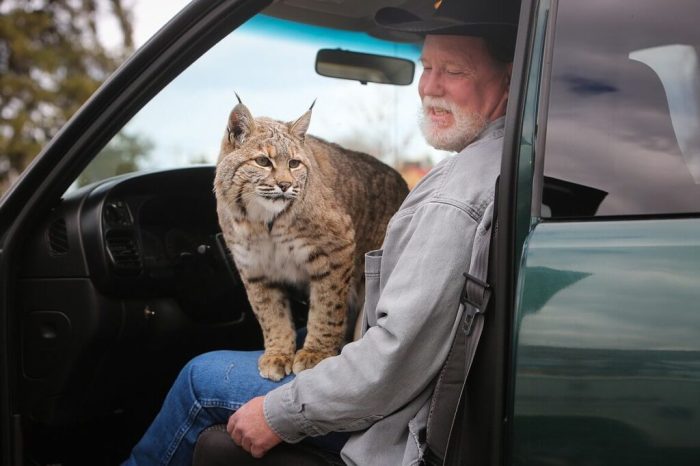
Source: animalgator.com
A captive bobcat will still exhibit territorial behavior, marking its enclosure with scent and potentially displaying aggression towards other animals or even humans who encroach on its perceived territory. Hunting instincts remain strong, and providing appropriate outlets for these instincts is essential for the animal’s well-being. Social interactions, while less frequent than in the wild, may still occur, particularly if the bobcat is raised with other animals from a young age.
However, even in these cases, dominance hierarchies and occasional conflicts are likely.
Captive-bred bobcats generally exhibit different temperaments than their wild-caught counterparts. Wild-caught bobcats are often fearful and unpredictable, making them unsuitable for captivity. Captive-bred bobcats, raised in human care, may be more habituated to humans, but they are still far from domesticated. They retain their wild instincts and can be unpredictable, especially when stressed or feeling threatened. Their behavior is influenced by genetics, early socialization, and individual personality.
Comparing Bobcat Behavior to Other Animals
- Bobcats vs. Domestic Cats: Bobcats are significantly larger and stronger than domestic cats. They have a much more intense prey drive and are not easily trained. While they may exhibit some similar behaviors like grooming and playing, their overall behavior is far more independent and less affectionate.
- Bobcats vs. Servals: Servals, while also exotic cats, are often considered slightly more amenable to domestication than bobcats. They tend to be more energetic and playful, and some individuals can form strong bonds with their owners. However, both species require specialized care and are not suitable for novice pet owners.
- Bobcats vs. Other Exotic Pets (e.g., Foxes): Foxes are generally considered more social and trainable than bobcats, and some breeds have been selectively bred for pet ownership. However, foxes also have unique care requirements and can be challenging to manage. Bobcats remain significantly more independent and less adaptable to human interaction.
Housing and Enclosure Requirements: Creating a Safe and Stimulating Environment
Providing adequate housing for a bobcat is a significant undertaking. It’s not simply a matter of providing a large cage; the enclosure must be secure, spacious, and enriched to meet the animal’s physical and psychological needs. A poorly designed enclosure can lead to stress, behavioral problems, and even escape, posing a risk to both the bobcat and the surrounding community.
The Ideal Bobcat Enclosure
An ideal bobcat enclosure should be at least 20 feet long, 15 feet wide, and 10 feet high, although larger is always preferable. The enclosure must be constructed of sturdy materials, such as heavy-gauge chain-link fencing or reinforced concrete, and buried at least 2 feet deep to prevent digging escapes. The top of the enclosure should be securely covered with a mesh roof to prevent climbing escapes.
Double-gated entry systems are essential to prevent accidental escapes during maintenance or cleaning.
Environmental enrichment is crucial for a bobcat’s well-being. The enclosure should include climbing structures (large logs, sturdy platforms), hiding places (dens, caves), and a water feature (a pond or stream) for bathing and play. Regularly rotating toys and providing novel objects can help keep the bobcat mentally stimulated. The enclosure should also be designed to provide shade and protection from the elements.
Indoor Housing Considerations
While bobcats are primarily outdoor animals, indoor housing may be necessary for short periods or during inclement weather. Indoor spaces should be large and well-ventilated, with a temperature-controlled environment. A substrate such as wood chips or shredded paper can provide comfort and allow for natural digging behaviors. It’s important to “bobcat-proof” the indoor space, removing any potentially hazardous objects or materials.
| Feature | Description | Importance |
|---|---|---|
| Climbing Structure | Durable wood and rope, multiple levels | Provides exercise and mental stimulation, allows for natural climbing behaviors. |
| Hiding Place (Den) | Enclosed structure, dark and secure | Provides a sense of security and privacy, reduces stress. |
| Water Feature | Pond or stream with circulating water | Allows for bathing and play, provides enrichment. |
Diet and Nutrition: Fueling a Wild Predator
In the wild, bobcats are opportunistic carnivores with a diet consisting primarily of rodents, rabbits, birds, and occasionally larger prey. Replicating this diet in captivity is challenging but essential for maintaining the bobcat’s health and well-being. A nutritionally complete diet must provide adequate protein, fat, vitamins, and minerals.
Formulating a suitable diet requires careful consideration. Commercially available raw meat diets formulated for carnivores can serve as a base, supplemented with whole prey items (e.g., rabbits, chicks) to provide essential nutrients. Taurine, an amino acid crucial for heart health, must be supplemented, as it is not always present in sufficient quantities in commercial diets. Vitamin and mineral supplements may also be necessary to ensure optimal nutrition.
Improper nutrition can lead to a variety of health problems, including taurine deficiency, bone disorders, and immune system dysfunction. It’s crucial to consult with a veterinarian experienced in exotic animal nutrition to develop a balanced and appropriate diet for your bobcat.
Sample Weekly Meal Plan
This is a sample meal plan and should be adjusted based on the individual bobcat’s age, activity level, and health status. Portion sizes are approximate and should be monitored to maintain a healthy weight.
| Day | Meal | Portion Size | Food Type |
|---|---|---|---|
| Monday | Breakfast | 2 lbs | Raw meat diet (carnivore formula) |
| Monday | Dinner | 1 whole rabbit | Frozen, thawed |
| Tuesday | Breakfast | 1.5 lbs | Raw meat diet |
| Tuesday | Dinner | 6 chicks | Frozen, thawed |
Closing Summary
Ultimately, the decision to consider a bobcat as a pet is fraught with complexities. From navigating intricate legal landscapes and providing specialized care to addressing ethical concerns about wildlife conservation, the responsibilities are immense. While the idea of sharing your life with such a magnificent creature might be appealing, the reality demands a deep commitment, significant resources, and a profound understanding of bobcat behavior and welfare.
Exploring alternatives like supporting conservation efforts or adopting a domestic cat offers a more sustainable and ethical path to appreciating these incredible animals.
Expert Answers
What is the average lifespan of a bobcat in captivity?
Bobcats in captivity can live 12-15 years, sometimes longer with excellent care, though this can vary depending on genetics and overall health.
Can a bobcat be litter-box trained?
While some captive-bred bobcats may learn to use a litter box, it’s not guaranteed and often requires extensive training and consistency. They still have natural marking behaviors.
What are the biggest challenges in finding a vet who can treat a bobcat?
Many veterinarians lack experience with exotic animals like bobcats. Finding a vet with specialized knowledge in feline medicine and exotic animal care is crucial, and often requires extensive searching and potentially travel.
How much space does a bobcat really need in an enclosure?
A minimum enclosure size is generally considered to be 200 square feet, but larger is always better. Bobcats need ample space to roam, climb, and exhibit natural behaviors. Height is also important, with at least 10-12 feet of vertical space.
Are captive-bred bobcats truly tame?
While captive-bred bobcats are less fearful than wild-caught individuals, they are still wild animals with inherent instincts. They are not domesticated and can exhibit unpredictable behavior, even with socialization.
What are some enrichment activities I can provide for a bobcat?
Enrichment is vital! This includes climbing structures, scratching posts, puzzle feeders, scent marking opportunities, and rotating toys. Providing a varied and stimulating environment helps prevent boredom and behavioral issues.
Is it ethical to keep a bobcat as a pet, even if it’s captive-bred?
This is a complex ethical debate. While captive-breeding can reduce pressure on wild populations, concerns remain about the animal’s welfare in a captive environment and the potential for contributing to the exotic pet trade.
What happens if I can no longer care for my bobcat?
Finding a suitable sanctuary or accredited zoo is extremely difficult. Bobcats are not easily re-released into the wild, and many facilities are already at capacity. Responsible ownership includes planning for the animal’s long-term care.

