Ever wondered why your cat acts the way they do? It’s more than just “cats are mysterious.” Felines are incredibly individual creatures, each with their own quirks, preferences, and unique ways of interacting with the world. While the stereotype of the aloof, independent cat persists, the reality is far more diverse. You might have a playful kitten bouncing off the walls, a shy cat who prefers quiet corners, or a cuddly companion who demands constant attention – and all of these personalities can exist within the same breed! Let’s meet three hypothetical cats to illustrate this: Leo, the energetic explorer; Willow, the gentle wallflower; and Jasper, the affectionate shadow.
This guide dives deep into the fascinating world of feline personalities, exploring the genetic influences, early life experiences, and environmental factors that shape who your cat is. We’ll look at common personality types, how to understand their communication, and how to address any behavioral challenges that might arise. Get ready to gain a whole new appreciation for your furry friend!
Understanding the Unique Personalities of Cats
Cats. They’re mysterious, independent, and endlessly fascinating. While we often think of them as aloof creatures, the truth is that cats possess a remarkable range of personalities, just like humans. This isn’t just anecdotal; there’s a growing understanding of the factors that shape feline individuality. This article will delve into the science and nuances behind cat personalities, exploring everything from genetics and early experiences to environmental influences and communication styles.
Let’s unravel the complexities of what makes each cat a unique individual.
Introduction: Understanding Feline Individuality
The diversity in cat behaviors and temperaments stems from a complex interplay of factors. It’s not simply a matter of breed or upbringing; genetics, early life experiences, and the environment all contribute to a cat’s personality. A common misconception is that all cats are aloof and independent, preferring solitude to interaction. While independence is certainly a trait often observed in cats, it’s a vast oversimplification.
Some cats are incredibly affectionate, seeking constant attention and physical contact, while others are shy and reserved, preferring to observe from a distance. Even within the same breed, personalities can vary dramatically. For example, you might find a playful and outgoing Siamese alongside a quiet and contemplative one.To illustrate this point, consider three hypothetical cats: Jasper, a playful tabby who greets everyone with a headbutt and a purr; Luna, a shy Persian who prefers to hide under the bed when visitors arrive; and Oliver, an affectionate Maine Coon who demands cuddles and follows his owner from room to room.
These contrasting personalities demonstrate the wide spectrum of feline individuality.
Genetic Influences on Cat Behavior
Genetics play a significant role in establishing predispositions for certain behaviors in cats. While pinpointing specific genes responsible for complex personality traits is an ongoing area of research, scientists have identified some genetic markers associated with behavioral tendencies. For instance, variations in genes related to dopamine and serotonin, neurotransmitters involved in reward and mood regulation, have been linked to boldness and sociability.
Breed characteristics often offer clues about potential personality traits, though they are far from definitive. Selective breeding over generations has resulted in breeds with tendencies towards certain behaviors, but individual variation within a breed is always present. A cat’s environment and experiences can significantly alter the expression of these genetic predispositions.
| Breed | Common Personality Traits | Potential Genetic Influences | Caveats (environmental factors) |
|---|---|---|---|
| Siamese | Vocal, intelligent, affectionate, demanding of attention | Genes influencing vocalization and social bonding | Early socialization, interaction with humans, enrichment activities |
| Persian | Calm, docile, affectionate, can be prone to anxiety | Genes related to temperament and stress response | Handling as a kitten, living environment (noise levels), grooming routine |
| Maine Coon | Gentle giant, playful, intelligent, affectionate, good with children | Genes influencing size, sociability, and playfulness | Early socialization with children and other pets, access to outdoor space |
| Bengal | Energetic, playful, intelligent, curious, can be demanding | Genes related to activity levels and hunting instincts | Enrichment activities (toys, climbing structures), consistent training, early socialization |
Early Life Experiences and Socialization
The period between 2 and 7 weeks of age is critical for socialization in kittens. During this time, kittens develop their comfort levels with humans, other cats, and other animals. Positive experiences during this window significantly impact their adult personality, shaping their ability to form social bonds and cope with new situations. Kittens raised in isolation often develop fearfulness, aggression, or excessive shyness.
Conversely, kittens raised in a social environment, exposed to a variety of people and animals, tend to be more confident, adaptable, and friendly.Here’s a list of socialization activities for kittens, along with expected outcomes:
- Handling and Cuddling: Regular gentle handling from a young age helps kittens become comfortable with human touch and reduces the likelihood of fear-based aggression.
- Exposure to Different Sounds: Introducing kittens to a variety of sounds (vacuum cleaner, doorbell, traffic) in a controlled manner helps them become desensitized and less reactive.
- Introduction to Other Cats: Supervised interactions with friendly, vaccinated adult cats allow kittens to learn appropriate social behaviors and develop confidence.
- Exposure to Different People: Introducing kittens to a diverse range of people (men, women, children) helps them become comfortable with different appearances and personalities.
- Exploration of New Environments: Allowing kittens to explore safe and supervised new environments (different rooms in the house, a secure outdoor space) encourages curiosity and adaptability.
Common Feline Personality Types
While every cat is unique, certain personality types tend to emerge. Recognizing these types can help owners better understand their cat’s behavior and provide appropriate care.
The Explorer
Explorers are curious and adventurous cats who love to investigate their surroundings. They are often the first to check out new objects or spaces and enjoy climbing and perching in high places. In an apartment, an explorer might spend hours investigating every nook and cranny. In a house with a yard, they’ll likely spend a significant amount of time patrolling the perimeter.
The Cuddler
Cuddlers are affectionate and clingy cats who crave physical contact. They enjoy being petted, held, and sleeping near their owners. They might follow their owners from room to room and demand attention frequently.
The Guardian
Guardians are protective and territorial cats who are alert to potential threats. They might vocalize at strangers or other animals and are often very observant of their surroundings.
The Comedian
Comedians are playful and entertaining cats who enjoy engaging in silly antics. They might chase toys, pounce on unsuspecting objects, or perform amusing behaviors to elicit a reaction from their owners.
The Wallflower
Wallflowers are shy and reserved cats who prefer to observe from a distance. They might hide when visitors arrive or avoid direct interaction. They often appreciate quiet and predictable environments.The progression of a kitten’s personality can be visualized as follows:[Flowchart: Early socialization (positive) -> Confident & Social / Early socialization (negative) -> Shy & Reserved / Limited socialization -> Cautious & Independent / Playful interactions -> Comedian / Protective environment -> Guardian]
Environmental Factors Shaping Personality
A cat’s living environment significantly influences its behavior and personality. Noise levels, available space, and the presence of other pets all play a role. A cat living in a noisy, cramped apartment might become anxious and withdrawn, while a cat with ample space and enrichment opportunities is more likely to be playful and confident. Enrichment activities, such as toys, scratching posts, and climbing structures, are crucial for a cat’s mental and emotional well-being.
A predictable routine can also reduce stress and contribute to a more stable personality.Here’s a list of environmental enrichment ideas, categorized by cost and complexity:
- Low Cost & Simple: Cardboard boxes, paper bags, catnip toys, rotating toys regularly.
- Moderate Cost & Moderate Complexity: Scratching posts, interactive toys (feather wands, laser pointers), window perches.
- High Cost & High Complexity: Cat trees, cat tunnels, puzzle feeders, outdoor enclosures (catios).
The Role of Sensory Perception
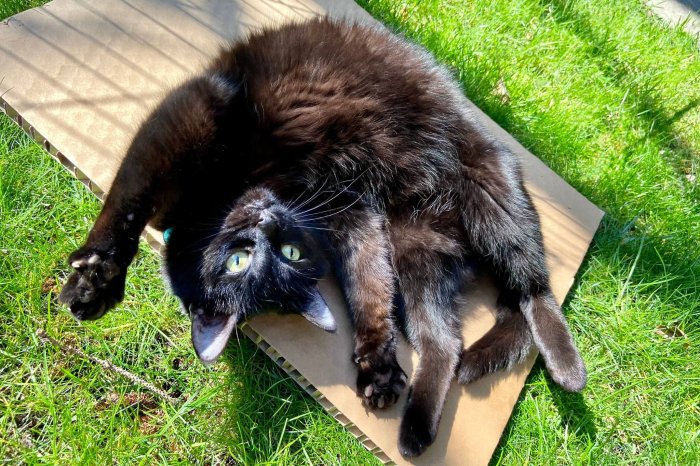
Source: cats.com
Cats possess heightened senses of smell, hearing, and sight, which profoundly influence their reactions to the world and contribute to their personality. Their keen sense of smell allows them to detect subtle changes in their environment, while their exceptional hearing enables them to perceive sounds beyond the range of human hearing. Their vision, while not as sharp as humans’, is particularly well-suited for detecting movement in low light.
Sensitivities to certain sounds or smells can trigger anxiety or fear, impacting behavior.
A sudden, high-pitched noise, like a squeaky toy or a ringing phone, can trigger a cat’s heightened hearing, causing them to perceive it as a threat. This can lead to a rapid, instinctive response – a sudden flinch, a frantic search for a hiding place, or even a startled vocalization.
Understanding Feline Communication
Cats communicate through a complex combination of vocalizations, body language, and scent marking. Vocalizations range from purrs and meows to hisses and growls, each conveying a different message. Body language, including tail movements, ear position, and posture, provides valuable insights into a cat’s emotional state. Scent marking, through scratching and spraying, allows cats to communicate territory and social status. Misinterpretations of feline communication can lead to misunderstandings between cats and humans.
| Body Language Cue | Possible Meaning | Contextual Considerations |
|---|---|---|
| Tail held high | Confidence, friendliness | May indicate excitement or anticipation |
| Tail tucked between legs | Fear, anxiety, submission | Often accompanied by flattened ears and a crouched posture |
| Ears forward | Alertness, interest | May indicate curiosity or focus |
| Ears flattened | Fear, aggression, defensiveness | Often accompanied by hissing or growling |
Personality Differences Between Indoor and Outdoor Cats
Cats who primarily live indoors tend to be more docile and dependent on their owners, while cats with outdoor access often exhibit greater independence and confidence. Outdoor experiences, such as hunting, exploring, and interacting with other animals, can shape a cat’s behavior, leading to increased activity levels and a more assertive personality. Allowing cats outdoor access presents both risks (traffic, predators, diseases) and benefits (exercise, mental stimulation).Potential personality traits more commonly observed in outdoor cats:
- Increased confidence and independence
- Greater hunting instincts
- More assertive behavior
- Higher activity levels
- Increased territoriality
Age-Related Changes in Personality
A cat’s personality evolves throughout its lifespan. Kittens are typically playful and energetic, while adult cats tend to be more settled and predictable. As cats age, they may experience decreased activity levels, increased sleep, and changes in their social interactions. Older cats might become more selective about their interactions, preferring the company of familiar humans or other cats. They may also develop new preferences for certain foods or sleeping spots.[Timeline: Kittenhood (0-6 months): Playful, curious, energetic / Adulthood (6 months – 7 years): Settled, predictable, independent / Senior Years (7+ years): Decreased activity, increased sleep, potential for cognitive decline]
Addressing Behavioral Challenges Related to Personality
Understanding a cat’s personality is crucial for addressing behavioral issues effectively. Aggression, anxiety, and excessive vocalization can often be linked to underlying personality traits. Strategies for managing these challenges should be tailored to the individual cat’s personality. Patience, consistency, and positive reinforcement are essential for modifying feline behavior.[Flowchart: Concerning behavior observed -> Identify underlying cause (fear, anxiety, frustration) -> Implement tailored management strategies (environmental enrichment, behavior modification techniques) -> Monitor progress and adjust strategies as needed -> Seek professional help if necessary]
Concluding Remarks
From genetics to socialization, environment to communication, understanding the nuances of your cat’s personality is key to building a stronger bond and ensuring their well-being. Recognizing their individual quirks, respecting their boundaries, and providing enriching experiences can transform your relationship with your feline companion. Whether your cat is a playful adventurer, a serene observer, or a devoted cuddler, appreciating their unique personality is the greatest gift you can give them – and yourself!
So, take a closer look at your cat. What makes them
-them*? The more you understand, the more rewarding your journey together will be.
Questions Often Asked
Why do some cats seem completely uninterested in human interaction?
It’s often a combination of factors! Genetics, early socialization experiences (or lack thereof), and even past trauma can contribute to a cat’s reluctance to engage. They might simply be more introverted, or they might need more time and patience to build trust.
Can I change my cat’s personality?
While you can’t fundamentally alter their core personality, you
-can* influence their behavior and help them become more comfortable and confident. Positive reinforcement, consistent routines, and addressing underlying anxieties are key.
My cat suddenly started acting differently – is this normal?
Sudden behavioral changes can be a sign of underlying medical issues. It’s always best to consult with a veterinarian to rule out any health problems before assuming it’s purely behavioral.
How can I tell if my cat is stressed?
Signs of stress in cats can include hiding, changes in appetite, excessive grooming, aggression, and litter box issues. Pay attention to their body language and overall demeanor.
What’s the best way to socialize a shy kitten?
Slow and steady wins the race! Start with short, positive interactions, offering treats and gentle petting. Let the kitten approach you on their own terms, and avoid overwhelming them with too much attention.
Why do cats sometimes “forget” they know me?
It’s not forgetting! Cats recognize us through scent more than sight. Changes in your scent (new perfume, different clothes) can sometimes confuse them.