Have you ever stopped to admire a house cat and thought, “Wow, that looks just like a cheetah!”? It’s a surprisingly common observation, and the internet has exploded with fascination for these feline look-alikes. From ancient folklore to modern-day breeding programs, the allure of a domestic cat mimicking the speed and beauty of a wild cheetah has captivated people for centuries.
This isn’t just about striking appearances; it’s a fascinating intersection of genetics, selective breeding, and our enduring fascination with animals that blur the lines between the familiar and the exotic.
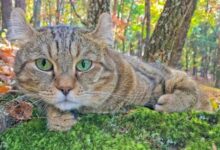
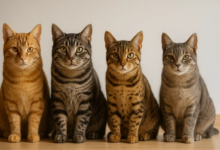
The phenomenon of “cheetah cats” isn’t new. Throughout history, anecdotal accounts and even artistic depictions suggest people have noticed this resemblance. But the surge in popularity recently is fueled by social media and a deeper understanding of feline genetics. We’ll explore the breeds most often mistaken for cheetahs, the science behind their spotted coats, and the unique characteristics that contribute to this remarkable illusion, while also highlighting the differences between our beloved pets and their wild counterparts.
The Allure of the “Cheetah Cat”: Exploring Felines with Striking Markings
There’s something undeniably captivating about a cat that resembles a cheetah. The internet frequently explodes with images and videos of these spotted felines, sparking curiosity and wonder. This fascination isn’t new, though. Throughout history, anecdotal accounts and folklore have hinted at the existence of cats with unusual, cheetah-like appearances. The public’s enduring interest in animals with striking or unusual appearances speaks to our innate appreciation for the beauty and diversity of the natural world, and the thrill of seeing something that blurs the lines between the familiar and the exotic.
Breed Identification: Potential Origins
Several domestic cat breeds are frequently mistaken for cheetahs due to their distinctive spotted coats and overall build. While no domestic cat is a true cheetah, selective breeding has resulted in breeds that share remarkable similarities. The most commonly associated breeds include the Bengal, Ocicat, Egyptian Mau, and Savannah. Each breed possesses unique characteristics that contribute to this resemblance, stemming from different breeding histories and genetic influences.
| Breed | Coat Pattern | Body Type | Origin |
|---|---|---|---|
| Bengal | Spotted (often rosettes) | Muscular, athletic, medium-large | United States (developed from Asian Leopard Cats) |
| Ocicat | Spotted (resembles wild cat spots) | Muscular, athletic, medium-large | United States (created by outcrossing Abyssinian, Siamese, and American Shorthair) |
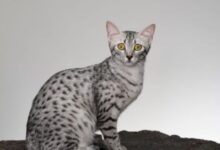
| Egyptian Mau | Spotted (distinctive “butterfly” markings) | Slender, graceful, medium-sized | Egypt |
| Savannah | Spotted | Tall, lean, muscular, large | United States (hybrid of Serval and domestic cat) |
Coat Patterns & Genetics
The spotted coat patterns seen in these “cheetah cats” are a result of complex genetic interactions. The primary gene involved is the Agouti gene, which controls the distribution of pigment within individual hairs. Variations in the Agouti gene, along with other modifier genes, determine whether a cat exhibits a solid color, tabby pattern, or a spotted pattern. The Agouti gene essentially dictates whether a hair shaft will be banded with different colors, creating the illusion of spots or rosettes.
Specific combinations of genes can produce a cheetah-like spotting pattern. For example, a dominant Agouti allele (A) typically results in a spotted or tabby pattern, while a recessive allele (a) produces a solid color. Modifier genes then influence the size, shape, and distribution of the spots. Rosettes, which are larger, irregularly shaped spots, are often a result of specific Agouti gene variations and the influence of other genes that affect spot morphology.
- Spots: Typically round or oval, evenly distributed.
- Rosettes: Larger, more complex patterns resembling roses or paw prints.
- Marbling: A swirling, less defined pattern of spots and blotches.
Physical Characteristics Beyond the Coat
While the spotted coat is the most obvious feature contributing to the cheetah resemblance, other physical traits play a significant role. A sleek, muscular build, a relatively small head in proportion to the body, and long, slender legs all enhance the cheetah-like appearance. Selective breeding has emphasized these characteristics in breeds like the Bengal and Savannah, further amplifying the resemblance.
Eye color, often a striking gold or green, also contributes to the overall impression.
The Bengal Cat: A Closer Look
The Bengal cat’s story is one of deliberate breeding to create a domestic cat with the appearance of a wild cat. Developed in the United States, the breed’s lineage traces back to Asian Leopard Cats (ALCs), small wild cats native to Asia. Early breeders crossed ALCs with domestic cats, and subsequent generations were carefully bred to refine the spotted coat and overall appearance.
The goal was to capture the beauty of the ALC while maintaining a temperament suitable for a domestic pet.
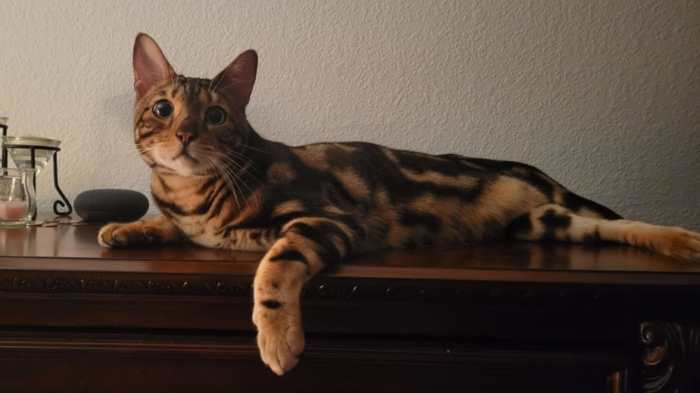
Bengal cats exhibit two primary coat patterns: spotted and marbled. Spotted Bengals have distinct spots, often resembling rosettes, while marbled Bengals display a swirling, flowing pattern. Spotted patterns are generally more prevalent and highly sought after.
While Bengals are energetic and playful, their temperament differs from that of a cheetah. They are known for their intelligence, curiosity, and affectionate nature, though they can also be quite independent. They often enjoy playing in water and exploring their surroundings.
“My Bengal, Shadow, is absolutely stunning! His spots are so vibrant, and he moves with such grace. He’s also incredibly playful and loves to chase anything that moves. He truly looks like a miniature leopard!”
-Sarah M.“Luna, my Bengal, is the most intelligent cat I’ve ever owned. She’s always getting into something, but she’s also incredibly affectionate and loves to cuddle. Her coat is just breathtaking.”
-David L.
The Ocicat: Mimicking a Wildcat
Source: thenatureofhome.com
The Ocicat is a unique breed intentionally designed to resemble a wild cat, despite having no wild cat ancestry. Developed in the United States in the 1960s, the breed was created by outcrossing Abyssinian, Siamese, and American Shorthair cats. The goal was to create a spotted cat that looked like an “ocelot” (hence the name), but with a domestic cat’s temperament.
Ocicats are characterized by their muscular build, striking spotted coat, and alert, intelligent expression. Their physical characteristics, including their long legs and powerful physique, contribute to the wildcat illusion. The breeding process involved carefully selecting cats with desirable spotted patterns and physical traits, gradually refining the breed over several generations.
- Color and Patterns: Brown spotted, silver spotted, blue spotted, chocolate spotted, cinnamon spotted, and more. The intensity and distribution of the spots vary, creating a wide range of visual appearances.
Egyptian Mau: Ancient Elegance
The Egyptian Mau is one of the oldest known domestic cat breeds, with a history deeply intertwined with ancient Egyptian art and culture. Depictions of spotted cats resembling the Mau appear in ancient Egyptian tombs and artwork, suggesting a long and enduring relationship between humans and this breed. The breed nearly went extinct but was revived in the 20th century.
The Egyptian Mau’s distinctive spotted coat is characterized by its small, well-defined spots and unique “butterfly” markings on the shoulders. These markings resemble the shape of butterfly wings and are a hallmark of the breed. Compared to other spotted breeds, the Egyptian Mau is generally more slender and graceful in build.
| Egyptian Mau | Bengal | Ocicat | |
|---|---|---|---|
| Coat Pattern | Small, well-defined spots, butterfly markings | Spotted (often rosettes) | Spotted (resembling wild cat spots) |
| Body Structure | Slender, graceful | Muscular, athletic | Muscular, athletic |
| Temperament | Active, intelligent, loyal | Energetic, playful, independent | Intelligent, playful, affectionate |
The Savannah Cat: Hybrid Appeal
The Savannah cat is a hybrid breed resulting from a cross between a Serval, a medium-sized African wild cat, and a domestic cat. The Serval’s influence is most pronounced in the early generations (F1, F2), with subsequent generations (F3, F4, etc.) exhibiting progressively less Serval characteristics. The breeding of Savannah cats is subject to legal restrictions and ethical considerations due to their hybrid origin and the potential for unpredictable behavior.
Savannah cats are known for their tall, lean build, long legs, and large ears. Their spotted coat, inherited from the Serval, is typically a golden or brown color with black spots. The Serval traits that contribute to the Savannah’s exotic appearance include its elongated body, large paws, and distinctive facial markings. The head is relatively small compared to the body, and the eyes are often a striking gold or green.
Caring for a “Cheetah Cat”
Breeds commonly mistaken for cheetahs, such as Bengals, Ocicats, Egyptian Maus, and Savannahs, share similar care requirements. A high-quality, protein-rich diet is essential to support their muscular build and active lifestyle. Regular exercise is crucial to prevent boredom and obesity. Grooming needs are generally moderate, with occasional brushing to remove loose hair. Mental stimulation and enrichment are particularly important for these intelligent and energetic breeds.
- Toys: Puzzle toys, interactive feeders, feather wands, laser pointers.
- Activities: Climbing structures, scratching posts, agility courses, interactive play sessions.
Distinguishing Between a “Cheetah Cat” and a Cheetah
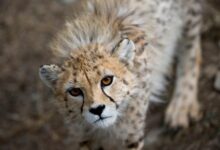
While domestic cats with cheetah-like markings can be remarkably similar in appearance, there are fundamental differences between them and actual cheetahs. Cheetahs are significantly larger, with longer legs and a more streamlined body. Their behavior is also distinct; cheetahs are primarily diurnal hunters, while domestic cats are more adaptable. Responsible pet ownership involves understanding and respecting these differences.
A Savannah cat, the largest of the “cheetah cat” breeds, typically weighs between 10-25 pounds and stands 14-18 inches tall. In contrast, a cheetah can weigh between 75-140 pounds and stand 28-33 inches tall. The size difference is substantial, highlighting the vast differences between a domestic feline and a wild predator.
Final Conclusion
From the sleek lines of the Bengal to the wildcat-inspired Ocicat and the ancient elegance of the Egyptian Mau, several breeds offer a captivating glimpse of cheetah-like beauty within the comfort of our homes. Understanding the genetics behind their spotted coats and the history of selective breeding sheds light on this fascinating phenomenon. Ultimately, appreciating these “cheetah cats” means recognizing their unique qualities, providing them with the care they need, and respecting the distinct differences between domestic companions and the magnificent wild cheetahs they resemble.
It’s a beautiful reminder of the incredible diversity and adaptability found within the feline world.
Question Bank
Why do some cats look like cheetahs?
It’s primarily due to specific genes that control coat patterns, particularly the Agouti gene, combined with selective breeding practices that have emphasized spotted or marbled coats in certain breeds.
What’s the most common breed that resembles a cheetah?
The Bengal cat is arguably the most well-known and frequently cited breed due to its leopard-like spots and muscular build.
Are Savannah cats truly wild?
Savannah cats are hybrids, a cross between a Serval (a wild African cat) and a domestic cat. Their level of wild influence depends on their generation (F1, F2, etc.).
Is it ethical to breed Savannah cats?
The ethics of Savannah cat breeding are debated, with concerns about the welfare of both the cats and the potential impact on wild Serval populations. Responsible breeders prioritize health and temperament.
What are the key differences between a “cheetah cat” and a real cheetah?
Beyond the coat, cheetahs are significantly larger, have a distinct head shape, longer legs, and a different body structure. Behaviorally, they are solitary hunters adapted to a wild environment, while domestic “cheetah cats” are domesticated companions.
How can I tell the difference between a rosettes and spots on a cat’s coat?
Rosettes are larger, more complex markings that resemble a rose shape, often with a lighter center. Spots are typically smaller, more uniform, and circular.

