The internet loves a good doppelganger, and that’s especially true when it comes to our feline friends! Lately, there’s been a surge of fascination with domestic cats that bear an uncanny resemblance to cheetahs. From viral videos to dedicated social media accounts, these spotted beauties have captured our hearts and sparked a lot of curiosity. This phenomenon isn’t entirely new; people have observed and documented these striking cats for years, often reacting with a mix of awe and amusement at the unexpected similarity.
But what’s behind this captivating look? It’s a fascinating blend of genetics, selective breeding, and a little bit of luck. We’ll delve into the genetic mutations that create these spotted patterns, explore the specific breeds most often associated with cheetah-like appearances, and uncover the history and characteristics that make these cats so special. Get ready to explore the world of feline mimicry!
Cats That Look Like Cheetahs: A Fascinating Phenomenon
The internet loves a good optical illusion, and the recent surge in photos and videos of domestic cats resembling cheetahs is a prime example. These felines, with their striking spotted coats and athletic builds, have captivated audiences worldwide, sparking conversations about genetics, breeding, and the sheer beauty of nature’s surprises. It’s more than just a fleeting trend; it’s a testament to how our brains are wired to recognize patterns and find connections, even in the most unexpected places.
This article delves into the science, history, and breeds behind this captivating phenomenon, exploring what makes these cats so cheetah-like and what it takes to care for them.
The fascination with these “cheetah-like” cats isn’t entirely new. Anecdotal observations of cats with unusual spotted patterns have existed for decades, passed down through cat fanciers and breeders. However, the rise of social media has amplified these observations, allowing them to spread rapidly and gain widespread attention. Platforms like Instagram and TikTok have become virtual showcases for these remarkable felines, fueling the online trend and prompting a deeper exploration of their origins.
The emotional response to these animals is often a mix of awe and amusement. People are struck by the uncanny resemblance to cheetahs, a creature known for its speed and grace. There’s a sense of wonder at the possibility of encountering a miniature cheetah in a domestic setting, coupled with the joy of appreciating the unique beauty of these cats.
Genetic Factors & Breed Origins
The spotted coat patterns we see in these cats are the result of complex genetic mutations. While cheetahs have a specific gene responsible for their spots, domestic cats have multiple genes that can influence coat coloration and pattern. These genes interact in intricate ways, sometimes resulting in patterns that mimic those of wild cats. Recessive genes play a significant role, meaning both parents must carry the gene for the spotted pattern to be expressed in their offspring.
Several breeds are particularly known for their cheetah-like appearances. These include the Bengal, Ocicat, Egyptian Mau, and Savannah. While each breed has its own unique history and genetic makeup, they all share the characteristic of possessing spotted or marbled coats that can evoke the image of a cheetah.
Comparing the genetic makeup of these breeds with that of cheetahs reveals both similarities and differences. While there’s no direct genetic link – these cats aren’t descended from cheetahs – the genes responsible for spotting in domestic cats can produce patterns that are visually similar. The specific genes involved and their expression patterns differ, leading to variations in spot size, shape, and distribution.
| Breed | Origin | Typical Coat Pattern | Common Temperament |
|---|---|---|---|
| Bengal | United States (developed from Asian Leopard Cats) | Spotted, marbled, rosetted | Active, playful, intelligent |
| Ocicat | United States (developed from domestic shorthairs) | Spotted | Affectionate, social, energetic |
| Egyptian Mau | Egypt | Spotted | Loyal, intelligent, active |
| Savannah | United States (hybrid of domestic cats and Servals) | Spotted | Energetic, intelligent, curious |
Bengal Cats: The Most Prominent Example
The Bengal cat’s story is particularly fascinating. Developed in the United States during the 1960s and 70s, the breed’s origins lie in crosses between domestic cats and Asian Leopard Cats (ALCs). Breeders aimed to create a domestic cat with the striking appearance of a wild cat, but with a gentle and predictable temperament. The initial crosses were challenging, and it took several generations to stabilize the breed and produce cats with consistent coat patterns and personalities.
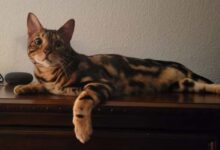
Bengal cats exhibit three main coat patterns: spotted, marbled, and rosetted. The spotted pattern, with its distinct, randomly placed spots, is the most commonly associated with cheetahs. The marbled pattern features swirling patterns that resemble marble, while the rosetted pattern has spots that are shaped like rosettes – clusters of spots that resemble flowers. The intensity and clarity of the spots contribute significantly to the cheetah resemblance.
Breeders selectively breed Bengals to enhance the spotted pattern and overall appearance. They carefully select cats with the most desirable markings and physical characteristics, aiming to produce offspring that closely resemble their wild ancestors. This process involves meticulous record-keeping, genetic testing, and a deep understanding of feline genetics.
Certain Bengal lineages are known for particularly striking cheetah-like markings. For example, cats with a “glitter” gene, which causes the tips of their hairs to shimmer, often have exceptionally vibrant and defined spots. Lines descended from specific ALC founders are also known for producing cats with larger, more distinct rosettes.
Ocicat Breed Characteristics
The Ocicat presents a unique case – a breed deliberately created to resemble a wild cat without incorporating any wild cat ancestry. Developed in the 1960s by Tawnie Beyeler in the United States, the Ocicat was the result of a spontaneous mutation in a domestic shorthair breeding program. Beyeler, recognizing the striking resemblance to an ocelot, named the breed accordingly.
The Ocicat’s spotted pattern is achieved entirely through selective breeding of domestic shorthairs, primarily Abyssinians, Siamese, and American Shorthairs. Breeders carefully selected cats with naturally occurring spots and gradually refined the pattern over generations, resulting in the distinctive spotted coat we see today.
Physically, the Ocicat shares several characteristics with a cheetah. It possesses a muscular build, a wedge-shaped head, and large, almond-shaped eyes. While the Ocicat’s body is generally more compact than a cheetah’s, the overall impression is one of athleticism and power. Eye color varies, but shades of green and gold are common, further enhancing the wildcat appearance.
| Ocicat | Cheetah |
|---|---|
| Muscular build, wedge-shaped head | Lean, athletic build, elongated head |
| Large, almond-shaped eyes | Large, round eyes |
| Spotted coat (various patterns) | Distinct black spots on a tan background |
| Typically 10-15 pounds | Typically 75-140 pounds |
Egyptian Mau: Ancient Roots and Distinct Markings
The Egyptian Mau boasts an ancient lineage, with depictions of spotted cats appearing in Egyptian art and mythology dating back thousands of years. These cats were revered by the ancient Egyptians, often associated with the goddess Bastet, who represented protection, fertility, and motherhood. The breed nearly disappeared during the 19th and 20th centuries but was revived by breeders in the 1950s.
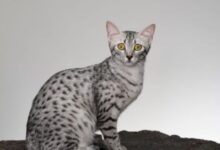
The Egyptian Mau’s spotted pattern is unique in several ways. It features small, well-defined spots that are evenly distributed across the body. A distinctive characteristic is the “mascara” markings around the eyes, which give the cat a striking and expressive appearance. The tail is also spotted, with a horizontal pattern of spots.
Unlike Bengals and Ocicats, the Egyptian Mau’s spotted pattern is genetically fixed and doesn’t exhibit the same variations in spot size or shape. The spots are typically smaller and more tightly packed than those seen in other spotted breeds.
Egyptian Maus are known for their intelligence, loyalty, and active nature. They are often described as being dog-like in their devotion to their owners. Their agility and hunting prowess, combined with their distinctive spotted coat, contribute to the perception of a cheetah-like cat.
Savannah Cats: The Wild Hybrid
The Savannah cat is a relatively new breed, created through crosses between domestic cats and Servals, an African wild cat. The first known Savannah was born in 1986, and the breed has gained popularity for its exotic appearance and energetic personality. The Serval’s influence is most pronounced in early generations (F1, F2), with later generations (F3 and beyond) exhibiting a more domestic appearance.
The breeding of Savannah cats raises several legal and ethical considerations. Regulations vary by country and state, with some jurisdictions restricting or prohibiting the breeding of Savannahs due to concerns about their wild ancestry and potential impact on native wildlife. Ethical concerns revolve around the welfare of the cats and the potential for irresponsible breeding practices.
The appearance of Savannah cats varies greatly depending on their generation. F1 Savannahs, which are 50% Serval, closely resemble their wild ancestors, with long legs, large ears, and a spotted coat. Later generations exhibit a more diluted Serval influence, with shorter legs, smaller ears, and a less pronounced spotted pattern.
The Serval’s markings and body shape significantly influence the Savannah’s cheetah-like appearance. The Serval’s distinctive spots, combined with its long legs and slender body, create a silhouette that is reminiscent of a cheetah. The Savannah’s agility and hunting behavior further enhance this resemblance.
| Generation | Serval Influence | Typical Appearance |
|---|---|---|
| F1 | 50% | Tall, long legs, large ears, bold spots |
| F2 | 25% | Slightly shorter legs, smaller ears, less bold spots |
| F3 | 12.5% | More domestic appearance, smaller spots, shorter legs |
Other Breeds and Individual Cats
While Bengal, Ocicat, Egyptian Mau, and Savannah cats are the most commonly associated with cheetah-like markings, other breeds occasionally exhibit similar patterns. The Toyger, for example, was specifically bred to resemble a miniature tiger, but its striped pattern can sometimes evoke the image of a cheetah. Occasionally, a Korat cat with unusual spotting may also display a cheetah-like appearance.
Numerous individual domestic cats have gained attention for their striking resemblance to cheetahs. These cats, often found in shelters or adopted as pets, have captured the hearts of internet users with their unique and captivating looks.
- Mowgli: A domestic shorthair from California, known for his perfectly symmetrical and cheetah-like spots.
- Cheetah the Cat: A tabby cat from New York, whose markings closely resemble those of a cheetah.
- Spot: A rescued cat from Florida, with a distinctive spotted pattern and a playful personality.
- Zola: A domestic shorthair from the UK, whose markings have earned her widespread online recognition.
Coat Patterns and Markings in Detail
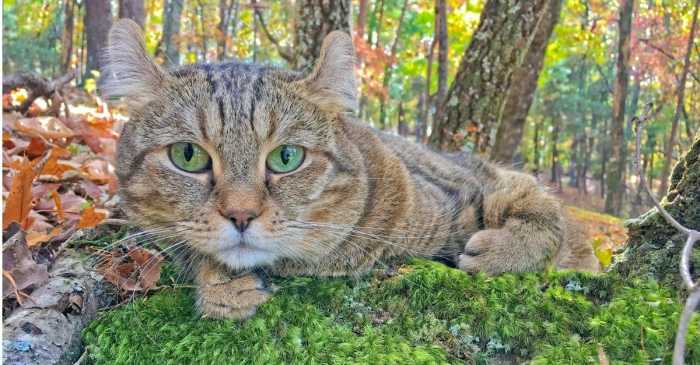
Source: a-z-animals.com
The spotted patterns we observe in these cats come in various forms, each with its own unique characteristics. Rosettes are large, flower-like markings with a central spot surrounded by a ring of smaller spots. Blotches are irregular, elongated patches of color that lack a distinct central spot. Spots are small, round markings that are evenly distributed across the body.
The creation of these spotted patterns is influenced by melanin, a pigment responsible for color in the fur. The distribution of melanin is controlled by genes that regulate the production and deposition of pigment cells (melanocytes) in the skin. Variations in these genes can lead to different patterns of pigmentation.
The size, shape, and distribution of spots significantly influence the overall cheetah resemblance. Larger, more distinct spots tend to create a more striking and cheetah-like appearance. The arrangement of spots, whether they are randomly placed or arranged in rosettes, also plays a role in the overall impression.
Rosette: A large, circular or oval marking with a central spot surrounded by a ring of smaller spots, resembling a flower. Blotch: An irregular, elongated patch of color without a distinct central spot, often resembling a smudge or stain. Spot: A small, round marking that is evenly distributed across the body, lacking the complexity of rosettes or blotches.
Behavior and Physical Characteristics – Beyond the Spots
Beyond the spotted coat, a cat’s body build, agility, and hunting behavior can contribute to the cheetah comparison. Cats with long legs, a slender body, and large paws often exhibit a more athletic and graceful appearance, reminiscent of a cheetah.
Physical characteristics such as a long tail, a flexible spine, and powerful muscles all contribute to a cat’s agility and hunting prowess. These traits, combined with a spotted coat, can create a compelling illusion of a miniature cheetah.
While “cheetah-like” cats may share some behavioral similarities with cheetahs, such as a playful nature and a strong hunting instinct, there are also significant differences. Cheetahs are known for their incredible speed and endurance, while domestic cats are more adapted to a sedentary lifestyle. The social behavior of cheetahs also differs significantly from that of domestic cats.
“The perception of a cat as ‘cheetah-like’ is a complex interplay of physical appearance and behavior, with the spotted coat serving as the primary visual cue. However, the cat’s agility, athleticism, and hunting instincts further reinforce this impression, creating a captivating and often surprising resemblance to the world’s fastest land animal.”
Care and Considerations for These Breeds
Caring for Bengal, Ocicat, Egyptian Mau, and Savannah cats requires specific attention to their unique needs. These breeds are generally active and intelligent, requiring plenty of exercise and mental stimulation. Providing interactive toys, climbing structures, and opportunities for play is essential for their well-being.
Potential health concerns associated with these breeds vary. Bengals are prone to certain genetic conditions, such as hypertrophic cardiomyopathy (HCM). Savannah cats, due to their wild ancestry, may require specialized veterinary care. Regular veterinary checkups and preventative care are crucial for maintaining their health.
Responsible breeding practices are essential to ensure the health and well-being of these cats. Breeders should prioritize genetic testing, health screenings, and socialization to produce cats that are both physically and mentally sound.
- Provide plenty of exercise and mental stimulation.
- Offer a high-quality diet appropriate for their age and activity level.
- Regularly groom their coat to prevent matting.
- Provide scratching posts and climbing structures.
- Schedule regular veterinary checkups and vaccinations.
- Socialize them from a young age to ensure they are well-adjusted.
Ending Remarks
From the meticulously bred Bengal to the ancient Egyptian Mau and the wild-hybrid Savannah, the journey through these “cheetah-like” cats has revealed a remarkable interplay of genetics and human influence. While no domestic cat can truly replicate the speed and agility of a cheetah, the striking spotted patterns and, in some cases, similar body structures, create a captivating illusion. Ultimately, appreciating these cats is about celebrating the diversity within the feline world and the unique beauty that arises from both natural mutations and careful breeding practices.
Whether you’re a seasoned cat enthusiast or simply curious about these spotted wonders, understanding the science and history behind them adds a whole new layer of appreciation. So, the next time you see a cat that looks like a cheetah, you’ll know there’s a whole lot more going on than just a pretty face!
Detailed FAQs
Why do some cats look like cheetahs?
It’s primarily due to genetic mutations that create spotted coat patterns, often amplified through selective breeding in specific breeds.
What breeds are most likely to resemble cheetahs?
Bengal, Ocicat, Egyptian Mau, and Savannah cats are the most commonly associated with cheetah-like appearances.
Are Savannah cats truly wild?
Savannah cats are hybrids created by crossing domestic cats with Servals, an African wild cat. Their wildness depends on their generation (F1 being closest to the Serval).
Is it ethical to breed Savannah cats?
The ethics of Savannah cat breeding are debated, with concerns about their welfare and potential impact on wild Serval populations.
What’s the difference between a rosette, blotch, and spot pattern?
A rosette is a spot with a darker ring around it, a blotch is an irregular, larger spot, and a spot is a simple, round marking.
Do “cheetah-like” cats behave like cheetahs?
While they might share some hunting instincts, their overall behavior is typically that of a domestic cat, not a wild cheetah.
What are the specific care needs for Bengal cats?
Bengals are energetic and require plenty of playtime and mental stimulation. They also benefit from a high-quality diet and regular vet checkups.

