Thinking beyond the usual “Whiskers” or “Mittens”? Arabic names for cats offer a beautiful blend of cultural richness and aesthetic appeal. From ancient traditions to modern sensibilities, choosing an Arabic name can add a unique layer of personality and meaning to your feline friend’s identity. This guide explores the fascinating world of Arabic names, delving into their history, meanings, and how to find the perfect fit for your cat’s appearance, personality, and even breed.
Arabic naming conventions are deeply rooted in tradition, often reflecting qualities, characteristics, or connections to nature. Historically, names weren’t just labels; they were blessings, aspirations, or even descriptions of a person’s (or in our case, a cat’s!) inherent nature. Across the Arabic-speaking world – from the Gulf to North Africa – you’ll find a diverse range of names, each carrying its own regional nuances and significance.
Let’s embark on a journey to discover these treasures!
Arabic Names for Cats: A Cultural and Aesthetic Guide
Choosing a name for your feline companion is a big decision! It’s more than just a label; it’s a reflection of your cat’s personality and a connection to your own tastes. Lately, there’s been a growing interest in Arabic names for cats, and for good reason. They offer a unique blend of beauty, meaning, and cultural richness that can truly set your cat apart.
This guide explores the world of Arabic names, offering inspiration and insights to help you find the perfect moniker for your beloved pet.Arabic naming conventions are deeply rooted in history and culture. Traditionally, names weren’t just chosen for their sound; they were carefully selected to reflect qualities, aspirations, or even blessings. Many names are derived from Arabic words describing virtues like bravery, intelligence, or beauty.
The historical context emphasizes the importance of names as identifiers carrying significant meaning and reflecting a person’s (or in this case, a cat’s!) character. Across different regions – the Gulf, the Levant, and North Africa – variations in pronunciation and popularity exist, but the underlying principles of meaning and significance remain consistent. For example, a name popular in the Gulf might have slightly different nuances in meaning compared to its usage in North Africa.
Names Reflecting Appearance: Color, Markings, and Features
The visual characteristics of your cat can be a wonderful starting point for choosing a name. Arabic offers a wealth of descriptive words that beautifully capture a cat’s appearance. Consider the color of their fur, their markings, or any unique features they possess. To help you visualize, here’s a table showcasing some options:
| Arabic Name | Transliteration | Meaning | Cat Suitability |
|---|---|---|---|
| Asfar | Asfar | Yellow | Yellow or golden-colored cat |
| Abyad | Abyad | White | White cat |
| Sawda’ | Sawda’ | Black | Black cat |
| Ramadi | Ramadi | Sandy | Tabby cat with sandy-colored fur |
| Najm | Najm | Star | Cat with star-shaped markings |
| Qamar | Qamar | Moon | Silver or grey cat |
| Zahra | Zahra | Flower | Cat with a delicate or beautiful appearance |
| Dhahab | Dhahab | Gold | Golden or ginger cat |
| Bardawni | Bardawni | Green | Rare, but suitable for a cat with greenish eyes |
| Murjan | Murjan | Pearl | Cat with a shimmering or iridescent coat |
The names “Asfar” and “Abyad” are particularly straightforward, directly translating to “yellow” and “white” respectively. “Najm,” meaning “star,” is perfect for a cat with distinctive star-shaped markings on their forehead or fur. Don’t be afraid to get creative! If your cat has a unique patch of fur, consider adapting a name to reflect that specific detail. For instance, if your cat has a small, dark spot resembling a teardrop, you could playfully adapt “Dam’a” (tear) to suit their appearance.
Names Reflecting Personality and Character
Beyond appearance, a cat’s personality is a key factor in choosing a name. Arabic offers a beautiful selection of names that convey positive traits like bravery, intelligence, and playfulness. Selecting a name that resonates with your cat’s observed behavior can be incredibly rewarding.Here’s a list of Arabic names that reflect positive personality traits:
- Shujaa (شجاع): Brave, courageous.
- Akil (عاقل): Intelligent, wise.
- La’ib (لاعب): Playful, amusing.
- Karim (كريم): Generous, noble.
- Hakam (حكيم): Wise, judicious.
- Farah (فرح): Joyful, happiness.
- Sadiq (صادق): Truthful, loyal.
- Basit (بسيط): Gentle, kind.
The significance of names like “Shujaa” and “Akil” in Arabic culture extends beyond simple descriptions. They represent desirable qualities that are valued and admired. Observing your cat’s behavior is crucial. Does your cat fearlessly explore new environments? “Shujaa” might be a fitting choice.
Is your cat observant and seems to understand more than they let on? “Akil” could be perfect. For a cat with boundless energy and a love for chasing toys, “La’ib” is a delightful option.
Names Inspired by Nature: Animals, Plants, and Elements
Arabic culture has a deep connection to nature, and this is reflected in the language. Drawing inspiration from animals, plants, and natural elements can result in beautiful and meaningful names for your cat.
- Suhail (سهيل): A type of gazelle, known for its grace and speed.
- Ward (ورد): Rose, symbolizing beauty and love.
- Bahr (بحر): Sea, representing vastness and tranquility.
- Qamar (قمر): Moon, associated with mystery and elegance.
- Nujum (نجوم): Stars, signifying brilliance and guidance.
Desert animals like “Suhail” are particularly evocative, capturing a sense of freedom and agility that many cats embody. “Ward,” the Arabic word for rose, carries a symbolic meaning of beauty and affection, making it a lovely choice for a cherished feline companion. Names referencing natural elements like “Bahr” (sea) and “Qamar” (moon) add a touch of mystique and elegance.
Gender-Specific Arabic Names for Cats
While many Arabic names are gender-neutral, some are traditionally associated with males or females. Understanding these nuances can help you choose a name that aligns with your cat’s perceived gender identity.
| Female Arabic Names | Male Arabic Names |
|---|---|
| Layla | Malik |
| Jana | Zaid |
| Nour | Rayan |
| Salma | Hamza |
| Dunia | Karim |
| Hala | Faris |
| Yasmine | Sami |
| Layan | Tariq |
The cultural significance of certain names being traditionally associated with males or females stems from historical and linguistic patterns. While these traditions are not rigid, they can provide a helpful guide. Gender-neutral names like “Noor” (light) or “Sadiq” (truthful) can work beautifully for either a male or female cat, offering flexibility in your choice.
Unique and Uncommon Arabic Names
If you’re looking for a name that’s truly distinctive, exploring less common Arabic names can be incredibly rewarding. These names often carry rich historical or cultural context, adding an extra layer of meaning to your cat’s identity.Here are 10 less common Arabic names for cats:
- Rawan (روان): Soul, spirit.
- Joud (جود): Generosity, abundance.
- Sama (سما): Sky, heavens.
- Diyar (ديار): Homes, dwellings.
- Zafir (زفير): Breeze, gentle wind.
- Widad (وداد): Affection, tenderness.
- Rasha (رشا): Grace, elegance.
- Badr (بدر): Full moon.
- Hizam (حزام): Belt, girdle (symbolizing strength and protection).
- Zuhur (زُهور): Blossoms, flowers.
These names often have roots in ancient poetry or folklore, adding a touch of mystique and intrigue. Researching the origin and meaning of these names can deepen your appreciation for their cultural significance.
Pronunciation and Transliteration Guide
Arabic pronunciation can be challenging for English speakers, as it includes sounds that don’t exist in the English language. Accurate transliteration is crucial for respecting the original pronunciation of a name.Here’s a table with 10 Arabic names and their phonetic pronunciations (approximations):
| Arabic Name | Phonetic Pronunciation |
|---|---|
| Asfar | [ˈas.fɑɾ] |
| Abyad | [ˈɑː.bjɑːd] |
| Najm | [nɑd͡ʒm] |
| Qamar | [qɑː.mɑɾ] |
| Shujaa | [ʃuˈd͡ʒɑː] |
| Akil | [ˈɑː.kil] |
| La’ib | [lɑˈʕib] |
| Ward | [wɑɾd] |
| Bahr | [bɑħɾ] |
| Layla | [ˈleɪ.lɑː] |
Respecting the original pronunciation demonstrates a genuine appreciation for the culture and language from which the name originates.
Combining Arabic Names with English Elements
For a truly unique name, consider blending Arabic names with English suffixes or prefixes. This can create a harmonious combination that reflects both cultures.Examples include “Layla-Rose,” “Akil-Max,” or “Nour-Belle.” Ensure the resulting name remains respectful of Arabic culture by avoiding jarring or inappropriate combinations. The goal is to create a blend that feels natural and meaningful.
Names Inspired by Arabic Literature and Mythology
Arabic literature and mythology are rich sources of inspiration for cat names. Drawing from famous poets, stories, or mythological figures can add a layer of depth and cultural significance to your cat’s identity.”Layla,” for instance, is a name drawn from the classic Arabic poem “Layla and Majnun,” representing a symbol of enduring love and beauty. Exploring Arabic literary traditions can uncover a treasure trove of evocative names with captivating stories behind them.
Adapting Names for Different Cat Breeds
The sound and meaning of a name can complement a specific cat breed’s characteristics. Consider the breed’s personality and appearance when selecting a name.
| Cat Breed | Suggested Arabic Name | Rationale |
|---|---|---|
| Persian | Yasmine | Evokes elegance and beauty, fitting for a Persian’s luxurious coat. |
| Siamese | Rayan | Suggests intelligence and grace, reflecting the Siamese’s alert nature. |
| Maine Coon | Suhail | Captures the Maine Coon’s size and strength, like a gazelle. |
| Bengal | Dhahab | Reflects the Bengal’s striking golden markings. |
| Ragdoll | Basit | Conveys the Ragdoll’s gentle and docile temperament. |
Closing Summary
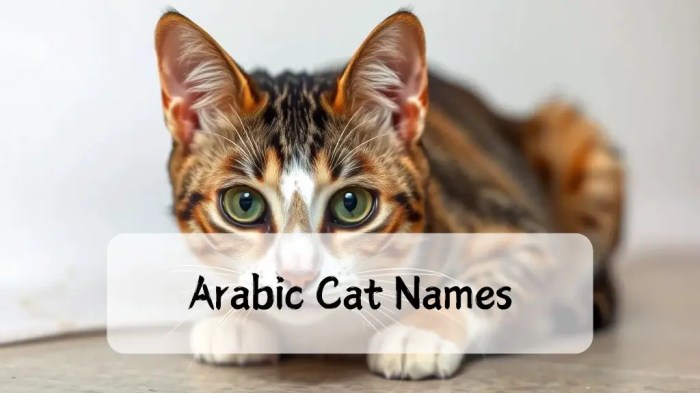
Source: teamgroupnames.com
We’ve explored a vast landscape of Arabic names, from those reflecting a cat’s striking appearance to those embodying admirable personality traits and inspirations drawn from nature, literature, and mythology. Whether you’re seeking a name that echoes the desert sands, the brilliance of the moon, or the bravery of a legendary hero, there’s an Arabic name waiting to perfectly capture your cat’s essence.
Ultimately, choosing a name is a personal journey, and we hope this guide has provided you with the knowledge and inspiration to find a name that you and your feline companion will cherish for years to come.
Remember to consider pronunciation and cultural sensitivity when selecting a name, and don’t be afraid to explore less common options for a truly unique and memorable choice. Happy naming!
Quick FAQs
Why choose an Arabic name for my cat?
Arabic names offer a unique and beautiful alternative to common pet names, adding a touch of cultural richness and often carrying meaningful symbolism.
How do I pronounce Arabic names correctly?
Arabic has sounds that don’t exist in English. Listen to online pronunciations or consult with someone familiar with Arabic to ensure you’re saying the name correctly. Focus on vowel sounds and guttural consonants.
Are there gender-neutral Arabic names?
Yes! Many Arabic names are suitable for both male and female cats, often reflecting qualities rather than gender.
Where can I find more obscure Arabic names?
Explore Arabic literature, poetry, and historical texts. Online forums and communities dedicated to Arabic language and culture can also be valuable resources.
Should I worry about cultural appropriation?
Respectful appreciation is key. Research the name’s meaning and origin, and avoid using names that are deeply sacred or have significant cultural weight without understanding their context.
Can I combine Arabic names with English words?
Yes, but be mindful of the resulting sound and meaning. Ensure the combination remains respectful and doesn’t trivialize the Arabic language or culture.
What if I like a name but can’t pronounce it perfectly?
While accurate pronunciation is ideal, choosing a name you can comfortably say is also important. Focus on a version that’s reasonably close and that you enjoy saying.
Are there any Arabic names that are considered unlucky?
Like any culture, some Arabic names may be associated with negative connotations. Research the name’s meaning and history to avoid unintentionally choosing something unfavorable.
How can I adapt a name to suit my cat’s unique appearance?
Consider the name’s meaning and how it relates to your cat’s color, markings, or physical features. For example, “Najm” (star) is perfect for a cat with star-shaped markings.

