Thinking about welcoming a graceful Balinese cat into your home? These elegant felines, often called the “longhaired Siamese,” are known for their striking looks and affectionate personalities. But before you fall completely in love, it’s important to understand the financial commitment involved. This guide breaks down everything you need to know about Balinese cat price, from initial purchase costs to ongoing expenses, helping you budget responsibly for your new furry friend.
The price of a Balinese cat isn’t a simple figure. It’s influenced by a surprising number of factors, including lineage, breeder reputation, coat color, and even geographic location. We’ll explore each of these elements in detail, providing a comprehensive overview of what you can expect to pay and how to make informed decisions when choosing a breeder or considering adoption.
Introduction to Balinese Cats
The Balinese cat, often affectionately called the “longhaired Siamese,” is a captivating breed known for its striking appearance and engaging personality. While visually resembling a Siamese with a longer coat, the Balinese boasts a unique history and subtle distinctions. Understanding this breed requires delving into its origins, physical traits, and the delightful quirks that make it a beloved companion.The Balinese’s story begins in the 1950s in the United States, specifically in New York and California.
Breeders, fascinated by the Siamese’s elegance and intelligence, began selectively breeding Siamese cats with longer fur. These longer-haired kittens initially appeared sporadically within Siamese litters, and breeders diligently worked to stabilize the trait, eventually establishing the Balinese as a distinct breed. The name “Balinese” was chosen to evoke the exotic beauty and mystique of Bali, Indonesia, though there’s no direct connection to the island itself.
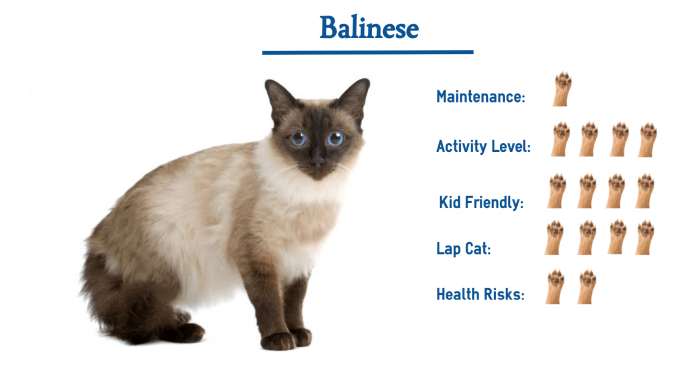
Early Balinese breeders faced considerable resistance from established cat fancy organizations, but persistence and dedication eventually led to recognition by major cat registries.Physically, the Balinese is a medium-sized cat with a slender, elegant build. The most obvious difference from the Siamese is, of course, the long, flowing coat. Unlike Persians or Himalayans, the Balinese has a single coat – meaning no undercoat – which makes it surprisingly low-maintenance.
The coat is silky and fine, clinging close to the body. Eye color is a defining feature, ranging from deep sapphire blue to lighter aqua hues. The body type is tubular and graceful, with long legs and a wedge-shaped head. A distinctive feature is the “points” – the darker coloration on the face, ears, paws, and tail – which are characteristic of pointed breeds.
These points can come in various colors, including seal, chocolate, blue, lilac, red, cream, and tortie.Balinese cats are renowned for their vocal nature and affectionate personalities. They are intelligent, playful, and highly interactive, often forming strong bonds with their human families. Expect a Balinese to follow you around the house, participate in your activities, and engage in lively conversations (they arevery* talkative!).
They are known to be curious and enjoy exploring, and they thrive on mental stimulation. While affectionate, they aren’t typically lap cats; they prefer to be near you, engaging in playful interactions rather than constant cuddling.Here’s a comparison table highlighting key differences between Balinese and Siamese cats:
| Feature | Comparison |
|---|---|
| Coat Length | Balinese: Long, single coat. Siamese: Short, sleek coat. |
| Vocalization | Both are vocal, but Balinese are often considered slightly more so. |
| Activity Level | Both are active and playful, but Balinese may be slightly more energetic. |
| Affection Style | Both are affectionate, but Siamese may be more overtly lap-oriented. Balinese prefer interactive play. |
| Grooming Needs | Balinese: Moderate (weekly brushing). Siamese: Minimal. |
Factors Influencing Balinese Cat Price
Determining the price of a Balinese cat isn’t a simple matter. Several factors converge to establish the cost, ranging from the breeder’s expertise to the cat’s lineage and even the color of its coat. Understanding these influences is crucial for prospective owners.The reputation and experience of the breeder play a significant role in the price. Established breeders with a proven track record of producing healthy, well-socialized Balinese kittens often command higher prices.
This reflects their investment in quality breeding practices, health testing, and socialization. Less experienced breeders, while potentially offering lower initial prices, may not have the same level of expertise or resources.Lineage and pedigree are also key determinants. A Balinese with a champion pedigree – meaning its ancestors have excelled in cat shows – will generally be more expensive. This signifies a higher likelihood of inheriting desirable traits, both physically and temperamentally.
Breeders meticulously document pedigrees, and this information is a valuable asset.Coat color and pattern can influence value. Certain colors, particularly those considered rarer or more desirable within the breed standard, may fetch higher prices. For example, a seal point Balinese with exceptionally clear markings might be more valuable than a blue point. Tortoiseshell (tortie) patterns, which are less common in Balinese, are often sought after and can increase the price.Responsible breeding is an expensive undertaking.
Breeders incur significant costs for veterinary care, including vaccinations, deworming, and genetic testing to screen for potential health issues. High-quality food, comfortable housing, and enrichment toys also contribute to the overall cost. These expenses are factored into the price of the kittens, reflecting the breeder’s commitment to ethical and responsible practices.
Price Ranges: Kitten vs. Adult Balinese
The price of a Balinese cat varies considerably depending on whether you’re acquiring a kitten or an adult, and the quality designation. Kittens, particularly those with show potential, generally command higher prices than adult cats.For Balinese kittens, prices typically range from $1,500 to $3,500. Kittens with a show-quality pedigree from reputable breeders located in areas with high demand (like California or New York) often fall at the higher end of this range.
Pet-quality kittens, intended as companions and not for showing, may be priced between $1,500 and $2,500. Location also plays a role; breeders in areas with lower demand or higher competition might offer slightly lower prices.Adult Balinese cats, especially those who have been spayed or neutered and have a documented health history, typically range from $800 to $2,000. The price depends on their pedigree, health, and temperament.
Adults with a champion lineage or those who have already participated in cat shows will be more expensive.Here’s a table illustrating price ranges categorized by quality and age:
| Category | Age | Price Range |
|---|---|---|
| Pet Quality Kitten | 8-12 weeks | $1,500 – $2,500 |
| Show Quality Kitten | 8-12 weeks | $2,500 – $4,000+ |
| Pet Quality Adult | 1+ years | $800 – $1,500 |
| Show Quality Adult | 1+ years | $1,500 – $2,500+ |
Seasonal demand can also influence prices. Kittens born during peak breeding seasons (spring and summer) may be slightly more expensive due to increased demand.
Geographic Price Variations
Source: indulgeyourpet.com
The price of a Balinese cat isn’t uniform across the globe; it fluctuates based on geographic location. Several factors contribute to these variations.Areas with a limited number of reputable breeders often experience higher prices. This is due to the scarcity of available kittens and increased competition among buyers. Conversely, regions with a larger pool of breeders may see more competitive pricing.
The cost of living in a particular area also plays a role. Breeders in cities with high operating expenses (rent, utilities, etc.) may need to charge higher prices to cover their costs.For example, Balinese kittens in California or New York, where the breed is particularly popular and breeders are concentrated, can easily exceed $3,500 for show-quality kittens. In contrast, prices in states with fewer breeders might be slightly lower, perhaps in the $2,500 – $3,000 range.
Internationally, prices can vary significantly. In Europe, where the breed is also popular, prices are generally comparable to those in the United States. However, in countries with stricter import regulations or limited access to breeders, prices can be considerably higher.Imagine a map of the United States. The West Coast (California, Oregon, Washington) would be shaded in a darker color, indicating a price range of $3,000 – $4,500+ for show-quality kittens.
The Midwest (Illinois, Ohio, Michigan) would be a lighter shade, representing a price range of $2,500 – $3,500. The Southeast (Florida, Georgia, North Carolina) would be a slightly lighter shade still, with prices ranging from $2,000 – $3,000. The Northeast (New York, Pennsylvania, Massachusetts) would be similar to the West Coast, reflecting high demand and numerous breeders. This visualization provides a general overview; individual breeder prices can vary within each region.
Purchasing from Breeders vs. Rescues/Shelters
Acquiring a Balinese cat involves a choice: purchasing from a reputable breeder or adopting from a rescue organization or shelter. Each option presents distinct advantages and disadvantages regarding cost, health, and temperament.Purchasing from a reputable breeder offers the benefit of knowing the cat’s lineage and health history. Responsible breeders conduct genetic testing to screen for potential health issues and socialize kittens from a young age.
This can reduce the risk of encountering health or behavioral problems later on. However, breeder prices are typically higher, reflecting the breeder’s investment in quality breeding practices.Finding a responsible breeder requires careful research. Look for breeders who are registered with reputable cat associations, conduct health testing on their breeding cats, and provide a health guarantee for their kittens. Visit the breeder’s cattery to observe the living conditions and interact with the cats.
Ask detailed questions about the kitten’s lineage, temperament, and socialization.Adopting a Balinese cat from a rescue organization or shelter is a rewarding experience. It provides a loving home for a cat in need and often costs significantly less than purchasing from a breeder. Adoption fees typically range from $100 to $300, and often include initial vaccinations and spaying/neutering. However, the cat’s history may be unknown, and there’s a possibility of encountering behavioral or health issues.Here’s a breakdown of the pros and cons:
- Buying from a Breeder:
- Pros: Known lineage, health testing, socialization, health guarantee.
- Cons: Higher cost, potentially longer wait time.
- Adopting from a Rescue/Shelter:
- Pros: Lower cost, rewarding experience, saves a life.
- Cons: Unknown history, potential behavioral/health issues.
Initial Costs Beyond the Purchase Price
Bringing a Balinese cat home involves more than just the purchase price. Several initial expenses are necessary to ensure your new feline friend has a comfortable and enriching environment.Essential supplies include a litter box, litter, food bowls, a scratching post, toys, and a carrier. A high-quality litter box and litter can cost between $50 and $100. Food bowls and toys are relatively inexpensive, but a sturdy scratching post is essential for a Balinese’s well-being and can cost $30 to $80.
A secure carrier is crucial for vet visits and travel, costing around $30 to $60.Initial vet visits, vaccinations, and microchipping are also significant expenses. The initial vet visit can cost $50 to $100, and a series of vaccinations and deworming treatments can add another $100 to $200. Microchipping typically costs $40 to $60.Ongoing expenses include food, litter, grooming, and regular vet care.
High-quality cat food can cost $30 to $50 per month, while litter can cost $20 to $40 per month. Grooming is relatively minimal for Balinese cats, but occasional brushing and nail trims are necessary. Annual vet checkups can cost $100 to $200.Here’s a table summarizing initial and ongoing costs:
| Expense Category | Estimated Cost |
|---|---|
| Litter Box & Litter | $50 – $100 (initial) / $20 – $40 (monthly) |
| Food Bowls & Toys | $20 – $50 |
| Scratching Post | $30 – $80 |
| Carrier | $30 – $60 |
| Initial Vet Visit & Vaccinations | $150 – $360 |
| Food (Monthly) | $30 – $50 |
| Grooming Supplies | $10 – $20 (occasional) |
| Annual Vet Checkup | $100 – $200 |
Health Considerations and Potential Costs
Balinese cats are generally healthy, but like all breeds, they are predisposed to certain health conditions. Understanding these potential issues and their associated costs is essential for responsible ownership.Common health concerns in Balinese cats include hypertrophic cardiomyopathy (HCM), a heart condition; progressive retinal atrophy (PRA), an eye disease that can lead to blindness; and polycystic kidney disease (PKD), a genetic disorder affecting the kidneys.
HCM can require lifelong medication and monitoring, costing $500 to $2,000 per year. PRA treatment is limited, and the cost of managing the condition can range from $500 to $1,000. PKD can lead to kidney failure, requiring expensive dialysis or a special diet, potentially costing $1,000 to $5,000 per year.Preventative care and regular vet checkups are crucial for early detection and management of health issues.
Annual checkups, vaccinations, and parasite prevention can cost $200 to $500 per year.Pet insurance can help offset the costs of unexpected veterinary care. Premiums typically range from $30 to $80 per month, depending on the cat’s age, breed, and coverage level. To calculate the potential annual cost of pet insurance, multiply the monthly premium by 12. For example, a monthly premium of $50 would result in an annual cost of $600.
Show Quality vs. Pet Quality Balinese
Not all Balinese cats are created equal. There’s a distinct difference between show-quality and pet-quality cats, primarily based on adherence to the breed standard.Show-quality Balinese cats are those that closely conform to the written standard established by cat fancy organizations like the Cat Fanciers’ Association (CFA). This includes specific requirements for coat length, color and pattern, head shape, eye color, and body structure.
They possess exceptional physical traits and a confident, graceful demeanor.Pet-quality Balinese cats, on the other hand, may have minor deviations from the breed standard. These deviations might include slightly shorter coat length, a less-than-perfect head shape, or a less intense eye color. While they may not excel in the show ring, they make wonderful companions.The characteristics that define a show-quality Balinese significantly influence the price.
Breeders specializing in show-quality Balinese invest considerable time and resources in selective breeding to produce cats that meet the stringent requirements of the breed standard.Several breeders specialize in show-quality Balinese cats, often advertising their kittens’ pedigree and potential for show success. These breeders typically have a deep understanding of the breed standard and a commitment to producing exceptional cats.
“Judging a Balinese in a cat show involves assessing the cat’s overall conformation to the breed standard, with particular attention paid to the quality of the coat, the shape of the head, and the intensity of the eye color. The cat’s temperament and presentation also play a significant role in the judging process.”
Financing Options and Payment Plans
The cost of acquiring a Balinese cat can be a significant investment. Fortunately, some breeders offer flexible financing options to make ownership more accessible.Some breeders offer payment plans, allowing prospective owners to spread the cost of the kitten over several months. This can ease the financial burden, but it’s important to inquire about any interest charges or fees associated with the plan.Options for financing the purchase of a Balinese cat include personal loans or credit cards.
However, it’s crucial to carefully consider the interest rates and repayment terms before taking on debt. Responsible budgeting for pet ownership is essential. Create a realistic budget that accounts for all expenses, including the purchase price, initial supplies, ongoing costs, and potential veterinary care.Using credit to finance a pet purchase can be risky. High interest rates can quickly escalate the cost, and unexpected veterinary expenses can further strain your finances.
It’s generally advisable to save up for the purchase price and avoid accumulating unnecessary debt.
Red Flags and Avoiding Scams
Purchasing a Balinese cat requires caution to avoid scams and unethical breeders. Recognizing red flags is crucial for ensuring a positive experience and a healthy, well-adjusted cat.Common red flags include breeders who are unwilling to provide references, allow visits to their cattery, or answer questions about the kitten’s lineage and health history. Be wary of breeders who offer kittens at significantly lower prices than the average market rate, as this may indicate poor breeding practices or health issues.
Also, be cautious of breeders who pressure you into making a quick decision or who are unwilling to provide a health guarantee.Avoiding scams requires thorough research. Check the breeder’s reputation online, read reviews from other buyers, and verify their registration with reputable cat associations. Ask for documentation of health testing and genetic screening.Here’s a checklist of questions to ask a breeder before making a purchase:
- Are your breeding cats health tested for HCM, PRA, and PKD?
- Can I visit your cattery to see the cats and kittens?
- Do you provide a health guarantee for your kittens?
- What is the kitten’s lineage and pedigree?
- How are the kittens socialized?
- Can I speak with references from previous buyers?
Last Recap
Ultimately, bringing a Balinese cat into your life is a significant investment, both financially and emotionally. Understanding the various costs involved – from the initial purchase to ongoing care and potential health expenses – is crucial for ensuring a happy and healthy life for your new companion. By doing your research, choosing a reputable breeder or considering adoption, and budgeting accordingly, you can enjoy the unique joys of owning a Balinese cat without unexpected financial strain.
Remember, the true value of a Balinese cat extends far beyond its price tag. Their intelligence, loyalty, and playful nature make them wonderful additions to any family, and with proper care and attention, they’ll bring years of love and companionship.
Expert Answers
What’s the difference between a Balinese and a Siamese cat?
The main difference is their coat length. Balinese cats have a long, silky coat, while Siamese cats have a short, sleek coat. They share similar personalities and body types, but the longer fur requires more grooming for the Balinese.
Do Balinese cats have any specific health concerns I should be aware of?
Like all breeds, Balinese cats are prone to certain health issues, including progressive retinal atrophy (PRA) and hypertrophic cardiomyopathy (HCM). Responsible breeders screen for these conditions, so it’s important to ask about health testing.
Can I find Balinese cats at animal shelters?
It’s rare, but not impossible! Balinese cats are less common in shelters than other breeds. However, it’s always worth checking local shelters and rescue organizations. You might also find Siamese mixes that resemble Balinese cats.
What’s the best type of litter for a Balinese cat?
Balinese cats are generally fastidious and prefer a fine-grained, unscented litter. Clumping clay litter is a popular choice, but some owners opt for natural alternatives like wood or paper pellets.
How much grooming do Balinese cats need?
While their long fur isn’t as demanding as some breeds, Balinese cats still require regular grooming. Aim for brushing 2-3 times a week to prevent mats and tangles.
What is a “pet quality” Balinese cat?
A pet quality Balinese cat doesn’t meet the breed standard perfectly for showing. They might have minor imperfections in their coat, color points, or conformation. They are still wonderful companions and typically cost less than show-quality cats.

