Finding the Best Cat Litter for Multiple Cats A Complete Guide

Let’s be honest, managing litter boxes for a single cat can feel like a chore. Now, multiply that by two, three, or even four! Keeping things clean, odor-free, and stress-free for both you and your feline family can feel overwhelming. It’s a common struggle – the constant battle against litter tracking, the lingering smells, and the occasional territorial disputes over the litter box.
I remember when I first got a second cat, I thought, “How much harder could it be?” Boy, was I wrong! This guide is all about navigating the multi-cat litter landscape and finding solutions that actually work.
We’ll dive deep into the different types of litter available, from traditional clay to eco-friendly options, and explore the essential features to look for when you have multiple cats. We’ll also tackle common problems like litter box aversion and resource guarding, and I’ll share some tried-and-true tips for keeping your home smelling fresh and your cats happy. Consider this your ultimate resource for creating a harmonious litter box environment for your furry crew.
The Ultimate Guide to Cat Litter for Multi-Cat Homes
Let’s be honest, managing litter for one cat can feel like a chore. Now, multiply that by two, three, or even four! Suddenly, you’re facing a mountain of litter, a constant battle against odors, and a potential minefield of territorial disputes around the litter box. It’s a common struggle, and if you’re nodding along, you’re not alone. This guide is designed to help you navigate the complexities of multi-cat litter management, from choosing the right litter to setting up a harmonious litter box environment.
We’ll dive deep into the different types of litter available, explore essential features to look for, and provide practical solutions for common multi-cat litter problems. Consider this your comprehensive resource for creating a cleaner, fresher, and more peaceful home for you and your feline family.
1. Introduction
The Challenges of Multi-Cat Litter Management
Having multiple cats brings immense joy, but it also amplifies the challenges of litter box management. Odor control becomes a significantly bigger issue, as does tracking litter throughout the house. Resource guarding – where cats compete for access to the litter box – is another frequent concern. Individual cats also develop unique litter box habits, some preferring specific types of litter or locations, which can further complicate things.
Many multi-cat owners express frustration with the constant scooping, the lingering smells, and the seemingly endless litter dust. They worry about their cats’ health and comfort, and often feel overwhelmed by the sheer volume of litter required. It’s a cycle of cleaning, scooping, and hoping for the best.
Imagine this: You have three cats – Whiskers, a senior with arthritis; Mittens, a playful kitten; and Shadow, a notoriously picky adult. Whiskers struggles to get into a covered litter box. Mittens scatters litter everywhere. Shadow refuses to use a box that isn’t in a quiet corner. The result?
Litter tracked across the living room, a persistent ammonia smell, and a stressed-out owner trying to figure out what to do.
2. Types of Cat Litter
A Comprehensive Overview
The sheer variety of cat litter available can be overwhelming. From traditional clay to innovative plant-based options, each type has its own pros and cons. Understanding these differences is crucial for choosing the best litter for your multi-cat household.
Here’s a breakdown of common litter types:
- Clay Litter: The classic choice, made from bentonite clay. It clumps well when wet.
- Clumping Clay Litter: A refined version of clay litter, designed for superior clumping and odor control.
- Crystal/Silica Litter: Made from silica gel, these crystals absorb urine and dehydrate solid waste.
- Wood Litter: Available in pellets or granules, made from pine, cedar, or other woods.
- Paper Litter: Typically made from recycled paper, often in pellet form.
- Corn Litter: A biodegradable option made from dried corn kernels.
- Wheat Litter: Another biodegradable option, made from wheat.
- Grass-Based Litter: A newer option made from sustainably grown grass.
| Litter Type | Absorbency (Scale 1-5) | Odor Control (Scale 1-5) | Dust Level (Scale 1-5) |
|---|---|---|---|
| Clay | 3 | 2 | 4 |
| Clumping Clay | 4 | 3 | 3 |
| Crystal/Silica | 5 | 4 | 1 |
| Wood | 3 | 3 | 2 |
| Paper | 2 | 1 | 1 |
| Corn | 4 | 3 | 2 |
| Wheat | 4 | 3 | 2 |
| Grass-Based | 4 | 4 | 1 |
For multi-cat homes, clumping clay or crystal litter generally perform well due to their absorbency and odor control. However, consider the dust levels, especially if you or your cats have respiratory sensitivities. Wood and plant-based litters are good eco-friendly options, but may require more frequent scooping.
3. Essential Features for Multi-Cat Litter
When selecting litter for a multi-cat household, certain features are more important than others. High absorbency is paramount to minimize waste and control odors. The more cats you have, the faster litter becomes saturated, so a highly absorbent litter is a must.
Minimizing tracking is another key consideration. Look for litters with larger granules or low-dust formulas. Smaller granules tend to stick to paws and fur, spreading litter throughout the house. Low-dust formulas reduce airborne particles, which is beneficial for both cats and humans.
Odor control mechanisms, such as activated charcoal or baking soda, can significantly reduce unpleasant smells. Activated charcoal is particularly effective at absorbing odors, while baking soda helps neutralize them. Regular scooping, regardless of the litter type, is also crucial for effective odor management. Litter box hygiene is the foundation of odor control.
4. Top Litter Choices for Multiple Cats
Detailed Reviews
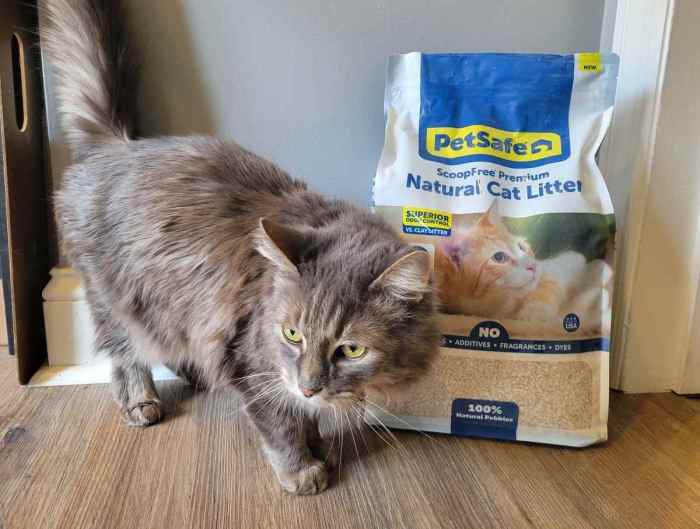
Source: cats.com
Here are five top litter choices for multi-cat homes, along with detailed reviews:
- Dr. Elsey’s Precious Cat Ultra: Clumping clay, known for its excellent clumping and odor control. Price range: $20-30. User reviews consistently praise its ability to control odors and minimize tracking.
- Purina Tidy Cats Clump & Seal: Clumping clay with Febreze odor control. Price range: $15-25. A popular choice for its affordability and effectiveness.
- Arm & Hammer Clump & Refresh: Clumping clay with baking soda for odor control. Price range: $12-20. A budget-friendly option that still provides decent odor control.
- Fresh Step Crystals Premium Cat Litter: Crystal/Silica litter, known for its long-lasting odor control and low dust. Price range: $25-35. Requires less frequent scooping but can be more expensive.
- ökocat Natural Wood Clumping Litter: Wood litter made from sustainably sourced wood fibers. Price range: $20-30. A natural and biodegradable option with good clumping and odor control.
| Brand | Absorbency | Odor Control | Dust | Tracking | Cost | Overall Rating |
|---|---|---|---|---|---|---|
| Dr. Elsey’s Precious Cat Ultra | 5 | 5 | 2 | 3 | $$ | 4.8/5 |
| Purina Tidy Cats Clump & Seal | 4 | 4 | 3 | 4 | $ | 4.2/5 |
| Arm & Hammer Clump & Refresh | 3 | 3 | 3 | 4 | $ | 3.8/5 |
| Fresh Step Crystals Premium | 5 | 5 | 1 | 2 | $$$ | 4.5/5 |
| ökocat Natural Wood Clumping | 4 | 4 | 2 | 3 | $$ | 4.3/5 |
Dr. Elsey’s Precious Cat Ultra is ideal for homes with multiple cats and a tendency for strong odors. Fresh Step Crystals is best for those seeking low-dust and long-lasting odor control. ökocat Natural Wood Clumping is a great choice for environmentally conscious owners.
5. Litter Box Considerations for Multiple Cats
The general rule of thumb is to have one litter box per cat, plus one. So, for three cats, you should have four litter boxes. This helps prevent resource guarding and ensures that each cat has a clean and accessible place to go.
Litter box size is also important. Cats need enough space to comfortably turn around and dig. Larger boxes are generally better, especially for larger breeds. Accessibility is crucial, particularly for senior cats or those with mobility issues. Low-sided litter boxes make it easier for them to enter and exit.
Covered litter boxes can provide privacy, but some cats may not like them. Uncovered boxes are more accessible and allow for better ventilation. Self-cleaning litter boxes can reduce the frequency of scooping, but they can be expensive and may not be suitable for all cats.
Imagine an ideal multi-cat litter box setup: Four large, uncovered litter boxes are strategically placed throughout the house – one in the living room, one in the kitchen, one in the hallway, and one in the spare bedroom. Each box is spaced at least three feet apart to prevent cats from feeling crowded. Litter mats are placed in front of each box to catch tracking litter.
The boxes are easily accessible and away from high-traffic areas.
6. Addressing Specific Multi-Cat Litter Issues
Litter box aversion can stem from various factors, including stress, medical issues, or a dislike of the litter type or box location. Identifying the underlying cause is key to resolving the problem. Consulting a veterinarian is always a good first step.
Resource guarding around litter boxes can be prevented by providing multiple boxes in different locations. Ensure that each cat has equal access to all boxes.
Minimizing litter tracking involves using litter mats, strategically placed rugs, and low-dust litter formulas. Regularly vacuuming and sweeping also helps.
Effective litter box odor management requires regular scooping (at least once daily), deep cleaning (once a month), and the use of odor-absorbing litter.
7. Natural and Eco-Friendly Options for Multi-Cat Homes
Using natural and biodegradable litters is a responsible choice for the environment. These litters are often made from renewable resources and decompose more readily than traditional clay litter.
Wood, paper, corn, wheat, and grass-based litters can perform comparably to clay litter in a multi-cat setting, although they may require more frequent scooping. The key is to find a natural litter that your cats accept and that effectively controls odors.
| Litter Type | Biodegradability | Sustainability Score (1-5) |
|---|---|---|
| Clay | No | 1 |
| Wood | Yes | 4 |
| Paper | Yes | 3 |
| Corn | Yes | 4 |
| Wheat | Yes | 3 |
| Grass-Based | Yes | 5 |
While natural litters may have a higher upfront cost, their biodegradability and sustainability can make them more cost-effective over time.
8. Budget-Friendly Litter Solutions for Multiple Cats
Affordable litter options that still provide adequate odor control and absorbency include Arm & Hammer Clump & Refresh and certain store-brand clumping clay litters. Buying in bulk can significantly reduce the cost per pound.
Here’s a breakdown of estimated monthly litter expenses for a household with 3-4 cats:
Monthly Litter Cost Estimate (3-4 Cats):
Clumping Clay (Arm & Hammer): $30 – $40
Crystal Litter (Fresh Step): $50 – $70
Wood Litter (ökocat): $40 – $60
Total: Varies depending on litter type and usage.
Assess the value of a litter based on its performance, longevity, and how well it controls odors. A slightly more expensive litter that lasts longer and requires less frequent scooping may ultimately be more cost-effective.
9. Advanced Litter Management Techniques
Litter box liners can simplify cleaning and help contain odors. However, some cats may find them noisy or uncomfortable.
Used litter should be disposed of responsibly. Never flush it down the toilet, as it can clog plumbing systems. Check with your local waste management authority for proper disposal guidelines.
Sifting litter boxes make scooping easier by allowing you to separate clean litter from waste. They are a good option for those who want to reduce litter waste.
Deep cleaning litter boxes involves emptying the box completely, washing it with warm water and a mild detergent, and thoroughly drying it before refilling with fresh litter. Avoid using harsh chemicals, as they can be harmful to cats.
10. Dealing with Special Needs Cats and Litter
Senior cats with mobility issues benefit from low-sided litter boxes that are easy to enter and exit. Provide ramps or steps if necessary.
Cats with allergies or sensitivities may require hypoallergenic litter options, such as paper or grass-based litters. Avoid litters that contain fragrances or dyes.
Adapt litter box setups for cats with medical conditions. For example, cats with kidney disease may need more frequent litter changes to manage odor. Provide multiple boxes in easily accessible locations for cats with diabetes.
Managing litter box habits in cats with behavioral problems often requires patience and understanding. Consult with a veterinarian or certified cat behaviorist for guidance.
Final Summary
Ultimately, finding the best cat litter for multiple cats is a journey of experimentation. What works perfectly for one household might not be ideal for another, depending on your cats’ preferences, your budget, and your environmental concerns. By understanding the different litter types, considering essential features, and addressing potential issues proactively, you can create a litter box setup that minimizes stress, controls odor, and keeps your feline companions content.
Remember, a happy cat is a happy home, and a well-managed litter box is a big part of that!
Don’t be afraid to try different litters and box setups until you find the perfect combination. And most importantly, pay attention to your cats’ behavior – they’ll let you know what they like (or don’t like!) with a few subtle cues. Good luck, and happy litter box management!
FAQ Corner
How many litter boxes do I really need for multiple cats?
The general rule is one litter box per cat, plus one extra. So, for three cats, you’d ideally have four litter boxes. It’s better to have too many than not enough!
My cats are fighting over the litter box – what can I do?
Resource guarding is a common issue. Increase the number of litter boxes, spread them out in different locations, and consider larger boxes to give each cat more space.
What’s the best way to minimize litter tracking?
Use a large, textured litter mat just outside the litter box. Consider litters with larger granules that are less likely to stick to paws. Regular vacuuming is also key!
Are natural litters really as effective as clay litter?
Many natural litters perform surprisingly well! Wood, paper, and corn litters can offer excellent odor control and absorbency, though it might take some trial and error to find the right one for your cats.
How often should I deep clean the litter boxes?
A thorough deep cleaning should be done every 1-3 months, depending on the number of cats and the type of litter you use. Regular scooping (at least once a day) is essential in between.
Can I use litter box liners? Are they worth it?
Litter box liners can make cleaning much easier, but some cats dislike the feel of them. They can also be prone to tearing. Experiment to see if your cats tolerate them.
