Dealing with cat urine odor is a common frustration for cat owners – it’s strong, persistent, and can quickly permeate your home. The culprit? Cat urine isn’t just smelly; it’s chemically complex, with different compounds contributing to that pungent aroma depending on your cat’s age, sex, and diet. Understanding the science behind the smell is the first step to effectively eliminating it, and thankfully, there are many options available, from DIY solutions to professional-grade products.
This guide will walk you through everything you need to know to conquer those lingering odors and keep your home smelling fresh.

We’ll explore the different types of odor eliminators, their mechanisms of action, and which ones are truly effective. We’ll also dive into specific products, address tricky situations like old stains and porous surfaces, and discuss safety precautions to protect your feline friend. Plus, we’ll share some natural alternatives and advanced techniques for tackling even the most stubborn odors.
Understanding Cat Urine & Odor
Let’s be honest, cat urine is notoriously difficult to deal with. It’s not just the smell; it’s the lingering, deeply embedded odor that seems to cling to everything. Understanding
-why* cat urine smells so bad is the first step in effectively eliminating it. This isn’t just about masking the scent; it’s about tackling the science behind it.
The pungent aroma isn’t just a matter of perception; it’s rooted in the chemical composition of the urine itself. And, surprisingly, there are differences based on your cat’s sex and age.
Chemical Composition and Pungency
Cat urine’s strong odor primarily comes from uric acid crystals. Unlike human urine, which is mostly urea, cat urine contains a high concentration of uric acid. When uric acid dries, it crystallizes, releasing volatile organic compounds (VOCs) that are responsible for that distinctive, lingering smell. These VOCs are particularly stable and resistant to breakdown, making them incredibly persistent. The higher the concentration of uric acid, the stronger the odor.
Factors like diet and hydration levels can also influence the concentration of these compounds.
Differences in Urine Odor
You might have noticed that male cat urine tends to smell stronger than female cat urine. This is largely due to the fact that male cats often spray to mark their territory, resulting in larger volumes of urine deposited in less-than-ideal locations. Furthermore, the hormones in male cat urine contribute to a more intense odor. Kittens, on the other hand, generally have less concentrated urine than adult cats, resulting in a milder smell.
As they mature, their kidneys become more efficient at concentrating urine, leading to a stronger odor.
Urine pH and Cleaning Agent Effectiveness
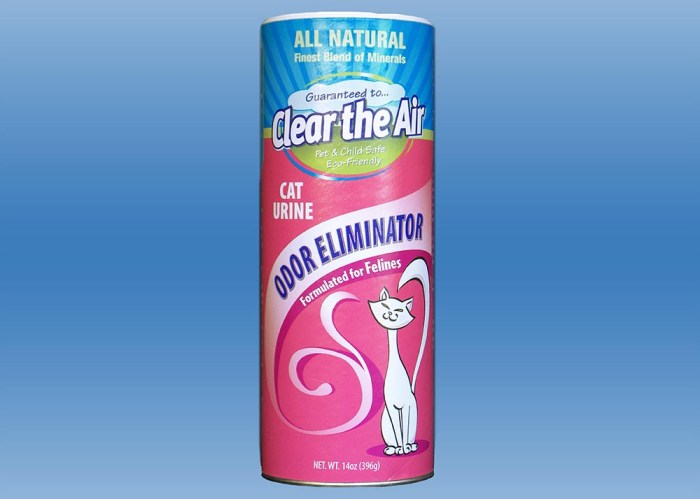
Source: cleartheair.com
The pH level of cat urine plays a crucial role in its odor intensity and how well different cleaning agents work. Cat urine is typically slightly acidic (around pH 6.0-6.5). Alkaline cleaners, like baking soda, can help neutralize the acidic odor, but they may not fully break down the uric acid crystals. Enzymatic cleaners, which we’ll discuss later, are particularly effective because they target the uric acid itself, regardless of pH.
Stages of Odor Development
Understanding the stages of odor development is key to choosing the right cleaning approach. The “fresh” stage is the immediate smell after the accident. The “lingering” stage occurs as the urine dries and the uric acid crystals begin to release VOCs. Finally, the “embedded” stage is the most challenging – the odor has permeated deep into the material, making it incredibly difficult to remove.
Types of Odor Eliminators: A Categorization
There’s a dizzying array of products claiming to eliminate cat urine odor. But not all are created equal. Some simply mask the smell, while others actually work to break down the odor-causing compounds. Let’s break down the main categories of odor eliminators and their pros and cons.
Comparison Table: Odor Eliminators
| Mechanism of Action | Effectiveness on Embedded Odors | Safety for Cats | Cost |
|---|---|---|---|
| Enzymatic Cleaners: Contain enzymes that break down uric acid crystals and other organic compounds. | Excellent – designed specifically for embedded odors. | Generally safe, but always read the label and ensure proper ventilation. | Moderate – typically more expensive than other options. |
| Chemical Odor Neutralizers: Use chemicals to bind to odor molecules and neutralize them. | Variable – effectiveness depends on the specific chemical and the severity of the odor. | Potential risks – some chemicals can be harmful to cats and humans. Requires careful ventilation. | Low to Moderate. |
| Baking Soda-Based Solutions: Absorb odors through adsorption. | Limited – primarily effective for fresh odors and surface absorption. | Very safe – a natural and non-toxic option. | Low – very affordable. |
| Air Fresheners: Mask odors with fragrances. | None – do not eliminate the odor source. | Potential risks – fragrances can be irritating to cats and may trigger allergies. | Low. |
Enzymatic Cleaners: The Molecular Breakdown
Enzymatic cleaners are the gold standard for cat urine odor removal. They contain specific enzymes – proteases, lipases, and amylases – that target the proteins, fats, and starches in cat urine. These enzymes break down the uric acid crystals into odorless compounds, effectively eliminating the source of the smell. It’s a biological process, not just a cover-up.
Chemical Odor Neutralizers: Pros and Cons
Chemical odor neutralizers often contain ingredients like zinc acetate or other metal salts. These chemicals bind to odor molecules, changing their structure and preventing them from being detected by our noses. However, many of these chemicals can be irritating to cats’ respiratory systems and skin. Furthermore, some can be harmful if ingested. Proper ventilation is absolutely crucial when using these products, and they should be kept out of reach of pets and children.
Baking Soda: A Simple Solution
Baking soda is a readily available and affordable odor absorber. It works by adsorbing odor molecules onto its surface. For fresh spills, sprinkle a generous amount of baking soda directly onto the affected area. Let it sit for several hours, or even overnight, then vacuum thoroughly. For more stubborn odors, create a paste of baking soda and water and apply it to the area.
Allow the paste to dry completely before vacuuming.
Air Fresheners: A Temporary Fix
Air fresheners simply mask odors with fragrances. They don’t address the underlying cause of the smell. While they might provide temporary relief, the odor will eventually return. Moreover, the fragrances in air fresheners can be irritating to cats and may even trigger allergic reactions.
Top Contenders: Product Deep Dive
Choosing the right odor eliminator can feel overwhelming. Let’s take a closer look at some popular options and their key features.
Comparison Table: Popular Odor Eliminators
| Product Name | Key Ingredients | Application | User Reviews (Summarized) |
|---|---|---|---|
| Nature’s Miracle Advanced Stain & Odor Remover | Enzymes (protease, amylase, lipase), surfactants | Spray directly onto affected area, saturate thoroughly, let dwell for 10-15 minutes, blot dry. | Highly effective on old stains, strong odor, some find the scent strong initially. |
| Rocco & Roxie Stain & Odor Eliminator | Pro-Enzyme formula, surfactants | Spray, saturate, let dwell for 5-10 minutes, blot dry. | Excellent for embedded odors, pet-friendly, pleasant scent. |
| Angry Orange Pet Odor Eliminator | D-Limonene (from orange peels), surfactants | Spray, let dwell, wipe clean. | Strong citrus scent, effective on many odors, may stain some fabrics. |
| Puracy Natural Pet Stain & Odor Remover | Plant-derived enzymes, surfactants | Spray, saturate, let dwell, blot dry. | Gentle, plant-based formula, effective on mild to moderate odors. |
| Bissell Pet Stain & Odor Remover Formula | Enzymes, surfactants | Spray, saturate, let dwell, blot dry. Also compatible with Bissell Pet Stain Eraser. | Good value, readily available, effective on a range of stains and odors. |
The Science Behind Nature’s Miracle
Nature’s Miracle utilizes a blend of enzymes – protease, amylase, and lipase – to target different components of cat urine. Protease breaks down proteins, amylase breaks down starches, and lipase breaks down fats. The surfactants help to lift the urine from the surface of the material, allowing the enzymes to reach the uric acid crystals. This multi-pronged approach ensures a thorough breakdown of the odor-causing compounds.
Ventilation is Key
Regardless of the product you choose, proper ventilation is essential. Odor eliminators often release VOCs, and adequate ventilation helps to dissipate these fumes, minimizing exposure to both cats and humans. Open windows and doors, or use a fan to circulate the air.
Step-by-Step Guide: Using Rocco & Roxie
- Pre-Treatment: Blot up as much fresh urine as possible with paper towels.
- Saturate: Generously spray the affected area with Rocco & Roxie Stain & Odor Eliminator, ensuring the product penetrates deep into the material.
- Dwell Time: Allow the product to dwell for at least 5-10 minutes, or longer for stubborn odors.
- Blot Dry: Blot the area with clean paper towels. Do not rub.
- Repeat: Repeat the process if necessary.
Determining Effectiveness
It’s crucial to distinguish between odor elimination and odor masking. After cleaning, sniff the area closely. If the odor is completely gone, the product is effective. If you still detect a faint smell, it’s likely that the product is only masking the odor. You may need to repeat the cleaning process or try a different product.
Conclusive Thoughts
Ultimately, finding the best odor eliminator for cat urine is about understanding the problem and choosing the right solution for your specific situation. Whether you opt for a powerful enzymatic cleaner, a simple baking soda treatment, or a professional deep cleaning, the key is persistence and a thorough approach. By following the tips and techniques Artikeld in this guide, you can effectively eliminate those unpleasant odors, create a healthier environment for your cat and your family, and enjoy a fresh-smelling home once again.
Remember to prioritize safety, always test products in inconspicuous areas, and address any underlying behavioral issues that might be contributing to the problem. With a little effort and the right tools, you can win the battle against cat urine odor and restore peace and tranquility to your home.
FAQ Insights
Why is cat urine so smelly?
Cat urine contains uric acid crystals, which have a particularly strong and lingering odor. Male cats and adult cats generally have stronger-smelling urine than female cats and kittens due to higher concentrations of these compounds.
Do air fresheners actually eliminate cat urine odor?
No, air fresheners only mask the odor temporarily. They don’t break down the urine components, so the smell will eventually return.
How can I tell if a product is truly eliminating the odor versus just masking it?
After cleaning, wait 24-48 hours. If the odor returns, the product likely only masked it. A truly effective product will eliminate the odor completely.
Are enzymatic cleaners safe for my cat?
Most enzymatic cleaners are safe for cats when used as directed. However, always read the label and ensure the product is specifically labeled as safe for pets. Avoid products with harsh chemicals.
Can I use bleach to clean cat urine?
No! Bleach can react with ammonia in cat urine to create toxic fumes. It’s also harmful to cats if ingested.
How often should I clean my cat’s litter box?
Ideally, scoop the litter box daily and completely empty and clean it once a month (or more frequently depending on the number of cats and litter box size).
What is a blacklight and how can it help with cat urine odor?
A blacklight (UV light) can detect dried urine stains that are invisible to the naked eye. Urine will glow under a blacklight, allowing you to identify hidden spots to clean.

