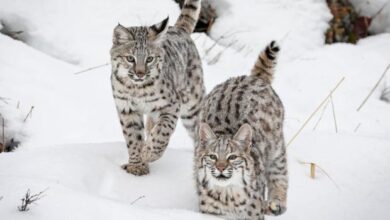
Lately, you’ve probably seen more chatter online about keeping bobcats as pets. It’s a fascinating, and frankly, complex topic that’s sparking a lot of interest. Historically, our interactions with bobcats have been largely limited to fleeting glimpses in the wild, but now some are exploring the possibility of bringing these wild felines into their homes. There are stories circulating – some heartwarming, some cautionary – of individuals who’ve attempted to raise bobcats, often driven by a desire to connect with nature or a fascination with these elusive creatures.
But is it truly possible, or even responsible?
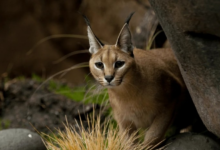


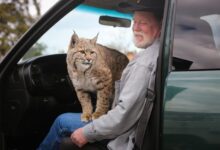
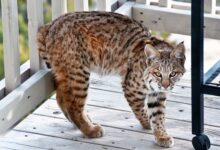
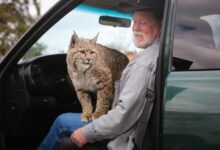
This exploration delves into the realities of bobcat ownership, from the legal hurdles and specialized care requirements to the ethical considerations and potential impact on wild populations. We’ll unpack everything from enclosure design and diet to socialization challenges and the crucial role of conservation efforts, providing a comprehensive overview for anyone curious about these captivating animals.
Introduction: The Rising Interest in Bobcats as Companions
Lately, it feels like bobcats are everywhere online. Searches for “bobcat pets” and discussions about keeping them have spiked dramatically. It’s a fascinating, and frankly, a bit concerning trend. People are captivated by these wild cats, their beauty, and their perceived independence. But is it a good idea?
This post will delve into the realities of bobcat ownership, exploring the legal hurdles, behavioral complexities, and ethical considerations involved. We’ll also look at ways to appreciate these incredible animals without bringing them into our homes.
Historically, human interaction with bobcats has been largely defined by avoidance. For centuries, they’ve been viewed as wild predators, sometimes trapped for fur or occasionally encountered while hunting. The idea of keeping them as pets is relatively new, a product of our increasing fascination with exotic animals and a desire for something unique. Anecdotally, you’ll find stories online of individuals who, often with good intentions, have attempted to raise bobcats.
Motivations range from rescuing orphaned kittens to simply wanting to experience a close bond with a wild animal. However, these stories often end with difficult realities and, in many cases, the eventual relocation of the bobcat to a sanctuary or release back into the wild (if possible).
Legal Landscape: Ownership Restrictions and Regulations
Before even considering a bobcat as a pet, it’s absolutely crucial to understand the legal landscape. Laws vary wildly from state to state, and federal regulations add another layer of complexity. Ignoring these laws can result in hefty fines, confiscation of the animal, and even criminal charges. The following table provides a snapshot of the current situation, but it’s essential to verify the specifics with your state’s wildlife agency.
| State | Ownership Allowed | Permit Requirements | Penalties for Illegal Ownership |
|---|---|---|---|
| Alabama | No | N/A | $500 – $2,500 fine, possible jail time |
| Arizona | Permit Required | Requires permit from Game and Fish Department, proof of enclosure, and experience with large carnivores. | $500 – $10,000 fine, possible jail time |
| California | No | N/A | $5,000 – $20,000 fine, possible jail time |
| Colorado | Permit Required | Requires permit from Colorado Parks and Wildlife, demonstrating adequate facilities and experience. | $200 – $1,000 fine, possible seizure of animal |
| Florida | No | N/A | $500 – $5,000 fine, possible jail time |
| Texas | Yes (with restrictions) | Requires permit from Texas Parks and Wildlife Department, specific enclosure requirements, and proof of experience. | $500 – $10,000 fine, possible seizure of animal |
Federally, bobcats are protected under the Lacey Act, which prohibits the interstate transport of illegally obtained wildlife. The Endangered Species Act doesn’t currently list bobcats as threatened or endangered, but specific subspecies or populations could be protected. Enforcement of these regulations is a significant challenge, particularly in states with more lenient laws.
Wildlife agencies often lack the resources to adequately monitor private ownership and investigate potential violations. The rise of online marketplaces also makes it easier for individuals to illegally acquire bobcats across state lines.
Bobcat Behavior and Temperament: Understanding the Species
To truly understand whether keeping a bobcat as a pet is feasible, you need to grasp their natural behavior. Bobcats are solitary, crepuscular hunters, meaning they are most active at dawn and dusk. In the wild, they employ a variety of hunting strategies, from stalking prey to ambushing from concealed positions. Their social interactions are limited, primarily occurring during mating season.
They are fiercely territorial, marking their boundaries with scent and vocalizations.
Comparing bobcat behavior to that of domestic cats reveals stark differences. While they share a common ancestor, thousands of years of domestication have significantly altered the behavior of domestic cats. Bobcats retain a much higher level of independence and aggression. Playfulness exists, but it’s often rougher and more predatory in nature. Domestic cats are generally more adaptable to human interaction and readily solicit affection; bobcats are far less likely to do so.
A bobcat’s temperament is influenced by several factors. Age plays a role – younger bobcats may be more adaptable, but also more prone to unpredictable behavior. Upbringing, particularly early socialization (though this is difficult and often unsuccessful), and genetics all contribute to an individual’s personality.
Housing and Enrichment: Creating a Suitable Environment
Providing a suitable environment for a bobcat is an enormous undertaking. It’s not simply about having a large cage; it’s about replicating aspects of their natural habitat and providing opportunities for natural behaviors. A secure outdoor enclosure is absolutely essential. The minimum recommended dimensions are 500 square feet, but larger is always better. The enclosure should be constructed with heavy-gauge chain-link fencing (at least 10 feet high) buried at least 2 feet deep to prevent digging escapes.
The top of the enclosure must also be covered with a sturdy mesh to prevent climbing. The substrate should be a mix of natural materials like dirt, sand, and mulch.
Enrichment is critical to prevent boredom and behavioral problems. Bobcats need opportunities to climb, dig, and explore. Consider incorporating large logs, sturdy platforms, and a designated digging pit filled with sand or dirt. Puzzle feeders can provide mental stimulation by requiring the bobcat to work for its food. Regularly rotating enrichment items keeps things interesting.
One successful enclosure design I’ve read about involved a large, multi-level structure built into a hillside. It included a spacious outdoor area with a pond, a network of tunnels and climbing structures, and a heated indoor den for shelter during cold weather. The entire enclosure was surrounded by a double layer of fencing and monitored by security cameras.
Diet and Nutrition: Meeting Specific Dietary Needs
Source: slidesharecdn.com
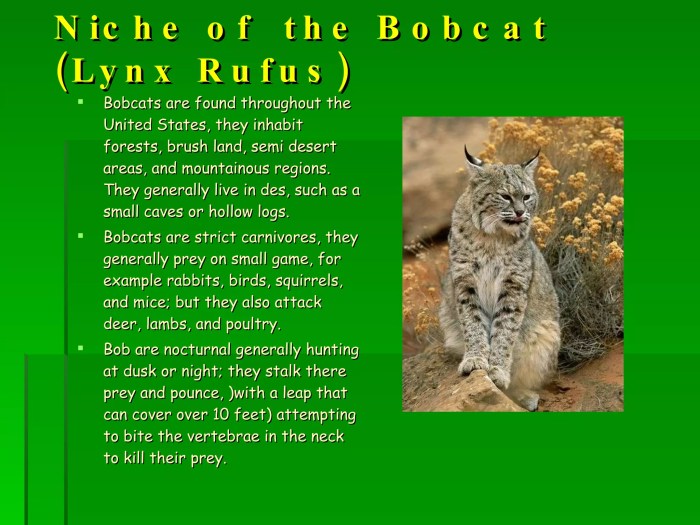
A bobcat’s natural diet consists primarily of small mammals like rodents, rabbits, and squirrels. They also consume birds, reptiles, and occasionally larger prey like deer fawns. Hunting is a crucial part of their behavior, and it provides essential nutrients that are difficult to replicate in captivity. Their nutritional requirements are complex, requiring a balance of protein, fat, and essential vitamins and minerals.
| Food Type | Quantity | Frequency | Nutritional Benefit |
|---|---|---|---|
| Raw Meat (Rabbit, Chicken, Turkey) | 1-2 lbs | Daily | High Protein, Essential Amino Acids |
| Whole Prey (Rodents, Birds) | 1-2 per week | Weekly | Calcium, Bone Marrow, Natural Tissues |
| Organ Meat (Liver, Kidney) | 4 oz | 2-3 times per week | Vitamins A, B, D, Iron |
| Vitamin/Mineral Supplement | As directed by veterinarian | Daily | Addresses potential deficiencies in captive diet |
Improper nutrition can lead to serious health problems in bobcats, including bone deformities, immune deficiencies, and organ failure. It’s crucial to consult with a veterinarian experienced in exotic animal nutrition to develop a balanced diet plan.
Health and Veterinary Care: Specialized Needs
Bobcats are susceptible to a range of health problems, including internal and external parasites, feline leukemia virus (FeLV), feline immunodeficiency virus (FIV), and injuries from territorial disputes. They can also contract diseases from other animals.
Finding a veterinarian experienced in treating bobcats is a significant challenge. Most general practice veterinarians lack the specialized knowledge and equipment needed to provide adequate care. It’s essential to locate a veterinarian with experience in exotic animals
-before* acquiring a bobcat. Preventative care, including regular vaccinations (as appropriate), parasite control, and dental checkups, is crucial for maintaining a bobcat’s health.
Socialization and Training: Managing a Wild Instinct
Socializing a bobcat with humans and other animals is incredibly difficult, given their solitary nature and inherent wild instincts. While some individuals may tolerate human presence, forming a close bond is unlikely. Attempts at socialization should be approached with extreme caution and a realistic understanding of the risks.
Positive reinforcement training techniques, such as rewarding desired behaviors with food or praise, can be used to teach basic commands and manage behavior. However, it’s important to remember that bobcats are not domestic animals and will never be fully trainable. The potential for bites and scratches is always present, even with a seemingly well-socialized bobcat. Never attempt to handle a bobcat in a way that could be perceived as threatening.
Ethical Considerations: Is Keeping Bobcats as Pets Responsible?
Removing bobcats from the wild has a direct impact on their populations and ecosystems. Even if a bobcat is legally obtained, its removal contributes to the disruption of natural processes. Furthermore, keeping a wild animal in a captive environment, even with the best care, raises serious welfare concerns. Bobcats have complex behavioral and psychological needs that are difficult to meet in captivity.
Confinement can lead to stress, boredom, and behavioral abnormalities.
Arguments in favor of keeping bobcats as pets often center on the idea of providing a sanctuary for rescued animals or educating the public about these magnificent creatures. However, these arguments are often outweighed by the ethical concerns surrounding the inherent limitations of captivity and the potential impact on wild populations. A balanced perspective recognizes the allure of these animals while acknowledging the responsibility to prioritize their welfare and the health of their ecosystems.
Alternatives to Ownership: Supporting Bobcat Conservation
Numerous organizations are dedicated to bobcat conservation and research, working to protect their habitats and monitor their populations. Supporting these organizations through donations or volunteer work is a far more responsible way to appreciate bobcats. Participating in habitat restoration projects, such as planting native vegetation or removing invasive species, can also make a significant difference.
Responsible wildlife viewing is another important aspect of bobcat conservation. Observe bobcats from a safe distance, avoid disturbing their natural behaviors, and never attempt to feed them. Minimizing human impact on bobcat habitats is essential for ensuring their long-term survival.
The Future of Bobcats and Human Interaction
Legislation regarding bobcat ownership is likely to become stricter in the future, as awareness of the ethical and welfare concerns grows. Increased public education and awareness campaigns can play a crucial role in promoting responsible interactions with bobcats. Future research into bobcat behavior and welfare in captive environments is needed to better understand their needs and develop more humane management practices.
Concluding Remarks
Ultimately, the question of whether keeping bobcats as pets is a good idea is a complicated one. While the allure of having such a unique and wild companion is understandable, the significant challenges and ethical concerns cannot be ignored. From the legal restrictions and specialized care needs to the potential impact on wild populations, responsible interaction with bobcats means prioritizing their welfare and supporting conservation efforts.
Perhaps the most rewarding path lies in appreciating these magnificent animals in their natural habitat and contributing to their protection for generations to come.
Question Bank
What states currently allow bobcat ownership?
It varies greatly! Some states outright prohibit it, others require permits with strict conditions, and a few have little to no regulation. Check the table below for a state-by-state breakdown.
Are bobcats truly trainable like domestic cats?
Not really. While they can learn basic commands through positive reinforcement, their wild instincts and solitary nature make them significantly less trainable than a typical house cat. Expect a lot of independence and unpredictable behavior.
What kind of enclosure is necessary for a bobcat?
A
-very* secure and spacious outdoor enclosure is essential. We’re talking a minimum of 1/4 acre, with 8-10 foot high fencing made of heavy-gauge chain link or similar material, buried at least 2 feet deep to prevent digging. It needs to mimic their natural environment with climbing structures, digging areas, and shade.
What’s the biggest health concern with captive bobcats?
Nutritional deficiencies are a major risk. Their diet needs to be meticulously planned to meet their specific needs, and improper feeding can lead to serious health problems. Parasites and diseases common in wild populations are also a concern.
Can I socialize a bobcat with my dog or other pets?
It’s extremely risky and generally not recommended. Bobcats are solitary animals with strong territorial instincts. Even with careful introductions, the potential for injury to your other pets (or the bobcat) is high.
What can I do to help bobcat conservation if I can’t own one?
Support organizations dedicated to bobcat research and habitat preservation. Donate to wildlife sanctuaries, participate in habitat restoration projects, and practice responsible wildlife viewing – keep a safe distance and avoid disturbing their natural behavior.
What are the federal laws protecting bobcats?
The Lacey Act prohibits the illegal transport of wildlife across state lines, and the Endangered Species Act could apply if a bobcat subspecies is listed as threatened or endangered. These laws aim to prevent exploitation and protect bobcat populations.