Exploring Breeds of Cats with Flat Faces A Comprehensive Guide

There’s something undeniably charming about a cat with a squished face, isn’t there? These breeds, often called brachycephalic, have captured hearts worldwide, but their unique appearance comes with some important considerations. We’ll dive into the world of flat-faced cats, exploring their history, popular breeds like Persians and Exotics, and the health challenges they can face. It’s a fascinating look at how selective breeding has shaped these adorable companions, and what it means to be a responsible owner.
From their origins in ancient Persia to their modern-day popularity, these cats have a rich history. The demand for their distinctive looks has increased significantly, driven by their appealing appearance and often gentle personalities. Let’s start by understanding what brachycephaly actually means in felines and then meet some of the most beloved breeds.
Flat-Faced Cats: A Comprehensive Guide to Breeds, Health, and Care
The world of feline companions is incredibly diverse, and among the most captivating are the breeds with distinctive, shortened faces. Often referred to as “brachycephalic” cats, these breeds have gained immense popularity in recent years, captivating hearts with their unique charm. However, their endearing appearance comes with specific health considerations and care requirements that potential owners should understand. This guide delves into the fascinating world of flat-faced cats, exploring their history, characteristics, health concerns, and responsible care practices.
The trend towards flatter faces in cats isn’t a natural evolutionary process. It’s largely a result of selective breeding, where humans have favored specific physical traits over generations. While the exact origins are difficult to pinpoint, the practice began centuries ago, particularly with Persian cats. Early breeders sought to enhance the “pancake face” look, inadvertently leading to the development of the brachycephalic features we see today.
The increasing popularity of these breeds can be attributed to their perceived cuteness, docile temperaments, and the overall aesthetic appeal of their unique facial structures. Social media has also played a significant role, showcasing these breeds to a wider audience and fueling their desirability.
| Breed Name | Origin | General Appearance |
|---|---|---|
| Persian | Iran (formerly Persia) | Long, flowing coat; round face with a short, flattened nose; large, round eyes. |
| Exotic Shorthair | United States | Short, dense coat; round face with a short, flattened nose; large, round eyes; resembles a Persian but with a shorter coat. |
| British Shorthair | United Kingdom | Dense, plush coat; round face with a slightly flattened nose; large, round eyes; stocky build. |
Persian Cats: The Classic Example
The Persian cat is arguably the most iconic example of a brachycephalic breed. Their defining characteristic is their luxurious, long coat, which requires significant grooming. However, it’s their facial structure that truly sets them apart. The Persian’s face is round and flat, with a short, snub nose and large, expressive eyes. This conformation, while aesthetically pleasing to many, contributes to the health challenges discussed later in this guide.
Persians come in a dazzling array of color variations, each influencing their overall appearance. Chinchilla Persians boast a silvery-grey coat with black tipping, creating a shimmering effect. Blue Persians have a striking slate-grey coat and deep copper eyes. Himalayan Persians, a cross between Persians and Siamese, exhibit pointed coloration – a lighter body with darker markings on the face, ears, paws, and tail – and brilliant blue eyes.
The color variations don’t significantly alter the underlying brachycephalic facial structure, but they do impact the overall visual impression of the cat.
Grooming a Persian is a daily commitment. Their long coat is prone to matting and tangling, requiring regular brushing to prevent painful knots. Special attention must be paid to their facial features. The flat face can trap moisture and debris, leading to tear staining and skin infections. Gentle cleaning with a damp cloth is essential to keep the area around their eyes and nose clean and dry.
Regular bathing, typically once or twice a month, is also necessary to maintain coat health.
Persians are known for their gentle and docile personalities. They are typically quiet and affectionate, enjoying cuddling and being pampered. While not overly active, they appreciate playtime and interaction with their owners. Their calm demeanor and beautiful appearance make them ideal companions for those seeking a low-key, loving feline friend. They are often described as “furniture cats” due to their preference for lounging in comfortable spots.
Exotic Shorthair: A Persian in a Shorter Coat
The Exotic Shorthair is essentially a Persian with a short, dense coat. Bred to replicate the Persian’s round face and sweet expression in a lower-maintenance package, they share many of the same physical characteristics. The primary difference lies in their coat length, which significantly reduces the grooming demands compared to their long-haired cousins. Despite the shorter coat, the Exotic Shorthair retains the characteristic flattened face and large, round eyes of the Persian breed.
While the shorter coat simplifies grooming, Exotic Shorthairs still require regular brushing, typically once or twice a week, to prevent matting and hairballs. Facial cleaning remains crucial, as their flat faces are still susceptible to tear staining and skin irritation. Bathing is less frequent than with Persians, but still necessary to maintain coat cleanliness.
The Exotic Shorthair’s facial structure, inherited from the Persian, directly impacts their breathing and overall health. The shortened nasal passages and elongated soft palate can lead to respiratory difficulties, especially during exercise or in hot weather. Their flattened face also increases the risk of eye problems, such as excessive tearing and corneal ulcers. Careful monitoring and proactive veterinary care are essential for maintaining their well-being.
- Pros: Resembles a Persian but with easier grooming; Gentle and affectionate temperament; Relatively quiet and docile.
- Cons: Prone to brachycephalic health issues; Requires regular facial cleaning; Can be sensitive to heat and stress.
British Shorthair: A Round-Faced Companion
The British Shorthair presents a different take on the “round face” aesthetic compared to Persians and Exotic Shorthairs. While they also possess a round face, it’s less dramatically flattened and features a broader, more substantial nose. Their large, expressive eyes are set wide apart, giving them a perpetually curious and slightly amused expression. The overall impression is one of sturdy, good-natured charm.
The British Shorthair’s history is deeply intertwined with British folklore. Originating in the 19th century, they are believed to be descendants of cats brought to Britain by the Romans. Over time, they were selectively bred to create the robust and distinctive breed we know today. They were popular mousers in Victorian England and have since become beloved family pets worldwide.
British Shorthairs are known for their calm and independent temperament. They are affectionate but not overly demanding, content to spend time lounging around the house or engaging in gentle play. Their easygoing nature and adaptability make them excellent companions for families with children and other pets. They are generally healthy and robust, though they can be prone to certain genetic conditions.
In contrast to the delicate and flowing build of a Persian, the British Shorthair possesses a more muscular and stocky physique. Their legs are short and sturdy, and their chest is broad. This difference in body build contributes to their overall impression of strength and resilience, contrasting with the more refined appearance of the Persian.
Other Breends with Flat Faces
While Persians, Exotic Shorthairs, and British Shorthairs are the most well-known brachycephalic breeds, several other feline companions exhibit similar facial features. These breeds often share the same health concerns and care requirements as their more popular counterparts.
| Breed Name | Origin | Coat Length | Notable Features |
|---|---|---|---|
| Himalayan | United States | Long | Combination of Persian and Siamese traits; pointed coloration and blue eyes. |
| Burmese | Myanmar (formerly Burma) | Short | Rounded head with a slightly flattened face; large, expressive eyes; known for their affectionate and playful nature. |
| Scottish Fold | Scotland | Short or Long | Folded ears due to a genetic mutation; round face with a slightly flattened nose. |
| Selkirk Rex | United States | Short or Long | Curly coat; round face with a slightly flattened nose; gentle and affectionate temperament. |
Health Concerns Associated with Flat Faces
The shortened facial structure characteristic of brachycephalic cats leads to a range of potential health problems. These issues stem from the compromised respiratory and ocular systems resulting from the altered anatomy. Understanding these concerns is crucial for responsible ownership.
Common respiratory problems include stenotic nares (narrowed nostrils), which restrict airflow; elongated soft palate, which obstructs the airway; and everted laryngeal saccules, which further impede breathing. These conditions can lead to noisy breathing, difficulty exercising, and even heatstroke. Eye issues are also prevalent, including excessive tearing (epiphora), corneal ulcers due to dryness and irritation, and progressive retinal atrophy, a degenerative eye disease.
Dental problems are frequently observed in brachycephalic cats due to crowding of the teeth within the shortened jaw. This can lead to periodontal disease, tooth decay, and other oral health issues. Regular dental checkups and professional cleanings are essential for maintaining their oral hygiene.
[Flowchart illustrating potential health complications stemming from brachycephaly: Stenotic Nares -> Difficulty Breathing -> Heatstroke Risk; Elongated Soft Palate -> Noisy Breathing -> Exercise Intolerance; Corneal Ulcers -> Pain & Vision Loss; Crowded Teeth -> Periodontal Disease & Tooth Decay]
Responsible Breeding and Ethical Considerations
Ethical breeding practices are paramount in minimizing health issues in flat-faced cats. Responsible breeders prioritize health and temperament over extreme physical traits, striving to produce cats with improved respiratory function and reduced risk of genetic diseases. This involves careful selection of breeding pairs and a commitment to transparency with potential owners.
Genetic testing plays an increasingly important role in identifying and reducing the prevalence of brachycephalic-related health problems. Breeders can screen potential breeding cats for genes associated with stenotic nares, elongated soft palate, and other conditions, allowing them to make informed breeding decisions. However, genetic testing is not foolproof and should be used in conjunction with careful observation and veterinary assessment.
Owners of brachycephalic cats have a significant responsibility to provide appropriate care and monitor their health closely. This includes regular veterinary checkups, proactive health monitoring, and a willingness to address any health concerns promptly. Owners should also be prepared to make lifestyle adjustments to accommodate their cat’s specific needs, such as providing a cool environment and avoiding strenuous exercise.
“The breeding of brachycephalic animals raises serious ethical concerns. While these breeds are undeniably popular, the inherent health problems associated with their conformation demand a cautious and responsible approach. Breeders have a moral obligation to prioritize the well-being of their animals over aesthetic preferences, and potential owners should be fully aware of the potential health challenges before acquiring one of these breeds.”Dr. Emily Carter, Veterinary Specialist.
Caring for a Flat-Faced Cat: Practical Tips
Managing a flat-faced cat’s breathing difficulties requires a proactive approach. Environmental adjustments, such as keeping the home cool and well-ventilated, can significantly improve their comfort. Avoiding exposure to smoke, dust, and other irritants is also crucial. Providing access to multiple resting spots and ensuring they are not overly stressed can also help.
Regular veterinary checkups are essential for monitoring their respiratory and ocular health. Proactive health monitoring, including early detection of any signs of respiratory distress or eye problems, can improve treatment outcomes. Owners should be vigilant in observing their cat’s breathing patterns and seeking veterinary attention at the first sign of trouble.
Facial cleaning is a vital aspect of care for flat-faced cats. Gently wiping away moisture and debris from around their eyes and nose with a damp cloth can prevent infections and tear staining. Using a veterinarian-approved cleaning solution can be beneficial for stubborn stains.
- Recommended Foods: Soft, moist food is generally easier for flat-faced cats to eat due to their dental conformation.
- Feeding Strategies: Elevated food bowls can help reduce the risk of aspiration (inhaling food into the lungs).
- Dental Care: Regular tooth brushing and dental treats can help prevent dental disease.
Visual Descriptions: Illustrating Facial Features
A Persian cat’s nose is a defining feature – short, flat, and often upturned. The nostrils are typically very small and can be partially obscured by the surrounding fur. This conformation, while contributing to their characteristic “pancake face,” can also obstruct airflow and contribute to respiratory difficulties.
The Exotic Shorthair’s eyes are large, round, and expressive, typically ranging in color from copper to blue. Their prominent eyes are set wide apart and have a slightly bulging appearance, which increases their susceptibility to injury. Protective eyewear may be recommended for outdoor cats.
The British Shorthair’s facial structure is characterized by its round face and large, expressive eyes. Unlike the dramatically flattened face of the Persian, the British Shorthair’s face is more substantial and features a broader nose. This gives them a more robust and dignified appearance.
The Himalayan cat possesses a gentle and serene appearance, largely due to their pointed coloration and soft, expressive eyes. Their face is round and flat, with a short nose and a sweet, almost melancholic expression. The combination of their physical features and calm demeanor creates an aura of tranquility and grace.
Breed Comparisons: A Detailed Analysis
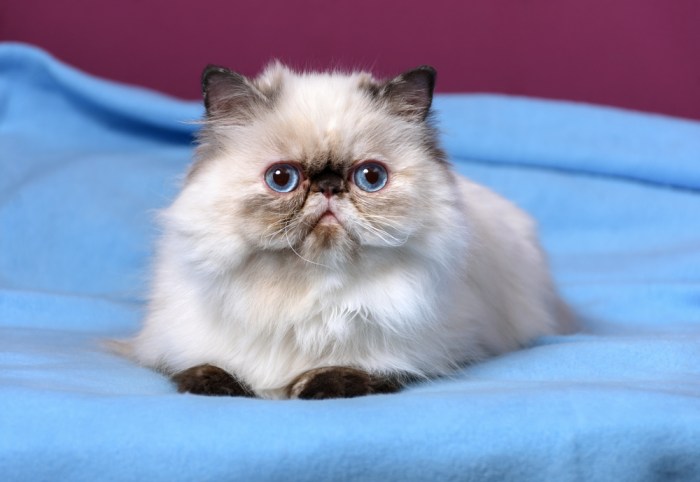
Source: catster.com
The skull structure of a Persian, Exotic Shorthair, and British Shorthair reveals significant differences. The Persian and Exotic Shorthair share a highly brachycephalic skull, characterized by a shortened snout and a flattened face. The British Shorthair, in contrast, has a more elongated skull with a less dramatically flattened face.
The facial conformation of flat-faced cats can impact their ability to groom themselves effectively. Their shortened noses and flattened faces make it difficult for them to reach certain areas, such as their eyes and nose. Owners may need to assist with grooming to ensure proper hygiene.
The shape of a flat-faced cat’s mouth affects their eating habits and potential for dental disease. The crowded teeth and shortened jaw can make it difficult for them to chew properly, increasing the risk of dental problems. Choosing appropriate food and providing regular dental care are essential for maintaining their oral health.
| Feature | Breed Comparison |
|---|---|
| Nose Shape | Persian: Very short, flat, upturned. Exotic Shorthair: Similar to Persian. British Shorthair: Moderately rounded, broader. |
| Eye Placement | Persian: Large, round, wide-set. Exotic Shorthair: Similar to Persian. British Shorthair: Large, round, wide-set. |
| Jaw Length | Persian: Shortened. Exotic Shorthair: Shortened. British Shorthair: More elongated. |
End of Discussion
So, there you have it – a deep dive into the world of breeds of cats with flat faces. We’ve covered everything from the classic Persian to the often-overlooked Himalayan, highlighting their unique characteristics and the responsibilities that come with owning one. Ultimately, understanding the potential health concerns and committing to ethical breeding practices are crucial for ensuring these adorable cats live long, happy, and healthy lives.
Hopefully, this guide has given you a better appreciation for these special felines!
Remember, choosing a pet is a big decision, and these breeds require dedicated care. By being informed and proactive, you can provide the best possible life for a flat-faced cat and enjoy the unique bond they offer.
Common Queries
Why are flat-faced cats called brachycephalic?
“Brachycephalic” comes from Greek roots meaning “short head.” It describes animals with shortened skulls and flattened faces, a characteristic resulting from selective breeding.
Are all flat-faced cats Persians?
No! While Persians are the most well-known, breeds like Exotic Shorthairs, British Shorthairs, Himalayans, and even some Burmese exhibit brachycephalic traits to varying degrees.
What’s the biggest health concern for these cats?
Respiratory issues are common, often due to stenotic nares (narrowed nostrils) and an elongated soft palate. Eye problems and dental issues are also frequently observed.
How can I help my flat-faced cat breathe easier?
Keep your home cool and well-ventilated, avoid stressful situations, and consider elevating their food and water bowls to reduce strain on their breathing.
Do flat-faced cats need special diets?
Yes, due to potential dental problems, softer, easily chewable foods are often recommended. Talk to your vet about the best diet for your cat’s specific needs.
What is ethical breeding when it comes to flat-faced cats?
Ethical breeders prioritize health over extreme features, aiming to reduce the severity of brachycephalic traits through genetic testing and careful selection of breeding pairs.
How often should I take my flat-faced cat to the vet?
Regular checkups, ideally every six months, are crucial for monitoring their respiratory and overall health. Early detection of problems can significantly improve their quality of life.
