Have you ever been captivated by a cat with a unique, patchwork coat? The “brown spot cat eye” pattern is a fascinating genetic phenomenon, resulting in a stunning array of markings that can range from subtle speckling to bold, contrasting patches. It’s more than just a pretty face; understanding these patterns involves genetics, breed characteristics, and even a little bit of history.
Let’s dive into the world of brown spotted cats and uncover the secrets behind their captivating appearance!
The beauty of a brown spot cat isn’t just about the spots themselves. It’s the interplay of colors, the way the patterns shift with age, and how they interact with the cat’s eye color. We’ll explore the science behind these markings, the different patterns they can form, and how to best care for these special felines. Plus, we’ll touch on the cultural significance of these unique cats throughout history.
Understanding “Brown Spot Cat Eye” Appearance
The captivating look of a brown spot cat is a result of fascinating genetics and how those genes interact with a cat’s underlying coat color. It’s more than just random patches; it’s a complex interplay of factors that create a wide range of beautiful patterns. This section will delve into the genetic basis, how different coat colors influence the appearance, and how breed plays a role in the prevalence and expression of brown spotting.Brown spotting, scientifically known as “torbie” (tortoiseshell tabby), arises from the interaction of the orange gene (O) and the spotting gene (S).
The orange gene exists in two alleles: O (orange/red) and o (non-orange/black). Female cats, having two X chromosomes (XX), can express both orange and black, resulting in the classic tortoiseshell pattern. The spotting gene (S) controls the amount of pigment in the coat. The ‘S’ allele allows for spotting, while the ‘s’ allele results in a solid color. Brown spotting occurs when a cat inherits at least one ‘S’ allele, leading to patches of orange and black (or diluted versions of these colors) interspersed with tabby markings.
The intensity of the spotting is determined by the specific combination of alleles inherited.
Genetic Factors Contributing to Brown Spotting
The inheritance of brown spotting is complex, primarily due to the X-linked nature of the orange gene. Because females have two X chromosomes, they can express both orange and black, leading to the tortoiseshell base. The spotting gene then modifies this base pattern. Male cats (XY) typically only express one color (orange or black) unless they have a rare chromosomal abnormality (XXY).
The degree of spotting is influenced by the specific alleles of the spotting gene. A cat with SS will have extensive spotting, while a cat with Ss will have less. The tabby gene (agouti gene) further complicates the picture, adding stripes, swirls, or ticked patterns within the spotted areas. Understanding these interactions is key to predicting the potential coat patterns in kittens.
Coat Color Interactions with Brown Spotting
The underlying coat color significantly impacts the final appearance of brown spotting. A black base coat will result in brown spots that appear as dark brown or chocolate patches. A white base coat will create lighter brown spots, often appearing as tan or cream. Tabby cats provide a particularly interesting variation, where the brown spots overlay the existing tabby stripes, creating a “torbie” pattern.
Diluted colors, such as blue (diluted black) or cream (diluted orange), also occur, resulting in softer, pastel-like brown spots. The combination of these factors leads to an incredible diversity of brown spot patterns.
Range of Brown Spot Intensities
The intensity of brown spotting varies greatly, ranging from faint speckling to large, distinct patches. Cats with minimal spotting might have just a few scattered brown hairs, barely noticeable against the dominant coat color. Others may have a “brindle” effect, where the brown hairs are interspersed throughout the coat, creating a subtle mottled appearance. At the other extreme, some cats have large, well-defined patches of brown that cover a significant portion of their body.
The distribution and size of these patches are influenced by the genetics of the spotting gene and the random expression of the orange gene during development.
Breed Influence on Brown Spotting
While brown spotting can occur in any breed, certain breeds are more commonly associated with this pattern. This is often due to selective breeding practices that favor specific coat colors and patterns. For example, British Shorthairs and Exotic Shorthairs are frequently seen with brown spotting, while it’s less common in breeds like Siamese or Persians. The prevalence of brown spotting within a breed can also be influenced by the breed’s genetic history and the founder cats used in its development.
| Breed | Typical Brown Spot Pattern | Genetic Considerations |
|---|---|---|
| British Shorthair | Large, well-defined patches of brown on a predominantly white or cream background. | Strong association with the spotting gene; often combined with tabby markings. |
| Exotic Shorthair | Similar to British Shorthair, but with a shorter coat. Can exhibit a wider range of brown spot intensities. | Inherits spotting genes from Persian ancestry. |
| American Shorthair | More variable; can range from faint speckling to large patches. Often seen in combination with tabby patterns. | Genetic diversity within the breed allows for a wider expression of brown spotting. |
Brown Spot Variations & Patterns
Brown spots don’t just appear as random patches. They can form distinct patterns, each with its own unique characteristics. Understanding these patterns can help you appreciate the complexity and beauty of a brown spotted cat’s coat.
Elaborating on Different Brown Spot Patterns
Several distinct patterns emerge from the combination of tortoiseshell and spotting genes. These include patched, ticked, roan, and mosaic patterns. Each pattern is characterized by a unique distribution and appearance of brown spots.
Patched: This is the most common pattern, characterized by large, distinct patches of brown (or diluted brown) interspersed with other colors, typically black or cream. The patches are clearly defined and can vary in size and shape.
Ticked: In a ticked pattern, the brown spots are not distinct patches but rather individual hairs that are banded with brown and other colors. This creates a “ticked” or “agouti” appearance, where the coat seems to shimmer with multiple colors. This is often seen in Abyssinian-type cats.
Roan: Roan patterns involve a more even distribution of brown hairs interspersed with hairs of another color, creating a blended or “salt-and-pepper” effect. The brown spots are less distinct than in a patched pattern.
Mosaic: This pattern is characterized by a seemingly random and chaotic distribution of brown spots, often with a mix of patch, ticked, and roan elements. It’s a less common but visually striking pattern.
[Insert visual guide here: A series of images or illustrations depicting each pattern – patched, ticked, roan, and mosaic – with clear labels and descriptions. Each image should showcase a cat exhibiting that specific pattern.]
Examples of Unique or Rare Brown Spot Combinations
While the patterns described above are common, some cats exhibit truly unique combinations. For example, a cat might have a patched pattern with significant ticking, or a roan pattern with large, distinct patches. These rare combinations are a testament to the genetic complexity of brown spotting.
Common Locations of Brown Spots
Brown spots commonly appear on the face, legs, paws, and tail. However, they can also be found on the chest, belly, and back. The distribution of spots is often asymmetrical, with one side of the body exhibiting a different pattern than the other.
Changes in Spot Distribution with Age
The distribution of brown spots can change as a cat ages. Kittens may have a more scattered pattern that becomes more defined as they mature. In some cases, new spots may appear, or existing spots may fade or change color. This is due to ongoing changes in pigment production and hair growth cycles.
Health Considerations Related to Coat Patterns
While brown spotting itself isn’t directly linked to any specific health problems, research suggests a potential connection between coat color and certain health predispositions in cats.
Known Health Predispositions Associated with Brown Spotting
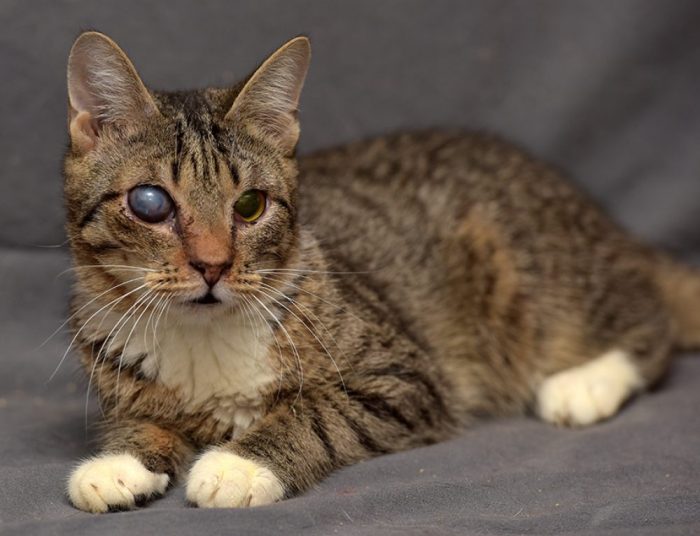
Source: veterinaryvisioncenter.com
Currently, there’s no definitive evidence that brown spotting directly causes health problems. However, some studies have suggested a possible link between orange coat color (which is a component of brown spotting) and an increased risk of certain cancers, although more research is needed.
Potential Link Between Coat Color/Pattern and Sensitivity
Cats with lighter coat colors, including those with lighter brown spots, may be more susceptible to sunburn and skin cancer due to reduced melanin production. It’s important to protect these cats from prolonged sun exposure. There’s also anecdotal evidence suggesting that cats with darker coats may be more sensitive to heat.
Influence on Camouflage and Predator Perception
A cat’s coat pattern plays a crucial role in its ability to camouflage in different environments. Brown spotted cats can blend well into wooded areas or environments with dappled sunlight. However, their visibility to predators can vary depending on the background.
Coat Color and Pattern Affecting Predator Perception
Predators rely on visual cues to identify and track prey. A cat’s coat pattern can either help it blend in or make it stand out. Brown spotted cats may be more easily detected in open areas with uniform colors, but their mottled appearance can provide effective camouflage in complex environments.
| Potential Health Consideration | Explanation |
|---|---|
| Sun Sensitivity | Lighter brown spots indicate lower melanin production, increasing the risk of sunburn and skin cancer. |
| Potential Cancer Risk (Orange Coats) | Some studies suggest a possible link between orange coat color and an increased risk of certain cancers, but more research is needed. |
Breed Specific Brown Spot Manifestations
Certain breeds are renowned for their stunning brown spotted coats. Let’s explore how this pattern manifests differently within these breeds.
Information on Breeds Known for Brown Spotting
British Shorthairs, Exotic Shorthairs, and American Shorthairs are particularly well-known for their beautiful brown spotted coats. Each breed exhibits unique characteristics and preferences for this pattern.
How Brown Spotting Manifests Differently Within Each Breed
In British Shorthairs, brown spotting often appears as large, well-defined patches on a predominantly white or cream background. Exotic Shorthairs, with their plush coats, display a softer, more blended appearance of brown spots. American Shorthairs exhibit a more variable pattern, ranging from faint speckling to large patches.
Comparing and Contrasting Brown Spot Patterns in Different Breeds
The key difference lies in the size and distribution of the spots, as well as the overall coat texture. British Shorthairs tend to have larger, more distinct patches, while Exotic Shorthairs have a more blended appearance. American Shorthairs offer the widest range of variations.
Ideal Brown Spot Appearance Within Breed Standards
Breed standards often specify the desired appearance of brown spotting. For example, British Shorthair standards typically call for large, well-defined patches, while Exotic Shorthair standards emphasize a balanced and harmonious distribution of color.
| Breed | Standard Brown Spot Description | Common Variations | Notable Examples |
|---|---|---|---|
| British Shorthair | Large, well-defined patches of brown on a white or cream background. | Smaller patches, more even distribution of color. | [Image of a British Shorthair with ideal brown spotting] |
| Exotic Shorthair | Balanced and harmonious distribution of brown spots, blending seamlessly with other colors. | More distinct patches, less blending. | [Image of an Exotic Shorthair with ideal brown spotting] |
| American Shorthair | Variable; can range from faint speckling to large patches. | Highly ticked patterns, predominantly white coats with minimal spotting. | [Image of an American Shorthair with ideal brown spotting] |
Visualizing Brown Spot Cat Eye Characteristics
The combination of a brown spot coat and striking eye color creates a truly mesmerizing effect.
Appearance of a Cat’s Eye with Brown Spot Coat
The eye color often contrasts beautifully with the surrounding brown spots, creating a striking visual impact. Green, gold, and blue eyes are all common in brown spotted cats.
Interaction of Eye Color with Brown Spots
Green eyes tend to stand out against darker brown spots, while gold eyes complement lighter brown spots. Blue eyes create a unique and captivating contrast with any color combination.
Potential for Contrasting Eye Colors
Heterochromia, the presence of different colored eyes, is not uncommon in brown spotted cats. This adds another layer of visual interest to their appearance.
Description of a Cat with Brown Spot Coat and Striking Green Eyes
Imagine a cat with a predominantly white coat adorned with large, chocolate brown patches. Its eyes are a vibrant, emerald green, creating a stunning contrast against the dark brown spots. The green eyes seem to glow, drawing the viewer’s attention and highlighting the cat’s unique beauty.
Visual Representation of Brown Spot Coat and Heterochromia
[Text-based description: Picture a cat with a patchwork coat of cream and dark brown spots. Its left eye is a brilliant green, while its right eye is a captivating blue. The combination of the mottled coat and contrasting eye colors creates a truly unforgettable image.]
Caring for Brown Spot Cats
Caring for a brown spotted cat is generally the same as caring for any cat, but there are a few specific considerations to keep in mind.
Specific Grooming Requirements
Grooming requirements depend on the cat’s coat length. Short-haired brown spotted cats require minimal grooming, while long-haired cats need regular brushing to prevent mats and tangles.
Maintaining Vibrancy and Health of Coat
Regular brushing helps remove loose hair and distribute natural oils, keeping the coat healthy and vibrant. A balanced diet rich in essential fatty acids also contributes to a shiny and healthy coat.
Importance of Sun Protection
Cats with lighter brown spots are more susceptible to sunburn. Limit their exposure to direct sunlight, especially during peak hours. Consider using cat-safe sunscreen on exposed areas.
Choosing Appropriate Toys and Accessories
Choose toys and accessories that complement the cat’s unique coat pattern. Colors that contrast with the brown spots, such as blue or green, can be particularly striking.
- Short Coat: Weekly brushing to remove loose hair.
- Medium Coat: Brushing 2-3 times per week to prevent mats.
- Long Coat: Daily brushing to prevent tangles and mats. Regular bathing as needed.
Historical and Cultural Significance
Brown spotted cats have held various meanings and perceptions throughout history and across different cultures.
Historical Perception of Brown Spotted Cats
In some cultures, brown spotted cats were associated with good luck and prosperity. In others, they were viewed with suspicion or considered to be symbols of witchcraft.
Folklore and Symbolism
Brown spotted cats have often been featured in folklore and mythology, representing a blend of different qualities and characteristics.
Changes in Popularity Over Time
The popularity of brown spotted cats has fluctuated over time, influenced by changing trends and breed preferences.
Examples in Art, Literature, and Media
Brown spotted cats have appeared in various works of art, literature, and popular media, often symbolizing beauty, mystery, or a unique personality.[Timeline illustrating the evolution of brown spotting appreciation in cat breeds, highlighting key moments and trends.]
Distinguishing Brown Spots from Other Coat Markings
It can sometimes be challenging to differentiate brown spots from other coat markings, such as tabby markings or roan markings.
Differences Between Brown Spots, Tabby Markings, and Other Patterns
Brown spots are distinct patches of color, while tabby markings are stripes or swirls. Roan markings involve a more even distribution of color.
Differentiating Brown Spots from Diluted or Faded Markings
Diluted brown spots appear lighter in color, while faded markings are often less distinct and may have a washed-out appearance.
Guide to Identifying Underlying Coat Color
The underlying coat color determines the color of the brown spots. A black base coat will result in dark brown spots, while a white base coat will create lighter brown spots.
Comparing Brown Spots with Roan Markings
Brown spots are typically more defined and distinct than roan markings, which have a more blended appearance.[Flowchart to help identify a cat’s coat pattern based on visual characteristics, guiding users through a series of questions and observations.]
Final Summary
From the genetic intricacies that create these patterns to the historical symbolism they’ve held, the brown spot cat eye is a truly remarkable subject. Whether you’re a seasoned cat enthusiast or simply curious about the diversity within the feline world, we hope this exploration has deepened your appreciation for these beautiful and unique animals. The next time you see a cat with a brown spotted coat, you’ll know there’s a whole lot more going on than meets the eye!
Ultimately, caring for a brown spot cat is similar to caring for any cat, but with a little extra attention to sun protection and grooming to keep that gorgeous coat looking its best. Enjoy the beauty and personality of these captivating companions!
FAQ Explained
Why do some cats have brown spots and others don’t?
Brown spotting is a genetic trait, primarily linked to the agouti gene. This gene controls the distribution of pigment in the hair shaft, allowing for the creation of these distinct markings. It’s a complex interaction of genes and coat colors.
Can brown spots change as a cat ages?
Yes, the distribution and intensity of brown spots can change as a cat matures. Spots may become more or less prominent, and the overall pattern can shift slightly.
Are brown spot cats prone to any specific health problems?
Currently, there’s no definitive evidence linking brown spotting directly to specific health problems. However, some coat colors have been associated with increased sensitivity to sunlight, so it’s always a good idea to protect your cat from excessive sun exposure.
What’s the difference between a brown spot and a tabby pattern?
Tabby patterns involve stripes, swirls, or spots that are consistent across the entire body. Brown spots are more random and often appear as distinct patches on a contrasting background color.
Do different eye colors look better with brown spots?
All eye colors complement brown spots beautifully! However, contrasting eye colors, like green or gold against a darker coat, can create a particularly striking visual effect.
How can I best groom a brown spot cat?
Grooming depends on coat length. Short-haired cats need occasional brushing, while medium and long-haired cats benefit from more frequent brushing to prevent mats and tangles. Regular bathing is generally not necessary unless the cat gets particularly dirty.

