Ever wondered why some feline companions come with a hefty price tag? The world of cat breeds is surprisingly diverse, and certain breeds command prices that can rival a down payment on a car! It’s not just about cuteness; a complex interplay of genetics, rarity, breeder expertise, and historical significance all contribute to a cat’s value. I recently read about a Persian cat selling for over $100,000 at auction – a truly staggering figure that highlights the extreme end of the spectrum.
This exploration delves into the factors that make some cat breeds so expensive, spotlighting the top contenders and examining the unique characteristics that make them so desirable. We’ll uncover the history, physical traits, and even the ethical considerations surrounding these luxurious felines, giving you a comprehensive look at the world of high-priced cats.
The World of High-Priced Felines
Ever wondered why some cats cost more than a used car? It’s a fascinating world where pedigree, rarity, and a whole lot of love (and breeding expertise) drive up the price tag. While most of us are happy with a perfectly lovely rescue cat, certain breeds command extraordinary sums, attracting collectors and enthusiasts willing to pay a premium. This isn’t just about aesthetics; it’s about genetics, lineage, and the dedication of breeders striving to preserve unique traits.
The value of a cat isn’t solely determined by its breed. A strong pedigree, tracing back to champion bloodlines, significantly increases worth. Rarity plays a huge role – the fewer cats of a particular breed, the higher the demand and price. Breeder reputation is also crucial; established breeders with a history of producing healthy, well-tempered cats can command higher prices.
And let’s not forget the “wow” factor – unique markings, exceptional conformation, and a captivating personality all contribute to a cat’s desirability. I once heard of a Persian cat with an incredibly rare silver chinchilla pattern selling for over $50,000 at auction! It just goes to show the passion and investment that goes into these extraordinary felines.
Top 5 Most Expensive Cat Breeds – A Detailed Look
Several cat breeds consistently top the lists of most expensive felines globally. These aren’t just pretty faces; they represent years of selective breeding and often possess unique characteristics that make them highly sought after. Let’s take a closer look at the top contenders.
- Ashera: The Ashera is often cited as the most expensive cat breed, though its existence as a distinct breed has been debated. It’s marketed as a hybrid of the African Serval, Asian Leopard Cat, and a domestic cat. The breed was created by Lifestyle Pets, and initial prices were reported to be around $15,000 – $125,000.
- Savannah: We’ll delve deeper into Savannahs later, but their hybrid status and the varying degrees of Serval influence contribute to their high price.
- Bengal: Another breed we’ll explore in detail, Bengals are prized for their striking resemblance to wild cats.
- Persian: The classic Persian, with its luxurious coat and regal demeanor, remains a highly desirable breed.
- Russian Blue: Known for their elegant silver-blue coat and captivating emerald eyes, Russian Blues are increasingly sought after.
| Breed Name | Average Price Range | Origin | Distinctive Feature |
|---|---|---|---|
| Ashera | $15,000 – $125,000+ | United States (controversial) | Reported hybrid of Serval, Asian Leopard Cat, and domestic cat; large size and spotted coat. |
| Savannah | $1,000 – $20,000+ | United States | Hybrid of Serval and domestic cat; tall, spotted, and energetic. |
| Bengal | $1,500 – $10,000+ | United States | Hybrid of Asian Leopard Cat and domestic cat; spotted or marbled coat resembling a leopard. |
| Persian | $1,800 – $8,000+ | Iran (Persia) | Long, luxurious coat; round face and expressive eyes. |
| Russian Blue | $500 – $3,000+ | Russia | Distinctive silver-blue coat and emerald green eyes. |
Bengal Cats: The Leopard-Like Luxury
The Bengal cat is a truly striking breed, instantly recognizable for its wild appearance. Their unique look stems from their heritage – a hybrid of the Asian Leopard Cat and a domestic cat. This combination results in a feline that embodies both the grace of a house cat and the captivating beauty of a wild predator.
The breeding process for Bengals is complex and carefully regulated. Early generations (F1, F2) have a higher percentage of Asian Leopard Cat genetics, which can influence their temperament and require specialized care. Breeders must adhere to strict guidelines to ensure the health and well-being of both the parent cats and the kittens. Creating a “true” Bengal – one that consistently displays the desired traits and temperament – is a challenging but rewarding endeavor.
Bengal patterns vary significantly. Spotted Bengals have distinct, randomly placed spots, reminiscent of a leopard’s coat. Marbled Bengals exhibit swirling patterns, while rosette Bengals have spots that are ring-shaped, resembling roses. Each pattern adds to the breed’s allure and contributes to its overall value.
“Owning a Bengal is like having a miniature leopard in your home! They’re incredibly playful, intelligent, and affectionate. It’s a lot of responsibility, but the rewards are immeasurable. Their energy is infectious, and their beauty is simply breathtaking.”
Sarah M., Bengal Cat Owner
Persian Cats: A Legacy of Opulence
The Persian cat boasts a long and storied history, dating back centuries. Their origins are believed to be in Persia (modern-day Iran), and they quickly gained popularity among royalty and nobility throughout Europe. Their association with luxury and elegance has endured for generations, solidifying their place as one of the most iconic cat breeds.
Maintaining a Persian’s luxurious coat is a significant commitment. Daily grooming is essential to prevent mats and tangles. Regular bathing, brushing, and even professional grooming appointments are often necessary. This dedication to grooming is a key factor in the breed’s overall cost and upkeep.
Within the Persian breed, several variations exist. Chinchilla Persians have a shimmering, silvery coat. Himalayan Persians combine the Persian’s long coat with the Siamese’s striking blue eyes and color points. Exotica Persians are essentially shorthaired Persians, offering the same luxurious facial features with less grooming demand.
- Polycystic Kidney Disease (PKD)
- Progressive Retinal Atrophy (PRA)
- Hypertrophic Cardiomyopathy (HCM)
- Brachycephalic Airway Syndrome (due to their flattened faces)
- Excessive tearing (epiphora)
Savannah Cats: The Exotic Hybrid
The Savannah cat is a captivating hybrid breed, resulting from the cross between a Serval – a medium-sized African wild cat – and a domestic cat. This unique lineage gives Savannahs a distinctive appearance and a lively, energetic personality.
Due to their wild ancestry, Savannah cat breeding is subject to legal restrictions in many areas. Regulations vary by state and country, often limiting the number of generations removed from the Serval. Ethical considerations also surround the breeding of hybrid cats, with concerns about their welfare and potential impact on wild populations. Responsible breeders prioritize the health and temperament of their cats, ensuring they are well-socialized and adapted to domestic life.
Savannah cats are categorized by “generations,” denoted by “F” followed by a number. F1 Savannahs have a Serval parent, making them the closest to the wild cat. F2 have an F1 parent, and so on. Each generation exhibits varying degrees of Serval influence, impacting their appearance, size, and temperament. F1s are typically the largest and most expensive, while later generations tend to be smaller and more domesticated.
Imagine a bar graph illustrating the price differences between Savannah generations. The F1 generation would have the highest bar, reaching approximately $20,000. The F2 generation would have a slightly lower bar, around $8,000. The F3 generation would be even lower, around $4,000. Finally, the F4 generation would have the lowest bar, around $1,500.
This demonstrates the significant price decrease as the Serval influence diminishes with each generation.
Russian Blues: Elegance and Rarity
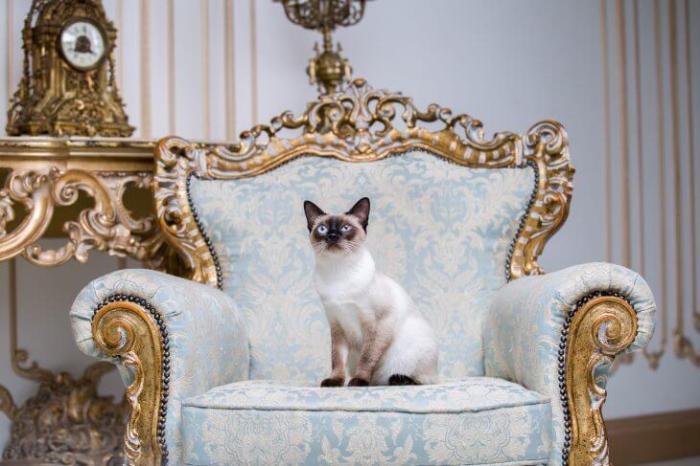
Source: animalgator.com
The Russian Blue cat breed is shrouded in folklore and mystery. Legends claim they originated in the Arkhangelsk region of Russia, where they were prized as mouser and companions. Some stories even suggest they were smuggled out of Russia by sailors, hence their eventual spread throughout the world.
The breed’s most defining characteristic is its stunning silver-blue coat, which shimmers in the light. This unique coloration is due to a specific gene that reflects light in a way that creates a silvery sheen. Paired with their captivating emerald green eyes, Russian Blues are undeniably elegant and striking.
Russian Blues are known for their gentle and reserved personalities. They are often described as quiet and dignified, but also affectionate and loyal to their families. They are intelligent and playful, making them excellent companions for those seeking a calm and devoted feline friend.
| Physical Trait | Description | Significance to Breed Standard |
|---|---|---|
| Coat Color | Dense, plush, silver-blue with a shimmering effect | Essential for breed identification; must be a consistent silver-blue hue. |
| Eye Color | Emerald green | A defining characteristic; must be a vibrant, clear green. |
| Body Structure | Slender and graceful with a long, lithe body | Contributes to the breed’s elegant appearance. |
British Shorthair: A Classic with a Price Tag
The British Shorthair’s history is deeply intertwined with British history. Originating in the 19th century, they are descendants of cats brought to Britain by the Romans and later by sailors. They played a vital role in controlling rodent populations and quickly became beloved companions.
The British Shorthair is instantly recognizable for its round face, dense, plush coat, and calm, easygoing temperament. Their sturdy build and expressive eyes contribute to their endearing appearance. They are known for their laid-back nature and ability to adapt to various living situations.
While both breeds share a similar appearance, the British Shorthair differs from the Scottish Fold in its ear shape. British Shorthairs have erect ears, while Scottish Folds have folded ears due to a genetic mutation. This difference is a key distinguishing factor between the two breeds.
- Acorn British Shorthairs
- Windwhistle British Shorthairs
- Bluebell British Shorthairs
- Silverleigh British Shorthairs
- Merrymate British Shorthairs
Munchkin Cats: The Short-Legged Phenomenon
Munchkin cats are instantly recognizable for their extraordinarily short legs. This unique trait is the result of a spontaneous genetic mutation that affects bone development. The gene responsible is dominant, meaning that if a cat inherits it from just one parent, they will have short legs.
The breeding of Munchkin cats has been a source of ethical debate. Critics argue that the genetic mutation can lead to health problems and that breeding for this trait is irresponsible. Proponents argue that Munchkin cats can live long, healthy lives and that responsible breeders prioritize their well-being.
Potential health concerns associated with Munchkin cats include lordosis (excessive curvature of the spine), pectus excavatum (a sunken chest), and osteoarthritis. Responsible breeders screen their cats for these conditions to minimize the risk of passing them on to their kittens.
Imagine a side-by-side visual representation comparing the skeletal structure of a Munchkin cat and a standard cat. The standard cat would have long, proportionally sized legs and a straight spine. The Munchkin cat would have significantly shorter legs and a slightly altered spinal curvature. This visual clearly illustrates the skeletal differences caused by the genetic mutation.
Peterbald Cats: The Hairless Wonder
The Peterbald cat is a relatively new breed, originating in Russia in the 1990s. Their unique hairlessness is the result of a spontaneous genetic mutation. They are a cross between a Donskoy hairless cat and a British Shorthair.
Within the Peterbald breed, a variety of coat variations exist. “Fluffies” have a soft, downy coat. “Velour” Peterbalds have a velvety-smooth feel. “Brush” Peterbalds have a short, wiry coat. These variations add to the breed’s diversity and appeal.
Caring for a hairless cat requires special attention to their skin. Regular bathing is necessary to remove oils and prevent dryness. Sunscreen is also important to protect their skin from sunburn. Maintaining a comfortable temperature is crucial, as they are more susceptible to cold.
- Pros: Hypoallergenic (often tolerated by people with allergies), unique appearance, affectionate and playful, relatively low grooming needs (except for bathing).
- Cons: Sensitive skin requires special care, susceptible to cold, potential for sunburn, can be more expensive than other breeds.
Factors Influencing Price Beyond Breed
While breed is a primary factor in a cat’s price, several other elements contribute to its overall value. Breeder reputation and pedigree play a significant role. Cats from established breeders with a history of producing healthy, well-tempered animals command higher prices. A strong pedigree, tracing back to champion bloodlines, further increases worth.
Location and demand also influence price. Certain breeds are more popular in specific regions, driving up demand and prices. The difference between a “show quality” cat and a “pet quality” cat is also crucial. Show quality cats meet specific breed standards and are suitable for competition, while pet quality cats are intended as companions. Show quality cats are significantly more expensive.
Imagine a flowchart illustrating these factors. It would start with “Breed” as the primary input. From there, branches would extend to “Breeder Reputation,” “Pedigree,” “Location & Demand,” and “Show Quality vs. Pet Quality.” Each of these branches would then lead to further considerations, ultimately influencing the final price of the cat.
Outcome Summary
From the regal Persian to the exotic Savannah, the journey through the world of expensive cat breeds reveals a fascinating blend of history, genetics, and human desire. Understanding the factors that influence price – breeder reputation, rarity, and even coat patterns – provides a deeper appreciation for these unique animals. Whether you’re a seasoned cat enthusiast or simply curious about the high-end feline market, hopefully, this overview has shed some light on why some cats are worth a small fortune.
Ultimately, the true value of a cat lies in the companionship and joy they bring, regardless of their price tag. But it’s undeniably intriguing to explore the world where pedigree and rarity can elevate a furry friend to a status symbol.
FAQ Explained
Why are some cat breeds more expensive than others?
Several factors contribute, including rarity, pedigree (the cat’s family history), breeder reputation, the cost of breeding programs, and the cat’s overall health and conformation to breed standards.
What does “F1” mean in relation to Savannah cats?
F1 Savannah cats are the first generation offspring of a Serval (a wild African cat) and a domestic cat. Higher “F” numbers (F2, F3, etc.) indicate more domestic cat ancestry, generally resulting in lower prices and more predictable temperaments.
Are Munchkin cats healthy?
The genetic mutation causing their short legs can be associated with certain health problems, including lordosis (a curvature of the spine) and potential joint issues. Ethical breeders prioritize health testing.
What are the grooming needs of a Persian cat?
Persians require daily grooming to prevent mats and tangles in their long, luxurious coats. Regular bathing and professional grooming are often necessary.
What is a “show quality” cat?
A show quality cat closely conforms to the breed standard and is eligible to compete in cat shows. These cats typically command higher prices.
Why are Bengal cats so unique in appearance?
Bengals are bred to resemble miniature leopards, thanks to their connection to the Asian Leopard Cat. Their distinctive spotted or marbled patterns are highly sought after.

