
Ever worry about your cat slipping out the door or not returning from their outdoor adventures? It’s a common concern for cat owners, and thankfully, technology has stepped in to offer a solution. Cat collars with GPS are becoming increasingly popular, providing a way to monitor your cat’s location and ensure their safety. From humble beginnings with basic pet tags, we’ve arrived at sophisticated GPS tracking devices that fit comfortably on your cat’s collar, giving you peace of mind.
This guide dives deep into the world of GPS cat collars, exploring the different technologies available, their benefits, and what to consider before making a purchase. We’ll cover everything from battery life and geofencing to data privacy and the best collar models on the market, helping you make an informed decision to keep your furry companion safe and sound.
Introduction to GPS Cat Collars
The rise in pet ownership, particularly cats, has brought with it a growing concern for their safety and well-being. Cats, with their independent nature and adventurous spirits, are notorious escape artists. Many owners worry about their feline friends wandering too far, getting lost, or encountering danger. This anxiety has fueled a surge in popularity for pet tracking technology, and GPS cat collars are leading the charge.At their core, GPS cat collars function as miniature tracking devices, allowing owners to monitor their cat’s location in real-time.
They utilize the Global Positioning System (GPS) to pinpoint a cat’s position and transmit that information to a smartphone or other device via a connected network. The history of pet tracking is a fascinating evolution. Early methods relied on simple ID tags and microchips, which were helpful for identificationafter* a cat was found, but offered no real-time location data. Radio frequency (RF) trackers emerged, providing a limited range, but were often bulky and unreliable.
The advent of GPS technology, coupled with miniaturization and improved battery life, has finally made practical and affordable GPS cat collars a reality, directly addressing the common concerns of cat owners – their cat’s tendency to roam, their fear of losing them, and the desire to ensure their safety.
Types of GPS Cat Collars: Technology & Features
Several GPS technologies power cat collars, each with its own strengths and weaknesses. Cellular collars are the most common, utilizing mobile networks to transmit location data. Satellite collars, while offering wider coverage, are generally more expensive and consume more power. Bluetooth trackers, on the other hand, rely on proximity to a paired device and have a very limited range.Cellular collars offer a good balance of range and affordability, but require a monthly subscription fee for data usage.
Satellite collars are ideal for cats that roam in remote areas with limited cellular coverage, but the cost is significantly higher. Bluetooth trackers are best suited for indoor use or for tracking cats within a small, defined area.Beyond location tracking, many GPS cat collars boast a range of additional features. Activity monitoring tracks a cat’s movement, sleep patterns, and overall activity levels, providing insights into their health and behavior.
Geofencing allows owners to define virtual boundaries and receive alerts when their cat enters or exits these zones. Some collars even include temperature sensors, which can be useful for monitoring a cat’s well-being in extreme weather conditions.Here’s a comparison of five popular GPS cat collar models:
| Model | Features | Battery Life |
|---|---|---|
| Tractive GPS Cat Collar | Real-time GPS tracking, activity monitoring, geofencing, waterproof | Up to 4 days |
| Whistle GO Explore | GPS, cellular, activity tracking, geofencing, temperature sensor | Up to 7 days |
| Fi Smart Collar | GPS, activity monitoring, sleep tracking, temperature sensor, LED light | Up to 6 days |
| Link AKC Smart Collar | GPS, activity monitoring, geofencing, lost pet recovery network | Up to 3 days |
| PetPace Smart Collar | GPS, activity monitoring, vital signs monitoring, geofencing | Up to 30 days |
Benefits of Using a GPS Cat Collar
The primary benefit of a GPS cat collar is the peace of mind it provides. Knowing your cat’s location, even when they’re exploring outside, can alleviate anxiety and reduce the worry of them getting lost.These collars significantly expedite the process of locating a lost cat. Instead of relying on posters, social media, and frantic searching, owners can use the collar’s app to pinpoint their cat’s exact location on a map.
This can be crucial in reuniting a cat with their family quickly, especially in dangerous situations.Activity monitoring offers valuable insights into a cat’s health and behavior. Changes in activity levels, sleep patterns, or eating habits can be early indicators of underlying health issues, allowing owners to seek veterinary care promptly.Numerous stories exist of GPS collars facilitating the safe return of lost cats.
For example, a cat named Mittens, who frequently escaped from her home, was located miles away using her GPS collar after disappearing during a thunderstorm. The owner was able to retrieve her quickly and safely, preventing her from being exposed to further danger.
Considerations Before Purchasing a GPS Cat Collar
Choosing the right GPS cat collar requires careful consideration. Collar weight is paramount; a heavy collar can be uncomfortable and even harmful to a cat, potentially causing skin irritation or restricting their movement. A general guideline is that a collar should weigh no more than 5% of the cat’s body weight.Reliable cellular or satellite network coverage is essential for accurate location tracking.
If your cat roams in an area with poor coverage, a satellite collar might be a better option, despite the higher cost.Subscription fees and data usage costs are ongoing expenses to factor into the overall cost of ownership. Different collars have varying subscription plans, so it’s important to compare prices and data allowances.Here’s a checklist of factors to consider before buying:
- Cat’s weight and size: Ensure the collar is appropriately sized and lightweight.
- Roaming area: Assess cellular or satellite coverage in the cat’s typical roaming range.
- Budget: Consider the initial cost of the collar and ongoing subscription fees.
- Features: Determine which features are most important (e.g., activity monitoring, geofencing).
- Battery life: Evaluate the collar’s battery life and charging requirements.
- Durability: Choose a collar that is waterproof and resistant to damage.
Battery Life and Charging
The battery life of GPS cat collars varies significantly depending on the model and usage patterns. Generally, battery life ranges from 2 to 30 days.Charging methods typically include USB charging, with some models offering wireless charging capabilities.Features like constant GPS tracking, activity monitoring, and frequent geofence alerts significantly impact battery consumption. Constant tracking drains the battery much faster than intermittent tracking or geofencing only.
| Usage Scenario | Estimated Battery Life |
|---|---|
| Constant GPS Tracking | 1-3 days |
| Intermittent Tracking (e.g., 10 minutes per hour) | 5-7 days |
| Geofencing Only (alerts when entering/exiting zones) | 10-30 days |
Geofencing and Safe Zones
Geofencing is a powerful feature that allows owners to create virtual boundaries for their cats. It works by using the collar’s GPS to monitor the cat’s location and sending alerts when they enter or exit a predefined area.Setting up geofences is typically done through the collar’s associated app. Owners can draw custom shapes on a map to define the boundaries of their home, garden, or neighborhood.Receiving alerts when a cat enters or exits a geofence provides valuable peace of mind and allows owners to intervene if necessary.
For example, an alert could be triggered if a cat wanders too close to a busy road or leaves the property entirely.Geofencing can be used to monitor a cat’s outdoor activities and prevent them from straying too far. By setting up a geofence around the neighborhood, owners can ensure their cat stays within a safe and familiar area.
Collar Design and Durability
A waterproof and durable collar is essential for outdoor cats. Exposure to rain, mud, and other elements can damage a less robust collar.Collar materials vary, with nylon and silicone being common choices. Nylon is durable and relatively inexpensive, while silicone is more flexible and comfortable for some cats.Features that enhance comfort and prevent irritation include adjustable straps, soft padding, and breakaway buckles, which release the collar if it gets caught on something.The design of the collar should ensure it stays securely on the cat.
Adjustable straps and a snug fit are crucial, but it’s important to avoid making the collar too tight, which could restrict breathing or cause discomfort.
Data Privacy and Security
Location tracking raises legitimate privacy concerns. It’s important to understand how the collar manufacturer collects, stores, and uses your cat’s location data.Reputable collar manufacturers employ various security measures to protect user data, including encryption, secure servers, and strict access controls.Data is typically stored on the collar manufacturer’s servers and accessed through the associated app or platform.When selecting a collar, look for a data privacy policy that clearly Artikels how your data will be used and protected.
Ensure the policy complies with relevant data privacy regulations.
Installation and Setup
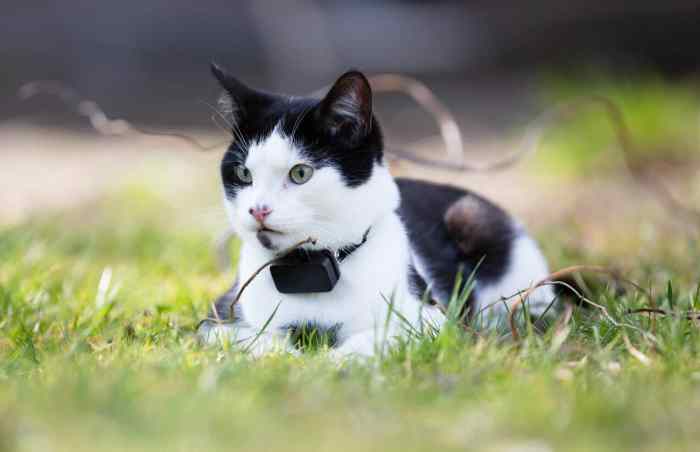
Source: rover.com
Setting up a GPS cat collar is generally a straightforward process.First, charge the collar fully. Then, download the collar’s associated app on your smartphone.Next, pair the collar with your smartphone via Bluetooth or Wi-Fi. Follow the app’s instructions to create an account and activate the collar.If a subscription plan is required, you’ll need to activate it through the app or on the manufacturer’s website.
Step 1: Attach the collar to your cat’s existing harness or collar, ensuring a snug but comfortable fit.
Illustration showing the collar being attached to the cat’s harness, ensuring a snug but comfortable fit. The illustration highlights the placement of the collar on the harness, demonstrating how to adjust the straps for a secure and comfortable fit.
Step 2: Power on the collar and follow the app’s instructions to connect it to your smartphone.Step 3: Configure your geofences and other settings within the app.
Step 4: Monitor your cat’s location and activity through the app.
Alternatives to GPS Cat Collars
Traditional methods of pet identification, such as microchipping and ID tags, remain valuable tools. Microchips provide permanent identification, while ID tags offer immediate contact information.Bluetooth trackers offer a limited range tracking solution, suitable for indoor use or tracking cats within a small area. Radio frequency (RF) trackers provide a slightly longer range than Bluetooth trackers but are still limited compared to GPS.Alternative methods lack the real-time location tracking capabilities of GPS collars.
Microchips require a cat to be found and scanned by a veterinarian or animal shelter, while ID tags rely on the kindness of strangers. Bluetooth and RF trackers have a very limited range, making them unsuitable for tracking cats that roam far from home.
| Method | Pros | Cons | Cost |
|---|---|---|---|
| GPS Collars | Real-time tracking, activity monitoring, geofencing | Subscription fees, battery life | $50 – $300 + monthly subscription |
| Microchipping | Permanent identification, reliable | Doesn’t provide real-time location | $25 – $75 |
| ID Tags | Immediate contact information, inexpensive | Can be lost or removed, relies on strangers | $5 – $20 |
