Finding the Best Cat Cone Collar Alternative for Your Furry Friend

Let’s face it, the dreaded cone of shame (or Elizabethan collar) isn’t exactly a cat’s favorite accessory. While essential for protecting wounds and preventing obsessive licking, those plastic cones can be incredibly frustrating for our feline companions, leading to stress, anxiety, and a whole lot of awkward bumping into furniture. Thankfully, there’s a growing world of cat cone collar alternatives designed to offer protection and comfort.
This guide explores those options, from soft collars and recovery suits to DIY solutions and veterinary-approved products, helping you find the perfect fit for your cat’s needs and personality.
We’ll dive deep into the pros and cons of each alternative, considering factors like durability, comfort, ease of use, and effectiveness in preventing licking and scratching. Understanding the limitations of each option is just as important as knowing their benefits, so we’ll cover when a traditional cone is still the best choice and how to ensure your cat’s safety and well-being during recovery.
Navigating the Cone Collar Conundrum: Alternatives for Your Feline Friend
Let’s be honest, seeing your cat sporting a dreaded cone collar (Elizabethan collar, or E-collar) isn’t a pretty sight. While these plastic halos are often necessary for healing, they can be incredibly distressing for our furry companions. This guide dives deep into the world of cat cone collar alternatives, exploring various options, their pros and cons, and how to choose the best solution for your cat’s specific needs.
We’ll cover everything from soft collars and recovery suits to DIY solutions and behavioral strategies, all with the goal of keeping your cat comfortable and safe during recovery.
Understanding the Cat Cone Collar & Its Limitations
The traditional cone collar serves a vital purpose: preventing cats from licking, biting, or scratching at wounds, surgical sites, or irritated skin. This is crucial for proper healing and preventing infection. However, the experience isn’t always positive. Cats often find these collars bulky, restrictive, and incredibly frustrating. They can bump into things, have difficulty eating and drinking, and feel generally disoriented.
The constant reminder of their restricted movement and inability to groom themselves can lead to significant psychological distress, manifesting as stress, anxiety, and even depression. While absolutely necessary after surgery, for open wounds, or when a vet specifically prescribes it, exploring alternatives is worthwhile for minimizing discomfort and promoting a quicker, happier recovery.
Soft Collar Options: Materials & Effectiveness
Thankfully, there’s a growing range of soft collar alternatives designed to offer protection with greater comfort. These collars come in various materials, each with its own advantages and disadvantages. Fabric collars are generally the most affordable and come in a wide array of designs. Foam collars offer a bit more cushioning, while fleece collars are exceptionally soft and cozy. Neoprene collars, often used in pet life jackets, are durable and water-resistant.
The design significantly impacts a cat’s ability to perform essential tasks. A collar that’s too long can obstruct their vision, while one that’s too tight can restrict breathing. While soft collars are often sufficient for minor irritations or small wounds, they aren’t always effective for larger or more persistent licking habits. A determined cat can often maneuver around a soft collar, defeating its purpose.
| Material | Durability Rating (1-5) | Comfort Rating (1-5) | Estimated Cost |
|---|---|---|---|
| Fabric | 2 | 4 | $10 – $25 |
| Foam | 3 | 4 | $15 – $35 |
| Fleece | 2 | 5 | $15 – $30 |
| Neoprene | 4 | 3 | $20 – $45 |
Fabricated Neck Covers & Recovery Suits
For cats requiring more comprehensive protection, custom-made neck covers and recovery suits offer a fantastic solution. These options provide a snug, comfortable fit that prevents licking and scratching without the bulk of a traditional cone. Recovery suits, in particular, offer full-body protection, safeguarding not only the neck and chest but also the legs and abdomen. Accurate measurement is key to a good fit.
Use a soft measuring tape to measure your cat’s neck circumference, chest girth, and back length. Add an extra inch or two to each measurement for a comfortable fit. Creating a simple fabric neck cover is surprisingly straightforward. Here’s a basic guide:
- Cut Fabric: Cut a rectangular piece of soft, breathable fabric (like fleece or cotton) approximately 12 inches wide and 24 inches long.
- Fold in Half: Fold the fabric in half lengthwise, with the right sides facing each other.
- Sew Seams: Sew along the long edge, leaving a small opening for turning.
- Turn Right Side Out: Turn the fabric right side out and sew the opening closed.
- Create a Hole: Cut a circular hole in the center of the fabric, large enough for your cat’s head to fit comfortably.
Inflatable Collars: Pros & Cons
Source: etsystatic.com
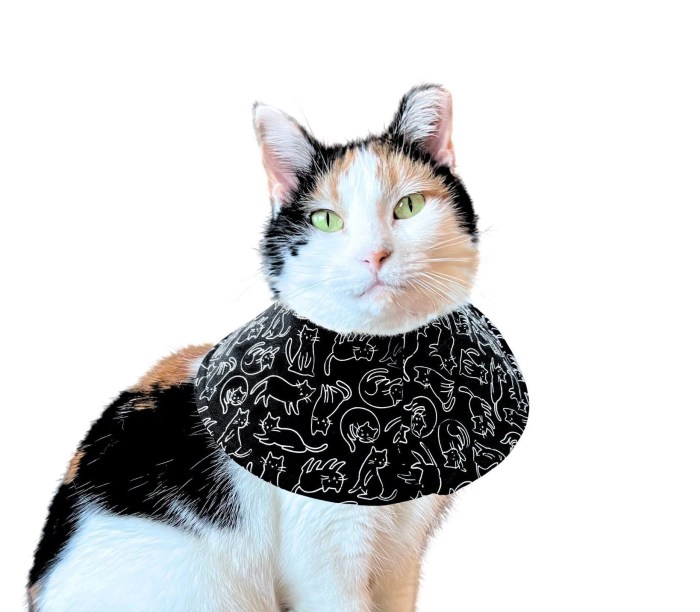
Inflatable collars, often resembling a donut, offer a unique approach to preventing licking. They work by creating a barrier around the cat’s head, preventing them from reaching their wounds. The intended benefit is a more comfortable and less restrictive alternative to the traditional cone. However, inflatable collars have potential drawbacks. They can be prone to deflation, especially if punctured.
The instability of the collar can also be an issue, making it difficult for cats to navigate their surroundings. In terms of protection level, inflatable collars generally offer less protection than soft fabric collars, particularly against determined licking. Different shapes and sizes cater to various cat types. Smaller, rounder collars are suitable for kittens and smaller breeds, while larger, more elongated collars are better for larger cats or those with longer necks.
DIY Solutions & Homemade Alternatives
While tempting, DIY cat collar alternatives require careful consideration. The feasibility and safety of homemade solutions are paramount. Risks associated with DIY options include choking hazards (from loose fabric or small parts) and inadequate protection, allowing the cat to still reach the wound. If opting for a DIY solution, prioritize safety. A simple t-shirt or towel can be fashioned into a makeshift collar, but ensure it’s snug enough to prevent licking but loose enough to allow comfortable breathing and movement.
Always supervise your cat when wearing a DIY collar.
| Alternative | Protection Level | Materials |
|---|---|---|
| T-Shirt Collar | Low | Old T-Shirt |
| Towel Wrap | Medium | Soft Towel |
| Fabric Neck Cover (Sewn) | Medium | Fleece or Cotton Fabric, Thread |
Body Suits & Onesies for Recovery
Cat body suits, or onesies, provide a comprehensive solution for wound protection, particularly for cats with multiple wounds or those prone to excessive licking. These suits cover the entire body, preventing licking and scratching on the torso, legs, and abdomen. Fitting a cat with a body suit can be challenging. Ensure the suit allows for adequate mobility and doesn’t restrict breathing.
Look for features like Velcro closures for easy on and off, breathable fabric to prevent overheating, and a snug but comfortable fit. Well-designed suits often incorporate stretchy panels for greater flexibility and comfort.
Behavioral Modification & Distraction Techniques
Beyond physical barriers, behavioral modification plays a crucial role in a cat’s recovery. Distracting your cat from licking or scratching wounds is key. Interactive toys, puzzle feeders, and engaging playtime sessions can redirect their attention. Environmental enrichment is equally important. Providing scratching posts, climbing structures, and window perches can reduce boredom and anxiety, minimizing the urge to lick or scratch.
Creating a calming environment with pheromone diffusers and quiet, comfortable spaces can further promote relaxation and healing.
Veterinary-Approved Alternatives & Products
Several products are specifically recommended by veterinarians for post-operative care. These include medical adhesive bandages, wound sprays, and specialized recovery suits designed for optimal protection and comfort. Consulting a veterinarian before choosing an alternative to a cone is essential. They can assess your cat’s specific needs and recommend the most appropriate solution. Specialized recovery products often offer superior protection and durability compared to DIY or generic alternatives.
“Choosing the right recovery solution for your cat is a collaborative effort between you and your veterinarian. Consider the severity of the wound, your cat’s personality, and their ability to adapt to different types of collars or suits. Prioritize safety and comfort to ensure a smooth and successful recovery.”Dr. Emily Carter, DVM
Considerations for Different Cat Breeds & Sizes
Breed characteristics significantly influence collar choice. Cats with long fur, like Persians or Maine Coons, may require longer collars or recovery suits to prevent fur from getting caught in the barrier. Body shape also matters; stockier breeds may need wider collars for a comfortable fit. Kitten collars should be smaller and lighter than those for adult cats. For cats with physical limitations, such as arthritis or obesity, prioritize collars that are easy to put on and take off and don’t exacerbate their discomfort.
Here’s a guide for selecting the right soft collar size:
- Measure your cat’s neck circumference with a soft measuring tape.
- Add 1-2 inches to the measurement.
- Choose a collar with an adjustable strap that allows for a snug but comfortable fit.
- Ensure the collar doesn’t obstruct your cat’s vision or breathing.
Cleaning & Maintenance of Alternatives
Proper cleaning and maintenance are crucial for preventing infection. Different types of cat collar alternatives require different cleaning methods. Fabric collars can typically be machine washed, while inflatable collars should be wiped down with a damp cloth. Recovery suits often require hand washing. Hygiene is paramount; regularly inspect the collar or suit for signs of wear and tear or contamination.
| Alternative | Washing Instructions | Drying Instructions |
|---|---|---|
| Fabric Collar | Machine wash cold, gentle cycle | Tumble dry low or air dry |
| Inflatable Collar | Wipe down with damp cloth and mild soap | Air dry |
| Recovery Suit | Hand wash cold with mild detergent | Air dry |
Ultimate Conclusion
Navigating the world of cat cone collar alternatives can feel overwhelming, but with a little research and consideration, you can find a solution that keeps your cat safe and comfortable. Whether you opt for a soft collar, a recovery suit, or explore DIY options, remember to prioritize your cat’s well-being and consult with your veterinarian for personalized recommendations. Ultimately, the goal is to provide a stress-free recovery experience, allowing your furry friend to heal quickly and return to their playful, happy selves.
From inflatable designs to cleverly crafted body suits, there’s a solution out there for every cat. By understanding the nuances of each option and considering your cat’s individual needs, you can make an informed decision and provide them with the best possible care during their recovery journey.
User Queries
Can a soft collar really protect a wound as well as a cone?
Not always. Soft collars are great for minor irritations or preventing casual licking, but they’re often not sufficient for larger wounds or areas a cat can easily reach with a stretch. A cone is still necessary in those cases.
Are recovery suits safe for cats who tend to overheat?
It depends on the material. Look for breathable fabrics like cotton or mesh. Monitor your cat closely for signs of overheating and ensure they have access to a cool, shaded area.
What’s the best way to introduce a soft collar to my cat?
Start slowly! Let them sniff and investigate the collar. Put it on for short periods, gradually increasing the time as they become more comfortable. Positive reinforcement (treats and praise) is key.
Are DIY cat collar alternatives really safe?
DIY options can be risky if not done carefully. Always prioritize safety by avoiding small parts that could be choking hazards and ensuring the material is durable and won’t irritate the skin. Supervision is essential.
How do I know what size soft collar to buy?
Measure your cat’s neck circumference with a soft measuring tape. Add 1-2 inches to that measurement to ensure a comfortable fit. The collar should allow for a few fingers to slip between the collar and your cat’s neck.
Can I use a t-shirt as a cone alternative?
A t-shirt can work for very minor irritations, but it’s not a substitute for proper protection. Ensure the shirt is long enough to cover the wound and that your cat can’t easily pull it off or reach the area.
How often should I clean a fabric recovery suit?
Wash the suit every 1-2 days, or more frequently if it becomes soiled. This helps prevent infection and keeps your cat comfortable.
