Feline Down Syndrome (FDS) is a rare genetic condition in cats, mirroring aspects of Down syndrome in humans. While it’s not as widely known as other feline diseases, understanding FDS is crucial for responsible cat ownership and breeding. This guide delves into the genetic basis, physical and behavioral traits, health concerns, and care strategies for cats living with this condition, offering a compassionate look at their unique needs and challenges.
The genetic roots of FDS lie in chromosomal abnormalities, primarily involving an extra copy or alteration of chromosome 16. This difference, while similar in concept to human Down syndrome’s trisomy 21, manifests differently in cats, leading to a spectrum of physical and behavioral characteristics. We’ll explore these differences and similarities, providing a clear picture of what FDS entails for our feline companions.
Understanding Feline Down Syndrome (FDS)
Feline Down Syndrome (FDS) is a fascinating, albeit rare, genetic condition affecting cats. While often compared to Down syndrome in humans, it’s crucial to understand that FDS is a distinct condition with its own unique genetic basis and presentation in felines. This article aims to delve into the intricacies of FDS, exploring its genetic underpinnings, physical and behavioral characteristics, health concerns, and responsible care practices.
We’ll navigate the complexities of this condition, providing a comprehensive overview for cat lovers and those seeking to understand this unique genetic anomaly.
Genetic Basis
The genetic basis of Feline Down Syndrome isn’t as straightforward as its human counterpart. Unlike human Down syndrome, which is primarily caused by trisomy 21 (an extra copy of chromosome 21), FDS in cats is linked to various chromosomal abnormalities and mutations. These variations can involve partial or complete extra copies of chromosomes, translocations (where parts of chromosomes swap places), or deletions (where sections of chromosomes are missing).
The specific chromosome involved can vary between cases, making a definitive genetic marker challenging to identify. Research suggests that chromosomes 18 and 22 are frequently implicated, but other chromosomes may also play a role.The manifestation of these genetic differences differs significantly between cats and humans with Down syndrome. In humans, the presence of an extra chromosome 21 leads to a predictable set of physical and cognitive characteristics.
However, in cats, the genetic variations associated with FDS are more diverse, resulting in a wider spectrum of presentations. This complexity makes it difficult to predict the exact phenotype (observable characteristics) of a cat with FDS based solely on its genetic makeup.
| Human Down Syndrome | Feline Down Syndrome |
|---|---|
| Trisomy 21 (extra copy of chromosome 21) | Variable chromosomal abnormalities (partial or complete extra copies, translocations, deletions on chromosomes 18, 22, and potentially others) |
| Consistent genetic marker: Trisomy 21 | No single, consistent genetic marker; variations are case-specific |
Physical Characteristics of Cats with FDS
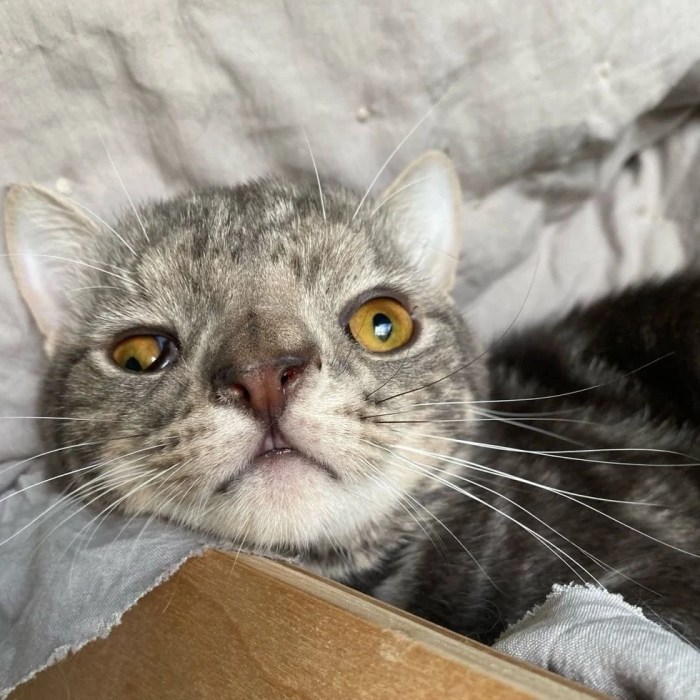
The physical appearance of cats with Feline Down Syndrome can vary considerably, ranging from subtle differences to more pronounced features. This variability reflects the diverse genetic underpinnings of the condition. While there’s no single “typical” appearance, certain traits are more commonly observed. It’s important to remember that not all cats with FDS will exhibit all of these characteristics, and the severity of each trait can differ significantly.Before diving into specifics, it’s crucial to understand the spectrum of presentation.
Some cats may display only mild physical differences, barely noticeable to the untrained eye. Others may have more pronounced features that are readily apparent. This wide range makes diagnosis challenging and highlights the importance of a thorough veterinary examination.
- Mild: Slightly flattened facial profile, slightly larger head relative to body size, slightly rounded eyes.
- Moderate: More pronounced flattened facial profile, wider-set eyes, slightly shortened limbs, potential for a slightly larger tongue.
- Severe: Significantly flattened facial profile, prominent brow ridge, widely spaced eyes, noticeably shortened limbs, potential for heart defects visible upon examination, and a larger tongue that may cause breathing difficulties.
Mild Severity: Cats with mild FDS often appear generally healthy and well-proportioned. The subtle differences in facial features might be easily overlooked. Their head may be slightly larger than average, and their eyes may have a slightly rounded appearance. Their overall body structure is typically normal, and they may exhibit no noticeable differences in limb length. These cats often lead relatively normal lives with minimal impact from their condition.
Moderate Severity: Cats with moderate FDS display more noticeable physical differences. Their facial profile is often flattened, giving them a somewhat “smooshed” appearance. Their eyes are typically wider-set than average, and they may have a slightly shortened limb length. A slightly larger tongue might be present, which could occasionally lead to mild breathing difficulties, especially during exertion. These cats may require some adjustments to their environment and care to ensure their comfort and well-being.
Severe Severity: Cats with severe FDS exhibit the most pronounced physical characteristics. Their facial profile is significantly flattened, and they may have a prominent brow ridge. Their eyes are widely spaced, and their limbs are noticeably shortened. Heart defects are more common in this group and may be detectable during a physical examination. A larger tongue can cause significant breathing difficulties, requiring specialized care and monitoring.
These cats often require intensive care and ongoing support to manage their health challenges.
Behavioral and Cognitive Traits in Affected Cats
The behavioral and cognitive traits of cats with Feline Down Syndrome are as varied as their physical appearances. While generalizations can be made, it’s important to remember that each cat is an individual, and their behavior will be influenced by their unique genetic makeup, environment, and experiences. Generally, cats with FDS tend to be exceptionally social and affectionate, often seeking out human interaction and displaying a strong desire for companionship.Their playfulness is often characterized by a gentle and persistent nature.
They may enjoy interactive toys and games but may lack the intense bursts of energy seen in some typical cats. Responsiveness to training can be variable; some cats may learn basic commands with patience and positive reinforcement, while others may struggle with more complex tasks. Potential cognitive differences may manifest as challenges in learning new routines or solving problems, but this doesn’t necessarily indicate a lack of intelligence.
It simply suggests that they may learn at a different pace or require a different approach to training.
| Behavioral Trait | Typical Observation | Potential Explanation |
|---|---|---|
| Social Interaction | Excessive affection, seeking human contact, friendly towards other animals | Potential for increased oxytocin production (the “bonding hormone”), heightened sensitivity to social cues |
| Playfulness | Gentle and persistent play, enjoyment of interactive toys, less intense bursts of energy | Potential for altered dopamine pathways, affecting motivation and reward systems |
| Trainability | Variable responsiveness to training, may require more patience and positive reinforcement | Potential for subtle cognitive differences affecting learning and memory |
| Problem-Solving | May struggle with complex problem-solving tasks, but can still learn through repetition | Potential for altered neural development affecting cognitive flexibility |
Health Concerns and Potential Comorbidities
Cats with Feline Down Syndrome are predisposed to a range of health issues, often mirroring those seen in humans with Down syndrome. These concerns stem from the underlying genetic abnormalities that disrupt normal development and function. Common health issues include congenital heart defects, respiratory problems, and immune deficiencies. Heart defects, such as atrial septal defects (holes in the heart), are relatively common and can lead to breathing difficulties and reduced exercise tolerance.
Respiratory problems, such as brachycephalic syndrome (difficulty breathing due to shortened airways), can also occur, particularly in cats with more pronounced facial abnormalities.Immune deficiencies are another significant concern, making cats with FDS more susceptible to infections. Regular veterinary checkups and preventative care are absolutely crucial for these cats to monitor their health and address any emerging issues promptly. Early detection and intervention can significantly improve their quality of life and longevity.
Preventative Care Schedule for Cats with FDS:
Step 1: Initial Veterinary Examination & Baseline Diagnostics (within first week of diagnosis)Includes complete blood count, chemistry panel, urinalysis, and cardiac evaluation.
Step 2: Regular Checkups (every 6 months)
Includes physical examination, weight monitoring, and assessment of respiratory function.
Step 3: Vaccinations & Parasite Prevention (as recommended by veterinarian)
Tailored to the cat’s individual health status and lifestyle.
Step 4: Cardiac Monitoring (annually)
Includes echocardiogram to assess heart function.
Step 5: Respiratory Assessment (annually)
Includes auscultation of lungs and potentially advanced imaging (e.g., chest X-ray) if indicated.
Step 6: Ongoing Monitoring for Infections – Promptly address any signs of illness, such as fever, lethargy, or coughing.
Diagnosis and Testing Procedures
Diagnosing Feline Down Syndrome can be challenging due to its rarity and the variability in presentation. The diagnostic process typically involves a combination of physical examination, behavioral observation, and genetic testing. A veterinarian experienced in feline genetics is invaluable for accurate diagnosis.Genetic testing is the definitive method for confirming FDS. This involves collecting a sample of cells, typically from a blood or buccal swab (cheek swab), and sending it to a specialized laboratory for analysis.
The laboratory will analyze the cat’s chromosomes to identify the specific genetic abnormalities associated with FDS. Interpretation of results requires expertise in cytogenetics or molecular genetics.Here’s a step-by-step guide to the diagnostic process:
- Initial Observation: The veterinarian observes any physical characteristics suggestive of FDS, such as a flattened facial profile, wide-set eyes, or shortened limbs.
- Detailed History: The veterinarian gathers a detailed history from the owner, including information about the cat’s birth, development, and any observed behavioral or health concerns.
- Physical Examination: A thorough physical examination is performed to assess the cat’s overall health and identify any abnormalities.
- Genetic Testing: A sample is collected for genetic testing.
- Result Interpretation: The laboratory provides a report detailing the cat’s chromosomal abnormalities. The veterinarian interprets the results and confirms the diagnosis of FDS.
Responsible Breeding and Genetic Counseling
Source: nationalkitty.com
Breeding cats with Feline Down Syndrome raises significant ethical considerations. Given the potential for health problems and reduced quality of life in affected cats, responsible breeders should avoid breeding cats known to carry the FDS genetic mutation. Unintentional breeding can perpetuate the condition and increase the prevalence of affected kittens.Genetic counseling is essential for breeders and owners of affected cats.
Genetic counselors can provide information about the inheritance patterns of FDS, the risks of passing the condition on to offspring, and the available testing options. They can also help breeders make informed decisions about breeding practices and provide support to owners of affected cats.
| Breeding Scenario | Ethical Considerations |
|---|---|
| Breeding a cat with confirmed FDS | Highly unethical; perpetuates the condition and increases the risk of affected kittens. |
| Breeding a cat with a known carrier status (carrying one copy of the mutated gene) | Requires careful genetic counseling and testing of potential mates to minimize the risk of affected offspring. |
| Breeding two cats with no known history of FDS | While the risk is low, genetic testing can be considered to rule out carrier status. |
Care and Management of Cats with FDS
Providing optimal care for cats with Feline Down Syndrome requires a proactive and compassionate approach. Dietary recommendations should focus on providing a balanced and nutritious diet that supports overall health and addresses any specific health concerns. Environmental enrichment is crucial to stimulate their minds and bodies, preventing boredom and promoting well-being. Socialization is also important, as these cats often thrive on human interaction and companionship.Creating a safe and stimulating environment is paramount.
This includes providing comfortable bedding, scratching posts, and interactive toys. It’s also important to minimize potential hazards, such as stairs or unstable furniture, which could increase the risk of injury.Here’s a list of environmental enrichment activities suitable for cats with FDS:
- Interactive Toys: Puzzle feeders, feather wands, laser pointers (used cautiously to avoid frustration).
- Climbing Structures: Cat trees, shelves, and ramps to encourage exploration and exercise.
- Window Perches: Provide a view of the outdoors to stimulate their senses.
- Gentle Play Sessions: Regular, gentle play sessions with their human companions.
- Quiet Resting Areas: Provide cozy and secure places for them to relax and nap.
Historical Context and Research on Feline Down Syndrome
Research on Feline Down Syndrome is relatively limited due to its rarity. The first documented cases were reported in the late 20th century, and since then, sporadic case reports and small studies have provided insights into the condition. Early research focused primarily on describing the physical and behavioral characteristics of affected cats. More recent studies have begun to explore the genetic basis of FDS, identifying some of the chromosomal abnormalities involved.Studying FDS presents several challenges.
The rarity of the condition makes it difficult to recruit large sample sizes for research. Furthermore, the variability in presentation and the lack of a consistent genetic marker complicate the analysis. Current research methods, such as cytogenetics and molecular genetics, are expensive and require specialized expertise.
Significant Milestones in Understanding FDS:
1980s: Initial case reports describing the clinical features of FDS in cats.
1990s: Identification of chromosomal abnormalities in some affected cats, suggesting a genetic basis.
2000s: Increased use of genetic testing to confirm diagnoses and investigate the genetic basis of FDS.
2010s – Present: Ongoing research to identify specific genes and mutations involved in FDS and to develop improved diagnostic and treatment strategies.
Illustrative Descriptions of Affected Cats
To better understand the impact of Feline Down Syndrome, let’s consider a few hypothetical cats with varying degrees of severity. These descriptions are intended to illustrate the range of presentations and the care considerations associated with each case. Leo (Mild FDS): Leo is a charming, three-year-old tabby cat with a slightly flattened facial profile and a gentle demeanor. His eyes are a bit rounder than average, but otherwise, he appears to be a typical cat.
He’s incredibly affectionate and loves to cuddle with his human companions. He enjoys playing with feather wands and chasing laser pointers, though he doesn’t have the same bursts of energy as some other cats. He learns new tricks with patience and positive reinforcement. Leo requires no special medical care beyond routine vaccinations and checkups. Luna (Moderate FDS): Luna is a beautiful, five-year-old calico cat with a more pronounced flattened facial profile and wider-set eyes.
She has a slightly larger tongue, which occasionally causes her to breathe with a bit of effort, especially after exercise. Luna is incredibly social and loves to be petted and brushed. She enjoys interactive toys but tires easily. She requires regular veterinary checkups to monitor her respiratory function and heart health. Her diet is carefully managed to maintain a healthy weight and prevent breathing difficulties.
Jasper (Severe FDS): Jasper is a sweet, two-year-old gray cat with a significantly flattened facial profile, widely spaced eyes, and noticeably shortened limbs. He has a large tongue that causes significant breathing difficulties, requiring him to breathe through his mouth. Jasper requires intensive care, including regular veterinary visits, respiratory therapy, and a specialized diet. He needs a quiet and comfortable environment with soft bedding and easy access to food and water.
His human companions provide constant love and support, ensuring he receives the specialized care he needs to thrive.
Comparing FDS to Other Feline Genetic Conditions
Feline Down Syndrome shares some similarities with other genetic conditions affecting cats, but it also has distinct characteristics. Comparing FDS to Feline Immunodeficiency Virus (FIV) and Feline Leukemia Virus (FeLV) highlights these differences. While all three conditions can impact a cat’s health and well-being, they differ significantly in terms of transmission, symptoms, and treatment options.FIV and FeLV are viral infections transmitted through bites and close contact, respectively.
They compromise the cat’s immune system, making them susceptible to various infections and diseases. FDS, on the other hand, is a genetic condition inherited from parents and not caused by a virus.
| Feline Down Syndrome (FDS) | Feline Immunodeficiency Virus (FIV) | Feline Leukemia Virus (FeLV) | |
|---|---|---|---|
| Cause | Chromosomal abnormalities | Viral infection | Viral infection |
| Transmission | Inherited from parents | Bites | Close contact (saliva) |
| Symptoms | Physical and cognitive differences, health predispositions | Immune deficiency, various infections | Immune deficiency, various cancers |
| Treatment | Supportive care, management of health issues | Supportive care, management of infections | Supportive care, management of infections and cancers |
Conclusive Thoughts
From understanding the genetic underpinnings to providing tailored care and ethical breeding practices, navigating the world of Feline Down Syndrome requires knowledge, compassion, and a commitment to the well-being of these special cats. While research is ongoing and challenges remain, increased awareness and responsible practices can significantly improve the quality of life for cats with FDS and ensure a brighter future for them and their owners.
Let’s continue to learn and advocate for these deserving animals.
Essential FAQs
What is the main genetic difference between cats with FDS and typical cats?
Cats with FDS typically have an extra copy or a structural abnormality on chromosome 16, similar to the trisomy 21 in humans with Down syndrome.
Are all cats with FDS the same?
No, the severity of FDS varies greatly. Some cats show only subtle differences, while others have more pronounced physical and cognitive challenges.
What are some common health problems seen in cats with FDS?
They can be predisposed to heart defects, respiratory issues, and weakened immune systems, requiring vigilant monitoring by a veterinarian.
Is it ethical to breed cats with FDS?
Generally, breeding cats with FDS is considered unethical due to the risk of passing on the genetic condition. Genetic counseling is essential for breeders and owners.
How can I best care for a cat with FDS?
Provide a safe, stimulating environment with plenty of enrichment activities, a consistent routine, and a diet tailored to their specific needs. Regular vet checkups are vital.
Is there a cure for Feline Down Syndrome?
Currently, there is no cure for FDS. Management focuses on providing supportive care and addressing any health complications that arise.
How is FDS diagnosed?
Diagnosis typically involves a physical examination and genetic testing to confirm the chromosomal abnormality.

