Cat Food for Russian Blue A Complete Feeding Guide

The elegant Russian Blue cat, with its shimmering silver-blue coat and captivating emerald eyes, is a beloved breed known for its quiet grace and playful personality. But did you know that their unique characteristics and history influence their nutritional needs? This guide dives deep into everything you need to know about choosing the best cat food for your Russian Blue, from understanding their specific dietary requirements to navigating the overwhelming world of cat food options.
We’ll explore the breed’s origins, discuss essential nutrients, compare different food types (dry, wet, raw), and highlight key ingredients to look for. Plus, we’ll address common concerns like picky eating and allergies, and provide practical tips for transitioning your feline friend to a new diet. Ultimately, the goal is to help you provide your Russian Blue with the optimal nutrition for a long, healthy, and happy life.
Feeding Your Russian Blue: A Comprehensive Guide
Russian Blues are known for their striking silver-blue coats and captivating emerald eyes. But beyond their beauty, they’re intelligent, playful, and often quite reserved companions. Providing them with the right nutrition is crucial for maintaining their health, vitality, and that gorgeous coat. This guide dives deep into everything you need to know about feeding your Russian Blue, from understanding their unique needs to choosing the best food options.
We’ll cover everything from their breed-specific characteristics and nutritional requirements to common dietary concerns and how to navigate the often-confusing world of cat food. Consider this your one-stop resource for ensuring your Russian Blue thrives.
1. Understanding the Russian Blue Breed
The Russian Blue is a truly fascinating breed with a rich history and distinct characteristics. Understanding these aspects is the first step in tailoring their diet to their specific needs.
- Physical Characteristics: Russian Blues are medium-sized cats with a slender, graceful build. Their most defining feature is their dense, plush double coat, which feels almost velvety to the touch. The color is a distinctive silver-blue, with darker shading along the back and sides. Their eyes are typically a vibrant emerald green, which deepens with age.
- Temperament and Personality: These cats are often described as quiet, gentle, and somewhat shy, especially around strangers. However, they form strong bonds with their families and can be incredibly affectionate and playful with those they trust. They’re intelligent and enjoy interactive toys and puzzles. While not overly vocal, they do communicate with soft chirps and trills.
- History and Origins: Originating from the Archangel Isles of Russia, Russian Blues were initially ship cats, prized for their hunting abilities. They were brought to England in the 1860s and quickly gained popularity. Historically, there have been concerns about a genetic predisposition to pyruvate kinase deficiency (PKD), a red blood cell disorder. Responsible breeders screen for this condition.
| Characteristic | Description | Importance for Diet |
|---|---|---|
| Coat Texture | Dense, plush double coat | Requires adequate omega-3 and omega-6 fatty acids for shine and health. |
| Eye Color | Emerald green | Taurine is essential for eye health and vision. |
| Activity Level | Moderate to high | Energy requirements vary based on activity; adjust calorie intake accordingly. |
2. Nutritional Needs of Russian Blues
Like all cats, Russian Blues are obligate carnivores, meaning their diet must primarily consist of animal protein. However, understanding the specific breakdown of nutrients is key to optimal health.
- Essential Nutrients: Cats require protein for muscle building and repair, fats for energy and healthy skin/coat, carbohydrates for fiber and some energy, vitamins for various bodily functions, and minerals for bone health and enzyme activity.
- Life Stage Differences: Kittens need a diet higher in protein and calories to support rapid growth. Adult Russian Blues require a balanced diet to maintain their weight and health. Senior cats may need fewer calories and increased fiber to aid digestion and manage potential kidney issues.
- Taurine’s Role: Taurine is an essential amino acid that cats cannot produce themselves. Deficiency can lead to serious health problems, including blindness and heart disease. Russian Blues, like all cats, require adequate taurine in their diet.
| Nutrient | Percentage of Daily Intake (Ideal) | Potential Deficiency Symptoms | Food Sources |
|---|---|---|---|
| Protein | 30-40% | Muscle loss, poor growth, weakened immune system | Meat, poultry, fish |
| Fat | 15-25% | Dry skin, dull coat, low energy | Fish oil, chicken fat, flaxseed oil |
| Taurine | 0.3-0.5% | Blindness, heart problems, weakened immune system | Meat, poultry, fish (especially dark meat) |
3. Types of Cat Food Suitable for Russian Blues
Source: mybritishshorthair.com
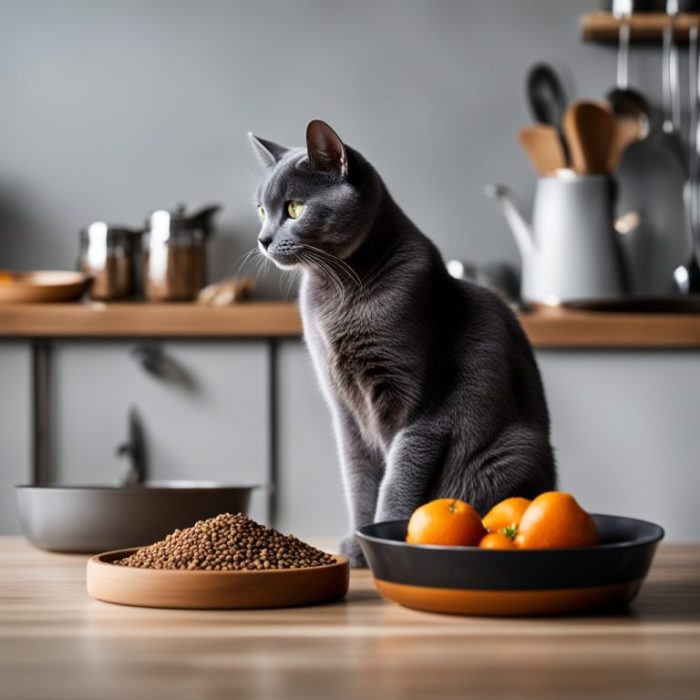
Choosing the right type of cat food can be overwhelming. Let’s break down the pros and cons of dry, wet, and raw options for your Russian Blue.
- Dry Food: Convenient and affordable, dry food helps maintain dental health through chewing. However, it often contains higher carbohydrate levels and may not provide as much moisture as wet food.
- Wet Food: Higher in moisture, wet food is beneficial for hydration and can be more palatable for picky eaters. It’s generally lower in carbohydrates than dry food but can be more expensive.
- Raw Food: A biologically appropriate diet, raw food mimics what cats would eat in the wild. It’s high in protein and moisture but requires careful handling to prevent bacterial contamination and must be properly balanced to avoid nutritional deficiencies.
- Grain-Free vs. Grain-Inclusive: Grain-free diets have become popular, but there’s no definitive evidence that they’re inherently better for cats. Some grains, like brown rice, can be a good source of fiber. The key is to look at the overall ingredient list and ensure the food is complete and balanced.
- Limited-Ingredient Diets: These diets contain a minimal number of ingredients, which can be helpful for cats with allergies or sensitivities.
| Food Type | Pros | Cons | Suitable for Russian Blue (Yes/No/Maybe) |
|---|---|---|---|
| Dry Food | Convenient, affordable, dental health | Higher carbs, lower moisture | Maybe |
| Wet Food | High moisture, palatable | More expensive | Yes |
| Raw Food | Biologically appropriate, high protein | Requires careful handling, potential for contamination | Maybe (with proper research and preparation) |
4. Ingredient Spotlight
What to Look For
Decoding cat food labels can feel like learning a new language. Here’s a breakdown of key ingredients to prioritize and those to avoid.
- Protein Sources: Chicken, turkey, and fish are highly digestible protein sources for cats. Look for named meat sources (e.g., “chicken” instead of “poultry by-product”).
- Healthy Fats: Omega-3 and omega-6 fatty acids are essential for a shiny coat and healthy skin. Fish oil, flaxseed oil, and chicken fat are good sources.
- Fiber: Fiber aids digestion and helps regulate bowel movements. Suitable sources include beet pulp, pumpkin, and psyllium.
- Ingredients to Avoid:
- Artificial Colors and Flavors: Offer no nutritional value and can be harmful.
- BHA and BHT: Preservatives linked to potential health concerns.
- Corn, Wheat, and Soy: Common allergens for cats.
- Excessive Fillers: Ingredients like cellulose and wood pulp add bulk without providing nutritional value.
5. Life Stage Specific Feeding
A Russian Blue’s nutritional needs change throughout their life. Adjusting their diet accordingly is crucial for their long-term health.
- Kittens: Russian Blue kittens require a diet high in protein and calories to support rapid growth and development. Look for kitten-specific formulas.
- Adults: Adult Russian Blues need a balanced diet to maintain their weight and health. Monitor their body condition and adjust portion sizes as needed.
- Seniors: Senior Russian Blues may benefit from a diet lower in calories and higher in fiber to aid digestion and manage potential kidney issues.
| Life Stage | Key Nutritional Considerations | Recommended Food Characteristics |
|---|---|---|
| Kitten | High protein, high calories, calcium for bone development | Kitten-specific formula, easily digestible |
| Adult | Balanced nutrition, weight management | Complete and balanced, appropriate calorie content |
| Senior | Lower calories, higher fiber, kidney health support | Senior-specific formula, low phosphorus |
6. Common Dietary Concerns & Solutions for Russian Blues
Like any breed, Russian Blues can be prone to certain dietary issues. Here’s how to address them.
- Allergies/Sensitivities: Food allergies can manifest as skin problems, digestive upset, or respiratory issues. A limited-ingredient diet can help identify potential allergens.
- Hydration: Russian Blues can be prone to dehydration. Encourage water intake by providing multiple water sources, using a water fountain, or adding wet food to their diet.
- Picky Eating: Try warming wet food, adding a small amount of tuna juice (in water, not oil), or offering a variety of textures and flavors.
- Transitioning to New Food:
- Start by mixing a small amount of the new food with the old food (10%).
- Gradually increase the proportion of new food over 7-10 days.
- Monitor your cat for any signs of digestive upset.
7. Premium & Budget-Friendly Options
Finding a high-quality cat food that fits your budget can be a challenge. Here are some recommendations.
- Premium Brands: Orijen, Acana, Wellness Complete Health, Blue Buffalo Wilderness, Tiki Cat.
- Budget-Friendly Brands: Purina Cat Chow, Iams Cat Food, Friskies.
| Ingredient | Premium Brand (Orijen Cat & Kitten) | Budget Brand (Purina Cat Chow Complete) | Notes |
|---|---|---|---|
| Protein Source | Chicken, turkey, herring, salmon | Chicken by-product, meat and bone meal | Premium uses whole meat sources; budget uses by-products. |
| Fat Source | Chicken fat, salmon oil | Animal fat | Premium uses named fat sources with omega-3s; budget is less specific. |
| Carbohydrates | Peas, lentils | Corn, soybean meal | Premium uses more digestible carbohydrate sources. |
8. Feeding Schedules & Portion Control
Proper portion control and feeding schedules are essential for maintaining a healthy weight.
- Calorie Calculation: A general guideline is 20-30 calories per pound of body weight for adult cats. Adjust based on activity level.
- Free-Feeding vs. Scheduled Feeding: Free-feeding can lead to overeating, while scheduled feeding allows for better portion control.
- Portion Sizes: Follow the feeding guidelines on the food label as a starting point, but adjust based on your cat’s individual needs.
Sample Daily Feeding Schedule for an Adult Russian Blue (10 lbs, moderately active):
- Morning: 1/4 cup dry food
- Evening: 1/4 cup dry food + 1-2 oz wet food
9. Supplements & Additives
While a complete and balanced diet should provide all the necessary nutrients, supplements can sometimes be beneficial.
- Probiotics: Can improve digestion and boost the immune system.
- Digestive Enzymes: Can aid in nutrient absorption.
- Catnip: Can stimulate playfulness and relaxation.
| Supplement | Potential Benefits | Potential Risks |
|---|---|---|
| Probiotics | Improved digestion, boosted immunity | May cause temporary digestive upset |
| Catnip | Stimulates playfulness, relaxation | Some cats may not react |
10. Visualizing a Healthy Russian Blue
Observing your Russian Blue’s physical condition is a great way to assess their overall health.
- Physical Signs of Health: A healthy Russian Blue will have a shiny, well-groomed coat, a lean but not bony body condition, and plenty of energy.
- Healthy Stool: Should be firm and well-formed. Diarrhea or constipation can indicate a digestive issue.
- Coat Description: Imagine a coat of shimmering silver-blue fur, incredibly soft and dense, with a subtle sheen that catches the light. The individual hairs are fine and plush, creating a velvety texture.
- Movement and Behavior: A healthy Russian Blue moves with grace and agility, exhibiting playful bursts of energy and a curious exploration of their surroundings.
Final Review
Navigating the world of cat food can feel daunting, but understanding your Russian Blue’s specific needs is the key to success. By considering their age, activity level, and potential sensitivities, and by carefully examining ingredient lists, you can confidently choose a diet that supports their overall well-being. Remember, a healthy Russian Blue is a vibrant, playful companion, and the right food is a cornerstone of their happiness and longevity.
So, take what you’ve learned here and put it into practice – your Russian Blue will thank you for it!
FAQ Guide
Why is taurine so important for Russian Blues?
Taurine is an essential amino acid that cats can’t produce themselves. It’s crucial for heart health, vision, and digestion. While all cats need taurine, ensuring adequate intake is particularly important for Russian Blues to prevent potential health issues.
Can I feed my Russian Blue only wet food?
While wet food offers excellent hydration, a combination of wet and dry food can be beneficial. Dry food helps maintain dental health by scraping plaque off teeth, while wet food provides moisture and often a higher protein content.
My Russian Blue is a very picky eater – what can I do?
Picky eating can be frustrating! Try warming wet food slightly to enhance the aroma, offering small, frequent meals, and avoiding excessive treats. Gradually introducing new foods mixed with their current favorites can also help.
How do I know if my Russian Blue has a food allergy?
Signs of a food allergy can include itchy skin, vomiting, diarrhea, or excessive grooming. If you suspect an allergy, consult your veterinarian and consider a limited-ingredient diet trial.
Should I give my Russian Blue supplements?
Generally, a high-quality cat food should provide all the necessary nutrients. Supplements should only be considered under the guidance of a veterinarian, as over-supplementation can be harmful.
What’s the best way to transition my Russian Blue to a new food?
Gradual transitions are key! Over 7-10 days, slowly mix increasing amounts of the new food with decreasing amounts of the old food. Start with a 25/75 ratio of new to old, then 50/50, 75/25, and finally 100% new food.
