Seeing your cat struggle to walk or showing a distinct lack of coordination in their hind legs can be incredibly worrying. Cat hind leg weakness isn’t a single condition, but rather a symptom that can stem from a wide range of underlying issues, from spinal problems to nerve damage and even infections. This guide aims to break down everything you need to know – the potential causes, how it’s diagnosed, treatment options, and what you can do to support your feline friend.
We’ll delve into the anatomy of your cat’s hind legs, exploring how they function normally and what can go wrong. From neurological conditions like intervertebral disc disease (IVDD) to musculoskeletal problems like hip dysplasia and arthritis, we’ll cover the most common culprits behind this frustrating issue. Understanding the possibilities is the first step towards getting your cat the help they need to regain their mobility and quality of life.
Understanding Feline Hind Leg Weakness
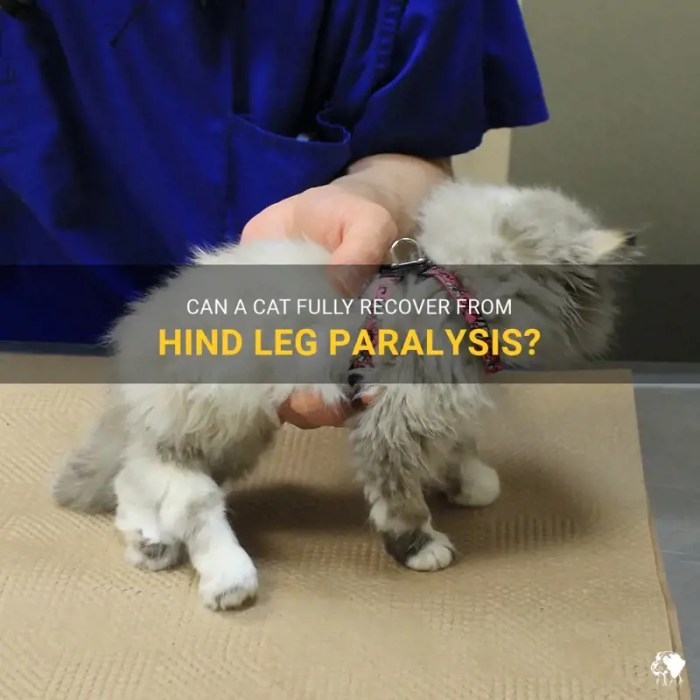
Source: petshun.com
It’s heartbreaking to see your cat struggling to move. Hind leg weakness, where a cat has difficulty using their back legs, can stem from a variety of causes, ranging from minor muscle strains to serious neurological conditions. This article aims to break down what might be happening, what the potential causes are, and what options are available for treatment and supportive care.
We’ll cover everything from basic anatomy to long-term management, so you can better understand your cat’s situation and work with your vet to provide the best possible care.The hind legs of a cat are a complex system of bones, muscles, nerves, and joints, all working together to allow for graceful movement, jumping, and balance. The femur (thigh bone) connects to the pelvis, and the tibia and fibula (lower leg bones) extend down to the paws.
Powerful muscles like the gluteals, hamstrings, and quadriceps drive movement, while smaller muscles provide stability and fine motor control. Nerves originating from the spinal cord transmit signals between the brain and the muscles, controlling everything from muscle contraction to sensation. A healthy cat exhibits a fluid, coordinated gait, with even strides and the ability to jump and climb with ease.
They should be able to stand squarely, with their paws positioned correctly under their body.Distinguishing between hind leg weakness and paralysis is crucial. Weakness (paresis) implies some degree of motor function remains, even if impaired. The cat might drag their legs, have an unsteady gait, or struggle to jump. Paralysis, on the other hand, means a complete loss of motor function.
The leg is limp and unresponsive. Understanding this difference helps your vet narrow down the potential causes.Common terms you might hear related to hind leg issues include: ataxia (lack of coordination), paresis (weakness), lameness (difficulty walking), and dysmetria (inability to judge distances, leading to awkward movements). Familiarizing yourself with these terms will help you communicate effectively with your veterinarian.
Potential Medical Causes – Neurological
Neurological issues are a common culprit behind hind leg weakness in cats. These problems often affect the spinal cord or brain, disrupting the signals that control leg movement.Intervertebral disc disease (IVDD) is a frequent concern, particularly in breeds like Persians and Himalayans. It occurs when the cushioning discs between the vertebrae degenerate or rupture, putting pressure on the spinal cord.
IVDD can range from mild, causing subtle weakness, to severe, resulting in paralysis. Different types exist, including discospondylitis (infection of the disc), degenerative disc disease (gradual wear and tear), and herniated discs (where the disc material protrudes). The severity of the weakness depends on the location and extent of the spinal cord compression. Imagine a cat suddenly unable to jump onto their favorite windowsill, or exhibiting a hunched posture – these could be signs of IVDD.Spinal cord injuries, often resulting from trauma like falls or car accidents, can also lead to hind leg weakness.
The severity of the weakness depends on the location and extent of the injury. A fracture of a vertebra can directly damage the spinal cord, or fragments of bone can compress it. [Describe an X-ray image showing a fractured vertebra and potential spinal cord compression].Tumors, both primary (originating in the spinal cord or brain) and metastatic (spreading from elsewhere in the body), can compress or damage the spinal cord, causing hind leg weakness.
These tumors can be slow-growing or aggressive, and symptoms can develop gradually or suddenly. The location of the tumor dictates which neurological functions are affected.Feline infectious diseases, such as feline leukemia virus (FeLV) and feline immunodeficiency virus (FIV), can have devastating neurological consequences. These viruses can directly damage the nervous system or weaken the immune system, making the cat more susceptible to other infections that affect the brain and spinal cord.
| Disease | Common Symptoms (beyond hind leg weakness) | Diagnostic Tests |
|---|---|---|
| FeLV | Weight loss, enlarged lymph nodes, fever, anemia | ELISA test, PCR test |
| FIV | Fever, oral ulcers, poor coat condition, chronic infections | ELISA test, Western blot |
| Spinal Cord Tumor | Pain, seizures, loss of appetite, changes in personality | MRI, CT scan, biopsy |
Potential Medical Causes – Musculoskeletal
Problems with the musculoskeletal system – bones, joints, and muscles – can also contribute to hind leg weakness and pain.Hip dysplasia, a genetic condition, occurs when the hip joint doesn’t develop properly, leading to instability and pain. This can cause a cat to avoid using their hind legs, resulting in weakness and a reluctance to jump. [Describe a diagram illustrating the difference between a normal hip joint and a dysplastic hip joint].Arthritis and osteoarthritis, common in older cats, involve the degeneration of joint cartilage, causing pain, stiffness, and reduced mobility.
The cat may exhibit a stiff gait, reluctance to move, and decreased range of motion in their hind legs.Muscle disorders, such as muscular dystrophy, can weaken the muscles of the hind legs, leading to progressive weakness and difficulty walking. These disorders are often genetic and can affect different muscle groups to varying degrees.Luxating patellas, where the kneecap dislocates, can cause intermittent hind leg weakness and pain.
The cat may suddenly “skip” or “bunny hop” due to the kneecap slipping out of place.
- History & Physical Exam: Detailed assessment of the cat’s history, including onset of symptoms, trauma, and breed predisposition. A thorough physical exam, including palpation of the joints and muscles.
- Neurological Exam: Assessment of reflexes, sensation, and motor function.
- Radiographs (X-rays): To evaluate bone structure and identify fractures, dislocations, or signs of arthritis.
- Advanced Imaging (CT/MRI): For more detailed visualization of the spinal cord and soft tissues.
- Bloodwork: To rule out underlying systemic diseases.
Potential Medical Causes – Peripheral Nerve Issues
The peripheral nerves are the pathways that transmit signals from the spinal cord to the muscles. Damage to these nerves can result in hind leg weakness.Nerve compression syndromes, such as lumbosacral stenosis (narrowing of the spinal canal in the lower back), can compress the nerves that control the hind legs, causing weakness, pain, and altered sensation.Peripheral neuropathy, a general term for nerve damage, can be caused by a variety of factors, including toxins, infections, and metabolic disorders.Trauma or injury, such as a crush injury or laceration, can directly damage peripheral nerves.Toxins and medications can also be culprits.
Certain insecticides, heavy metals, and some medications can cause nerve damage.
- Decreased reflexes in the hind legs
- Altered sensation (e.g., decreased sensitivity to touch)
- Muscle atrophy (wasting)
- Pain or tenderness along the nerve pathways
- Abnormal gait or posture
Recognizing the Signs and Symptoms
Recognizing the signs of hind leg weakness is the first step towards getting your cat the help they need.The level of hind leg weakness can vary significantly. Mild incoordination might manifest as a slightly wobbly gait, while complete paralysis means the cat cannot move their hind legs at all.Behavioral changes often accompany hind leg weakness. A cat might become reluctant to jump, hide more than usual, or show signs of pain or discomfort.Assessing a cat’s gait involves observing how they walk.
Look for uneven strides, dragging of the legs, a hunched posture, or difficulty coordinating movements.Handling a cat with hind leg weakness requires extra care. Support their hindquarters to prevent falls and minimize stress.Checking reflexes in the hind legs (e.g., patellar reflex) can provide valuable information to your veterinarian. [Describe how to check the patellar reflex in a cat].
Diagnostic Procedures
Accurate diagnosis is essential for effective treatment.A neurological examination assesses reflexes, sensation, and motor function to pinpoint the location and nature of the neurological problem.Bloodwork and urine analysis help rule out underlying systemic diseases that could be contributing to the weakness.X-rays, CT scans, and MRIs provide detailed images of the spine and joints, allowing veterinarians to identify fractures, dislocations, tumors, and other abnormalities.Myelography, an X-ray procedure where contrast dye is injected into the spinal canal, can help diagnose spinal cord compression.
| Diagnostic Test | What it Detects | Advantages | Disadvantages |
|---|---|---|---|
| X-ray | Fractures, dislocations, arthritis | Relatively inexpensive, readily available | Limited visualization of soft tissues |
| MRI | Spinal cord tumors, disc disease, nerve damage | Excellent visualization of soft tissues | Expensive, requires anesthesia |
| Bloodwork | Underlying systemic diseases | Relatively inexpensive | May not identify the specific cause of hind leg weakness |
Treatment Options – Medical Management
Medical management focuses on alleviating pain, reducing inflammation, and supporting muscle function.Anti-inflammatory medications can help manage pain and inflammation associated with arthritis and other musculoskeletal conditions.Pain medications, such as opioids or non-steroidal anti-inflammatory drugs (NSAIDs), can improve comfort and mobility.Muscle relaxants may be prescribed to reduce muscle spasms and improve comfort.Physical therapy and rehabilitation exercises can help strengthen muscles, improve range of motion, and restore function.Supplements like glucosamine, chondroitin, and omega-3 fatty acids may support joint health and nerve function.
Treatment Options – Surgical Intervention
Surgical intervention may be necessary in certain cases, such as IVDD or hip dysplasia.Surgical options for IVDD include stabilization procedures to decompress the spinal cord and prevent further damage.Surgical correction of hip dysplasia aims to improve joint stability and reduce pain.Surgical approaches can address nerve compression by relieving pressure on the affected nerves.Amputation may be considered as a last resort for severe cases where the leg is non-functional and causing significant pain.
Surgical intervention carries inherent risks, including anesthesia complications, infection, and nerve damage. However, it can also offer significant benefits, such as pain relief, improved mobility, and a better quality of life for your cat. A thorough discussion with your veterinarian is essential to weigh the risks and benefits and determine the best course of action.
Supportive Care and Home Management
Providing supportive care and modifying the home environment can significantly improve a cat’s quality of life with hind leg weakness.Creating a comfortable and safe environment is paramount. Provide soft bedding, easy access to food and water, and a litter box that is easy to access.Ramps, stairs, and other assistive devices can aid mobility.Assisting with grooming and hygiene is essential, as the cat may have difficulty reaching certain areas.Managing weight is crucial to reduce stress on the joints.Preventing pressure sores is important, especially for cats who spend a lot of time lying down.Modifications to the home environment to improve accessibility include removing obstacles, providing non-slip surfaces, and ensuring easy access to favorite spots.
Prognosis and Long-Term Management
The prognosis for cats with hind leg weakness varies depending on the underlying cause, severity of the condition, and response to treatment.Ongoing monitoring and follow-up care are essential to assess the cat’s progress and adjust treatment plans as needed.Treatment plans should be adjusted based on the cat’s response.Palliative care options, such as pain management and supportive care, can provide comfort and improve quality of life for cats with chronic or progressive conditions.
| Stage of Weakness | Expected Outcome with Treatment |
|---|---|
| Mild Incoordination | Good prognosis with medical management and physical therapy |
| Moderate Weakness | Variable prognosis; may require surgery or long-term medical management |
| Severe Weakness/Paralysis | Guarded prognosis; focus on pain management and supportive care |
Ultimate Conclusion
Navigating the world of cat hind leg weakness can feel overwhelming, but remember that early diagnosis and appropriate treatment are key to a positive outcome. Whether it’s managing pain with medication, supporting mobility with assistive devices, or considering surgical intervention, there are often ways to improve your cat’s comfort and function. Consistent monitoring, a supportive home environment, and a strong partnership with your veterinarian are essential for long-term management and ensuring your cat lives a happy and fulfilling life, even with hind leg challenges.
Ultimately, recognizing the signs, seeking prompt veterinary care, and providing ongoing support are the best ways to help your cat overcome hind leg weakness and maintain a good quality of life.
Answers to Common Questions
What’s the difference between hind leg weakness and paralysis?
Weakness (paresis) means the cat has some movement but struggles, while paralysis means they can’t move the leg(s) at all. Paralysis is a more severe condition.
Can stress cause hind leg weakness in cats?
While stress can exacerbate existing conditions, it’s rarely the sole cause of hind leg weakness. It’s more likely to worsen pain or muscle tension.
Are there any home remedies that can help?
Warm compresses can soothe sore muscles, and providing a comfortable, accessible litter box is crucial. However, always consult your vet before trying any home remedies.
How can I tell if my cat is in pain?
Signs include hiding, decreased appetite, reluctance to move, vocalizing more than usual, and changes in litter box habits.
What is lumbosacral stenosis?
It’s a narrowing of the spinal canal in the lower back, which can compress nerves and cause hind leg weakness or pain.
What kind of assistive devices are available for cats with hind leg weakness?
Ramps, stairs, slings to help them get up, and even custom-fitted wheelchairs can improve mobility.
Is amputation ever necessary?
In severe cases where there’s no chance of recovery and the cat is suffering, amputation might be considered as a last resort to improve their quality of life.

