Have you ever glanced at your feline friend and thought, “Wow, they look just like a cheetah!”? It’s a surprisingly common observation, and one that’s sparked curiosity for quite some time. From anecdotal stories shared online to the intentional breeding of certain cat breeds, the comparison between domestic cats and the iconic spotted big cat is a fascinating one. We’ll dive into the science, genetics, and visual perception behind this intriguing resemblance, exploring why our beloved pets sometimes evoke the image of a speedy cheetah.
This exploration isn’t just about aesthetics; it touches on the history of cat breeding, the intricacies of genetics, and even how our own brains interpret what we see. We’ll look at specific breeds known for their cheetah-like appearances, dissect the physical characteristics that contribute to the illusion, and consider the behavioral nuances that might (or might not) add to the comparison.
Get ready to uncover the secrets behind why your cat might be giving off serious cheetah vibes!
The Curious Resemblance: Why Cats Sometimes Look Like Cheetahs
It’s a comment you hear often: “Your cat looks just like a cheetah!” It’s a surprising observation, given the vast differences between a domestic feline and its wild, spotted cousin. But the visual similarities are undeniable, sparking curiosity and prompting questions about genetics, breed development, and even human perception. This article delves into the reasons behind this fascinating phenomenon, exploring the physical traits, breed specifics, and optical illusions that contribute to the cheetah-like appearance of certain cats.
The comparison isn’t new. While pinpointing the exact origin is difficult, anecdotal evidence suggests people have been noticing this resemblance for decades, likely increasing with the popularity of breeds like the Bengal. Early mentions often appeared in cat fancier circles and online forums, gradually gaining wider recognition as these breeds became more common. I remember my aunt, years ago, exclaiming that her Abyssinian looked like a miniature cheetah – a sentiment echoed by many others I’ve spoken to since.
Physical Characteristics: Spot Patterns
Source: theatlantic.com
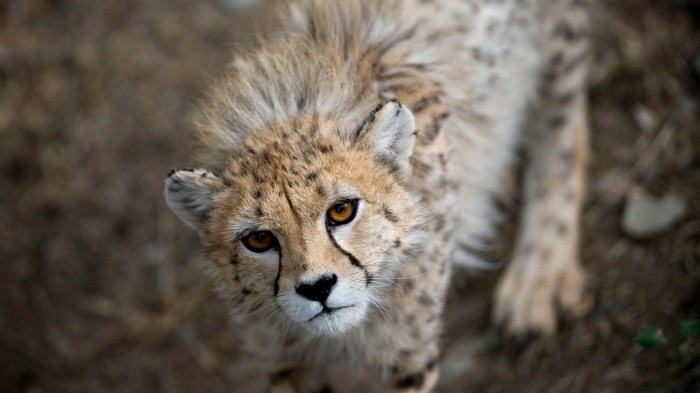
Cheetah spots aren’t random; they’re a product of complex genetics. Unlike the stripes of a tiger or the rosettes of a leopard, cheetah spots are solid, distinct markings. They arise from melanocytes, pigment-producing cells, that form concentrated areas during embryonic development. The unique arrangement and size of these spots are largely determined by genes, resulting in the cheetah’s iconic appearance.
Interestingly, cheetah spots are also unique to each individual, acting like a fingerprint.
Comparing these spots to those found in domestic cat breeds reveals a spectrum of similarities and differences. The Bengal, Ocicat, Abyssinian, and Egyptian Mau are frequently cited for their cheetah-like markings, but the patterns vary significantly. While cheetah spots are solid, many domestic breeds exhibit variations like rosettes or ticked patterns, which create a different visual effect.
| Breed | Spot Shape | Spot Density | Overall Pattern |
|---|---|---|---|
| Bengal | Solid spots, rosettes (two-toned spots with a darker center) | High | Random, scattered |
| Ocicat | Solid spots | Moderate to High | Random, scattered |
| Abyssinian | Ticked (banding of color on each hair) – appears as subtle spots | Low | Agouti pattern, creating a shimmering effect |
| Egyptian Mau | Solid spots, often with “bullseye” markings | Moderate | Distinct, often aligned along the spine |
The term “rosettes” refers to spots that are two-toned, featuring a darker center surrounded by a lighter halo. This pattern is more common in wild cats like leopards and jaguars, and can be seen in some Bengal cats. Rosettes differ from simple spots in their more complex structure and the visual depth they create.
Physical Characteristics: Body Structure & Movement
Cheetahs are built for speed. Their lean build, long legs, flexible spine, and deep chest contribute to their incredible agility. The long legs provide a greater stride length, while the flexible spine allows for a greater range of motion during running. These features, while not replicated exactly in domestic cats, are present to varying degrees in certain breeds.
Some domestic cat breeds, like the Abyssinian and the Bengal, possess a more athletic build than others. While their legs aren’t as proportionally long as a cheetah’s, they exhibit a similar level of muscularity. Even in play, a cat’s gait can sometimes mimic a cheetah’s bounding run, particularly when chasing a toy or engaging in mock hunting behavior. However, it’s crucial to remember that the skeletal proportions and muscle structure of a cheetah are fundamentally different from those of a domestic cat.
Cheetahs have a modified spine and specialized muscles that allow for unparalleled speed, features not found in their domestic counterparts.
Breed Specifics: The Bengal Cat
The Bengal cat is arguably the breed most frequently associated with a cheetah-like appearance. This is due to its distinctive spotted coat, which was intentionally cultivated through selective breeding. The breed’s history is fascinating, beginning with Jean Mill, who crossed an Asian Leopard Cat (a small wild cat) with domestic cats in the 1960s. The goal was to create a domestic cat with the striking appearance of a wild cat, but with a gentle temperament.
Bengal cat coats come in two main variations: spotted and marbled. Spotted Bengals have distinct, randomly scattered spots, while marbled Bengals exhibit a swirling, pattern reminiscent of marble. Both variations can display a range of colors, including brown, silver, charcoal, and snow. The intensity and size of the spots are influenced by genetics and breeding practices.
Breeders actively select for Bengals with large, bold spots and a high density of markings to achieve the desired “cheetah-look.” It’s a meticulous process that requires careful observation and selective breeding over multiple generations.
“Achieving that true ‘cheetah look’ in a Bengal isn’t just about luck; it’s about generations of careful breeding. We look for cats with large, well-defined spots, a good contrast between the spots and the base coat, and a muscular build that complements the pattern. It’s a constant pursuit of perfection.”
Sarah Miller, Bengal Breeder.
Breed Specifics: Ocicat
The Ocicat is a breed deliberately designed to resemble a wild cat, and its appearance often draws comparisons to cheetahs and other spotted felines. Created in the 1960s by crossing Abyssinian, Siamese, and American Shorthair cats, the Ocicat was intentionally bred to have a spotted coat and a wildcat-like appearance, despite being entirely domestic.
Ocicat spot patterns are generally more uniform and less random than those of Bengals. They tend to be larger and more evenly spaced, creating a bolder, more defined pattern. The spots are typically solid, without the rosettes seen in some Bengals.
While Ocicats share a visual resemblance to cheetahs, their personality and behavior differ significantly. Ocicats are known for their playful, energetic, and affectionate nature, often described as being dog-like in their loyalty and trainability. Cheetahs, on the other hand, are solitary hunters with a more reserved demeanor.
- Bengal: More random spot patterns, often with rosettes; higher energy levels.
- Ocicat: More uniform spot patterns; often described as dog-like in personality.
Breed Specifics: Abyssinian & Egyptian Mau
While not as immediately striking as Bengals or Ocicats, the Abyssinian and Egyptian Mau possess subtle cheetah-like qualities that contribute to the overall resemblance. These qualities are often overlooked but add to the intrigue of the comparison.
Abyssinians exhibit a “ticked” coat pattern, where each hair has bands of different colors. This creates a shimmering effect that can visually resemble subtle spots, particularly in certain lighting conditions. The overall effect is a warm, golden hue with a hint of spotting.
The Egyptian Mau is known for its unique spot pattern, which includes distinctive “bullseye” markings on its flanks. These markings, along with the cat’s graceful, athletic build, evoke a sense of wildness and agility, reminiscent of a cheetah.
| Breed | Coat Pattern | Visual Effect |
|---|---|---|
| Abyssinian | Ticked | Shimmering effect, subtle visual illusion of spots |
| Egyptian Mau | Solid spots with bullseye markings | Graceful, athletic appearance, evokes a sense of wildness |
Color Variations & Genetics
Different color variations can significantly influence the perceived cheetah-likeness of a cat. Brown spotted Bengals, for example, often bear a closer resemblance to cheetahs than silver spotted ones, due to the similarity in coat color. The contrast between the spots and the base coat also plays a crucial role; higher contrast generally enhances the cheetah-like appearance.
Spot size, density, and pattern are all influenced by genetics. Multiple genes interact to determine these characteristics, making it a complex interplay. The Agouti gene is particularly important, as it controls the distribution of pigment within each hair, creating the banded pattern that underlies the spotted appearance. Recessive genes also play a role, influencing the overall coat color and the intensity of the spots.
For example, a cat needs to inherit two copies of a recessive gene to express a particular trait. This means that even if a cat carries the gene, it may not be visible in its coat unless both parents also carry the gene.
Visual Perception & Optical Illusions
Human perception plays a significant role in how we interpret a cat’s appearance. Our brains are wired to recognize patterns and make associations, and the cheetah-like appearance of certain cats can be amplified by our preconceived notions.
Lighting and background can dramatically affect the visibility of spots. A cat sitting against a dark background will have its spots appear more prominent, while a light background may make them less noticeable. The cat’s posture and movement also contribute to the illusion; a cat crouching low to the ground or darting across a room can evoke a sense of speed and agility, further enhancing the cheetah-like impression.
Photography and videography can both enhance and distort the cheetah-like appearance. Certain camera angles and lighting techniques can accentuate the spots and create an illusion of greater speed or power.
Beyond Appearance: Behavior & Personality
While the visual resemblance is striking, certain behavioral traits can also contribute to the perception of a cat looking like a cheetah. Playfulness, a strong hunting instinct, and a tendency to stalk and pounce are all behaviors shared by both domestic cats and cheetahs.
However, the hunting styles differ significantly. Cheetahs are sprinters, relying on bursts of incredible speed to catch their prey. Domestic cats are ambush predators, using stealth and patience to stalk and capture their targets. Social behavior also differs greatly; cheetahs are generally solitary animals, while domestic cats can be highly social and form strong bonds with humans and other animals.
- Playful stalking and pouncing
- Intense focus during hunting play
- High energy levels and bursts of speed
Illustrative Descriptions
Imagine a Bengal cat with a rich, brown spotted coat. The spots are large and bold, randomly scattered across its sleek, muscular body. Its posture is alert, with its ears pricked forward and its tail held high. The cat exudes an air of confidence and agility, reminiscent of a miniature cheetah.
Picture an Ocicat in a striking silver spotted pattern. The contrast between the dark spots and the pale silver base coat is dramatic, creating a bold and eye-catching appearance. The cat moves with a fluid grace, its sleek body gliding effortlessly across the floor. Its demeanor is confident and self-assured, further enhancing its wildcat-like presence.
Envision an Abyssinian cat with a ticked coat. The subtle banding of the hairs creates a shimmering effect, giving the impression of a warm, golden glow. The overall effect is one of understated elegance and subtle spotting, a testament to the breed’s unique coat pattern.
Finally, visualize an Egyptian Mau, its flanks adorned with distinctive “bullseye” spots. The cat’s athletic build and graceful movements convey a sense of wildness and agility, evoking the image of a cheetah poised for action.
Final Thoughts
Ultimately, while no domestic cat is a true cheetah, the striking similarities in spot patterns, body structure, and even movement can be quite compelling. Whether it’s the bold spots of a Bengal, the deliberate design of an Ocicat, or the subtle ticking of an Abyssinian, the cheetah-like resemblance in cats is a testament to both natural variation and human ingenuity in breeding.
So, the next time you catch your cat striking a particularly graceful pose, remember the fascinating science and history behind why they might just remind you of the world’s fastest land animal.
It’s a delightful reminder that even within the familiar comfort of our homes, echoes of the wild can be found, adding a touch of exotic beauty to our everyday lives. Appreciate the unique qualities of your feline companion, and enjoy the playful comparison to these magnificent creatures!
FAQ Compilation
Why do people often say cats look like cheetahs?
Certain cat breeds have spot patterns that visually resemble a cheetah’s, and their body structure or movement can sometimes mimic a cheetah’s agility.
What is the difference between a cheetah’s spots and a cat’s spots?
Cheetah spots are solid and unique to each individual, while cat spots vary in shape and density depending on the breed. Cats can also have “rosettes,” which are grouped spots forming a rose-like pattern.
Which cat breed most closely resembles a cheetah?
The Bengal cat is most frequently associated with a cheetah-like appearance due to its spotted coat and muscular build.
What’s the difference between a Bengal and an Ocicat?
While both have spotted coats, Bengals often have larger, more randomly placed spots, while Ocicats have more defined, rectangular spots and a more deliberate, wildcat-like design.
Is the cheetah-like appearance in cats intentional?
Yes, breeders intentionally cultivated the cheetah-like appearance in breeds like the Bengal and Ocicat through selective breeding.
Do cats and cheetahs behave similarly?
While both are skilled hunters, their social behaviors and overall lifestyles are vastly different. Domestic cats are typically solitary or live in small groups, while cheetahs live in coalitions or as single mothers.

