Ever wondered why cat puns are so delightfully ridiculous? From ancient wordplay to viral social media sensations, the art of feline-themed humor has a surprisingly rich history. We’re diving deep into the world of cat puns – exploring their origins, dissecting their structure, and uncovering the secrets to crafting your own purr-worthy jokes. Get ready for a paws-itively hilarious journey!
This exploration isn’t just about silly jokes; it’s about understanding how language, culture, and our love for cats intertwine to create a unique form of humor. We’ll look at how cat puns have evolved over time, how they’re categorized, and why some land with a resounding “meow” while others fall flat. Plus, we’ll equip you with the tools to become a pun-tastic feline wordsmith yourself!
The Wonderful World of Cat Puns: A Comprehensive Guide
Let’s be honest, the internet runs on cat videos and, increasingly, cat puns. They’re everywhere, from social media captions to birthday cards. But where did this obsession with feline wordplay come from? And why are some cat puns genuinely hilarious while others just… don’t land? This guide dives deep into the history, structure, and art of cat puns, offering insights for both casual enthusiasts and aspiring pun-masters.
We’ll explore everything from the earliest documented instances to crafting your own purr-fectly clever combinations.
The appeal of cat puns is undeniable. They tap into our love for these quirky creatures and our appreciation for clever wordplay. But beyond the surface-level amusement, there’s a fascinating cultural history and linguistic structure at play. So, grab a cup of catnip tea and let’s get started!
The Origins and Evolution of Feline Wordplay
The history of cat puns is surprisingly rich, stretching back centuries. While pinpointing the
-absolute* first instance is tricky, we can trace humorous word combinations involving cats to early literature and folklore. Early examples often revolved around the association of cats with witchcraft and superstition, leading to puns that played on these themes. As societal attitudes towards cats shifted from feared creatures to beloved companions, so too did the nature of the puns, becoming lighter and more affectionate.
- Early Instances: Medieval bestiaries and folklore frequently depicted cats as cunning and mysterious, leading to puns referencing their perceived intelligence or slyness. Think of phrases like “cat-astrophe” (though the exact phrasing might have differed) used to describe unfortunate events.
- Societal Influence: The Victorian era’s fascination with domesticity and pets significantly boosted the popularity of cat-related humor. As cats became increasingly integrated into family life, puns reflecting their playful personalities and quirky habits emerged.
- Timeline of Puns:
- 14th-16th Centuries: Primarily dark humor, referencing superstition and witchcraft.
- 18th-19th Centuries: Emergence of lighter, more affectionate puns as cats gained popularity as pets.
- 20th Century – Present: Explosion of cat puns fueled by the internet and social media.
- Regional Variations: Certain cat puns are more prevalent in specific regions. For example, British English might favor puns using words like “paw-some” or “purr-fect,” while American English might lean towards phrases like “cat-titude” or “feline good.”
Categorizing Cat Puns: Types and Structures
Not all cat puns are created equal. Some rely on clever wordplay, while others are simply… well, groaners. Understanding the different types of cat puns can help you appreciate their humor and even craft your own. We can broadly categorize them based on the linguistic techniques employed.
| Type | Example | Explanation |
|---|---|---|
| Homophone | “I’m feline fine!” | Uses the homophone “feline” (relating to cats) and “feeling” to create a pun. |
| Spoonerism | “A clawful of milk” (instead of “a lawful of milk”) | Swaps the initial sounds of two words for humorous effect. |
| Double Meaning | “That cat has a lot of purr-suasion.” | Plays on the double meaning of “purr” (a cat’s sound) and “persuasion.” |
| Malapropism | “My cat is a real catastrophe!” | Uses a similar-sounding but incorrect word (“catastrophe” instead of “cat nap”) for comedic effect. |
Effective cat puns often rely on unexpected twists and double meanings. The surprise element is key to eliciting a chuckle. Grammatically, puns frequently exploit the flexibility of English, particularly with adjectives and nouns related to cats. For instance, adjectives like “furry,” “clawed,” and “meow-gical” are ripe for punning.
The Best Cat Puns: A Curated Collection
Ranking humor is subjective, of course, but here’s a curated list of 20 cat puns, ranked by perceived amusement (based on general internet consensus!). We’ll also explore how context can dramatically alter a pun’s impact.
- “Have a pawsome day!” (Simple, positive, universally appealing)
- “I’m feline good!” (Classic, easy to remember)
- “Purr-haps I’ll stay in tonight.” (Playful, relatable)
- “Don’t be catty!” (Witty, slightly sassy)
- “You’ve got to be kitten me!” (Expressive, humorous disbelief)
- “Meow is the time!” (Adaptable to various situations)
- “I’m just kitten around.” (Lighthearted, self-deprecating)
- “Let’s paws for a moment.” (Practical, punny)
- “Feeling claw-some today!” (Energetic, positive)
- “It’s a cat-titude problem.” (Relatable, humorous)
- “Purr-fectly content.” (Satisfying, peaceful)
- “Don’t be a scaredy-cat!” (Encouraging, playful)
- “I’m not lion, I love cats!” (Unexpected twist)
- “Have a meow-gical day!” (Whimsical, enchanting)
- “Cat nap time!” (Simple, relatable)
- “You’re purr-ty amazing!” (Complimentary, charming)
- “I’m feline fine, thank you for asking.” (Polite, punny)
- “Just a little cat-titude.” (Short, sweet, sassy)
- “Pawsitively adorable!” (Endearing, charming)
- “Don’t fur-get about me!” (Sentimental, playful)
Context is everything. A pun that lands perfectly on a birthday card might fall flat in a serious conversation. For example, “Have a pawsome day!” is ideal for a birthday greeting, while “It’s a cat-titude problem” might be better suited for a humorous observation about a friend’s behavior.
Cat Puns in Popular Culture
Cat puns have permeated popular culture, appearing in literature, film, and television. While not always overt, subtle feline wordplay adds layers of humor and charm to various works. Think of the Cheshire Cat in
-Alice in Wonderland*, whose disappearing act and cryptic pronouncements are inherently playful. Numerous animated films and television shows feature characters who utilize cat puns to comedic effect.
- Literature: Beyond the Cheshire Cat, many children’s books incorporate cat puns to engage young readers.
- Film & Television: Animated series like
-The Simpsons* and
-Family Guy* frequently employ cat puns for quick comedic moments. - Genre Variations: Comedy naturally embraces cat puns, but they can also appear in dramas to lighten the mood or in children’s entertainment to create a playful atmosphere.
Creating Your Own Cat Puns: A Guide
Generating humorous word combinations isn’t just about luck; it’s a cognitive process. It involves recognizing patterns, making connections, and embracing the absurd. Here’s a step-by-step guide to crafting your own cat puns:
- Brainstorm Cat-Related Words: Start with a list of words associated with cats: paws, claws, meow, purr, fur, whiskers, feline, kitten, etc.
- Identify Homophones & Similar-Sounding Words: Look for words that sound like cat-related terms. For example, “feline” and “feeling,” “paw” and “pause.”
- Explore Double Meanings: Consider words with multiple interpretations. Can “purr” refer to both a cat’s sound and a feeling of contentment?
- Experiment with Wordplay Techniques: Try spoonerisms, malapropisms, and other linguistic tricks.
- Test Your Puns: Share your creations with others and gauge their reactions.
The Art of Delivery: Presenting Cat Puns Effectively
Even the best cat pun can fall flat if delivered poorly. Timing and context are crucial. A well-placed pun can elicit laughter, while a forced pun can elicit groans. Body language and vocal inflection also play a role. A playful tone and a slight smirk can enhance the comedic effect.
Seamlessly integrating cat puns into conversations requires a sense of naturalness. Don’t force it. Adapt your delivery to your audience. A group of cat lovers will likely appreciate a more elaborate pun than a group of strangers.
Beyond the Pun: Exploring Related Forms of Humor
Cat puns are just one form of feline-themed humor. They share similarities with riddles and jokes, often relying on wordplay and surprise. Irony and sarcasm can also be employed to create humorous situations involving cats. Visual humor, such as cartoons and illustrations, can be equally effective, even without relying on puns.
The Dark Side of Cat Puns: When They Fall Flat
Not all cat puns are winners. Common pitfalls include clichés, overused phrases, and puns that are simply too obscure. “Groaners” – puns that elicit negative reactions – often rely on forced wordplay or predictable punchlines. It’s important to avoid puns that are offensive or inappropriate.
Cat Puns and Social Media: Trends and Virality
Cat puns thrive on social media. They’re shared, remixed, and adapted into memes. The key to virality lies in creating puns that are relatable, humorous, and easily shareable.
| Platform | Typical Usage | Example | Engagement Level |
|---|---|---|---|
| Captions for cat photos/videos | “Feeling purr-ty good today! 😻” | Medium | |
| Short, witty observations | “My cat’s got a serious cat-titude problem. 😼” | High | |
| Shared memes and humorous posts | Image of a cat with the caption “Have a pawsome day!” | Medium | |
| TikTok | Short videos with pun-related audio | Video of a cat sleeping with the caption “Cat nap time!” | Very High |
Illustrative Descriptions: Visualizing Feline Humor
Imagine a cartoon cat wearing a tiny, oversized top hat perched precariously on its head. The hat is bright red with a jaunty feather, and the cat’s expression is one of bewildered dignity. Its whiskers twitch slightly as it attempts to maintain its composure, but the sheer absurdity of the situation is evident in its wide, slightly crossed eyes. The contrast between the cat’s inherent feline grace and the ridiculousness of the hat creates a comical visual.
Picture a scene depicting a fluffy Persian cat attempting to play a grand piano. The cat is perched awkwardly on the stool, its paws reaching for the keys with clumsy determination. The music that results is a chaotic jumble of discordant notes, and the cat’s expression is a mixture of frustration and bewildered concentration. Sheet music lies scattered around the floor, covered in cat hair and paw prints, adding to the overall absurdity of the situation.
Envision a cat lounging in a ridiculously oversized armchair, a plush velvet throne that dwarfs its small frame. The cat is sprawled out in a relaxed posture, its paws dangling over the armrests, completely oblivious to the comical contrast between its size and the scale of the furniture. The scene evokes a sense of feline entitlement and luxurious laziness.
Imagine a scenario where a cat is “helping” with household chores. It’s batting at a roll of toilet paper, unraveling it across the living room floor. It’s attempting to “dust” a bookshelf by knocking books onto the floor. It’s “watering” a houseplant by splashing water everywhere. The scene is a chaotic mess, a testament to the cat’s well-intentioned but ultimately disastrous attempts at assisting with domestic tasks.
Final Summary
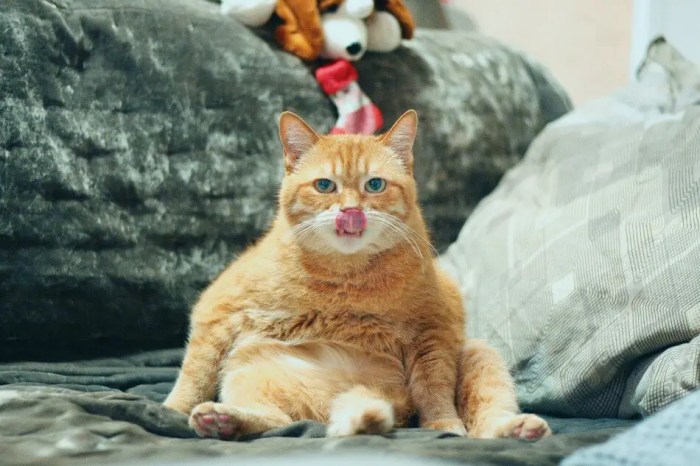
Source: punsandjokes.com
So, whether you’re a seasoned punster or a curious newcomer, we’ve covered a lot of ground in our exploration of cat puns. From understanding their historical roots and diverse forms to mastering the art of delivery and avoiding common pitfalls, you now have a solid foundation for appreciating and creating this unique brand of humor. Remember, a well-placed cat pun can brighten someone’s day – so go forth and spread the feline-fueled laughter!
Ultimately, cat puns are a testament to our playful nature and our enduring fascination with these enigmatic creatures. They’re a reminder that sometimes, the silliest jokes are the most enjoyable, and that a little bit of wordplay can go a long way in bringing a smile to someone’s face. Now, go forth and pun responsibly!
FAQ Summary
Why are cat puns so popular?
Cats are inherently amusing creatures, and their names and behaviors lend themselves perfectly to wordplay. Plus, the internet loves cats!
What’s the difference between a pun and a spoonerism?
A pun uses multiple meanings of a word or similar-sounding words for humor. A spoonerism swaps sounds between words (e.g., “a lack of shaving” instead of “a lack of shaving”).
How can I avoid making offensive cat puns?
Be mindful of your audience and avoid puns that rely on stereotypes or could be perceived as hurtful. When in doubt, err on the side of caution.
What makes a cat pun “viral”?
Relatability, cleverness, and a touch of absurdity are key. Puns that tap into current trends or popular cat memes also have a higher chance of going viral.
Are there any resources for finding more cat-related words to use in puns?
Online dictionaries, thesauruses, and even cat breed descriptions can be great sources of inspiration. Think about cat behaviors, physical traits, and common phrases associated with cats.

