Ever noticed your cat spending a lot of time just
-sitting* in their litter box, not just doing their business? It’s a surprisingly common behavior, and it’s not always about needing to go. Understanding why your feline friend chooses this particular spot can reveal a lot about their comfort, security, and even their health. We’ll dive into the fascinating world of cat litter box preferences, exploring everything from instinctive behaviors to potential medical concerns, and how you can create a happy and healthy litter box environment for your furry companion.
This isn’t just about scooping the litter; it’s about understanding your cat’s unique personality and needs. We’ll look at how their individual traits, the type of litter box they prefer, and even environmental factors all play a role in their litter box habits. Plus, we’ll cover what to do if those habits change, which can sometimes signal a bigger issue.
Understanding Your Cat’s Litter Box Habits
Let’s face it, litter box issues can be incredibly frustrating for cat owners. It’s not just about the mess; it’s about understanding what’s going on in your cat’s head. Cats are complex creatures with nuanced behaviors, and their litter box habits are a window into their overall well-being. This article dives deep into why cats choose specific litter box locations, what influences their preferences, and how to troubleshoot potential problems.
We’ll cover everything from instinctive behaviors to medical considerations, giving you the tools to create a happy and healthy litter box environment for your feline friend.
Understanding Feline Behavior – Litter Box Preference
A cat’s choice of litter box location isn’t random. It’s driven by a combination of instinct, personality, scent marking, and environmental factors. Understanding these influences is the first step in addressing any litter box concerns.
- Typical Reasons for Location Choice: Cats instinctively seek out secluded, quiet areas for elimination. They prefer spots that offer a degree of privacy and protection from potential threats. Think corners, under furniture, or even a slightly hidden spot in a room. This stems from their wild ancestors who needed to eliminate away from predators and rivals.
- Personality’s Influence: A shy cat will gravitate towards the most secluded and hidden spots possible, while a bolder cat might be less picky and choose a more accessible location. Playful cats might prefer a spot that’s easily accessible and doesn’t interfere with their playtime. A cat with anxiety might seek a spot that feels safe and secure, even if it’s not the most convenient.
- The Role of Scent Marking: Cats use scent marking to communicate with each other. Urinating and defecating in a particular spot deposits scent, signaling to other cats (and even to themselves) that this area is “claimed.” This is why a cat might repeatedly choose a specific spot, even if it’s not ideal.
- Environmental Factors: Noise, light, and temperature all play a role. A litter box near a noisy washing machine or in a brightly lit area is less appealing. Cats generally prefer a slightly warmer temperature for elimination. Drafts can also be a deterrent.
Why a Cat Might Choose a Litter Box Over Other Areas
While cats
-can* eliminate anywhere, the litter box offers a unique combination of security and comfort that appeals to their instincts. It’s about more than just having a place to go; it’s about feeling safe and in control.
- Instinctive Behaviors & Enclosed Spaces: Cats are naturally drawn to enclosed spaces for elimination. This instinct stems from their need to feel protected while vulnerable. An enclosed space provides a sense of security and allows them to scan their surroundings for potential threats.
- Security vs. Vulnerability: Eliminating in an open area leaves a cat exposed and vulnerable. A litter box, especially a covered one, provides a barrier and a sense of privacy, reducing anxiety and promoting relaxation.
- Evolutionary Reasons for Burying Waste: The instinct to bury waste is deeply ingrained in cats. In the wild, burying waste helps to conceal their scent from predators and rivals. The litter box provides a convenient and safe way to fulfill this instinct.
- A Cat’s Thought Process: Imagine a cat assessing a situation. They need to eliminate. Option 1: an open floor space – exposed, vulnerable, potential for interruption. Option 2: the litter box – enclosed, private, familiar scent, opportunity to bury. The litter box offers a clear advantage in terms of safety and comfort.
Litter Box Types and Cat Preferences
The type of litter box you choose can significantly impact your cat’s willingness to use it. There’s no one-size-fits-all solution; it’s about finding what your cat prefers. Here’s a comparison of common litter box types:
| Litter Box Type | Pros | Cons |
|---|---|---|
| Covered | Privacy, Odor Control | Can feel confining, harder to clean |
| Uncovered | Easy access, better ventilation | Less privacy, potential odor issues |
| Self-Cleaning | Convenience, reduced scooping | Expensive, can be noisy, some cats dislike it |
| Plastic | Affordable, readily available | Can absorb odors, may scratch |
| Stainless Steel | Durable, easy to clean, doesn’t absorb odors | Can be more expensive, some cats dislike the feel |
Beyond the box itself, other factors matter. Litter depth should be around 2-3 inches to allow for digging and burying. Different litter types appeal to different cats. Clay litter is traditional and affordable, clumping litter simplifies cleaning, crystal litter offers excellent odor control, and wood litter is a natural and eco-friendly option. Senior cats with arthritis may benefit from low-sided litter boxes to make access easier.
Medical Reasons for Litter Box Behavior Changes
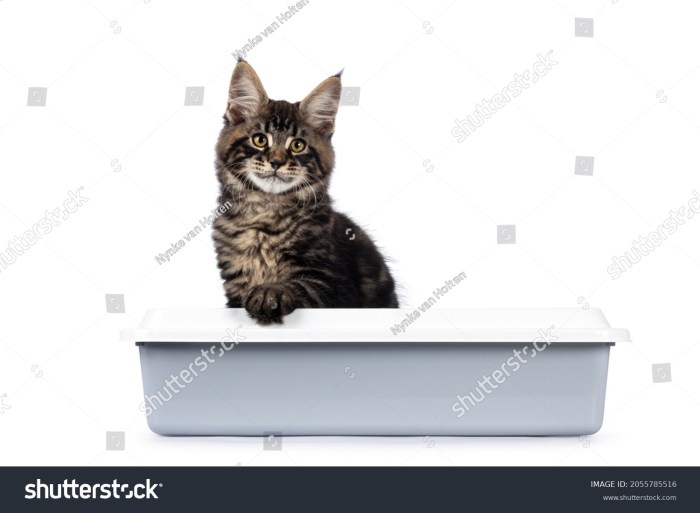
Source: shutterstock.com
Sudden changes in litter box habits can be a sign of an underlying medical condition. It’s crucial to rule out any medical causes before assuming it’s a behavioral issue.
- Urinary Tract Infections (UTIs): UTIs cause frequent urination and discomfort, leading cats to seek out the litter box more often.
- Kidney Disease: Kidney disease increases urination frequency, potentially resulting in more litter box visits.
- Pain (Arthritis, Dental Issues): Pain can make it difficult for a cat to reach the litter box, causing them to eliminate elsewhere.
- Hyperthyroidism: This condition increases a cat’s metabolic rate and urination frequency.
Environmental Stressors and Litter Box Habits
Cats are sensitive creatures, and changes in their environment can trigger stress, which can manifest as inappropriate elimination.
- Household Changes: New pets, new babies, moving – all these changes can disrupt a cat’s sense of security and lead to litter box problems.
- Loud Noises & Disturbances: Cats are easily startled by loud noises and frequent disturbances. This can make them feel anxious and less likely to use the litter box.
- Territorial Disputes: Conflicts with other cats, whether in the house or outside, can lead to inappropriate elimination as a way of marking territory.
Flowchart of Potential Causes:
Start with “Cat Eliminating Outside Litter Box.” Branch 1: Medical – Vet Check. Branch 2: Environmental – Assess for changes (new pet, move, etc.). Branch 3: Behavioral – Consider stress, territoriality. Each branch leads to further questions and potential solutions.
Litter Box Placement – Ideal Locations
Strategic litter box placement is key to encouraging your cat to use the box consistently. Consider these factors:
- Ideal Locations: Quiet, secluded areas away from high-traffic zones and noisy appliances.
- Proximity to Resting Spots: Placing a litter box near a cat’s favorite resting spot can be beneficial, as they often need to eliminate after waking up.
- Avoid High-Traffic Areas: Cats don’t want to feel like they’re being watched while eliminating.
Multi-Cat Household Visual: Imagine a living room with three cats. Litter boxes are placed in three separate locations: one in a quiet corner near the cat tree, one in a hallway closet, and one in a spare bedroom. The distances between the boxes are at least 10-15 feet to minimize competition. The rationale is to provide each cat with a private and accessible space to eliminate, reducing stress and territorial disputes.
Addressing Inappropriate Elimination – Step-by-Step
Dealing with inappropriate elimination requires a systematic approach. Here’s a step-by-step guide:
- Veterinary Checkup: Rule out any underlying medical conditions.
- Thorough Cleaning: Use an enzymatic cleaner to remove all traces of odor from soiled areas.
- Pheromone Diffusers: Use Feliway diffusers to reduce stress and promote appropriate behavior.
- Litter Box Appeal: Add fresh litter, change the location of the box, or try a different type of litter.
Litter Box Hygiene and Maintenance
Regular cleaning is essential for maintaining a healthy and appealing litter box environment.
- Regular Scooping: Scoop the litter box at least once a day, preferably twice.
- Deep Cleaning: Thoroughly clean the litter box with mild soap and water every 1-2 months. Avoid harsh chemicals like bleach.
- Odor Control: Proper hygiene is the best way to control litter box odor.
- Maintenance Schedule: Daily scooping, weekly litter change, monthly deep cleaning.
Multi-Cat Households – Litter Box Management
Managing litter boxes in a multi-cat household requires extra attention.
- The “n+1” Rule: Have one more litter box than the number of cats.
- Multiple Locations: Provide multiple litter box locations to reduce competition.
- Monitor Usage: Observe which cats are using which boxes to identify potential problems.
- Prevent Guarding: Ensure all cats have equal access to the litter boxes.
Special Considerations – Senior Cats and Kittens
Different age groups have different needs when it comes to litter box management.
- Senior Cats: Low-sided litter boxes are easier for senior cats with mobility issues to access.
- Kittens: Introduce kittens to the litter box early and provide positive reinforcement.
Starting with a kitten? Place the litter box near where they sleep and eat. Gently guide them to the box after meals and naps. Reward them with praise and a small treat when they use it successfully. Consistency is key!
Final Review
From instinctive behaviors rooted in evolution to the impact of stress and medical conditions, the reasons behind a cat sitting in their litter box are multifaceted. By understanding these factors – considering litter box type, placement, hygiene, and your cat’s individual personality – you can create a comfortable and secure space that encourages appropriate elimination. Ultimately, a happy cat is a healthy cat, and a well-managed litter box is a key component of their overall well-being.
So, take a closer look at your cat’s litter box habits – you might be surprised by what you discover!
Question Bank
Why does my cat sit in the litter box even when it’s clean?
Sometimes it’s about the feeling of security and privacy the litter box provides. It’s a designated “safe space” for them, and they might just enjoy relaxing there.
Is it normal for my cat to spend a lot of time in the litter box?
Occasional lounging isn’t usually a concern, but excessive time spent in the box could indicate stress, boredom, or a medical issue. Monitor for other changes in behavior.
My cat used to bury their waste, but now they don’t. What’s going on?
This could be due to stress, a painful condition (like arthritis making it difficult to dig), or even the type of litter you’re using. Experiment with different litters and consider reducing stress factors.
How can I tell if my cat’s litter box habits are stress-related?
Look for other signs of stress like hiding, changes in appetite, excessive grooming, or aggression. A sudden change in litter box habits is often a red flag.
What’s the best way to clean a litter box to remove odors completely?
Thoroughly scrub the box with warm water and a mild, unscented soap. Avoid ammonia-based cleaners, as they smell similar to urine and can attract your cat back to the spot. Rinse well and dry completely before adding fresh litter.
My cat is bullying other cats at the litter box. What can I do?
Increase the number of litter boxes and spread them out in different locations. Provide multiple escape routes and hiding places to reduce competition and territoriality.

