Cat Trees for Large Cats Giving Your Gentle Giants Space

Big cats like Maine Coons, Norwegian Forest Cats, and Ragdolls are known for their impressive size and gentle personalities. But their size also means they have unique needs when it comes to enrichment and play. Standard cat trees often just don’t cut it – they’re too small, not sturdy enough, or don’t cater to their natural climbing and lounging habits.
Investing in the right cat tree can make a huge difference in your large cat’s happiness, providing them with exercise, mental stimulation, and a safe space to call their own, ultimately reducing stress and encouraging healthy territory marking.
We’re diving deep into everything you need to know about choosing the perfect cat tree for your large feline friend. From sizing and materials to features and design, we’ll cover it all to ensure your cat gets a tree that’s both safe and enjoyable. It’s not just about buying a big tree; it’s about understanding your cat’s specific needs and finding a solution that truly enhances their quality of life.
Cat Trees for Large Cats: A Comprehensive Guide
Large cat breeds like Maine Coons, Norwegian Forest Cats, and Ragdolls are magnificent companions, but their size and unique needs often mean standard cat furniture just doesn’t cut it. They require more than just a place to perch; they need a space that caters to their physical strength, climbing instincts, and desire for enrichment. This guide dives deep into everything you need to know about selecting, building, and maintaining the perfect cat tree for your large feline friend, ensuring their comfort, safety, and happiness.Standard cat trees frequently fall short for these breeds.
Their smaller platforms struggle to support a cat’s considerable weight, and the overall structure may lack the stability needed for vigorous climbing and playing. Furthermore, the lack of vertical space can stifle a large cat’s natural desire to survey their territory from a high vantage point. Investing in an appropriately sized cat tree offers numerous benefits: increased exercise, mental stimulation through exploration and play, reduced stress through secure hideaways, and the ability to mark their territory effectively.
Size and Dimensions: Critical Considerations
Determining the right size cat tree is paramount. A tree that’s too small will be frustrating and potentially unsafe, while one that’s too large might overwhelm your space. Consider your cat’s breed, age, and activity level when making your decision. Here’s a table outlining recommended dimensions for various large cat breeds:
| Breed | Minimum Height | Minimum Base Width | Recommended Platform Size |
|---|---|---|---|
| Maine Coon | 60 inches (152 cm) | 36 inches (91 cm) | 18 x 18 inches (46 x 46 cm) |
| Norwegian Forest Cat | 54 inches (137 cm) | 32 inches (81 cm) | 16 x 16 inches (41 x 41 cm) |
| Ragdoll | 50 inches (127 cm) | 30 inches (76 cm) | 14 x 14 inches (36 x 36 cm) |
| Siberian | 58 inches (147 cm) | 34 inches (86 cm) | 17 x 17 inches (43 x 43 cm) |
Vertical space is crucial for large cats. Their climbing instincts are deeply ingrained, and a tall cat tree allows them to mimic natural behaviors like scaling trees and surveying their surroundings. Platform spacing also plays a vital role. Platforms that are too close together can feel cramped and frustrating, while those that are too far apart can be difficult and potentially dangerous to navigate, especially for older or less agile cats.
A good rule of thumb is to ensure a comfortable jumping distance between platforms, typically no more than 12-18 inches (30-46 cm).
Materials and Construction: Safety and Durability
The materials used in a cat tree’s construction directly impact its durability and safety. Particleboard is a common, budget-friendly option, but it’s less sturdy than solid wood and can be prone to damage from moisture. Solid wood, like pine or fir, offers superior strength and longevity, making it ideal for large, heavy cats. Carpet provides a comfortable surface for lounging, but it can wear down quickly with heavy use.
Sisal rope is essential for scratching posts, offering a durable and satisfying texture for cats to sharpen their claws.A sturdy base is non-negotiable. The base should be wide and heavy enough to prevent tipping, especially during vigorous play. Secure anchoring to the wall is also highly recommended, particularly for taller cat trees. Look for trees with reinforced joints, high-quality hardware, and a solid construction overall.
Signs of poor construction quality include flimsy materials, loose screws, wobbly platforms, and a generally unstable feel. Avoid trees with exposed staples or sharp edges, which can pose a hazard to your cat.
Features and Functionality: Beyond Basic Platforms
While platforms are the foundation of any cat tree, incorporating additional features can significantly enhance its appeal and functionality for large cats. A variety of features cater to different needs and preferences.
- Scratching Posts: Essential for claw maintenance and marking territory.
- Enclosed Hideaways: Provide a sense of security and privacy.
- Dangling Toys: Encourage play and exercise.
- Ramps: Offer easier access to higher levels, especially for older or less agile cats.
- Multiple Levels: Create a dynamic and engaging environment.
- Observation Perches: Allow cats to survey their surroundings from a high vantage point.
Incorporating natural elements, such as branches or logs, can add visual appeal and provide a more stimulating environment for your cat. Consider your cat’s personality when designing or selecting a cat tree. Active climbers will benefit from a tall, multi-level tree with plenty of scratching posts, while relaxed loungers will appreciate a tree with comfortable hideaways and plush platforms.
Types of Cat Trees for Large Cats
Several cat tree styles cater specifically to the needs of large breeds. Each style offers unique advantages and disadvantages.
| Style | Space Requirements | Stability | Cost | Best For |
|---|---|---|---|---|
| Condo-Style | Moderate to Large | Good | Moderate to High | Cats who enjoy enclosed spaces and multiple levels. |
| Tower-Style | Large | Excellent | High | Active climbers and cats who like to survey their surroundings. |
| Wall-Mounted | Minimal Floor Space | Good (with proper installation) | Moderate | Small spaces or cats who prefer a more secure climbing experience. |
| Corner Units | Utilizes Corner Space | Good | Moderate | Maximizing space in smaller rooms. |
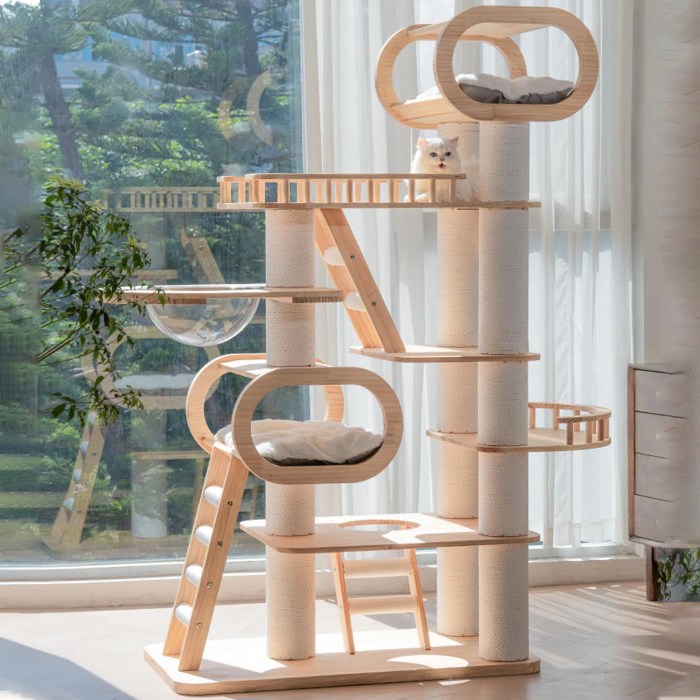
Condo-style cat trees offer a combination of platforms, hideaways, and scratching posts, providing a versatile and engaging environment. Tower-style trees are tall and slender, ideal for active climbers. Wall-mounted trees save floor space and offer a more secure climbing experience. Corner units are designed to fit snugly into corners, maximizing space efficiency.
Scratching Post Design and Placement
Sisal rope is the gold standard for scratching posts. Opt for high-quality, thick sisal rope that can withstand repeated use. Scratching posts should be tall enough to allow for full-body stretches, ideally at least 30 inches (76 cm) in height. Strategic placement is key. Incorporate scratching posts throughout the cat tree and in other areas of your home, particularly near doorways and windows.
Hideaway and Resting Areas
Large cats need secure and comfortable hideaways to retreat to when they feel stressed or overwhelmed. Enclosed boxes, hammocks, and plush beds are all excellent options. Consider your cat’s preferences when choosing a hideaway design. Ventilation is crucial to prevent overheating, and temperature regulation is important, especially in warmer climates.
Assembly and Maintenance
Assembling a large cat tree can be challenging, so follow the manufacturer’s instructions carefully. Prioritize safety by using appropriate tools and wearing protective gear. Regularly inspect the tree for wear and tear, loose parts, and potential hazards. Tighten screws, replace worn-out sisal rope, and clean the tree regularly with a mild detergent and water.
Integrating Cat Trees into Home Decor
Choosing a cat tree that complements your existing home decor can help it blend seamlessly into your living space. Consider the tree’s color, style, and materials. Strategic placement can maximize space and functionality. Disguising the cat tree as a piece of furniture, such as a bookshelf or room divider, can further enhance its aesthetic appeal.
Budget Considerations and Value
Cat trees for large cats can range in price from a few hundred dollars to over a thousand. While it’s tempting to opt for the cheapest option, investing in a durable and well-designed tree is ultimately more cost-effective in the long run. Look for trees made from high-quality materials, with a sturdy construction and a good warranty.
Final Wrap-Up
Source: wfcdn.com
Ultimately, selecting a cat tree for a large cat is an investment in their well-being. By carefully considering size, construction, features, and your cat’s individual personality, you can create a haven that caters to their unique needs. A well-chosen cat tree isn’t just a piece of furniture; it’s a playground, a resting spot, a scratching post, and a source of endless entertainment for your beloved gentle giant.
So, take your time, do your research, and prepare to witness the joy a truly perfect cat tree can bring!
FAQ Section
How much weight should a cat tree for a Maine Coon hold?
Maine Coons are notoriously heavy! A good cat tree for a Maine Coon should comfortably hold at least 30-40 pounds, and ideally more for extra security. Always check the manufacturer’s weight limit.
What’s the best material for scratching posts on a large cat tree?
Sisal rope is the gold standard. Look for thick, tightly-wound sisal rope – the thicker, the better for satisfying those scratching urges. Avoid carpeted scratching posts, as they tend to wear out quickly and aren’t as effective.
My cat is scared of high places. Should I still get a tall cat tree?
Even if your cat isn’t a natural climber, a cat tree can still be beneficial. Start with a shorter tree and gradually introduce them to it. Include plenty of cozy hideaways and ramps to make it feel safe and inviting.
How often should I clean my cat’s tree?
Regular cleaning is important! Vacuum the tree weekly to remove loose fur and dust. Wash removable cushions or beds monthly. For deeper cleaning, you can wipe down the entire tree with a damp cloth and mild detergent.
Can I attach a cat tree to the wall for extra stability?
Absolutely! Wall-mounting is highly recommended, especially for taller cat trees or homes with active cats. It prevents tipping and adds an extra layer of safety.
What if my cat ignores the cat tree completely?
Try adding enticing toys, catnip, or treats to the tree to pique their interest. You can also place the tree near a window or in a high-traffic area to encourage exploration. Patience is key!
