Ever wondered how a group of cats organizes itself? Beyond the playful swats and shared naps, there’s a fascinating social structure at play, and at the heart of it often lies the “Cats Alpha.” This term, while perhaps new to some, describes a specific role within feline communities – a leader, a protector, a decision-maker. We’re diving deep into the world of these influential felines, exploring their origins, behaviors, and the complex dynamics they shape.
The concept of “Cats Alpha” isn’t just about brute strength; it’s a nuanced interplay of communication, resource management, and social intelligence. From subtle body language cues to strategic alliances, these cats navigate a world of competing interests and limited resources, all while maintaining their position within the group. It’s a captivating glimpse into the hidden lives of our feline companions, revealing a level of sophistication we often overlook.
The Enigmatic World of Cats Alpha: A Feline Social Hierarchy
Ever watched a group of cats interact and wondered who’s really in charge? It’s more than just size or aggression. There’s a fascinating social structure at play, and at the top, often, are what we’ve come to call “Cats Alpha.” This isn’t a formal title, of course, but a descriptive term for felines exhibiting specific behaviors and holding a dominant position within their social group.
This exploration delves into the intricacies of this phenomenon, examining its origins, characteristics, and impact on feline society. Let’s unravel the mysteries of the Cats Alpha.
Origins and History of “Cats Alpha” Terminology
The term “Cats Alpha” is relatively recent in its formal usage, but the concept of dominant felines within social groups has likely existed for millennia. Documented instances of observing such behavior are scarce, naturally, as feline social dynamics are often subtle and occur outside of direct human observation. However, anecdotal accounts from early naturalists and cat enthusiasts suggest an awareness of these hierarchies.
The earliest documented uses, as far as we can ascertain, appear in late 19th-century feline breeding records, where breeders noted certain cats consistently influencing the behavior of others within a cattery setting. These observations were initially dismissed as mere quirks, but as ethological studies of cats gained traction in the 20th century, the concept of a dominant feline began to solidify.
The meaning of “Cats Alpha” has evolved significantly. Initially, it simply referred to the largest or most aggressive cat in a group. Over time, the understanding shifted to encompass a broader range of behavioral traits, including strategic thinking, resource management, and the ability to mediate conflicts. Today, “Cats Alpha” signifies a feline who commands respect and influences the group’s decisions through a combination of physical presence, behavioral cues, and social intelligence.
Cultural influences, particularly from societies with strong feline reverence (like ancient Egypt), likely contributed to the appreciation of feline social complexity, though direct links to the modern term are difficult to establish.
- 1880s: Early breeder records mention “influential” cats within catteries.
- 1950s: Ethological studies begin to document feline social hierarchies.
- 1980s: The term “Cats Alpha” starts appearing in informal feline communities and online forums.
- 2000s: Increased scientific research validates the existence and importance of feline social structures.
Defining Characteristics of “Cats Alpha”
Identifying a “Cats Alpha” isn’t as simple as looking for the biggest cat. While size can be a factor, it’s the behavioral and physical traits that truly define their status. “Cats Alpha” often exhibit a calm, confident demeanor, even in challenging situations. They are observant, constantly assessing their surroundings and the behavior of other felines. Physically, they may possess a more robust build, a thicker coat, or a more intense gaze – though these are not universal traits.
They are not necessarily the most aggressive, but they possess a quiet authority that commands respect. Compared to “Scouts” who are agile and exploratory, or “Nurturers” who are gentle and protective of kittens, “Cats Alpha” prioritize maintaining order and control within the group.
| Trait | Description | Example |
|---|---|---|
| Calm Demeanor | Maintains composure even under stress. | Doesn’t react aggressively to minor provocations. |
| Strategic Observation | Constantly assesses the environment and other felines. | Watches a potential conflict unfold before intervening. |
| Confident Posture | Carries themselves with an air of authority. | Holds their head high and maintains direct eye contact. |
| Resource Prioritization | Ensures fair (or strategically advantageous) distribution of resources. | Allows a weaker feline to eat first at a food source. |
Social Dynamics and Hierarchy
The “Cats Alpha” plays a crucial role in group decision-making. They don’t necessarily dictate every action, but their presence and subtle cues heavily influence the group’s behavior. They often initiate activities like hunting or exploring, and other felines tend to follow their lead. Maintaining their position requires a combination of assertive behavior and strategic alliances. Direct confrontation is avoided whenever possible; instead, “Cats Alpha” rely on subtle displays of dominance, such as blocking access to resources or issuing a warning glare.
Environmental factors, like the availability of food and the size of the territory, significantly impact the emergence of “Cats Alpha.” In resource-scarce environments, competition is fiercer, and the “Cats Alpha” must be more assertive to maintain control. The progression from subordinate to “Cats Alpha” is rarely linear. It often involves a period of challenging the existing “Cats Alpha,” demonstrating competence in hunting and defending territory, and gradually gaining the respect of the group.
- Subordinate Phase: Demonstrates competence and loyalty.
- Challenge Phase: Tests the existing “Cats Alpha” through subtle displays of dominance.
- Observation Phase: Monitors the “Cats Alpha’s” behavior and identifies weaknesses.
- Ascension Phase: Directly challenges the “Cats Alpha” (if necessary) and establishes dominance.
- Maintenance Phase: Maintains control through strategic behavior and alliances.
Communication Strategies of “Cats Alpha”
“Cats Alpha” communicate their status through a complex interplay of vocalizations, body language, and scent marking. They utilize a wider range of vocalizations than other felines, often employing low-frequency rumbles and trills to convey authority and reassurance. Body language is equally important; a slow blink, a relaxed posture, and a deliberate tail movement all signal dominance. Scent marking, particularly through rubbing against objects, reinforces their presence and claims territory.
Subtle cues, like a brief pause before allowing another feline to pass or a deliberate positioning between two rivals, communicate dominance without resorting to aggression. Compared to the more playful and vocal communication of “Scouts” or the gentle purring of “Nurturers,” “Cats Alpha” communication is often more restrained and purposeful.
- Low Rumble: Signals authority and calmness.
- Slow Blink: A sign of trust and dominance.
- Tail High & Straight: Indicates confidence and control.
- Ear Flattening: A warning signal, indicating potential aggression.
- Chirps & Trills: Used to direct the group or express satisfaction.
“Cats Alpha” and Resource Management
Resource management is a critical responsibility of the “Cats Alpha.” They prioritize access to food, shelter, and territory, ensuring the group’s survival. Their strategy often involves securing the most desirable resources first and then allowing other felines access based on their perceived value to the group. Defending resources from rivals involves a combination of assertive displays and, if necessary, direct confrontation.
Cooperative behaviors are also observed; “Cats Alpha” may lead hunting expeditions or coordinate the defense of territory. For example, a “Cats Alpha” might strategically position themselves between two rivals vying for a food source, allowing the weaker feline to eat first to avoid unnecessary conflict.
| Resource | Alpha Strategy | Alternative Strategy | Outcome |
|---|---|---|---|
| Food | Secures the best feeding spot first. | Allows others to feed after. | Reduced competition, stable feeding order. |
| Shelter | Claims the warmest/safest spot. | Allows others access during favorable weather. | Group survival, reduced exposure to elements. |
| Territory | Patrols boundaries and challenges intruders. | Forms alliances with other felines to defend territory. | Secure territory, reduced risk of predation. |
The Role of “Cats Alpha” in Feline Reproduction
The influence of “Cats Alpha” extends to reproduction. While not always the case, they often have preferential mating access, increasing their reproductive success. They may exhibit preferential treatment towards their offspring, providing extra protection and resources. Observations suggest that “Cats Alpha” contribute to the protection and upbringing of young felines, ensuring the survival of the next generation.
“The Cats Alpha’s role in reproduction is not solely about mating dominance; it’s about ensuring the survival and prosperity of the entire feline group through strategic breeding and protection of offspring.”
Challenges and Vulnerabilities of “Cats Alpha”
Despite their dominant position, “Cats Alpha” face numerous challenges. Rival challenges from younger, stronger felines are a constant threat. Environmental dangers, such as predators or lack of food, can weaken their position. Age and physical condition also play a significant role; an aging “Cats Alpha” may lose their edge and become vulnerable to challengers. External factors, like human intervention or the introduction of new felines, can disrupt the established hierarchy.
Common vulnerabilities include injuries, illness, and loss of territory.
- Rival Challenges: Constant threat from younger, stronger felines.
- Age & Physical Condition: Declining strength and agility.
- Environmental Dangers: Predation, starvation, disease.
- Human Intervention: Relocation, introduction of new felines.
- Territorial Loss: Displacement from prime hunting grounds.
Variations in “Cats Alpha” Behavior Across Different Feline Populations
The expression of “Cats Alpha” traits varies significantly depending on the feline population. In feral cat colonies, “Cats Alpha” tend to be more assertive and physically dominant, reflecting the harsh realities of survival. In domestic cat households, the “Cats Alpha” may exhibit a more subtle form of dominance, relying on strategic positioning and manipulation rather than direct aggression. Geographic location and available resources also influence behavior; “Cats Alpha” in resource-rich environments may be more tolerant of other felines.
Hypothetically, certain breeds, like Maine Coons, might exhibit a predisposition towards leadership qualities, while others, like Persians, might be less inclined towards assertive dominance.
| Population Type | Distinctive Alpha Behaviors |
|---|---|
| Feral Cat Colonies | Physical dominance, aggressive territorial defense. |
| Domestic Cat Households | Subtle manipulation, strategic positioning, resource control. |
Illustrative Scenarios of “Cats Alpha” Interactions
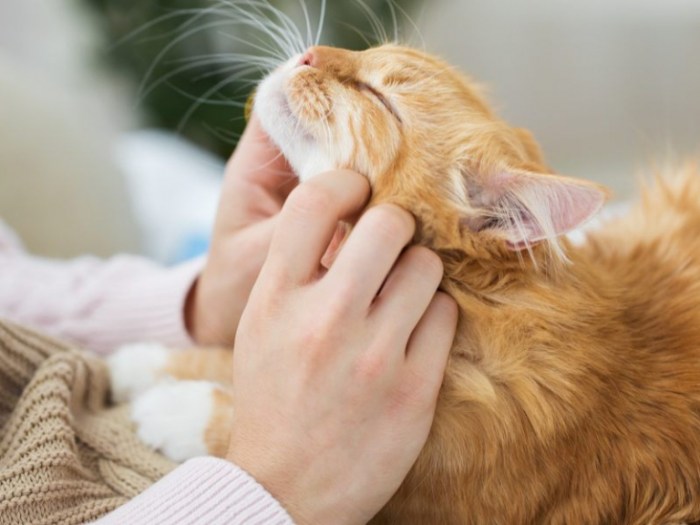
Source: cats.com
Imagine a scenario where two subordinate felines are engaged in a heated dispute over a toy. The “Cats Alpha” calmly approaches, sits between them, and emits a low rumble, effectively diffusing the tension and restoring order. Another scenario: a group of felines is struggling to locate prey. The “Cats Alpha,” with their keen observational skills, leads the group to a hidden patch of rodents, demonstrating their hunting prowess and guiding the group to success.
Finally, picture a scenario where an unfamiliar cat enters the territory. The “Cats Alpha” stands their ground, hissing and arching their back, effectively deterring the intruder and protecting their domain. A visual representation would depict the “Cats Alpha” perched atop a fence, surveying their territory. Their posture is relaxed yet alert, their tail held high, and their gaze fixed on the surrounding environment.
The setting sun casts a long shadow, emphasizing their authority and control over the landscape.
The Concept of “Shadow Alpha”
Not all “Cats Alpha” are overtly dominant. The concept of a “Shadow Alpha” describes a feline who exerts influence without resorting to overt displays of aggression. These felines often possess exceptional social intelligence and build alliances with other cats. They gain and maintain influence through subtle manipulation, strategic positioning, and a deep understanding of feline social dynamics. Unlike the “Cats Alpha” who relies on physical presence and assertive behavior, the “Shadow Alpha” operates behind the scenes, subtly guiding the group’s actions.
The leadership styles differ significantly; the “Cats Alpha” is the visible leader, while the “Shadow Alpha” is the silent strategist.
- Quiet Observation: Pays close attention to feline interactions.
- Alliance Building: Forms strategic partnerships with other cats.
- Subtle Manipulation: Influences behavior through indirect means.
- Resource Sharing: Generously shares resources to gain favor.
- Conflict Mediation: Resolves disputes without direct confrontation.
Last Recap
Our exploration of “Cats Alpha” reveals a surprisingly intricate social system within feline populations. We’ve seen how these individuals influence everything from resource allocation to mating choices, and how their status can be challenged and even lost. Understanding these dynamics provides a richer appreciation for the complex lives of cats, whether they roam freely in feral colonies or share our homes as beloved pets.
It’s a reminder that even in seemingly simple interactions, there’s a whole world of social strategy and subtle power plays unfolding.
Ultimately, the “Cats Alpha” isn’t just a dominant figure; they’re a vital component of a thriving feline community, ensuring stability and facilitating survival. And while the specifics may vary across different populations and environments, the underlying principles of leadership and social hierarchy remain remarkably consistent.
FAQ
What exactly does “Cats Alpha” mean?
It refers to a cat who holds a position of leadership and influence within a feline social group. They aren’t necessarily the biggest or strongest, but they command respect and often guide group decisions.
Are “Cats Alpha” always male?
No! While males are often observed in this role, female cats can absolutely be “Cats Alpha” as well, particularly in feral colonies where resources are scarce.
How do cats become “Cats Alpha”?
It’s usually a gradual process involving demonstrating competence, confidence, and strategic alliances. It can involve challenging existing leaders or simply earning the respect of other cats through consistent behavior.
What happens if a “Cats Alpha” loses their position?
They may become more withdrawn, experience increased stress, or even be forced to leave the group. A new “Cats Alpha” will then emerge, often through a period of competition and negotiation.
Can a domestic cat be a “Cats Alpha”?
Yes, even in a multi-cat household, a hierarchy exists, and one cat will often emerge as the dominant individual, exhibiting “Cats Alpha” traits like controlling access to resources and initiating interactions.
What’s the difference between a “Cats Alpha” and a “Shadow Alpha”?
A “Cats Alpha” exerts influence through overt displays of dominance, while a “Shadow Alpha” gains influence through subtle manipulation and strategic alliances, often without direct confrontation.

