It’s a striking thought, isn’t it? That our beloved house cats can sometimes bear an uncanny resemblance to the majestic cheetah. Beyond the adorable factor, there’s a surprising amount of science, genetics, and even cultural significance behind this visual connection. We’ll dive into the physical similarities, explore the breeds that truly capture the cheetah’s essence, and unravel the genetic mysteries that make these comparisons possible.
Get ready to see your feline friend in a whole new light!
From the distinctive spotted coats to the sleek body structures, the parallels between domestic cats and cheetahs are more than just a coincidence. We’ll examine how specific breeds have evolved or been selectively bred to showcase these cheetah-like traits, and how even subtle behaviors can echo the hunting strategies of the world’s fastest land animal. Plus, we’ll touch on how our perception of these animals is shaped by lighting, photography, and centuries of cultural symbolism.
Do Cats Really Look Like Miniature Cheetahs? Exploring the Resemblance
It’s a common observation – a flash of spotted fur, a graceful pounce, and suddenly, your house cat seems to channel its inner cheetah. While obviously, a domestic feline isn’t going to outrun the fastest land animal, the visual and behavioral similarities are striking enough to spark curiosity. This article dives into the fascinating ways cats and cheetahs share traits, from their coats and builds to their hunting styles and even their cultural symbolism.
We’ll explore the genetics behind these resemblances and why our pets sometimes evoke the image of their wild cousins.
The connection isn’t just about aesthetics. It touches on evolutionary history, genetic quirks, and the way we, as humans, perceive and interpret animal behavior. Let’s unpack this intriguing phenomenon.
1. Physical Resemblances
Coat Patterns & Markings
The most immediate similarity people notice is in the coat. Both domestic cats and cheetahs exhibit a range of spotted and patterned coats, though the specifics differ. Spots, rosettes (patterns of spots grouped together), and stripes all appear in both species, albeit with variations in size, shape, and distribution. Understanding these patterns requires a look at the genetics at play.
Coat Patterns in Domestic Cats
Several domestic cat breeds showcase markings that strongly resemble cheetah patterns. These include:
- Bengal: Known for their bold, random rosettes that mimic the cheetah’s spots. Color variations range from brown spotted tabby to snow Bengal (seal lynx point, seal mink, seal sepia) with varying degrees of rosetting.
- Savannah: A hybrid breed (Serval x domestic cat) with tall, dark spots and a lean build, creating a very cheetah-like appearance. Colors include brown spotted tabby, silver spotted tabby, and black smoke.
- Egyptian Mau: Distinguished by their small, well-defined spots and a unique “butterfly” marking on their forehead. They typically come in silver, bronze, and smoke colors.
- Ocelot Tabby: Some domestic cats, particularly those with tabby markings, can display a pattern reminiscent of an ocelot, which itself shares some visual similarities with a cheetah.
Genetic mutations play a significant role in these coat variations. The Agouti gene, for example, controls the distribution of pigment, allowing for the creation of spotted and banded patterns. Mutations in this gene, along with others involved in melanin production, can lead to the development of coat patterns that mimic cheetah characteristics. The tabby gene is also crucial, influencing the presence and arrangement of stripes and spots.
Comparing Spot Patterns
To better visualize the differences and similarities, here’s a table comparing spot patterns:
| Species | Pattern Description | Typical Coloration |
|---|---|---|
| Cheetah | Solid, round or oval spots, evenly distributed. | Tan or yellowish-brown with black spots. |
| Ocelot | Large, irregular rosettes with a dark center. | Brownish-yellow with black or dark brown rosettes. |
| Bengal | Random, two-toned rosettes (dark spots with a lighter center). | Brown, snow (seal lynx point), or silver with black or dark brown rosettes. |
| Savannah | Vertical stripes and spots, often with a “cheetah-like” arrangement. | Brown, silver, or black with dark spots. |
2. Body Structure & Build
Beyond the coat, there are subtle similarities in body structure. While a domestic cat is significantly smaller than a cheetah, certain breeds exhibit a more athletic build that echoes the cheetah’s physique. However, fundamental skeletal differences remain.
Skeletal Differences
Cheetahs possess longer legs relative to their body size compared to domestic cats. Their spine is also exceptionally flexible, allowing for a greater range of motion during running. This flexibility, combined with a lightweight build and specialized claws, contributes to their incredible speed. Domestic cats, while agile, don’t have the same degree of skeletal adaptation for sustained high-speed running.
Breed-Specific Builds
Certain breeds, like the Abyssinian and Siamese, have a leaner, more muscular build that can be reminiscent of a cheetah. The Abyssinian, in particular, has long legs and a lithe frame. The Siamese, with its elegant posture and athletic movements, also shares a certain grace with the cheetah.
Tail Function
Both cheetahs and domestic cats use their tails for balance and maneuvering. However, the cheetah’s tail is longer and more muscular, acting as a rudder during high-speed turns. Domestic cat tails are shorter and primarily used for balance during climbing and jumping.
Cheetahs are marvels of evolutionary engineering, built for speed. Their flexible spine, powerful legs, and semi-retractable claws allow for bursts of incredible acceleration and precise turns. While domestic cats lack the cheetah’s extreme adaptations, they share a similar agility and grace, honed by millions of years of evolution as skilled hunters.
3. Facial Features & Head Shape
The facial features contribute significantly to the cheetah-like impression some cats give. Eye shape, nose shape, and ear placement all play a role. While the overall skull structure differs, certain breeds exhibit features that evoke a cheetah-like appearance.
Facial Feature Comparisons
Key facial features that contribute to the resemblance include:
- Eye Shape: A slightly elongated, almond-shaped eye can resemble the cheetah’s eye.
- Nose Shape: A relatively narrow and slightly pointed nose can contribute to the cheetah-like look.
- Ear Placement: Ears set high on the head and slightly forward-pointing can enhance the resemblance.
Head shape also differs. Cheetahs have a more rounded head with a shorter muzzle compared to the more angular head shape often seen in domestic cats.
Hairless breeds, like the Sphynx, can accentuate the underlying bone structure, sometimes highlighting features that resemble a cheetah’s face.
Facial Feature Table
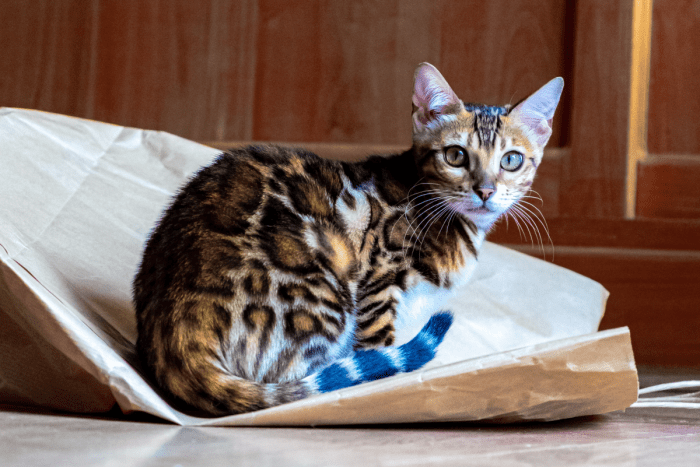
Source: saymedia-content.com
| Feature | Cheetah | Domestic Cat (General) | Breed 1 (Bengal) | Breed 2 (Savannah) |
|---|---|---|---|---|
| Eye Shape | Almond-shaped, slightly hooded | Round to almond-shaped | Almond-shaped, often bright green | Almond-shaped, often golden or amber |
| Nose Shape | Relatively narrow, slightly pointed | Variable, generally broader | Moderate width | Narrow, often with a slightly hooked tip |
| Ear Shape | Small, rounded tips | Variable, triangular to rounded | Triangular, upright | Large, upright, often tufted |
| Head Profile | Rounded forehead, shorter muzzle | More angular, variable muzzle length | Moderate width, slightly rounded | Longer, more angular |
4. Behavior & Movement
The similarities extend beyond appearance to behavior and movement. While cheetahs are apex predators built for speed, domestic cats retain many of the hunting instincts and movement patterns of their wild ancestors.
Hunting Styles
Cheetahs are known for their stalk-and-ambush hunting style, relying on stealth and bursts of speed to capture prey. Domestic cats exhibit similar behaviors, stalking their toys or potential prey with intense focus before pouncing with surprising agility.
Speed and Agility
Obviously, cheetahs are far faster than domestic cats. Cheetahs can reach speeds of up to 75 mph, while domestic cats typically top out around 30 mph. However, domestic cats are incredibly agile, capable of impressive leaps and quick changes in direction.
Play Behavior
Kitten play often mimics cheetah-like movements. Chasing, leaping, and pouncing are all common behaviors that demonstrate a feline’s natural hunting instincts and athleticism.
- Intense focus on a target
- Quick bursts of speed
- Precise pouncing
- Agile maneuvering
- Silent stalking
5. Breed-Specific Examples
The “Cheetah Look-Alikes”
Certain cat breeds are frequently compared to cheetahs due to their striking appearance. Let’s examine a few of the most notable examples.
Savannah Cats
The Savannah cat, a hybrid of a Serval and a domestic cat, is arguably the most cheetah-like domestic breed. Its tall, slender build, spotted coat, and large ears create a very distinctive appearance. The first generation (F1) Savannahs, with a higher percentage of Serval genetics, most closely resemble cheetahs.
Bengal Cats
As mentioned earlier, the Bengal cat’s random rosettes and muscular build evoke the image of a cheetah. The contrast between the dark spots and the lighter background color further enhances the resemblance.
Egyptian Maus
The Egyptian Mau’s small, well-defined spots and athletic build contribute to its cheetah-like appearance. Their distinctive “butterfly” marking on their forehead adds to their unique charm.
| Breed | Key Similarities |
|---|---|
| Savannah | Tall, slender build; spotted coat; large ears; cheetah-like posture. |
| Bengal | Spotted coat with rosettes; muscular build; agile movements. |
| Egyptian Mau | Spotted coat; athletic build; graceful movements. |
6. Genetics & Coat Color Inheritance
Understanding the genetics behind coat color and patterns is key to appreciating the cheetah-like resemblances in domestic cats. Several genes interact to determine the final appearance.
Coat Color Genetics Basics
The Agouti gene is a primary determinant of whether a cat has a spotted or striped pattern. The Spotting gene (S) controls the presence or absence of spots. The “S” allele results in a spotted coat, while the “s” allele results in a solid or tabby coat. Other genes influence the intensity and distribution of pigment.
Gene Combinations & Cheetah-Like Markings
Specific combinations of these genes can result in coat patterns that mimic cheetah markings. For example, a cat with the Agouti gene and the “S” allele for spotting, combined with specific melanin production genes, might develop a spotted coat resembling a cheetah’s.
Introducing cheetah genes into domestic cats is currently a hypothetical scenario. The genetic differences between the two species are significant, and successful hybridization would be extremely challenging, raising ethical concerns about animal welfare and genetic integrity.
Genes and Their Impact
- Agouti (A): Controls banded or spotted patterns.
- Spotting (S): Determines the presence or absence of spots.
- Melanin Production Genes: Influence the intensity and color of the spots.
- Tabby (T): Influences the pattern of stripes or spots.
7. Visual Perception & Optical Illusions
The perception of a cat’s appearance can be significantly influenced by external factors like lighting and background. Clever photography can further accentuate or minimize cheetah-like features.
Lighting and Background
Strong, directional lighting can create shadows that emphasize the spots on a cat’s coat, making it appear more like a cheetah. A background with contrasting colors can also enhance the visual effect.
Photography Techniques
Camera angles and composition play a crucial role. A low angle can make a cat appear larger and more imposing, while a close-up shot can highlight facial features that resemble a cheetah’s.
Imagine a photograph of a Bengal cat bathed in golden sunlight, with a dark, textured background. The shadows accentuate the rosettes, and the cat’s pose – perhaps a crouch with its head slightly tilted – further enhances the cheetah-like illusion.
To photograph a cat to emphasize its cheetah-like qualities:
- Lighting: Use strong, directional light to create shadows.
- Background: Choose a background with contrasting colors and textures.
- Pose: Capture the cat in a crouched or stalking pose.
- Angle: Shoot from a low angle to make the cat appear larger.
- Focus: Sharply focus on the cat’s face and coat markings.
8. Cultural Significance & Symbolism
Both cheetahs and cats hold significant cultural importance across various societies. Their symbolic meanings often overlap, reflecting their shared qualities of grace, agility, and independence.
Cultural Portrayals
Cheetahs are often depicted in African art and folklore as symbols of speed and power. Cats, in many cultures, are associated with mystery, independence, and good luck. Ancient Egyptian art frequently featured cats as sacred animals, representing protection and fertility.
Symbolic Meanings
The cheetah symbolizes speed, grace, and power, while cats often represent independence, mystery, and intuition. The perceived resemblance between the two animals may have contributed to the association of cats with qualities like agility and stealth.
Cultural Symbols List
- Cheetah: Speed, power, grace, Africa, royalty.
- Cat: Independence, mystery, intuition, protection, good luck, fertility (especially in ancient Egypt).
- Overlapping Themes: Agility, stealth, independence, connection to the wild.
Conclusion
Ultimately, while our domestic companions will never quite reach the cheetah’s incredible speed or agility, the visual echoes and shared behaviors are undeniably captivating. Understanding the genetics, physical traits, and even the cultural significance behind this resemblance deepens our appreciation for both species. So, the next time you glance at your spotted tabby, remember – you might just be looking at a miniature, purring version of a cheetah!
It’s a testament to the beauty of evolution and the surprising connections that can exist within the animal kingdom. Whether it’s a playful pounce or a striking coat pattern, the “cheetah look-alike” in your cat is a reminder of the wildness that still resides within our domestic companions.
Expert Answers
Why do some cats have spotted coats like cheetahs?
It’s largely due to genetic mutations affecting coat color inheritance, specifically genes like Agouti and Spotting. These genes, when combined in certain ways, can produce spotted or patterned coats that mimic cheetah markings.
Can you actually breed a cat that looks
-exactly* like a cheetah?
No, not really. While breeds like the Savannah cat have a strong cheetah resemblance, they are still distinct species. Introducing cheetah genes into domestic cats is currently not feasible and raises significant ethical concerns.
What’s the difference between a cheetah’s spots and an ocelot’s spots?
Cheetah spots are solid and distinct, while ocelots have rosettes – spots that are grouped together to form larger, flower-like patterns. The coloration also differs, with cheetahs typically having black spots on a tan background, while ocelots have more varied colors.
Do all Savannah cats look like cheetahs?
Not all. The degree of cheetah resemblance varies depending on the generation of the Savannah cat (how far removed it is from its cheetah ancestor). Earlier generations tend to have a stronger resemblance.
Why do cats stalk and pounce like cheetahs?
These behaviors are instinctive hunting strategies inherited from their wild ancestors. While domestic cats don’t need to hunt for survival, these ingrained behaviors remain.
How does lighting affect how a cat looks?
Lighting plays a huge role! Strong, directional light can accentuate the contrast of a cat’s spots, making them appear more cheetah-like. Conversely, soft, diffused light can minimize the appearance of spots.

