Understanding Your Cats Rear Legs Causes, Signs & Solutions

Have you noticed your cat seems a little off, maybe a bit hesitant to jump or a slight limp in their rear legs? It’s a worrying sight, and you’re not alone – rear leg issues are surprisingly common in our feline friends. This guide dives deep into the potential causes, from subtle behavioral changes to serious medical conditions, and explores what you can do to help your cat regain their mobility and comfort.
We’ll cover everything from recognizing the signs to treatment options and even how to make your home more cat-friendly.
The hind legs are crucial for a cat’s agility and quality of life. Problems can stem from a variety of sources, including age-related wear and tear, injuries, genetic predispositions, and underlying medical conditions. Understanding these factors is the first step in ensuring your cat receives the best possible care. We’ll break down the complexities, offering practical advice and insights to help you navigate this challenging situation.
Rear Leg Issues in Cats: A Comprehensive Guide
Rear leg problems in cats can be heartbreaking to witness. It’s tough seeing your feline friend struggle with mobility, and understanding the potential causes, symptoms, and treatment options is crucial for providing the best possible care. This guide aims to break down everything you need to know about rear leg issues in cats, from common causes to long-term management, presented in a way that’s easy to understand and actionable.
We’ll cover a wide range of topics, so you can be better equipped to support your cat’s health and well-being.
Common Causes of Rear Leg Issues in Cats
A variety of factors can contribute to rear leg problems in cats. It’s rarely a single, simple issue, and often involves a complex interplay of anatomical structures and underlying conditions. Understanding these potential causes is the first step towards effective diagnosis and treatment.
- Anatomical Structures Involved: The rear leg is a complex system. Problems can arise in the hips (the connection point between the leg and the body), knees (the stifle joint), ankles (the hock joint), nerves (which control muscle function), and the spinal cord (the central communication pathway). Damage or dysfunction in any of these areas can impact mobility.
- Possible Medical Conditions: The list of potential conditions is extensive, ranging in severity.
- Mild: Muscle strains, minor sprains, temporary lameness due to overexertion. These often resolve with rest and supportive care.
- Moderate: Arthritis (degenerative joint disease), luxating patella (dislocated kneecap), early stages of hip dysplasia. These conditions may require ongoing management and pain relief.
- Severe: Spinal cord injuries (due to trauma or disease), fractures, tumors affecting the bones or joints, advanced hip dysplasia requiring surgical intervention. These conditions often necessitate intensive treatment and rehabilitation.
- Contributing Factors: Several factors increase the risk of rear leg issues. Age is a significant factor, as arthritis and degenerative conditions become more common with older cats. Breed predispositions exist – certain breeds (like Maine Coons and Persians) are more prone to hip dysplasia. Lifestyle factors, such as obesity and lack of exercise, can also contribute to joint stress and mobility problems.
- Common Injuries: Fractures (broken bones) can occur from falls or trauma. Dislocations, particularly of the patella, are also relatively common. Soft tissue damage, such as ligament tears or muscle injuries, can result from sudden movements or accidents.
- Genetic Predisposition: Genetics play a role in many rear leg conditions. Hip dysplasia, luxating patella, and certain neurological disorders have a hereditary component, meaning they are more likely to occur in cats with affected ancestors.
Recognizing Symptoms & Signs
Early detection is key to managing rear leg problems effectively. Subtle changes in your cat’s behavior or appearance can be early warning signs that something is amiss. Don’t dismiss these changes – they could indicate underlying discomfort or mobility limitations.
- Behavioral Changes: Reluctance to jump onto favorite spots, decreased activity levels, hiding more than usual, changes in grooming habits (difficulty reaching certain areas), and increased irritability can all be signs of rear leg discomfort.
- Visible Signs: Limping, dragging paws, stiffness, an unusual gait (walking pattern), and reluctance to put weight on one or both rear legs are all visible indicators of a problem.
| Symptom | Possible Cause | Severity Level (1-5) | Action Needed |
|---|---|---|---|
| Reluctance to jump | Arthritis, muscle strain, hip dysplasia | 2 | Monitor closely, consider vet visit if persistent |
| Limping | Fracture, sprain, dislocation | 4 | Immediate vet visit |
| Dragging paws | Nerve damage, paralysis, severe weakness | 5 | Emergency vet visit |
| Stiffness after rest | Arthritis, muscle stiffness | 2-3 | Consider vet visit, provide warm resting place |
| Altered gait | Hip dysplasia, luxating patella, nerve compression | 3 | Vet visit for assessment |
| Decreased activity | Pain, weakness, fatigue | 3 | Monitor closely, vet visit if significant change |
| Difficulty grooming | Pain, limited range of motion | 2-3 | Assist with grooming, vet visit if severe |
| Irritability | Pain, discomfort | 3 | Handle with care, vet visit to address underlying cause |
Diagnostic Procedures
Accurate diagnosis is essential for effective treatment. Your veterinarian will employ a variety of diagnostic tools to pinpoint the cause of your cat’s rear leg problems.
- Physical Examination: The veterinarian will perform a thorough physical examination, assessing your cat’s posture, gait, range of motion, and reflexes. Palpation (feeling the joints and muscles) can help identify areas of pain or swelling.
- Imaging Techniques:
- X-rays: Used to visualize bones and joints, helping to identify fractures, dislocations, and signs of arthritis.
- CT scans: Provide more detailed images of bones and soft tissues than X-rays, useful for evaluating complex fractures or tumors.
- MRIs: Offer the most detailed images of soft tissues, including nerves, ligaments, and the spinal cord. They are particularly helpful in diagnosing spinal cord injuries and nerve-related problems.
- Neurological Examination: This assesses nerve function and reflexes, helping to identify nerve damage or spinal cord problems.
- Blood Tests & Laboratory Analyses: Blood tests can rule out underlying systemic diseases that might be contributing to the rear leg problems.
- Joint Fluid Analysis: If a joint is swollen, fluid can be withdrawn and analyzed to look for signs of infection, inflammation, or arthritis.
Treatment Options: Conservative Management
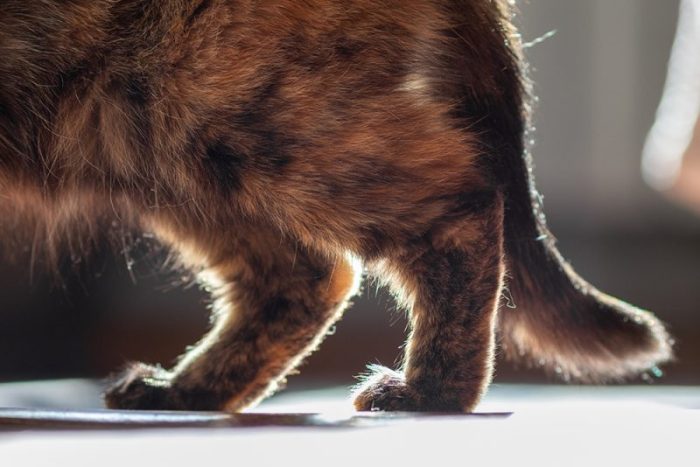
Source: catster.com
Conservative management focuses on alleviating pain, reducing inflammation, and supporting mobility without surgery. This approach is often the first line of treatment for many rear leg conditions.
- Pain Management: A comprehensive pain management plan may include both pharmaceutical (medications) and non-pharmaceutical approaches. Medications like NSAIDs (non-steroidal anti-inflammatory drugs) and analgesics can help reduce pain and inflammation. Non-pharmaceutical approaches include acupuncture, massage, and warm compresses.
- Rest & Restricted Activity: Limiting activity is crucial for allowing injured tissues to heal and reducing stress on joints. Confine your cat to a small area and discourage jumping or running.
- Physical Therapy & Rehabilitation: Physical therapy can help improve muscle strength, range of motion, and coordination.
- Passive Range of Motion Exercises: Gently moving your cat’s leg through its full range of motion can help prevent stiffness and maintain joint flexibility.
- Massage: Gentle massage can help relieve muscle tension and improve circulation.
- Controlled Walking: Short, controlled walks on a leash can help maintain muscle strength and improve gait.
- Weight Management: Maintaining a healthy weight is essential for reducing stress on joints and minimizing pain.
- Supportive Devices: Slings can provide support for weak hind legs, allowing your cat to move more easily. Harnesses can be used for controlled walks. Ramps can help cats access elevated surfaces without jumping.
Treatment Options: Surgical Interventions
Surgery may be necessary for certain rear leg conditions, particularly those involving fractures, dislocations, or severe joint damage.
- Surgical Procedures: Common surgical procedures include fracture repair (using plates, screws, or pins), joint replacement (replacing a damaged joint with an artificial one), and tumor removal.
- Recovery Process: Post-operative care is crucial for successful recovery. This includes pain management, restricted activity, and physical therapy.
- Risks & Complications: As with any surgery, there are potential risks and complications, such as infection, bleeding, and anesthesia-related complications.
- Surgical Techniques: Different surgical techniques may be used depending on the specific condition. For example, a fractured femur (thigh bone) might be repaired with an intramedullary pin, while a dislocated hip might require a femoral head and neck excision.
- Criteria for Surgery: Surgery is typically considered when conservative management fails to provide adequate relief, or when the condition is severe enough to warrant surgical intervention (e.g., a displaced fracture).
Specific Conditions: Hip Dysplasia
Hip dysplasia is a common condition in cats, particularly in certain breeds. It involves abnormal development of the hip joint, leading to pain, instability, and arthritis.
- Development & Progression: Hip dysplasia typically develops during kittenhood or adolescence, as the hip joint grows and matures. It can progress over time, leading to increasing pain and mobility limitations.
- Grades of Hip Dysplasia: Hip dysplasia is graded based on the severity of the abnormalities. Higher grades are associated with more severe symptoms.
- Treatment Options: Treatment options range from conservative management (pain relief, weight management, physical therapy) to surgical interventions (e.g., femoral head and neck excision).
[Flowchart illustrating the diagnostic and treatment pathway for hip dysplasia would be here, describing steps from initial observation to diagnosis and treatment options.]
Specific Conditions: Luxating Patella
Luxating patella is a condition in which the kneecap (patella) dislocates from its normal position. This can cause pain, lameness, and difficulty walking.
- What is Luxating Patella?: The patella normally sits in a groove on the femur (thigh bone). In cats with luxating patella, this groove is shallow or the ligaments that hold the patella in place are weak, allowing it to slip out of position.
- Grades of Patellar Luxation: Patellar luxation is graded based on the severity of the dislocation. Higher grades are associated with more frequent and severe dislocations.
- Treatment Options: Treatment options range from conservative management (pain relief, weight management, physical therapy) to surgical correction.
[Visual description of a normal patella versus a luxated patella would be here.]
Specific Conditions: Spinal Cord Injuries/Degenerative Myelopathy
Spinal cord injuries and degenerative myelopathy can severely impact a cat’s rear leg function.
- Causes of Spinal Cord Injuries: Spinal cord injuries can result from trauma (e.g., falls, car accidents), tumors, infections, or intervertebral disc disease.
- Neurological Signs: Spinal cord damage can cause a variety of neurological signs, including weakness, paralysis, loss of sensation, and loss of reflexes.
- Prognosis: The prognosis for cats with spinal cord injuries depends on the severity and location of the injury. Some cats may recover partial or full function, while others may require lifelong supportive care.
- Supportive Care: Supportive care for cats with spinal cord injuries includes providing comfortable bedding, assisting with grooming and hygiene, and managing pain.
- Degenerative Myelopathy: Degenerative myelopathy is a progressive neurological disease that affects the spinal cord, leading to gradual loss of rear leg function.
Home Care and Supportive Measures
Creating a supportive home environment is crucial for cats with rear leg problems.
- Cat-Friendly Home Checklist:
- Provide soft, comfortable bedding.
- Eliminate stairs or provide ramps.
- Ensure easy access to food, water, and litter box.
- Use non-slip surfaces to prevent falls.
- Assisting with Grooming & Hygiene: Gently clean and groom your cat, paying particular attention to areas they can no longer reach.
- Comfortable Resting Places: Provide warm, comfortable resting places that are easily accessible.
- Medication & Supportive Care: Follow your veterinarian’s instructions carefully when administering medication.
- Monitoring Condition: Regularly monitor your cat’s condition and report any worsening symptoms to your veterinarian.
Preventing Rear Leg Problems
While not all rear leg problems are preventable, there are steps you can take to reduce the risk.
- Nutrition & Exercise: Proper nutrition and regular exercise are essential for maintaining joint health.
- Early Detection & Intervention: Regular veterinary checkups can help detect potential problems early on.
- Preventative Screening: Consider preventative screening for conditions like hip dysplasia, particularly in breeds predisposed to the condition.
- Healthy Weight: Maintaining a healthy weight is crucial for reducing stress on joints.
- Safe Toys & Activities: Provide safe and appropriate toys and activities that don’t put excessive stress on your cat’s rear legs.
Conclusion
Navigating rear leg issues in cats can feel overwhelming, but with knowledge and proactive care, you can significantly improve your cat’s well-being. From recognizing early symptoms and seeking veterinary diagnosis to implementing conservative treatments and considering surgical options, there’s a path forward. Remember, creating a supportive home environment and maintaining open communication with your vet are key to ensuring your feline companion enjoys a comfortable and fulfilling life, even with mobility challenges.
Don’t hesitate to advocate for your cat and explore all available resources to help them thrive.
Ultimately, paying close attention to your cat’s behavior and seeking prompt veterinary attention when you notice any changes can make a world of difference in their long-term health and happiness. A little extra care and understanding can go a long way in supporting your cat’s mobility and overall quality of life.
FAQ Explained
Why is my cat suddenly dragging their back paws?
Dragging paws can indicate pain, nerve damage, weakness, or a neurological issue. It’s crucial to see a vet for a proper diagnosis.
Can a cat’s rear leg problems be caused by arthritis?
Yes, arthritis is a common cause, especially in older cats. It causes inflammation and pain in the joints.
What’s the difference between acute and chronic rear leg pain in cats?
Acute pain is sudden and often related to an injury. Chronic pain develops over time and can be due to conditions like arthritis or nerve damage.
Are certain cat breeds more prone to rear leg issues?
Yes, breeds like Maine Coons, Persians, and Siamese can be predisposed to conditions like hip dysplasia or luxating patella.
How can I help my cat with rear leg weakness at home?
Provide ramps or steps to help them reach favorite spots, use soft bedding, and ensure food and water are easily accessible.
What is joint fluid analysis and why would my vet recommend it?
It involves analyzing fluid from a joint to look for signs of inflammation, infection, or arthritis.
Is surgery always the best option for rear leg problems?
Not necessarily. It depends on the severity of the condition, the cat’s overall health, and the potential risks and benefits.
How can I tell if my cat is in pain?
Signs include hiding, decreased appetite, changes in litter box habits, aggression, and vocalization.
